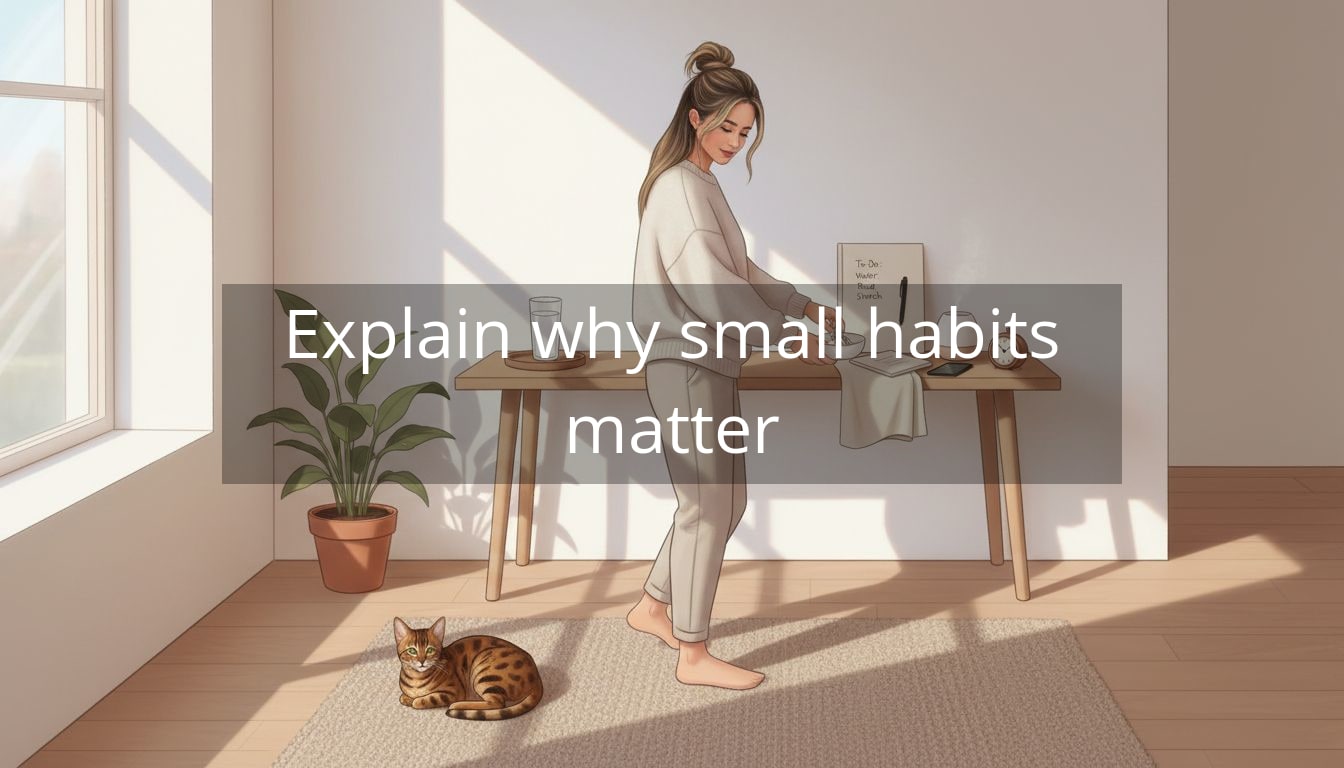
You know those nights when you finally close your laptop… and the kitchen is still cluttered, your notifications are still buzzing, and your brain is still running? Small habits that change your life don’t fix everything overnight—but they do give you a way out of the constant catch-up cycle without requiring a personality transplant.
The problem isn’t that you’re “bad at routines.” It’s that modern life is set up to keep you reactive: messages, meetings, errands, decision fatigue, and a never-ending list of tiny tasks that somehow feel heavier than the big ones. When you try to solve that with a dramatic reset—a strict new schedule, a full wellness overhaul—it asks for more willpower than you actually have available on a random Tuesday. And when willpower runs out, the plan collapses, and you’re left feeling like it’s you that’s inconsistent.
Why small habits that change your life actually work
Here’s the mindset shift: consistency beats intensity. Small habits work because they’re low-resistance micro-actions you can repeat even when you’re tired, busy, or not in the mood. Over time, repetition trains your brain to automate the behavior—so you spend less mental energy “deciding” and more energy living.
Clarity isn’t a massive breakthrough—it’s the quiet result of small choices repeated.
The goal isn’t to become a perfectly optimized person. It’s to create tiny anchors in your day that make life feel a little more handled.
A simple system to start: make it smaller than you think
Start by attaching one micro-habit to something you already do (this is often called habit stacking). Think: after coffee, after brushing teeth, after lunch.
A few ideas that work well in real life:
- The 60-second reset: rinse one dish or wipe one counter right after you eat. (Not the whole kitchen. Just one visible win.)
- A “future you” favor: before bed, set out tomorrow’s outfit or open the note where you’ll write your 1–3 most important tasks.
- Use a timer when motivation is low: a 2-minute timer (iPhone timer, Google Assistant, or an app like Tiimo/Todoist reminders) turns “I should” into something you can actually start.
Once you choose one tiny action, the next step is making it repeatable—without needing your day to be calm first.
Make small enough habits repeatable (even on messy days)
Repeatable is the whole game. The habit doesn’t have to be impressive—it has to be doable when you’re running on fumes, your calendar is packed, and your brain feels like it has 47 tabs open.
A simple way to pressure-test a habit is this question: “Could I still do this on a day when everything goes slightly wrong?” If the answer is no, shrink it.
Use “minimums” and “nice-to-haves”
One of the fastest ways to stop the all-or-nothing cycle is to define two versions of the same habit:
- The minimum: what you do no matter what (30–90 seconds).
- The nice-to-have: what you do when you have capacity (5–20 minutes).
Examples that work in real life:
- Kitchen reset: minimum = clear just the sink; nice-to-have = wipe counters + start dishwasher.
- Movement: minimum = 10 deep breaths + stretch calves; nice-to-have = 20-minute walk.
- Planning: minimum = write your top 1 task; nice-to-have = choose top 3 + time-block your morning.
This structure keeps you consistent without forcing you to “perform” wellness on hard days.
Small habits that change your life: five anchors that reduce mental load
If you want a calmer routine fast, focus on habits that remove decisions and prevent pile-ups. These are the tiny anchors that make life feel more handled—without needing a whole lifestyle renovation.
1) The “closing shift” (3 minutes before you stop working)
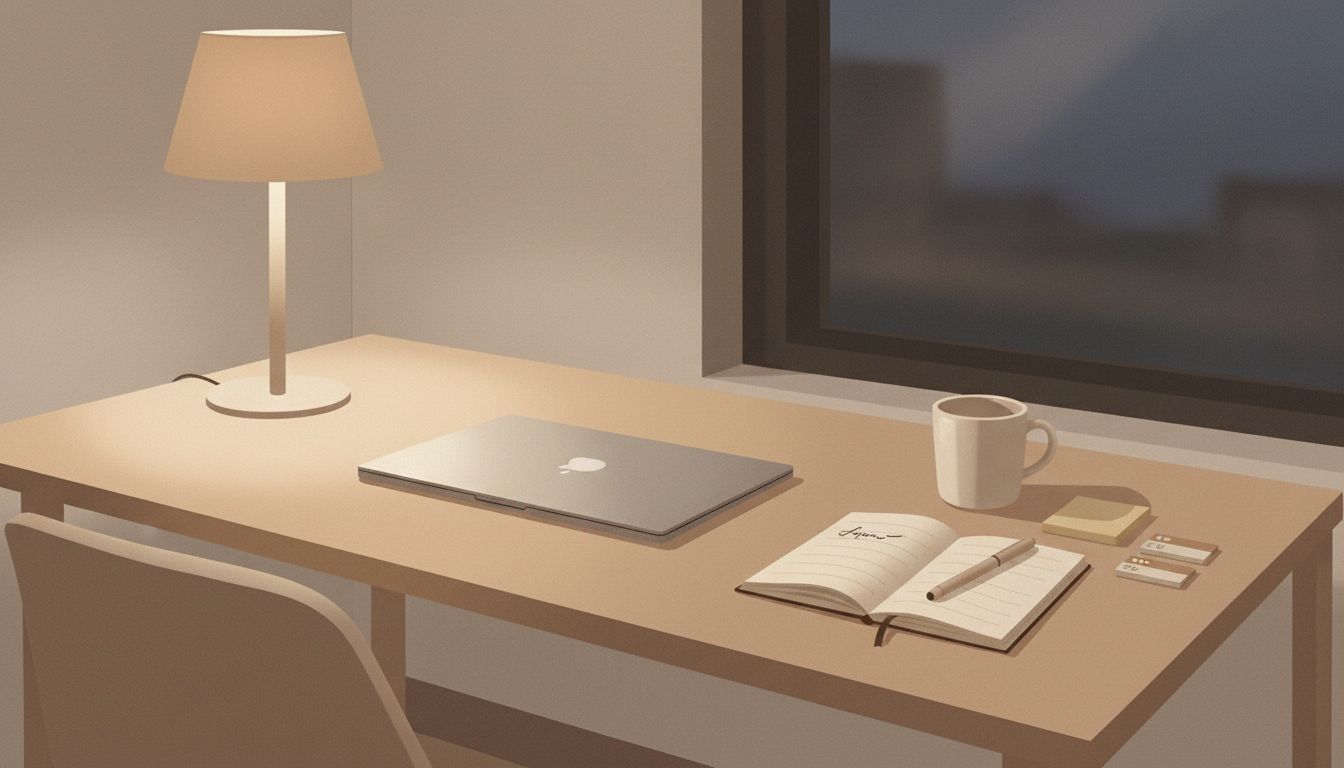
When work ends abruptly, your brain keeps spinning—especially if you’re closing your laptop mid-thought. Try a tiny shutdown ritual:
- Write one sentence: “Tomorrow, I’ll start with ____.”
- List 1–3 priorities: not everything, just what moves the day forward.
- Close the loop visually: close the extra tabs, put the notebook away, or clear one surface.
It sounds small, but it reduces the “I’m forgetting something” feeling that follows you into your evening.
2) A one-touch rule for tiny clutter
Clutter isn’t always a cleaning problem—it’s a “where does this live?” problem. Pick one mini category that tends to multiply (mail, packages, hair tools, reusable bags) and create a home for it.
Then practice a one-touch rule: when you notice it, you put it where it lives—no “temporary spot.”
Real-life example: you walk in with the mail and place it on the counter “for later.” Later becomes three days. Instead, add a slim tray or folder near the entry and make the minimum habit: mail goes into the tray. That’s it. Sorting can be the nice-to-have.
3) The “tomorrow you” setup (2 minutes nightly)
This is the habit that makes mornings feel less sharp-edged. Choose one friction point you hit every day and neutralize it the night before.
- Put your keys in the same spot.
- Set out your outfit (or at least your top layer).
- Pre-fill your water bottle / set the coffee stuff out.
- Open the note where you keep your priorities.
If you’re thinking, “That won’t change much,” try it for one week. The point isn’t perfection—it’s fewer decisions before your brain is fully online.
4) A midday reset that’s not a full break
When days get hectic, we tend to push through and then crash. A tiny midday reset helps you keep your energy steadier without requiring a long lunch or a full workout.
- Physical: stand up, roll your shoulders, drink water.
- Visual: clear one square foot of space (desk corner, kitchen counter edge).
- Mental: ask, “What’s the next right thing?” and do only that.
Think of it as a “keep the boat steady” moment—not a productivity contest.
5) The 10-minute “relationship deposit”
When you’re overloaded, connection is usually the first thing to go. And then somehow everything feels heavier. A small habit that protects your relationships (and your mood) is a quick, intentional deposit:
- Send one voice note to a friend while you’re walking.
- Text someone one specific appreciation (not a vague “miss you”).
- Have a 10-minute phone call while you fold laundry—no multitasking required beyond that.
It’s not about being socially perfect. It’s about staying tethered to your people even in busy seasons.
Make the habit easier than your excuses: three practical tools
Habits stick when the environment supports them. You don’t need a fancy setup—just a few small “defaults” that make the right action the easiest action.
1) Use cues you can’t ignore
If you rely on memory, your habit will disappear on stressful days. Instead, use cues that already happen:
- After brushing teeth: put face moisturizer on.
- After lunch: set a 2-minute timer and tidy one micro-zone.
- When you start the kettle: unload five items from the dishwasher.
These cues act like little rails that guide you when your brain is tired.
2) Keep “starter steps” visible
Many habits fail because the first step is annoying. Make the first step effortless:
- Keep a book where you sit (not on a shelf across the room).
- Put a water glass by the coffee machine.
- Store wipes where you actually wipe things (under the sink is fine, but “within arm’s reach” is better).
Visibility is underrated. If you can see it, you’ll do it more.
3) Track in a way that doesn’t create pressure
Some people love checklists; others feel judged by them. Choose a gentle method:
- The “done list” note: one line each day: “Today I did ____.”
- A weekly glance: every Sunday, ask, “Which habit made my week feel easier?”
- A simple calendar dot: one dot for showing up, not for doing it perfectly.
The goal is awareness, not a perfect streak.
You don’t rise to the level of your intentions—you fall to the level of your systems.
When you fall off (because you will), use the two-day rule
Life will interrupt you—travel, deadlines, sickness, hormones, family drama, random exhaustion. The difference between habits that fade and habits that last is how you respond after the miss.
Try this: never miss twice. If you skipped your 60-second reset today, tomorrow you do the minimum version. Not to “make up for it,” just to keep the identity intact: I’m someone who comes back.
And if your minimum still feels like too much? Make it smaller again. One dish. One sentence. One minute. The win is returning.
Extra support: simple resources to keep the habit going
If you want a little structure as you build your routine, here are a few helpful resource ideas to explore:
- A basic habit tracker (paper or notes app) to mark minimums without pressure
- A timer you’ll actually use (phone timer, smart speaker, or a simple visual timer)
- Short guided breathing or stretch videos for a 2–5 minute reset
- A “Top 3 priorities” template in your notes app for quick daily planning

A calm ending you can actually repeat
The best thing about small habits that change your life is that they don’t ask you to become a new person. They just give your current self a few steady handrails—tiny actions that reduce the pile-ups, soften your mornings, and quiet the mental noise.
Choose one habit that makes your day feel lighter, attach it to something you already do, and keep the minimum so small you can do it on your most ordinary Tuesday. Calm doesn’t come from doing everything. It comes from having a few smart systems that carry you when life is full.
Telegram Galelar
Instagram @galelar_lis
YouTube @galelar
TikTok @galelar_lis

Leave a Reply