
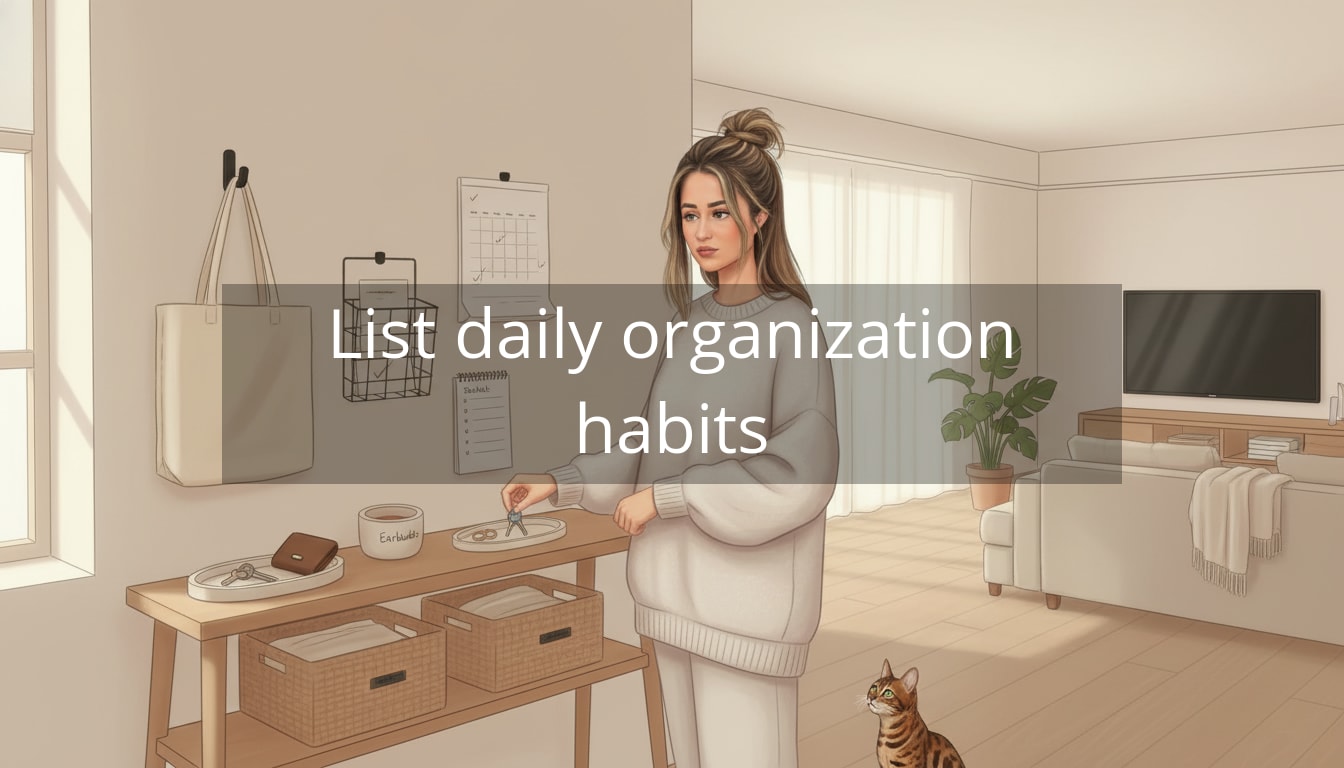
You can Google a hundred home organization tips, but none of them matter when you’re already running on fumes. If your brain feels like it has 37 tabs open, even “just tidy up” can land like an extra assignment.
The chaos usually isn’t because you’re messy or incapable. It’s because modern life doesn’t leave much margin. You’re moving from work to errands to texts to dinner decisions—so the kitchen counter becomes a landing strip, laundry lives on “the chair,” and mail quietly turns into a paper avalanche. Most of us only organize in big dramatic bursts (a Sunday reset, a spring-cleaning spree), and then real life shows up on Monday and undoes it.
Here’s the mindset shift that makes the difference: an organized home isn’t maintained by motivation. It’s maintained by tiny defaults—small daily actions that prevent clutter from forming in the first place.
“Clarity isn’t created in one big moment—it’s built in small, repeated choices.”
Home organization tips that work because they’re daily, not dramatic
Start with one simple system: everything needs a home. Not a vague “somewhere in the living room,” but one specific spot you’d confidently tell a friend to look. This is what makes the next tip possible.
Then add a low-effort routine that “closes” your space each day:
- The 10-minute reset (timer on, no pressure): Before bed, set a timer and put obvious strays back where they belong—mugs to the sink, shoes to the rack, throw blanket folded. Ten minutes is short enough that you’ll actually do it, but long enough to change how you wake up.
- A paper landing zone: Choose one tray or folder for incoming mail. When you bring it in, immediately sort into recycle/shred vs. “needs action.” If scanning helps, apps like Adobe Scan or Apple Notes can turn a paper pile into a searchable file in seconds.
- The five-minute rule: If you notice a mini-mess (a package, hair tools, yesterday’s water bottle), give it five minutes now instead of giving it an hour later.
If your home currently feels like it’s always one step away from overwhelm, these micro-habits create a calmer baseline—without asking you to become a different person overnight.
Home organization tips for high-traffic “drop zones” (because that’s where clutter is born)
Once you’ve got a basic “everything has a home” mindset, the fastest way to feel calmer is to focus on the places that collect stuff by default. These are the spots where you’re most likely to walk in with full hands, a busy brain, and zero desire to make five extra decisions.
Think: the entryway, the kitchen counter, the bathroom sink, and that one chair that keeps volunteering as a laundry hamper.
1) Create a real landing pad at the door
If your home had a “clutter headquarters,” it would probably be within 10 feet of the front door. The fix isn’t more willpower—it’s giving your life a simple docking station.
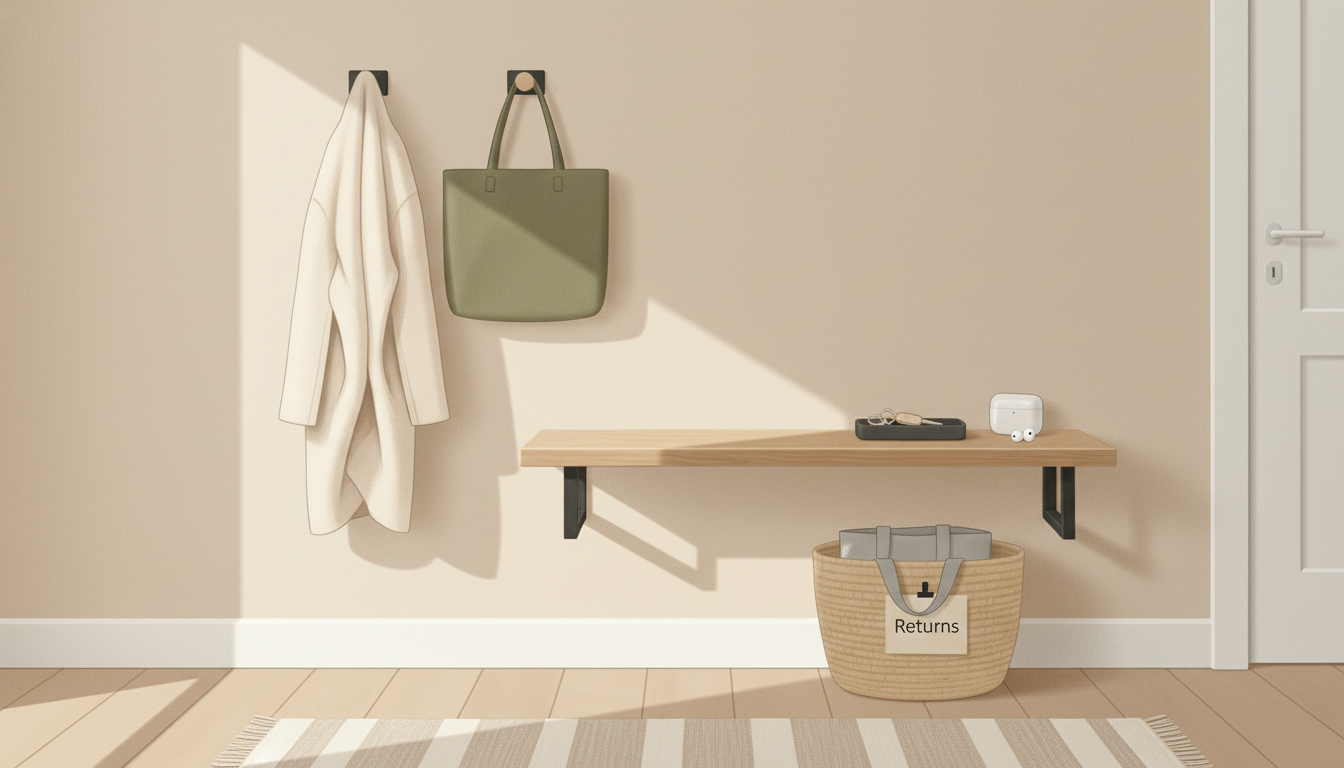
- Hooks at eye level: one per person (even if you live alone—give your everyday bag and coat their own spots).
- A small bowl or tray: keys, lip balm, headphones. If it’s tiny and important, it lives here.
- A basket/bin for “leaving again” items: returns, library books, that thing you keep meaning to bring to work.
Real-life example: If you’re always tearing up the house for your keys at 8:42 a.m., the goal isn’t “be better.” The goal is: keys never leave the tray. Not sometimes. Not “unless I’m in a rush.” Especially when you’re in a rush.
2) Give your kitchen counter a “nothing lives here” rule (with one exception)
Counters attract random objects because they’re flat, central, and convenient. If you want your kitchen to feel calmer quickly, make the counter a temporary surface—not a storage solution.
- Choose one allowed zone: a small tray for the coffee setup, or a fruit bowl, or the mail tray—one contained area.
- Everything else gets re-homed in under 60 seconds: meds go to a basket in a cabinet, school papers go to the paper landing zone, chargers go to a charging drawer/bin.
If it helps, name the problem: the counter isn’t “messy,” it’s undecided. Every time you clear it, you’re reducing future decision fatigue.
3) Make the bathroom easy to reset in one minute
Bathrooms get chaotic fast because you use them in a hurry—morning, bedtime, post-gym, mid-workday. Your goal is not a pristine spa bathroom. Your goal is “I can wipe and reset without dragging out a whole routine.”
- Keep only daily items on the counter: one cup or small tray for the basics (toothbrush, toothpaste, cleanser).
- Use a shallow bin under the sink: hair tools, extra products, backup toothpaste—contained, not scattered.
- One swipe routine: after brushing teeth at night, use a counter wipe or microfiber cloth for 15 seconds.
When the bathroom looks under control, your brain reads it as “I’m holding it together,” which is honestly underrated.
Small home organization tips that remove decisions (the quiet secret to consistency)
The systems that last are the ones that reduce your thinking. If your organization plan requires you to make good choices at the end of a long day, it’s not a plan—it’s a wish.
Use “good enough” containers—then upgrade later
You do not need perfect matching bins to start. Use what you already have (shoeboxes, baskets, a spare tote). The point is containment: giving categories a boundary so they stop spreading.
- One bin per category: sunscreen/bug spray, batteries, backstock toiletries, cords.
- Label if you share your space: even a sticky note works. Labels reduce “where does this go?” questions for everyone.
Later—once you know the categories actually work—you can swap in prettier containers if you want. Function first, aesthetics second.
Try a “one-touch” rule for the most annoying clutter
Some items become clutter because they get handled multiple times: moved from the counter to the table, from the table to a chair, from the chair to… somewhere. Pick your biggest repeat-offender and practice: touch it once, put it away fully.
- Mail: sort immediately into recycle vs. action tray.
- Packages: open and break down the box right away (or it becomes furniture).
- Laundry: either in the hamper or on your body—no “chair limbo.”
This isn’t about being strict. It’s about being kind to your future self.
Build a “closing shift” that fits your real evenings
The 10-minute reset works best when you make it ridiculously doable. If nights are tough, give yourself an even smaller version:
- The 3-item reset: put away three things before bed. That’s it.
- The “surfaces only” reset: clear just the counter and coffee table. Ignore everything else.
- The tomorrow-me reset: set out one thing that will make the morning smoother (lunch container, outfit, gym shoes).
Consistency beats intensity. A tiny closing shift done most days will change how your home feels.
You don’t need more time—you need fewer open loops.
When organization feels impossible: reset the system, not yourself
If you try these habits and still feel like your home won’t cooperate, that’s usually a systems issue. A few common culprits:
- Your “homes” are too far away: if the scissors live three rooms over, they’ll end up everywhere except their home. Move frequently used items closer to where you use them.
- You have more stuff than the space can hold: if a drawer won’t close, no amount of labeling will fix it. Shrink the category until it fits comfortably.
- Your storage is too complicated: lids, stacks, hard-to-reach shelves—anything that adds friction will get skipped when you’re tired. Simplify.
A gentle but powerful question is: “What would make the right choice the easiest choice?” That’s the organizing version of self-care—setting up your environment so you don’t have to fight it daily.
A calm weekly rhythm (so you’re not always catching up)
Daily habits keep things from exploding. A simple weekly rhythm keeps life from slowly drifting into chaos again.
- Pick one “anchor day” task: the day you already do groceries becomes “fridge + pantry quick check.”
- Choose one small zone per week: one drawer, one shelf, one basket. Set a 15-minute timer and stop when it goes off.
- End with a donation drop: keep a donation bag in a closet; when it’s full, take it out on your next errand run.
This isn’t another big overhaul. It’s maintenance that respects your energy.
Extra resources if you want more structure
If you’re the kind of person who feels calmer with a little guidance, there are plenty of helpful resources you can lean on—without turning your home into a full-time project:
- Printable checklists: a simple nightly reset list or “Sunday reset” guide you can keep on your phone.
- Short organizing videos: look for quick “one drawer” or “10-minute reset” routines you can follow while you do it.
- Decluttering prompts: room-by-room question lists that help you decide what stays without overthinking.
A home that holds you (not one you have to wrestle)
The goal of these home organization tips isn’t to create a perfect space. It’s to create a home that supports your actual life—workdays, tired evenings, rushed mornings, and all.
When your default is “things have a home” and your routines are small enough to keep, your house stops feeling like another job. You’ll spend less time searching, less time shifting piles around, and more time exhaling when you walk into a room.
Start with one system. Make it easy. Let it be imperfect. Calm living isn’t something you earn after you get everything done—it’s something you build with smarter systems that lower the mental load, one small reset at a time.
Telegram Galelar
Instagram @galelar_lis
YouTube @galelar
TikTok @galelar_lis