
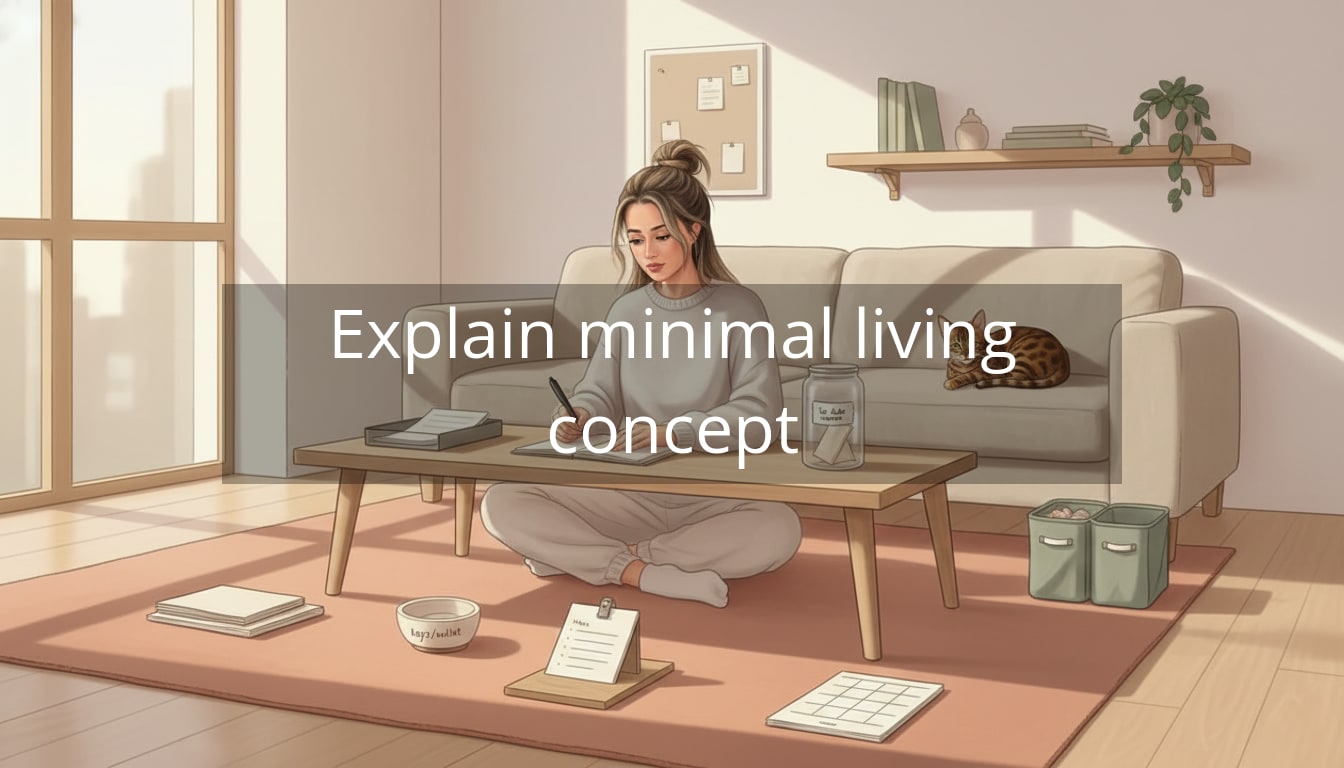
Your life can look fine on paper and still feel like a constant scramble. The minimal living lifestyle is one of the simplest ways to ease that “too much” feeling—too many tabs open, too many obligations, too much stuff you’re silently managing.
If you’ve ever walked into your home and felt your shoulders tense (even when it’s technically “clean”), that’s a clue. Clutter isn’t just visual. It’s unanswered decisions: clothes you might wear someday, duplicate chargers, half-used skincare, that box of “I should deal with this.” Add modern consumer pressure—targeted ads, social media hauls, the fear of missing out—and your space becomes a storage unit for past versions of you.
That’s why overwhelm often isn’t a motivation problem. It’s a volume problem. Too many inputs, too many choices, too much maintenance. And the cost shows up as decision fatigue, tight finances, and the low-grade anxiety of never feeling caught up.
Minimal Living Lifestyle: the mindset shift that makes life feel lighter
A minimal living lifestyle isn’t about bare rooms or living with nothing. It’s intentionally keeping what supports the life you actually want—and letting go of what distracts you from it. Think of it as editing, not deprivation: fewer items to manage, fewer decisions to make, more breathing room for rest, relationships, and creativity.
Clarity isn’t something you find—it’s something you create by removing what doesn’t belong.
Start with a small, low-drama system that builds trust with yourself:
- Try a mini “life audit” in one category (like mugs, workout clothes, or bathroom products). Ask: Do I use it? Do I love it? Would I buy it again today?
- Use the 90/90 rule: Have you used it in the last 90 days, or will you realistically use it in the next 90? If not, it’s probably just taking up rent-free space.
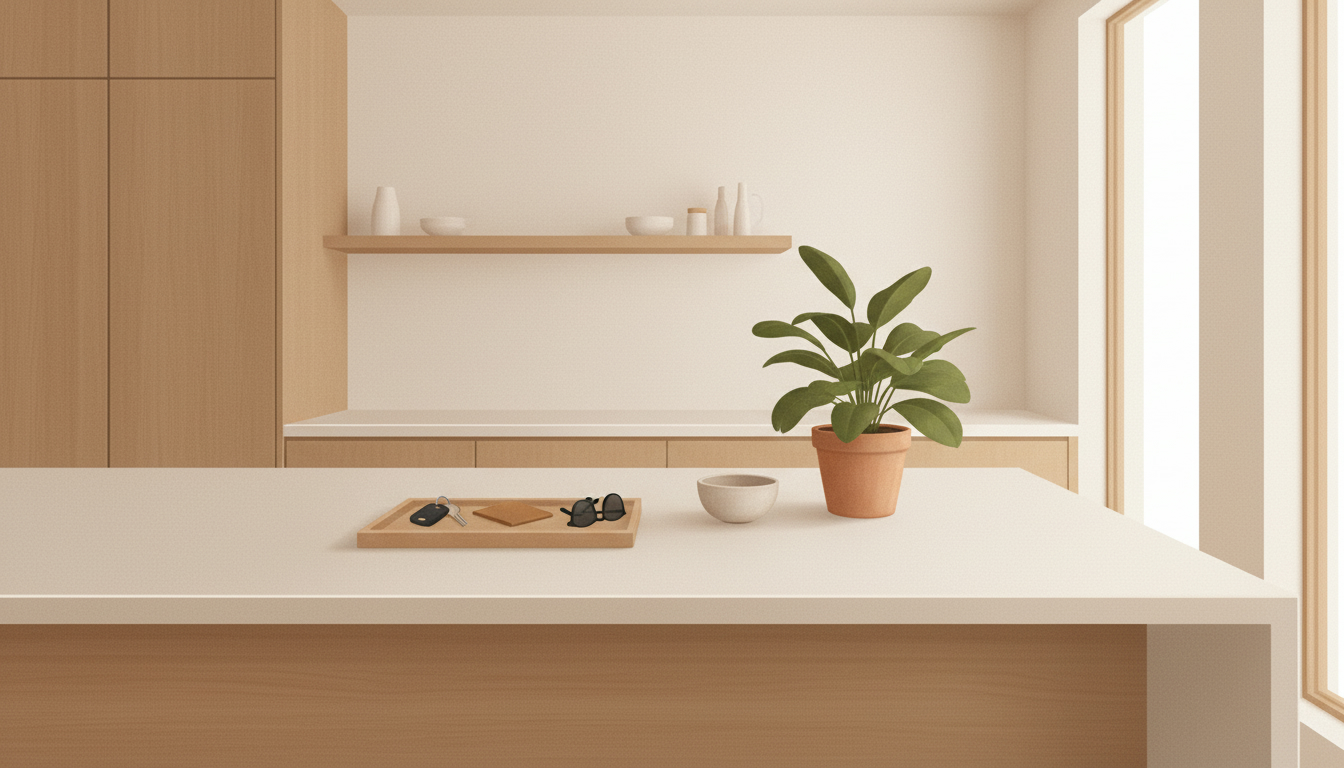
- Create a soft landing zone: one clear counter, one clear chair, one clear shelf. Open space is calming because your brain stops scanning for “problems.”
If you want a digital support tool, keep it simple: a single Notion page or Apple Notes checklist called “House Reset” can hold your declutter decisions and donation list—so you’re not rethinking the same choices every weekend.
Minimal living lifestyle: the systems that keep clutter from coming back
Decluttering is the easy part. The real magic is setting up simple “guardrails” so your home doesn’t slowly refill with random extras and delayed decisions.
Think of this as maintenance that protects your future energy. You’re not trying to become a different person—you’re making it harder for clutter to become your default.
1) Create a few clear “homes” (so your brain can rest)
Most everyday mess isn’t caused by laziness. It’s caused by items that don’t have an obvious place to belong. When something feels homeless, your brain parks it on the nearest surface—and then you start living around piles.
- Pick 5 daily categories that tend to drift: keys, bags, shoes, mail, chargers.
- Give each one a “one-step home”: a hook, tray, basket, or drawer close to where you naturally drop it.
- Limit the container: the tray is the boundary. When it fills, you edit. (This is how you keep the system honest.)
Real life example: If your entry table becomes a dumping ground, try a small tray for keys + a single basket for “out-the-door” items (sunglasses, dog bags, headphones). Anything that doesn’t fit doesn’t live there. It either gets put away—or you decide you don’t need it.
2) Use the “one-touch” rule for tiny tasks that turn into big stress
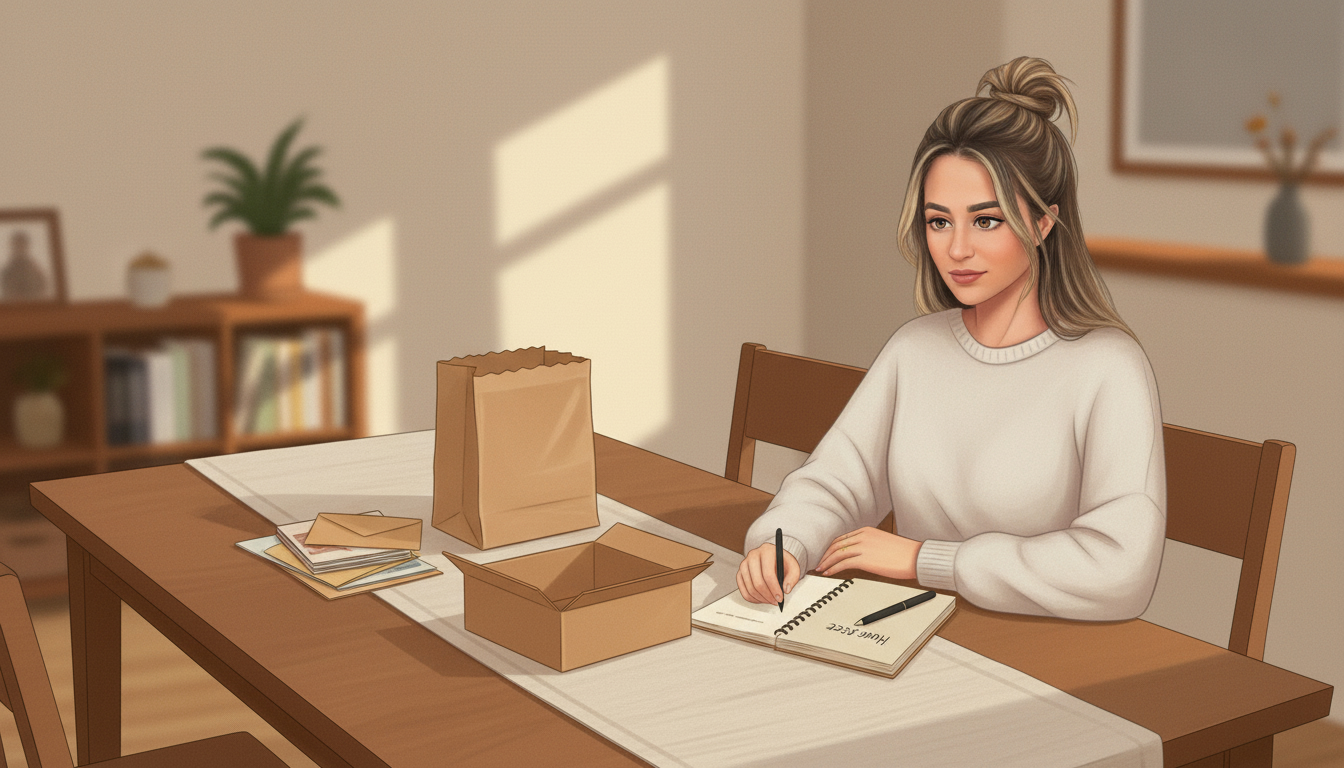
Clutter often starts as a delayed decision. Receipts. A package. A new skincare item you’re not sure about. The trick is to handle small things fully while they’re still small.
- Mail: recycle junk immediately, file anything important, and put “action items” on one short list.
- Packages: open, keep what you’re keeping, break down the box right away.
- New items: if it needs a home, assign the home now (not “later”).
If “one-touch” feels too strict, soften it: aim for two touches max. The goal is simply to stop creating micro-debts you have to pay off on Saturday.
3) Make buying harder (without making life boring)
A minimal living lifestyle gets dramatically easier when you reduce incoming clutter. Not because you “shouldn’t buy things,” but because every item you bring home adds an invisible to-do list: store it, clean it, maintain it, decide when to get rid of it.
- The 48-hour pause: for non-essentials, wait two days. If you still want it, you’ll buy it confidently instead of impulsively.
- The “would I replace something I already own?” test: if it’s not replacing an existing item, it’s probably multiplying your inventory.
- Shop your home first: before buying a basket, candle, or water bottle, do a quick sweep and see what you already have.
Real life example: You’re tempted by a “perfect” new planner. Before you buy it, ask: “What problem is this solving?” If the answer is “I feel behind,” a calmer fix might be a single weekly page in Notes—no shipping, no clutter, no guilt when it goes unused.
4) Keep “maybe” items from living in your space
The hardest category isn’t trash or obvious donations—it’s the “I’m not sure” stuff. The dress you might wear. The hobby supplies you feel bad about. The gifts you never asked for.
Give yourself a pressure-free container:
- Create a ‘Maybe Later’ box (one box only).
- Label it with a date 30–90 days out.
- If you don’t open it by that date, donate it without re-deciding every item.
This is gentle, but it’s also decisive. You’re not forcing yourself to be ruthless—you’re protecting your space from indefinite limbo.
Minimal living lifestyle beyond stuff: simplify your schedule and mental tabs
If your home is calmer but your calendar is still packed, you’ll still feel that “scramble” sensation. Minimalism works best when it includes your time, your obligations, and the constant background noise of modern life.
Try a “calendar declutter” that doesn’t require a personality transplant
- Choose one night a week that stays intentionally unscheduled. This becomes your buffer.
- Downsize recurring commitments: if a weekly thing drains you, can it become biweekly or seasonal?
- Create a default “closing time” for decision-making (like 8:30 p.m.). After that, you’re allowed to stop optimizing.
Real life example: If you’re always squeezing errands into lunch breaks and nights, pick one “admin block” each week—just 60 minutes. Pay a bill, order contacts, schedule the appointment. One contained block often removes five days of low-grade stress.
Digital minimalism that actually helps (not more apps)
You don’t need a perfect system; you need a small system you trust. If digital clutter makes you feel scattered, aim for a few simple defaults:
- One capture place: a single Notes page for random thoughts, links, and reminders.
- One running list: “Next Errands” or “House Reset” so you’re not holding tasks in your head.
- Unsubscribe once a week: one minute, one email list. Small, steady relief.
The win here is mental: fewer open loops. Less re-checking. Less “Where did I put that?”
You don’t need more time—you need fewer things competing for your attention.
A gentle weekly rhythm that keeps your home feeling clear
The goal isn’t a perfect reset. It’s a light routine that prevents chaos from building up.
- 10-minute tidy (most days): put surfaces back to “neutral” and return stray items to their homes.
- 15-minute category sweep (once a week): pick one small category—water bottles, socks, pantry snacks—and remove what you’re not using.
- Donation bag habit: keep one bag in a closet. When it’s full, it leaves the house.
If you live with a partner or kids, keep it collaborative and simple: “Everything has a home, and we do a 10-minute reset before we relax.” Not as a rule—more like a shared exhale.
Extra resources if you want support (without overwhelm)
If you do better with a little structure, here are a few easy options you can explore when you have time:
- A minimalist wardrobe checklist to identify your true weekly staples
- A printable one-page “House Reset” routine you can stick on the fridge
- A guided declutter video (great for body-doubling while you tackle one drawer)
- A simple spending pause script to use before impulse purchases
A calmer life is built by removing the extra—one decision at a time
A minimal living lifestyle isn’t about making your home look a certain way. It’s about making your days feel more manageable. Fewer items to maintain. Fewer choices to second-guess. Clearer spaces that support you when you’re tired, busy, or mentally maxed out.
Start small and stay kind to yourself: one category, one landing zone, one gentle boundary around what comes into your home and calendar. The point isn’t to do it perfectly—it’s to build smarter systems that reduce your mental load and make calm feel like your new normal.
Telegram Galelar
Instagram @galelar_lis
YouTube @galelar
TikTok @galelar_lis