
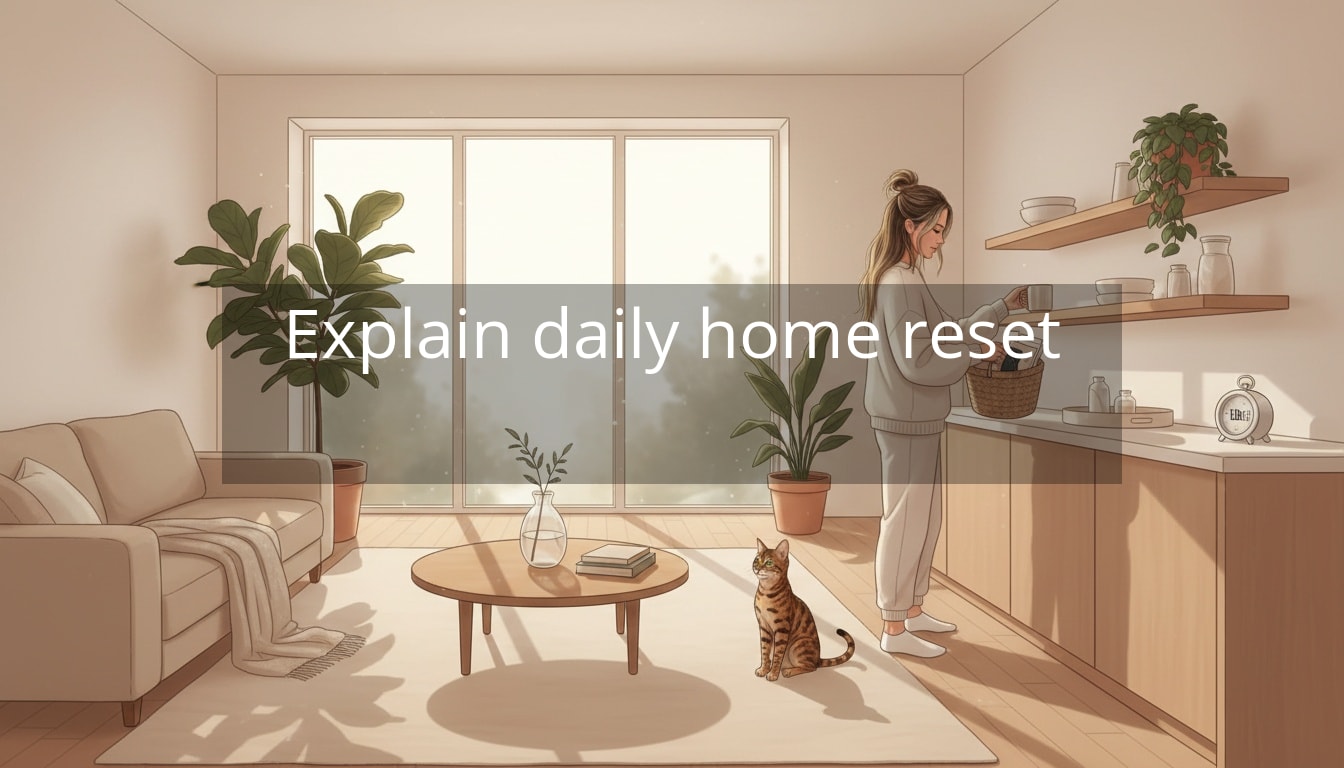
You know that moment when you finally close your laptop, and your brain is begging for “off”… but the kitchen counter is shouting receipts, cups, and half-sorted mail? A home reset routine is the small, calming system that keeps that end-of-day mess from becoming tomorrow morning’s stress.
Here’s why this keeps happening, even when you’re a competent adult with good intentions: modern life doesn’t leave “white space.” Work messages keep coming, deliveries stack up, and every room turns into a drop zone when you’re moving fast. When there’s no simple daily maintenance, the clutter compounds—one night of dishes becomes two, the entryway becomes a pile, and then your brain starts running that low-grade background tab of: I need to deal with this. That mental load is exhausting because it never fully clocks out.
A home reset routine is a mindset shift away from “cleaning the house” and toward “returning the house to neutral.” It’s not deep cleaning. It’s a short, repeatable habit—usually 5–10 minutes—that brings a few high-impact areas back to baseline so your space feels supportive again.
“Clarity isn’t created in a single sweep—it’s built in small returns to calm.”
Start by choosing an anchor you already have. Most people do best with either after dinner (before the evening fades) or right before bed (so you wake up to calm). Then set a timer on your phone—Apple Timer, Google Clock, or a simple Pomodoro app—and give yourself permission to stop when it goes off. The timer is the boundary that keeps “a quick reset” from turning into a midnight cleaning spiral.
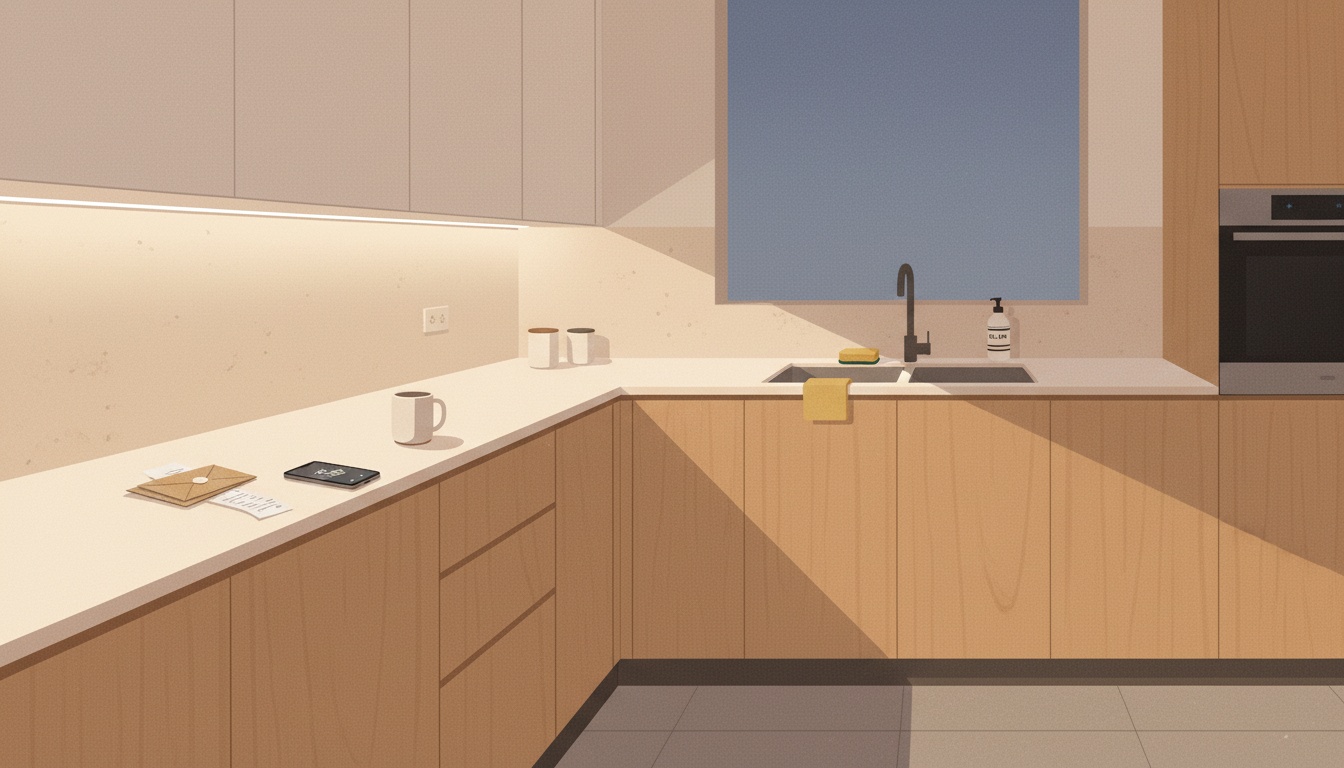
For a first pass, focus on the two places that change the mood of the whole home: the kitchen counter/sink and the entryway. Clear surfaces, return a few items to their “homes,” and make it easy for Future You to start the day without immediately managing yesterday’s leftovers. If you like digital support, a tiny checklist in Notes or a habit tracker (like Habitica) can make the routine feel automatic instead of emotional.
Once those two zones are consistently calmer, you’ll notice something encouraging: you’re not cleaning more—you’re thinking less about cleaning. That’s the win. Now you can gently widen the routine so it supports your whole week, not just tonight’s countertop.
A simple home reset routine you can actually repeat
The best reset is the one that fits the version of you who’s tired, hungry, and ready to be done. So instead of adding five new chores, build a tiny “default sequence” you can run on autopilot.
The 10-minute baseline (no perfection required)
If you want a structure that works on both normal days and chaotic ones, try this:
- 3 minutes: Kitchen close-down (dishes into dishwasher/sink, quick counter clear, wipe one sticky spot)
- 2 minutes: Entryway reset (shoes lined up, bags hung, keys in their spot, trash/mail corralled)
- 3 minutes: Living area sweep (cups back to kitchen, blankets folded, obvious items returned)
- 2 minutes: Tomorrow setup (coffee station ready, water bottle filled, one thing placed where you’ll need it)
Notice what’s missing: mopping, organizing a closet, “finally dealing with that one drawer.” Those are real tasks—but they’re not reset tasks. A reset is about returning your home to neutral, not upgrading it.
The “minimum viable reset” for brutal days
Some nights you’re running on fumes. On those nights, aim for the smallest version that still changes the morning:
- Clear the sink enough that you can make coffee and wash one thing.
- Clear one counter strip (even a 12-inch “landing zone” helps).
- Put shoes/bags where they belong so you don’t start tomorrow hunting.
This counts. The habit you keep on hard days is the one that sticks.
Make it easier with a few “home spots” (so you’re not constantly deciding)
A reset routine gets dramatically easier when your most common clutter has a default home. Decision fatigue is often the real problem—your brain stalls because every item requires a mini judgment call.

Three high-impact drop zones to set up once
- A mail/receipts corral: one tray or folder by the entry. Not “sort it now,” just “put it here.”
- A leaving-the-house station: hooks for keys/bag, a small dish for essentials, and a spot for returns (library book, package, dry cleaning).
- A quick-tidy basket: one cute-ish bin that can swallow random items when you’re doing a speed reset. You can empty it later—on purpose, not as a nightly requirement.
Real-life example: if your dining table becomes a paper pile, don’t try to “be the kind of person who doesn’t do that.” Give yourself a paper tray. You’re not failing—you’re designing for reality.
How to share the reset without turning it into a negotiation
If you live with a partner, roommate, or kids, the reset works best when it’s simple enough to delegate without managing. The goal isn’t a perfect distribution of labor every night—it’s relieving the mental load of being the only person who sees everything.
Try a role-based split (instead of a chore list)
- One person closes the kitchen (trash, dishwasher, counters).
- One person resets the living area (blankets, cups, toys, remotes).
- One person does the “tomorrow setup” (coffee, lunches, backpacks, outfits).
Even with kids, tiny roles help: “shoes on the rack,” “cups to the sink,” “toys in the bin.” Keep it short and predictable so it doesn’t become a nightly debate.
Common friction points (and calm fixes that don’t require motivation)
“I start, then I keep going and suddenly it’s midnight.”
That’s exactly what the timer is for. When it goes off, stop—even if you’re mid-task. You’re teaching your brain that this routine is safe and bounded, not a trap.
“I can’t reset because the house is already too messy.”
When things feel out of control, shrink your target. Pick one visible surface and one pathway (like the entry hall). You’re creating relief, not solving everything tonight.
“I’m the only one who cares.”
Focus on what benefits you immediately: a clear sink, a clear launch pad by the door, and a calmer morning. Quietly designing for your peace is allowed. If you want others involved, make the ask tiny and specific (“Can you do the living room cups?”), not general (“Can you help more?”).
Small routines don’t steal your time—they give your mind somewhere soft to land.
Build a weekly “reset boost” so daily stays easy
Daily resets work best when there’s a light weekly rhythm behind them—nothing intense, just enough to keep the baseline from drifting.
Pick one day (Friday after work, Sunday afternoon, whichever feels most natural) and do a 20–30 minute reset boost:
- Empty the quick-tidy basket and return items to their homes.
- Clear the fridge of leftovers and wipe one shelf.
- Run a load of towels or sheets.
- Take out recycling/trash and replace bags.
- Refill your “life runs smoother” supplies (dish soap, sponges, hand soap).
This is also a great time to glance at your calendar and remove tiny future stressors—like placing a return by the door or setting out something you’ll need for an early morning.
Extra resources to keep your home reset routine effortless
If you like a little structure, there are additional resources you can use to make this feel even more automatic:
- A notes app checklist you can pin to your home screen (simple and surprisingly effective)
- A printable one-page evening reset checklist for the fridge or inside a cabinet door
- A 10-minute reset timer playlist (music cues can make the routine feel lighter)
- A “zones” list (kitchen, entry, living area, bathroom) so you never have to decide what to do next
A calmer home isn’t about doing more—it’s about returning to neutral
The point of a home reset routine isn’t to impress anyone or maintain a Pinterest-level baseline. It’s to give your future self a kinder starting line. A clear counter, an easier morning, a living room that feels like somewhere you can actually rest—those small resets add up to real calm.
Start tonight with one timer and two zones. Let “neutral” be enough. You’re not behind—you’re building a smarter system that reduces mental load and makes your home feel like it’s on your side.
Telegram Galelar
Instagram @galelar_lis
YouTube @galelar
TikTok @galelar_lis