
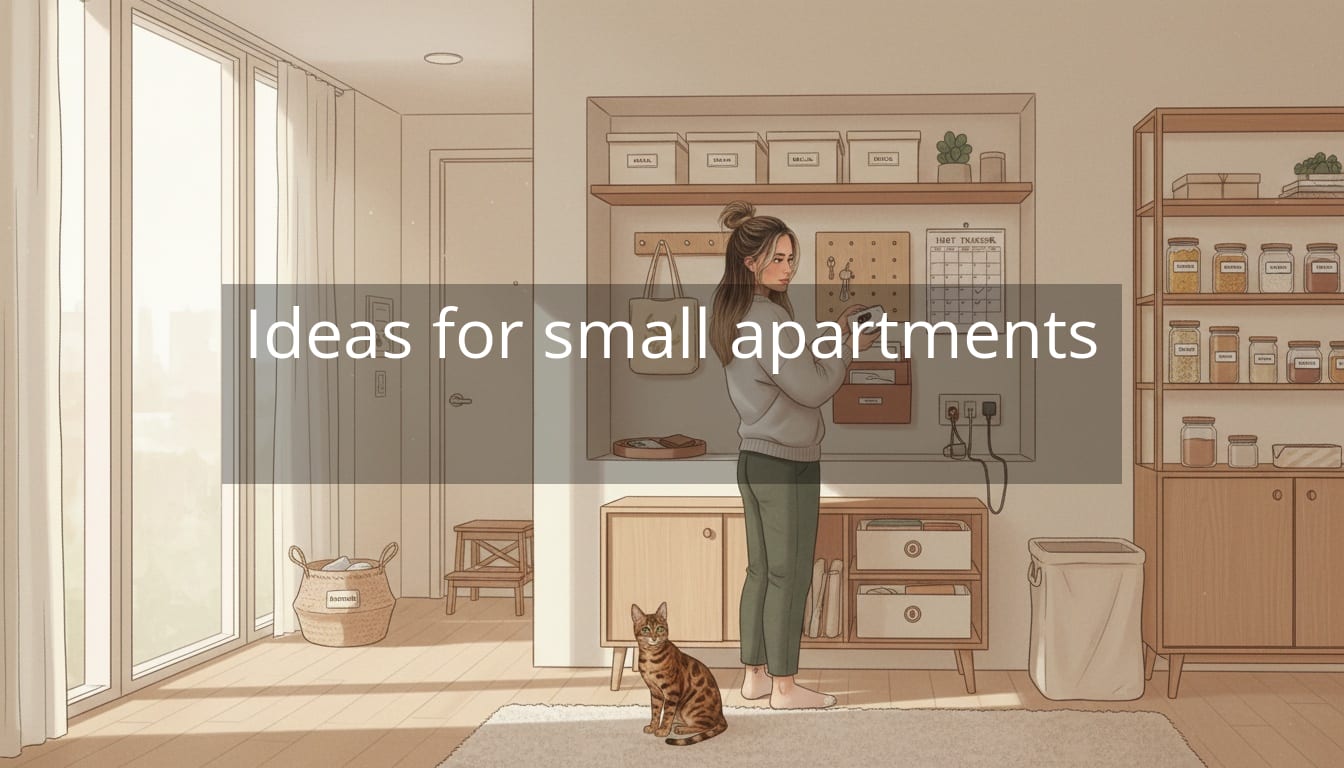
Your apartment can be cute and still make you feel like you’re constantly behind. The right small home organization ideas aren’t about matching bins—they’re about reducing the daily mental load of living in a space that has to do everything.
If you’ve ever opened a cabinet and had a water bottle avalanche, or spent ten minutes looking for the “one” charger you swear you own, you’re not messy. Small spaces simply amplify friction. When your bedroom is also your office and your living room is also your storage unit, every item without a home becomes visual noise you have to process all day.
Why small spaces feel so chaotic (even when you tidy)
The problem usually isn’t the amount of stuff—it’s the lack of clear zones and visible storage. In a larger home, clutter can hide in a hallway closet. In an apartment, it lands on the counter, the chair, or the entryway floor because there’s nowhere else for it to go.
A few things make this worse: keeping “just in case” items, drawers where everything piles on top of everything, and renter limitations (no drilling, no built-ins, no custom pantry). That’s why you can declutter once and still feel like your space re-clutters itself by Tuesday.
“Clarity isn’t created by doing more—it’s created by deciding where things belong.”
Small home organization ideas that work because they’re systems
Here’s the mindset shift: aim for default settings, not constant upkeep. You want your apartment to gently guide you back to tidy—without a big Sunday reset.
Start with two simple systems:
-
Create “micro-zones” for everyday categories.
Instead of organizing by room, organize by real life: “leaving the house,” “work mode,” “cooking,” “wind down.” A slim tray or small basket by the door becomes the landing pad for keys, earbuds, and mail. A rolling cart (like the IKEA RÅSKOG) can hold work supplies and slide away after hours. -
Go vertical before you add furniture.
When you’re considering more storage, ask: Can this go on a door or wall first? Over-door hooks, command strips, and pegboards are renter-friendly and instantly free up floor space—especially for bags, cleaning tools, or accessories.
If you like digital support, a simple notes app list called “Apartment Zones” (entry, kitchen, bed area) can help you decide what belongs where before you buy more containers. Once zones are clear, storage choices get way easier.
Small home organization ideas you can implement in one weekend
Once your zones are named, the next step is giving each zone a “container” that matches the way you actually move through your day. Not a perfect Pinterest container—just something that makes putting things away feel obvious.
Think of it like this: your space doesn’t need more willpower. It needs fewer decisions.
1) Entryway: make a “drop zone” that can’t overflow
The entryway is usually where small-space chaos begins: bags land on chairs, shoes multiply by the door, and mail becomes a paper sculpture you keep meaning to deal with.
-
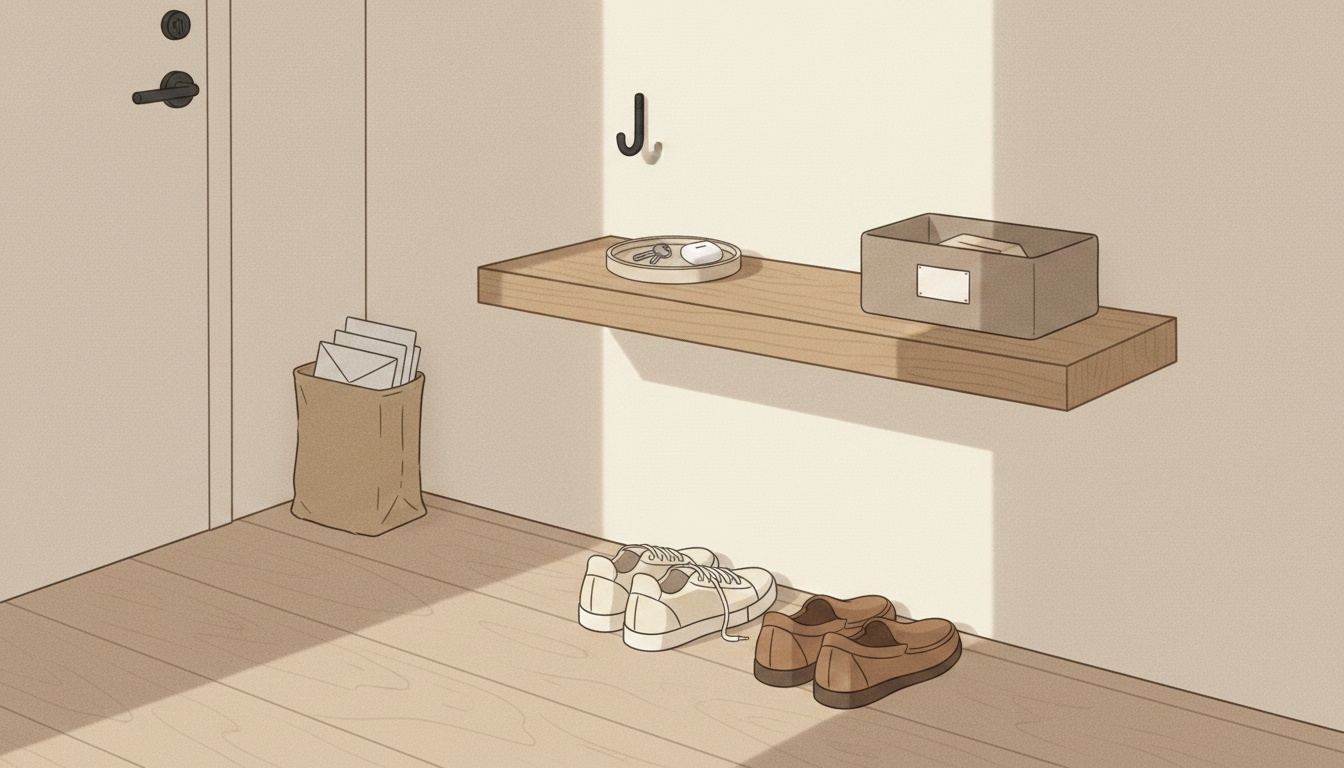
Use a tray + one small bin. The tray is for daily essentials (keys, lip balm, earbuds). The bin is for “not daily” (spare sunglasses, receipts you need to file, random buttons). If the bin fills, that’s your built-in reminder to sort—no guilt, just a signal.
-
Create a mail rule you can keep. If sorting mail immediately is unrealistic (it is, for most of us), try: “Junk goes out before shoes come off.” Keep a small recycling bag or slim bin right by the door.
-
Shoes get a cap. Give yourself a limit—like “two pairs per person by the door.” Everything else lives in a box under the bed or in the closet. When the cap is reached, you’re not failing. You’re just at capacity.
Real-life example: If you’re always running late, your drop zone should support that. A wall hook for your go-to bag + a tiny dish for your keys is more useful than a shoe bench you never sit on.
2) Kitchen: reduce the “digging” with visibility upgrades
Small kitchens don’t usually need a full makeover—they need fewer stacks and more sightlines. The goal is to make your most-used items the easiest to grab.
-
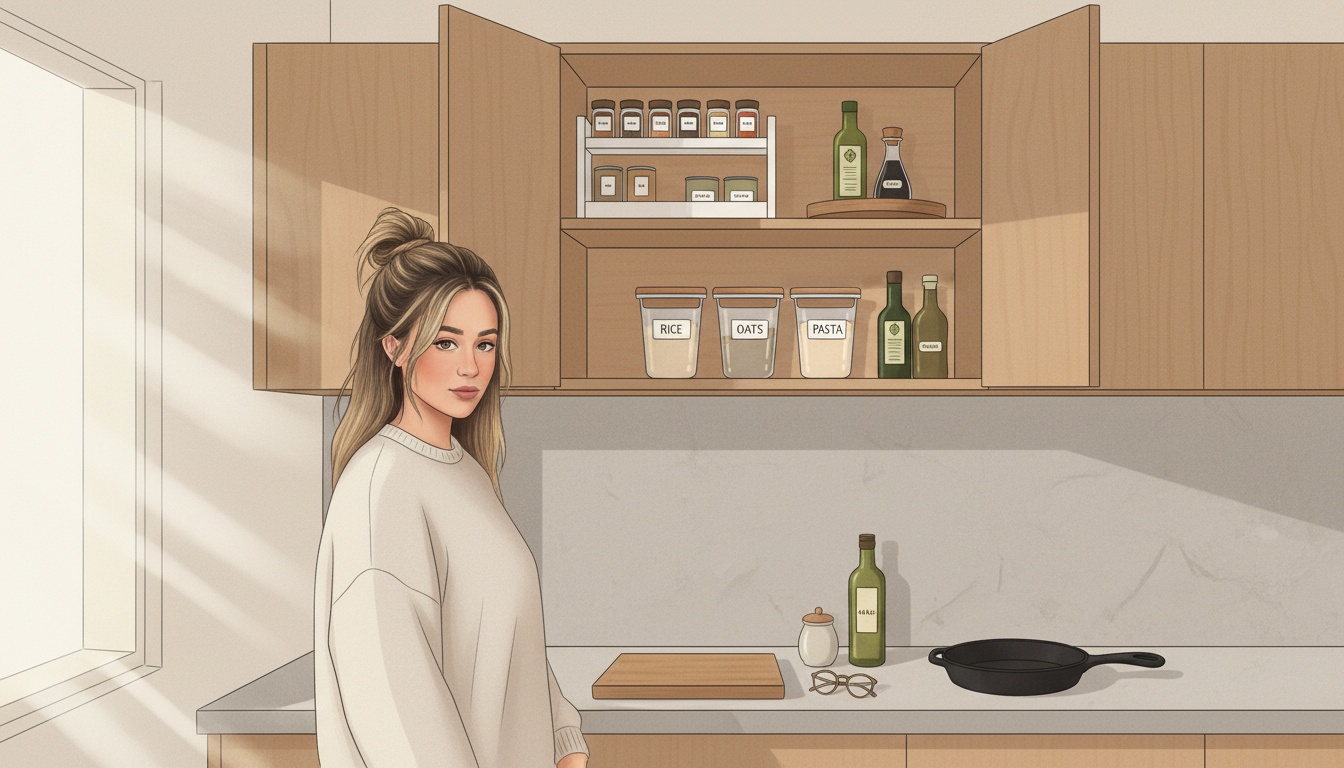
Use risers and turntables in cabinets. A tiered riser for spices or canned goods stops the “forgot it existed” problem. A lazy Susan in a corner cabinet keeps oils, nut butters, or sauces reachable with one spin.
-
Decant only what causes daily friction. You don’t need to move everything into matching jars. Focus on the mess-makers: rice, oats, pasta, snacks. Even two clear containers can calm an entire shelf.
-
Create a “meal prep micro-zone.” Keep cutting board, knife sharpener, olive oil, salt, and your favorite pan in one area. When cooking feels easy to start, takeout becomes a choice—not the default.
Small-space truth: If you’re constantly shifting things to reach one item, your storage is asking you to do too much. Visibility is an organization shortcut.
3) Closet and bedroom: organize around outfits, not categories
In apartments, most closets are basically “a suggestion.” The trick is to store based on what you wear together, not what an ideal closet system says you should do.
-
Create a “work week” section. Keep your most-worn work tops, pants, and a couple layering pieces together. If you often get dressed while half-awake, this single change reduces decision fatigue fast.
-
Group by function, then by type. For example: gym items together (tops + bottoms + socks + sports bras), then casual, then dressier. You’re building a map your brain can follow.
-
Under-bed storage = seasonal storage. Treat under-bed bins like a second closet, but only for off-season items or backups (extra bedding, bulky sweaters, beach towels). Label the bin on two sides so you can find things without pulling everything out.
Real-life example: If you do laundry once a week and always run out of socks midweek, it’s not a discipline issue—it’s a system issue. Put socks where you get dressed (not where you fold laundry) and keep a small “sock backstock” in the same drawer.
4) The “cable + tech” problem: give chargers one home (and one backup plan)
Chargers are tiny, essential, and weirdly good at disappearing. A simple tech setup makes your space feel instantly more under control.
-
Create a charging station. One basket or small box near an outlet: phone charger, watch charger, portable battery, and one spare cable. That’s it.
-
Add a “travel tech pouch.” Keep a small pouch packed with a cable, wall plug, and earbuds. When you’re leaving for work or a weekend trip, you’re not rummaging through drawers like a detective.
-
Use a label you’ll actually read. Masking tape on the plug that says “LAPTOP” or “KINDLE” prevents the unplug-and-hope cycle.
Renter-friendly tools that make small home organization ideas stick
The most helpful tools aren’t the fanciest—they’re the ones that remove steps. If something requires extra effort every time, it won’t last during busy weeks.
-
Command hooks + removable strips: Put hooks where the friction happens (inside a cabinet door for measuring spoons, by the entry for bags, near the bed for a robe).
-
Over-the-door organizers: Great for hair tools, cleaning supplies, pantry items, or accessories—especially when your closets are shallow.
-
One “catch-all” basket per room: Not for permanent storage—just a quick tidy tool. When life gets busy, you can toss things in, and later return them to their zones in five minutes.
-
Clear bins for high-friction categories: Skincare backups, first-aid supplies, cords, tea/coffee, or lunch containers. Clear bins reduce the need to open three boxes to find one thing.
-
Stackable risers: For cabinets, fridge shelves, or bathroom storage. They create instant “levels” so your eyes can find what you need.
Small habits that keep your space calm (without constant tidying)
Organization is less about the big reset and more about the tiny preventions. The goal is to stop clutter before it becomes a weekend project.
The 2-minute zone reset
Pick one time of day you already have a natural pause—right after dinner, after brushing your teeth, or before you sit down to watch something.
-
Return items to the entry drop zone (keys, bag, wallet).
-
Clear one surface that stresses you out most (kitchen counter or bedside table).
-
Do a quick “floor scan” for anything that migrated.
Two minutes doesn’t sound like much, but it prevents the slow-build clutter that makes a small apartment feel impossible.
The “one-touch” rule (the gentle version)
Some advice says you should handle every item once. In real life, you’re tired. Try this instead: handle things fully when it’s easy.
-
If you’re already standing by the recycling, toss the junk mail.
-
If you’re already in the bathroom, put the hair tool back in its bin.
-
If you’re already leaving the room, bring one out-of-place item with you.
This keeps you from feeling like your home requires a whole separate life to maintain.
Caps instead of rules
If you’ve ever tried to “be minimal” and then rebounded with a shopping spree, you’ll like this approach: decide your capacity.
-
One bin for candles.
-
One shelf for mugs.
-
One drawer for workout gear.
When the container is full, you’ve hit your limit. No shame—just a clear boundary that protects your space (and your brain).
“You don’t need a bigger home—you need fewer daily decisions inside the home you have.”
If you want extra support, here are a few helpful resources
If you’d like more ideas and visuals to build on what you’ve done here, additional resources can help you stay inspired and keep refining your zones over time:
-
Printable zone checklists (entryway, kitchen, bedroom) to make setup faster
-
Short video demos of renter-friendly vertical storage (doors, walls, and corners)
-
Simple decluttering prompts for “just in case” items and overflow categories
-
Sample layouts for studios and one-bedroom apartments based on real-life routines
A calm home isn’t perfect—it’s easy to live in
The point of these systems isn’t to keep your apartment guest-ready 24/7. It’s to make your normal Tuesday feel lighter—fewer piles, fewer frantic searches, fewer tiny decisions that drain you before the day even starts.
Start with one zone that annoys you the most (usually the entryway or kitchen), give it a clear home for the essentials, and add one visibility upgrade. That’s enough to create momentum.
Your space can be small and still feel steady. With a few smart small home organization ideas, you’re not chasing “organized.” You’re building a home that supports you—quietly, consistently, and with a lot less mental noise.
Telegram Galelar
Instagram @galelar_lis
YouTube @galelar
TikTok @galelar_lis