
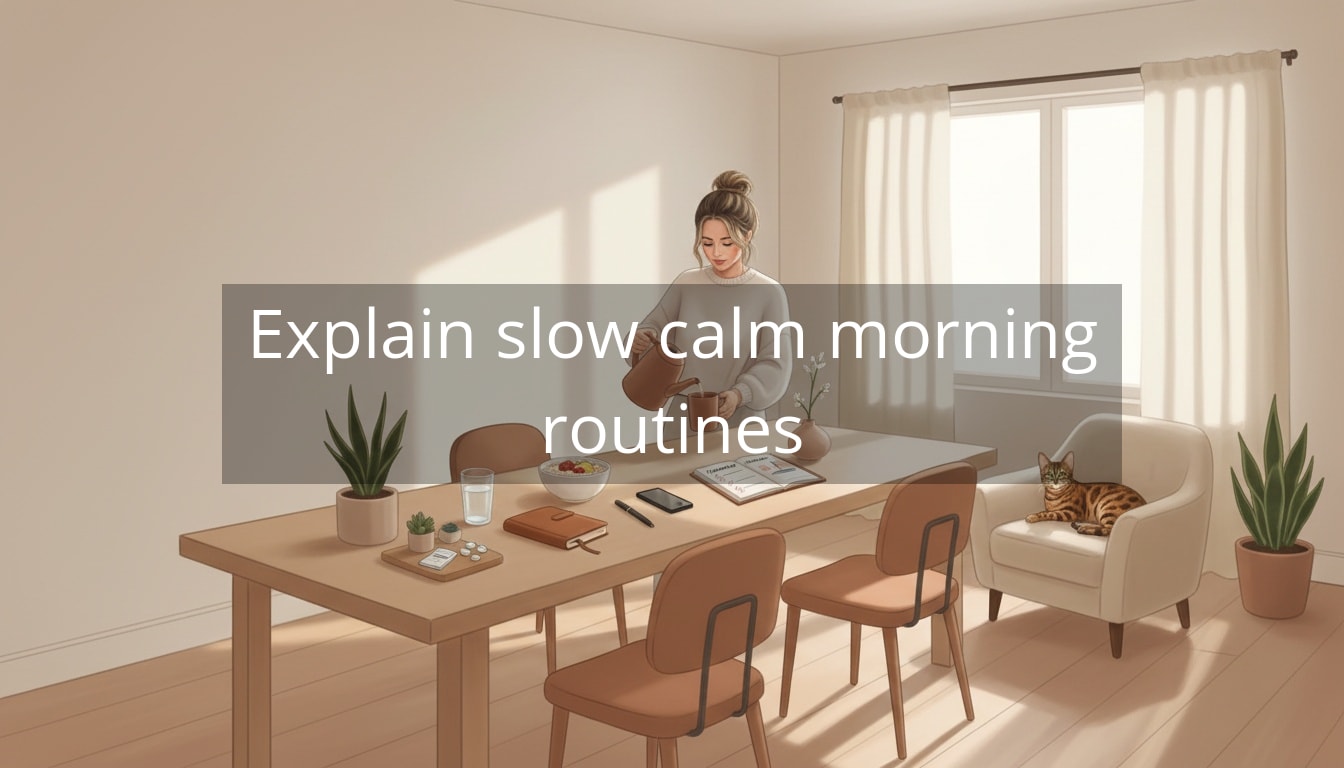
A calm morning routine can feel almost impossible when your life starts the second you open your eyes. If your calm morning routine currently looks like silencing an alarm, grabbing your phone, and sprinting into the day half-awake, you’re not lazy—you’re overloaded.
Most modern mornings are chaotic for two reasons: decision overload and digital urgency. Before you’ve even brushed your teeth, you’re already choosing what to wear, what to eat, which email to answer first, and whether that calendar notification is a real meeting or just your app being “helpful.” Add a quick scroll (that turns into ten minutes), and your nervous system is basically awake in fight-or-flight.

The real problem isn’t that you don’t have discipline. It’s that your morning is starting reactively—on everyone else’s timing, demands, and notifications—so your brain never gets a chance to settle into the day.
Here’s the mindset shift that changes everything: a calm morning isn’t built in the morning. It’s built with tiny “friction removers” the night before, so you wake up to fewer decisions and less rushing.
“Clarity comes when you stop rushing your own mind.”
Start with a 10-minute evening reset (think of it as a quiet favor to tomorrow-you):
- Choose your clothes and put them where you’ll actually wear them (including socks/underwear—future you deserves the full set).
- Pre-set breakfast or coffee: set out your mug, prep overnight oats, or even just put a protein bar where you can see it.
- Glance at your calendar and note anything that could surprise you (early call, commute time, workout class).
- Tidy one “landing spot”—a clear kitchen counter or desk makes the whole morning feel less noisy.
If you like digital support, keep it simple: a quick checklist in Apple Reminders, Todoist, or a recurring “Evening Reset” in your calendar can turn this into an automatic habit instead of another thing to remember.
Once mornings have less friction, it becomes much easier to add the calming pieces—like hydration, gentle movement, and a slower start—without forcing yourself to become a totally different person overnight.
The Calm Morning Routine: A Simple Flow You Can Actually Repeat
When you remove the “where are my keys / what am I wearing / why is there no clean mug” stress, you suddenly have space for the kind of morning that feels steady instead of sharp. The goal isn’t a picture-perfect routine. It’s a repeatable rhythm that helps your mind and body arrive in the day together.
Think of your morning like a dimmer switch, not a light switch. You’re not trying to snap into high performance—you’re easing yourself into clarity.
A 20-Minute Baseline (That Still Works on Real-Life Mornings)
If you want a structure that’s both calming and doable, try this simple order. It’s designed to reduce decision fatigue and digital urgency—without requiring you to wake up an hour earlier.
- Minute 0–2: Don’t grab your phone. Sit up, put your feet on the floor, and take a few slow breaths. Even 30 seconds tells your nervous system, “We’re not running yet.”
- Minute 2–5: Hydrate + light. Drink water and open a curtain or step into daylight. It’s a gentle “wake up” cue that doesn’t involve notifications.
- Minute 5–10: Gentle movement. A few stretches, a quick walk around the block, or a slow yoga flow. Not a workout—just circulation and calm.
- Minute 10–15: One grounding practice. Journal one page, do a 3-minute breath exercise, or sip your coffee in silence. Pick one.
- Minute 15–20: Choose your “one thing.” Look at your day and decide what would make you feel most relieved by lunchtime.
If you have kids, a partner, or roommates, you can still do this—just shrink the time. Even a 6-minute version counts. The win is that you start intentionally, not reactively.
Make It Easier: A Few “If-Then” Plans for Stressy Mornings
Most routines fail because we plan for perfect conditions. Instead, plan for the mornings when everything goes a little sideways.
- If you oversleep… then do water + two deep breaths before anything else. That’s your “minimum viable calm.”
- If you wake up anxious… then put one hand on your chest, one on your belly, and breathe out longer than you breathe in (exhale-focused breathing helps your body downshift).
- If your morning gets taken over by other people… then claim a “bookend” moment—2 minutes before leaving the bedroom, or 2 minutes in the car before you walk into work.
- If you’re tempted to scroll… then keep your phone out of the bedroom or put it on charge across the room. It’s not willpower; it’s environment design.
These little plans matter because you’re not trying to be a different person in the morning. You’re setting up a routine that can survive your actual life.
Reduce Decision Fatigue With “Morning Defaults”
A calm morning routine becomes dramatically easier when you stop asking yourself brand-new questions every day. Defaults are your secret weapon: small pre-decisions that remove mental load.
Try These 3 Defaults (Start With Just One)
- Default breakfast: Pick two options you genuinely like (ex: Greek yogurt + berries, or eggs + toast) and rotate. Keep the ingredients visible and easy.
- Default outfit formula: Not one outfit—an outfit template. Example: straight-leg jeans + fitted top + cardigan; or matching set + sneakers. When you’re tired, templates save you.
- Default first-task rule: Decide what you do before checking messages. Example: water first, then a 3-minute tidy, then your day’s one priority.
This is how calm becomes automatic: fewer choices, fewer micro-stressors, fewer “what now?” moments.
A Quick Example (Because This Is Where It Clicks)
Imagine you wake up and your calendar has an early meeting. Old you would rush, scroll while getting ready, and show up feeling behind. New you has clothes already set, coffee already staged, and one clear rule: phone stays down until after water and a two-minute stretch.
That meeting may still be early. But you arrive feeling like you’re steering the day—not chasing it.
Use Tech to Protect Your Calm (Not Steal It)
You don’t have to “quit your phone” to have a calmer morning. You just need your devices to stop making the first decisions of the day for you.

Small Digital Boundaries That Make a Big Difference
- Create a morning Focus mode (iPhone or Android) that hides email, Slack/Teams, and social apps for the first 30–60 minutes.
- Move your most tempting apps off your home screen. Add one extra step between you and the scroll.
- Set one “check-in window” for messages (example: after you’re dressed and fed). You’re not ignoring people—you’re pacing access to your attention.
- Use a single morning checklist in Apple Reminders, Todoist, or a notes app: Water, stretch, one priority, then phone. Keep it short enough that you’ll actually follow it.
The point is not restriction. The point is relief.
Small, steady choices create a life that feels steady, too.
When Your Calm Morning Routine Gets Derailed (Because It Will)
Some mornings explode: the dog gets sick, your child can’t find their shoes, your boss pings you early, your brain wakes up already spinning. A calm routine isn’t one you execute perfectly—it’s one you can return to without guilt.
Try this “reset in the middle” move: pick any moment (bathroom sink, elevator, parking lot) and do three slow breaths while unclenching your jaw and dropping your shoulders. It’s a tiny interruption to the stress cycle, and it counts.
Also: if your mornings are consistently impossible, that’s a signal—not a failure. It might mean your evenings need a little more support, your schedule needs a wider buffer, or your mornings need to be simpler for this season of life.
Extra Resources (If You Want More Structure)
If you like having guidance you can follow without overthinking, additional resources are available to help you build a calmer start:
- Simple breathing practices (2–5 minutes) you can do before checking your phone
- Guided morning stretches for tight shoulders and a busy mind
- Printable or digital morning checklists to reduce decision fatigue
- Journaling prompts for intention-setting without spiraling into overanalysis
A Calm Start Is a Smarter System, Not a Personality Trait
You don’t need to become a “morning person” to have mornings that feel good. You just need a few friction removers, a couple of reliable defaults, and one or two calming anchors you can repeat even when life is loud.
Your calm morning routine isn’t about doing more before 9 a.m. It’s about protecting your mental space so the day doesn’t take it from you. With the right small systems, you’ll feel less rushed, less reactive, and more like you’re meeting your life with a steady hand.
Start with one change tonight. Make tomorrow a little easier. Then repeat. That’s how calm living is built—gently, smartly, and in a way that lightens your mental load over time.
Telegram Galelar
Instagram @galelar_lis
YouTube @galelar
TikTok @galelar_lis