If you’ve been saving calmer home ideas to a Pinterest board you never open, you’re in good company. Most of us don’t need more inspiration—we need our home to stop adding to the mental noise we already carry.
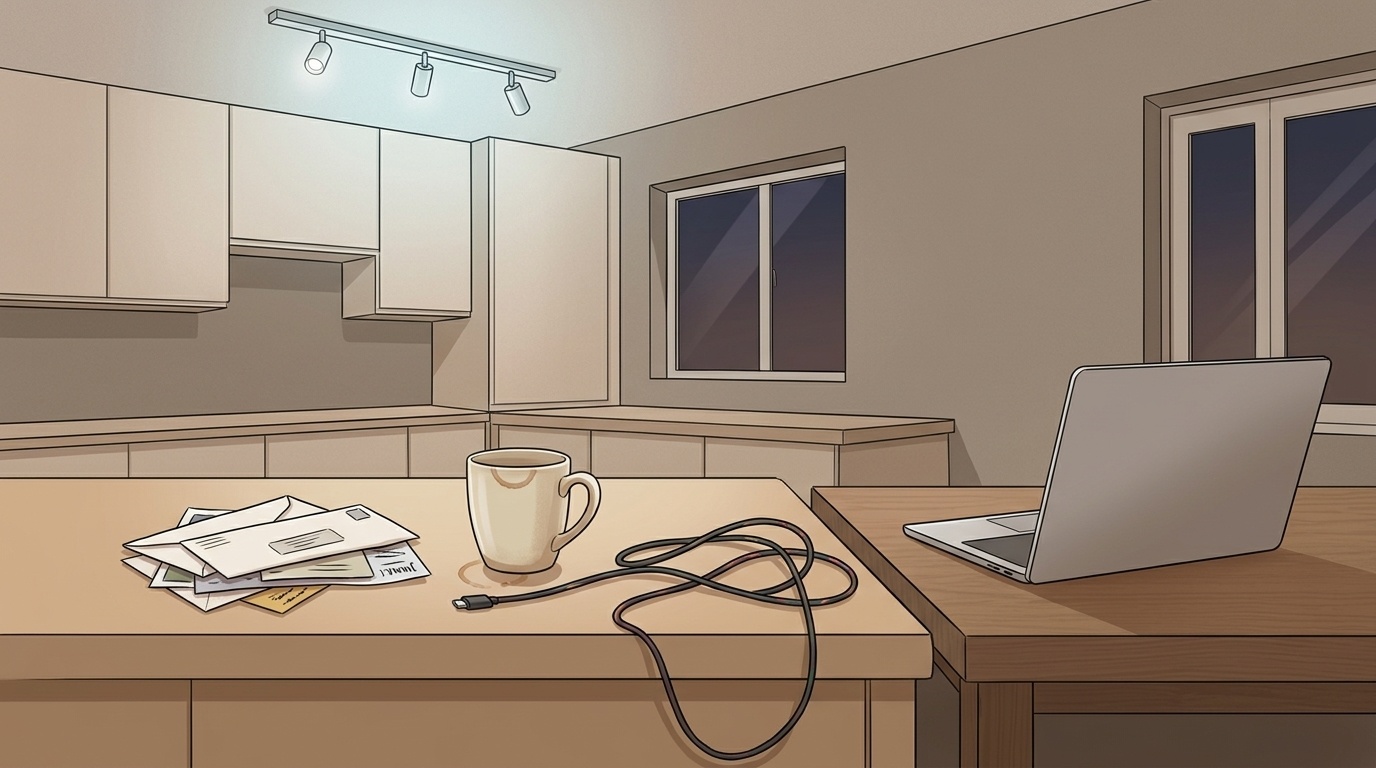
Picture the end of a long day: you close your laptop after back-to-back calls, finally wander into the kitchen for water, and your eyes land on the mail pile, yesterday’s mug, a charger cord draped across the counter like a tiny tripwire. Nothing is technically wrong… and yet your body tightens anyway. That’s the sneaky thing about home stress: it’s rarely one dramatic mess. It’s a hundred small “unfinished” signals your brain keeps trying to resolve.
Why your home can feel exhausting (even when it’s “fine”)
Modern life is already cognitive-heavy. You’re tracking deadlines, friendships, finances, health appointments, maybe a side project or two—and your phone is basically a handheld task manager that never sleeps. When you walk into a space with cluttered surfaces, harsh lighting, or items that don’t have a home, your brain keeps doing the same work it’s been doing all day: scanning, deciding, remembering, managing.
This is why you can be sitting on your own couch and still feel like you haven’t exhaled yet.
A calm home isn’t about aesthetic perfection or becoming the kind of person who alphabetizes spices for fun. It’s about reducing friction—those tiny points of resistance that quietly drain you: searching for keys, walking past a counter you “should” clear, feeling your nervous system stay on high alert because the lighting and sensory environment still says daytime hustle.
And there’s a second layer: so many of us live in “multi-use” spaces now. Your dining table is also your desk. Your bedroom might also be your laundry folding station. Your living room may be where you answer emails, watch a show, and attempt to relax… all in the same two-hour window. Without intentional cues, your brain doesn’t know when it’s allowed to switch off.
The core idea: calm is a set of cues, not a personality trait
This is the mindset shift that makes calmer home ideas actually work: your space is constantly communicating with your nervous system. The goal is to make the message simpler and kinder.
Instead of “I need to get my life together,” think: “What small environmental cues would make my body feel safe enough to rest?”
That’s why tiny changes can feel surprisingly big. Not because they magically fix your schedule, but because they reduce the number of open loops your brain keeps trying to close.
Calm isn’t something you find—it’s something you set up.
When you start viewing calm as something you design, you stop waiting for the perfect weekend to reorganize everything, and you start choosing a few high-impact levers.
The 8 “instant calm” levers (and why they work)
There are certain home tweaks that reliably create a calmer baseline because they target the biggest stress multipliers: visual noise, decision fatigue, and sensory overstimulation.
Here are the eight levers we’re working with:
- Soft lighting in the evening
- Clear kitchen counters
- Fresh air (open windows)
- A cozy reading corner
- Fewer things on surfaces (in general)
- A place for everyday items (keys/phone/wallet)
- Plants or natural elements
- A phone-free corner
You don’t need to do all eight. In fact, trying to do all eight at once is how these things become another “project” that follows you around. We’re aiming for small, repeatable resets that make your space feel supportive on an average Tuesday—not just after a deep-clean frenzy.
Calmer home ideas: start by reducing the “visual inbox”
Let’s talk about surfaces, because this is where most calm disappears first.
Kitchen counters, entry tables, nightstands—these spots act like a visual inbox. Everything lands there: receipts, packages, hair ties, notes you don’t want to forget, the Amazon return you’ve been meaning to do, a half-used candle, a charger, a random sock (honestly, how).
Even if you don’t consciously think about it, your brain reads those piles as: pending tasks. That’s why you can clean the floor and still feel stressed—because the loudest stress cues are eye-level.
A calmer counter isn’t about minimalism as a lifestyle. It’s about fewer decisions per square inch.
A simple system: the 2-minute counter reset
If your evenings tend to blur from “work mode” into “scroll mode,” a tiny ritual helps your brain transition.
Try this once a day (preferably when you stop working or right after dinner):
- Set a timer for 2 minutes
- Put obvious trash/recycling away
- Return anything that has an actual home
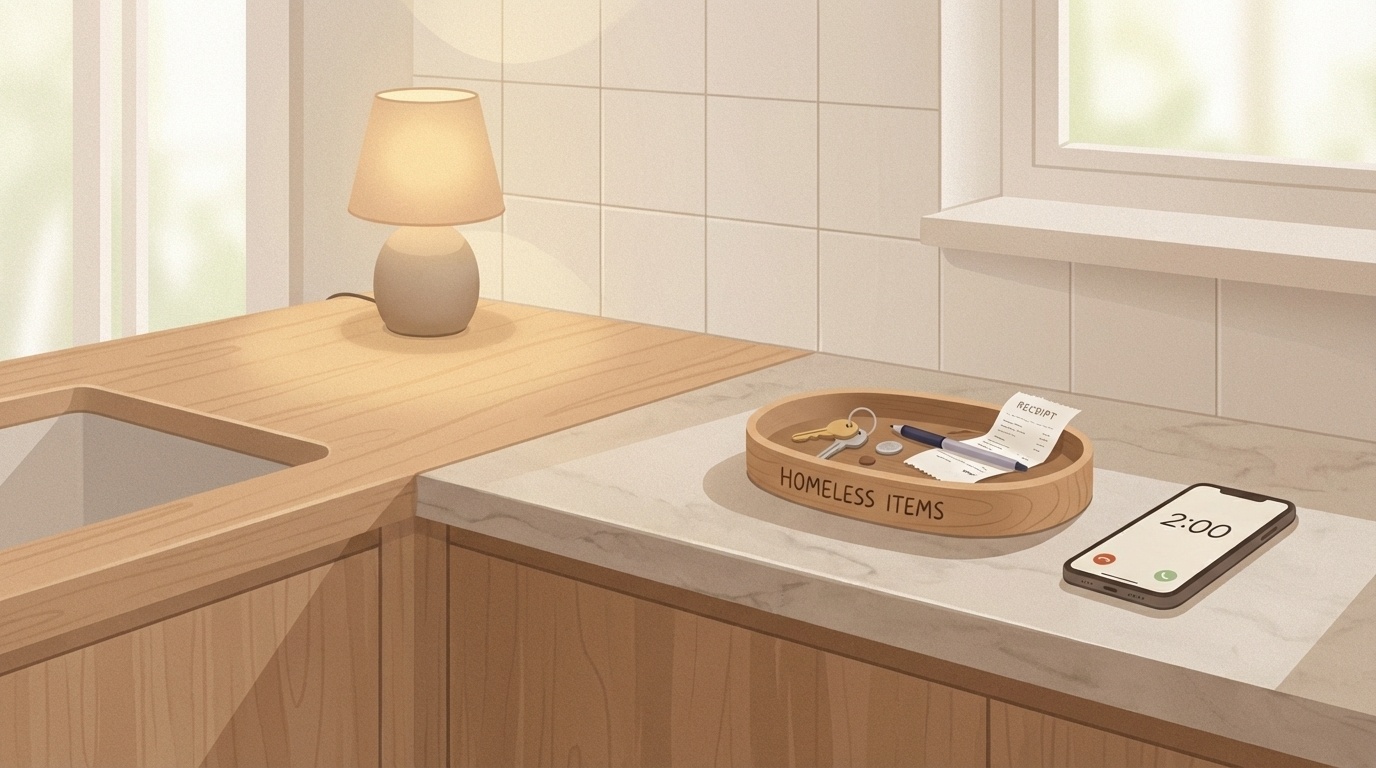
- Collect the “homeless items” into one small bin or tray (not a new pile—one container)
That’s it. No organizing. No cleaning spree. Just reducing the visual inbox.
If you want a digital tool to make it stick without thinking about it, Tody is great for this style of maintenance. You can set a small recurring task like “Counters reset (2 min)” and let the app hold the reminder instead of your brain.
A note about “fewer things on surfaces”
This one gets mistaken for “get rid of everything,” which is not the vibe. It’s more like curating your line of sight.
A helpful rule: one anchor item per surface.
For example: a lamp and one small tray on your entry table—not lamp, tray, mail stack, three candles, a basket, two water bottles, and a stray scarf.
The goal is breathing room for your eyes. When your eyes relax, your body tends to follow.
The nervous system shift: lighting that tells you the day is over
If your home feels wired at night, pay attention to the lighting. Overhead lights (especially cool/bright ones) communicate “keep going.” Warm, lower lighting communicates “we’re landing the plane.”
This is one of the simplest calmer home ideas because it works even if your house is imperfect. You can have laundry on the chair and still feel calmer if the sensory environment is softer.
An easy evening lighting setup
- Use warm bulbs (look for 2700K on the box)
- Favor lamps over overheads after dinner
- If you can, put lamps on smart plugs or smart bulbs
If you like systems that run in the background, Philips Hue (smart bulbs) or even a basic smart plug can automate the shift: set “Evening” to dim at 7:30pm and “Night” to dim further at 10pm. It’s a small cue, but it tells your body, you’re allowed to downshift now.
And if you’re thinking, “This feels extra,” remember: we already automate so many things for work. Automating rest cues is just as practical.
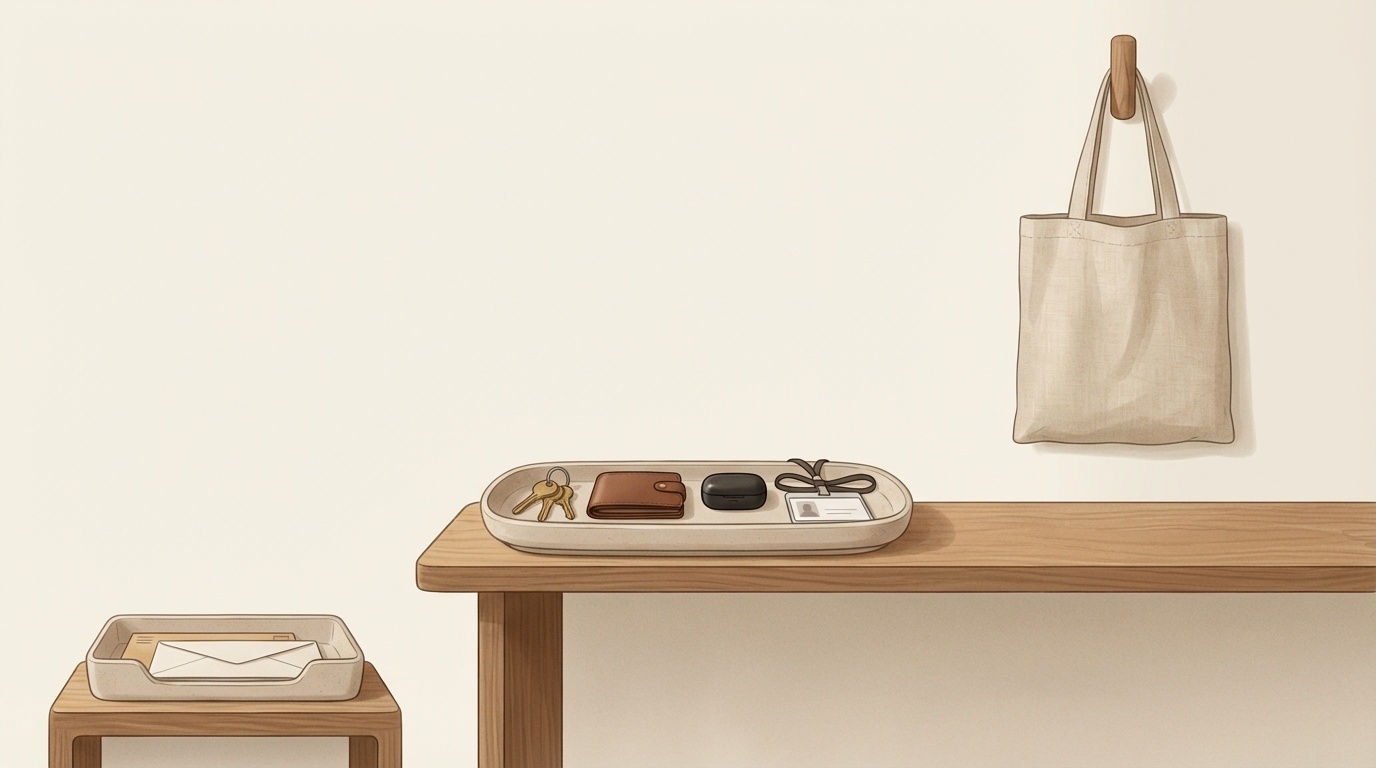
Stop losing your essentials: the “everyday items dock”
One of the fastest ways to spike stress at home is the mini scavenger hunt. Where are my keys? Did I leave my card in a different bag? Why is my charger never where I think it is?
These are small problems with outsize emotional impact because they happen when you’re already trying to leave, already running late, already mentally juggling. A calm home isn’t only about how it looks—it’s also about how smoothly your life moves through it.
The system: one landing spot by the door
Pick one spot (not five):
- a shallow tray, bowl, or small box
- ideally near where you naturally drop things
- keys + wallet + earbuds + work badge live there
This works best when it’s frictionless and slightly satisfying—like you’re “closing the loop” the moment you walk in.
If you live with someone else, you can still do your own version. Calm doesn’t require a household-wide overhaul; it requires one dependable spot you can trust.
A supportive digital add-on here is a simple “Reset” checklist you can tap once a day. AnyList works beautifully for this—create a list called “Close the House” or “Evening Reset” with 5 tiny items (dock essentials, counters, set lights, quick tidy). The checklist becomes your external brain.
Fresh air: the quickest reset that costs nothing
When you’re mentally overloaded, your body often feels heavier without you realizing why. Fresh air changes the whole mood of a room fast—especially if you work from home or spend long stretches inside.
A realistic ritual:
- open a window for 5–10 minutes in the morning
- repeat for 5 minutes in the evening while you’re doing a micro reset
If you want to make this automatic, use the tool you already check: the weather app. A quick glance for “feels like” and wind can nudge you to do it on days it’ll actually feel good.
At this point, you’ve got three high-impact levers that don’t require a full declutter or an identity change: clearer surfaces, softer light, and a consistent dock for essentials. Together, they reduce the feeling that your home is asking you to manage it.
Next, we can build on that calm baseline by carving out small “rest zones” that make it easier to actually unplug (without relying on willpower) and by adding a few nature cues that help your space feel like a soft place to land…
Rest zones: small cues that make switching off feel automatic
…and this is where things get surprisingly powerful. Once you’ve lowered the baseline noise (clearer surfaces, softer light, essentials dock, fresh air), you can create tiny “rest zones” that do the boundary-setting for you.
A rest zone isn’t a whole-room makeover. It’s a spot that answers one question: “What do I want my body to do here?” Read, stretch, talk, decompress, sleep—pick one. The clearer the purpose, the less your brain has to negotiate.
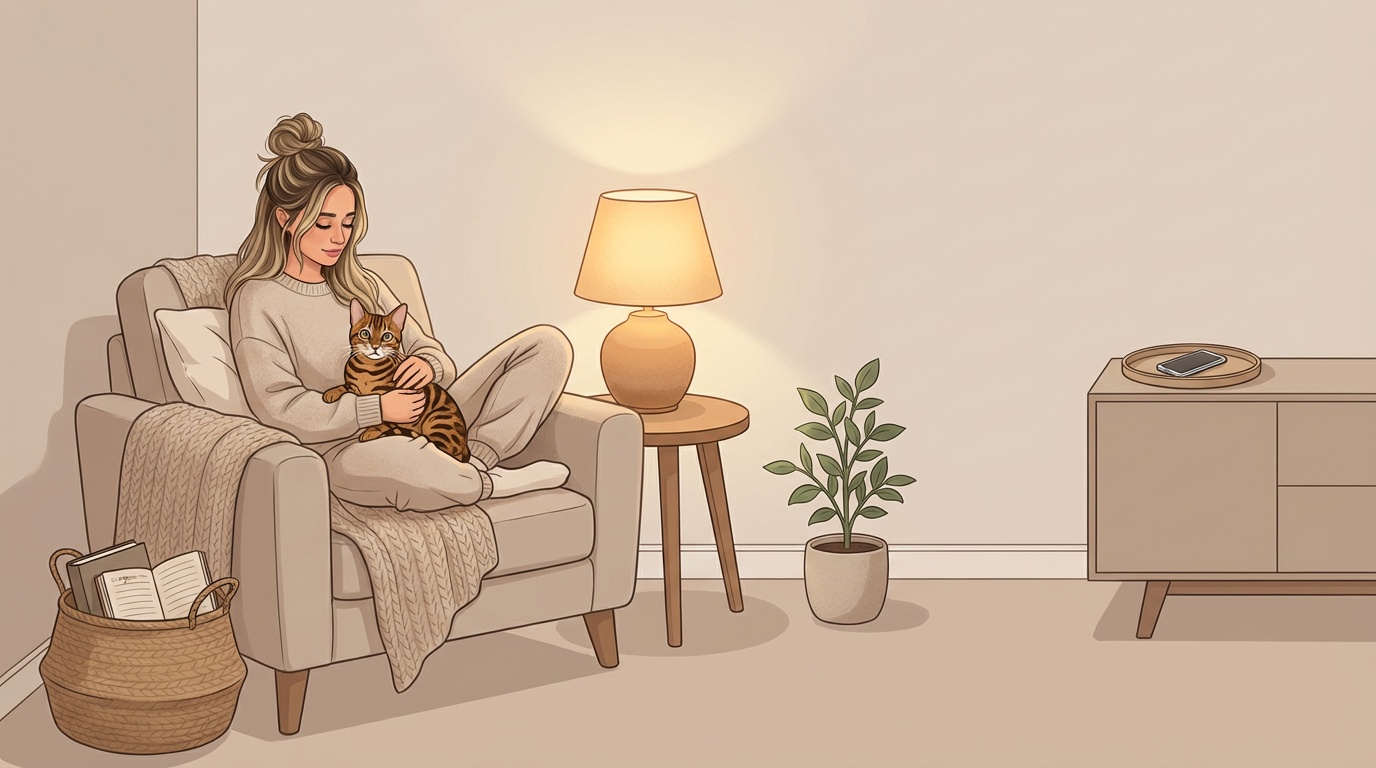
The 10-minute cozy corner (even in a small apartment)
Give yourself a place that isn’t for work, chores, or “catching up.” The point is to make rest feel available, not like something you earn after you’ve done enough.
- Choose your cue: one chair, one pillow/throw, one lamp. That’s enough.
- Add one “ready-to-rest” item: a book, a journal, or a basket with a puzzle/knitting/whatever actually relaxes you.
- Remove one friction point: if the corner becomes a dumping spot, add a small basket nearby so clutter has a place to go fast.
If you’re thinking, “I don’t have space,” try this: claim a corner of something you already have. One side of the couch with a lamp and a basket counts. The magic isn’t square footage—it’s the signal.
The phone-free corner that doesn’t rely on willpower
The goal here isn’t to be “better” about screen time. It’s to stop accidentally turning every micro-break into more input. A phone-free corner works best when it’s easy and slightly inconvenient to break the rule.
- Pick a spot without chargers. (This matters more than motivation.)
- Add a “replacement” object: paperback book, magazine, crossword, knitting—something your hands can do.
- Create a default parking spot elsewhere: your everyday items dock can hold your phone too, especially after dinner.
One practical script that helps: “My phone gets to rest too.” It sounds silly until you notice how often your nervous system matches your device’s pace.
Plants and natural elements: calm you can feel, not just see
Nature cues are one of the most underrated calmer home ideas because they change the emotional tone of a room without adding chores (if you choose wisely). You’re not trying to become a Plant Person overnight—you’re borrowing the “exhale” feeling of the outdoors.
Low-maintenance nature cues (choose one)
- One hardy plant: pothos, snake plant, ZZ plant (they’re forgiving and don’t demand constant attention).
- A bowl of real citrus: lemons or oranges on the counter reads fresh and intentional.
- Natural texture: a woven tray, linen napkins, a wood cutting board you actually keep out.
- A “scent that means calm”: eucalyptus in the shower, a subtle essential-oil diffuser, or a candle you only light when you’re off duty.
A good guideline: if it adds maintenance you’ll resent, it’s not a calming element—it’s a future task. Pick the version you can sustain on your least energetic week.
Make calm repeatable: the 3 daily resets that keep your home from “slipping”
Most homes don’t get chaotic because we’re doing nothing. They get chaotic because there’s no small rhythm that closes the loops. The goal is not to clean more—it’s to reset more strategically.
Reset #1: The “arrive home” close-the-loop (60 seconds)
This is the moment you prevent the evening spiral. Before you change clothes or open the fridge:
- Put keys/wallet/earbuds in the dock
- Hang your bag/jacket on one hook
- Put mail in one tray (not the counter)
This tiny sequence pays you back tomorrow morning.
Reset #2: The after-dinner “surface sweep” (3 minutes)
Not a deep clean. Just restoring your line of sight.
- Clear the sink zone (even if it’s imperfect)
- Wipe one counter section
- Put “homeless items” into the bin/tray you already chose
If you live with other people, this is still worth doing for your nervous system. You’re not fixing everything—you’re creating one calm visual lane.
Reset #3: The “tomorrow me” setup (2 minutes)
This is the antidote to morning decision fatigue.
- Set out your water bottle/coffee setup
- Plug in your phone where it belongs (not next to your bed, if you can help it)
- Choose one “first task” item (gym clothes, lunch container, work notebook)
Think of it as leaving yourself a breadcrumb trail.
A small mindset shift that keeps these systems kind (not rigid)
If you’ve ever tried a routine and then quit because you missed a day, this is for you: calm systems work when they’re designed for real life—busy weeks, low-energy days, surprise plans, hormonal days, all of it.
Try treating your home like it has two settings:
- Maintenance mode: 2–5 minute resets, keep the visual inbox small.
- Recovery mode: when life is a lot—do only the essentials dock + one surface sweep. That’s enough.
You don’t need consistency like a robot. You need a “minimum viable reset” you can do even when you’re tired.
“You don’t rise to the level of your goals—you fall to the level of your systems.”
Conclusion: calm living is built from small decisions you don’t have to keep making
A calmer home isn’t about a perfect aesthetic or a total life overhaul. It’s a set of supportive cues: fewer open loops, softer sensory input, and small zones that make rest feel like the default—not a reward.
If you take one thing from these calmer home ideas, let it be this: you’re allowed to design your space for the version of you who’s busy, capable, and sometimes maxed out. Start with one lever (lighting, surfaces, the dock), add one rest zone, and let the resets be small enough to repeat. Calm isn’t a personality trait—it’s a system you can actually live with.