
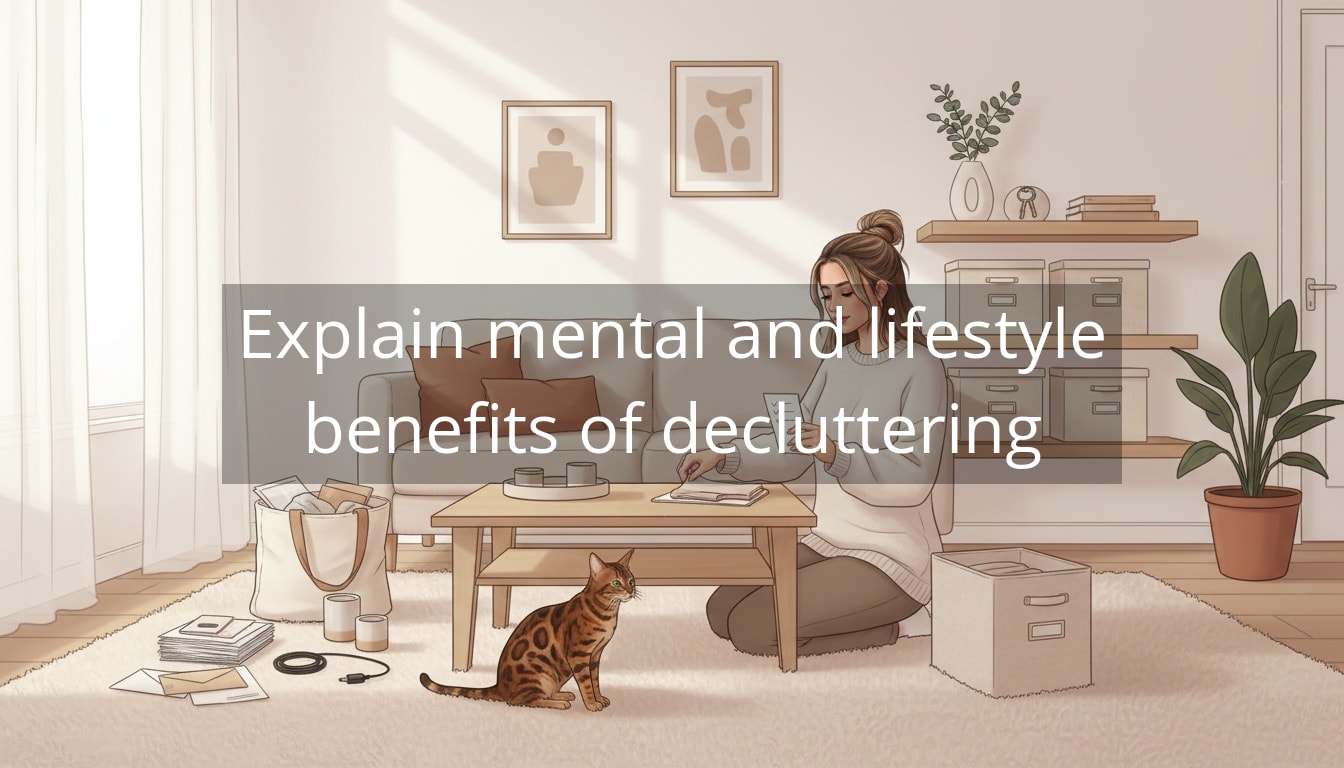
Your home doesn’t have to look like a magazine spread to feel better—but the decluttering benefits become obvious the moment your brain stops scanning piles like unpaid tabs. If you’ve ever tried to relax while side-eyeing a counter full of mail, chargers, and half-finished “I’ll deal with that later” projects, you already know: visual noise turns into mental noise.
Clutter isn’t just a housekeeping issue. It’s a modern-life issue. We’re living in an overbuy-everything culture, managing busy workdays, side projects, and a constant stream of decisions. So stuff quietly accumulates: the returns you meant to mail, the skincare you didn’t love, the cords to devices you don’t own anymore. And the more it builds, the more your brain has to process—tiny interruptions that make it harder to focus, harder to start, and easier to feel like you’re behind before the day even begins.
Decluttering Benefits: Why Your Space Affects Your Mind
One of the most underrated decluttering benefits is how quickly it lowers that background stress. Researchers have linked cluttered environments with higher stress levels, and it makes sense: when your space looks unfinished, your brain treats it like unfinished business. A calmer room signals safety and closure—especially in high-traffic areas like your kitchen, bedroom, or workspace.
“Clarity in your space creates kindness in your mind.”
The mindset shift that tends to stick isn’t “get rid of everything.” It’s this: your home is a tool. Each area should support a specific part of your life—rest, cooking, getting ready, creating—not constantly demand your attention.
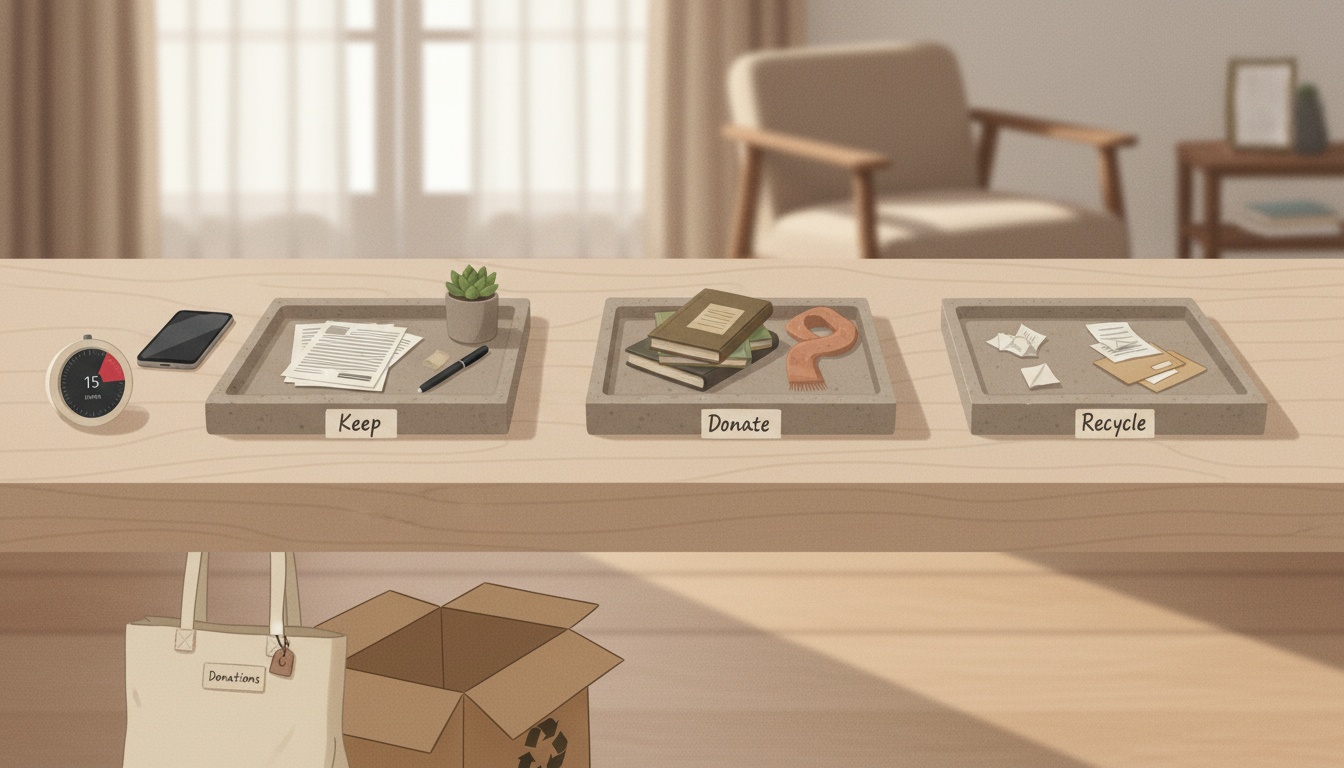
To start without overwhelm, try a 15-minute boundary once a day. Set a timer (your phone is perfect), pick one tiny zone (one drawer, one shelf, one surface), and do a quick three-pile sort: Keep, Donate, Trash/Recycle. If you want an extra layer of ease, use a simple notes app list (or Sortly, if you like inventory-style organizing) to track what you’re keeping—mostly so you stop buying duplicates when you’re tired and rushed.
Once one small area feels “done,” you’ll notice your brain gets a little quieter—and that’s where the momentum tends to come from.
Decluttering Benefits You Can Feel in Your Week (Not Just “Someday”)
Momentum gets easier when you know what you’re aiming for. The goal isn’t a perfectly styled home—it’s a home that’s easier to live in. The most practical decluttering benefits show up in the tiny moments: you can find your keys without a scavenger hunt, start dinner without moving piles, and sit down at night without your brain whispering, “You forgot about that.”
Think of decluttering as reducing the number of “open tabs” your space creates. Every stray item is a tiny question: Where does this go? Do I need it? Why is it here? When you answer those questions once—on purpose—you stop paying for them daily with your attention.
A Simple System: Declutter by Function, Not by Room
If you’ve ever tried to “do the bedroom” and ended up moving random items from corner to corner, you’re not alone. A calmer approach is to declutter by function, because function is how you actually live.
- Getting ready: skincare, makeup, hair tools, jewelry
- Work mode: laptop accessories, chargers, notebooks, pens
- Cooking: utensils, pantry staples, food containers
- Leaving the house: keys, bags, sunglasses, dog stuff
Pick one function that annoys you the most right now. For example: if mornings feel chaotic, start with “getting ready.” You’ll feel the payoff immediately—less rummaging, fewer decisions, fewer late starts.
The “One-Touch” Rule for Daily Clutter Hotspots
Most clutter isn’t sentimental; it’s transitional. It lands on counters, chairs, and entryway surfaces because your home is missing one easy step: a clear landing spot.
Try the “one-touch” rule for the items that repeatedly migrate:
- Mail: open it over the recycling bin, toss junk immediately, and keep a single folder labeled “To Pay/To File.”
- Chargers: assign one charging station (a basket or drawer works) instead of letting cords live wherever they fall.
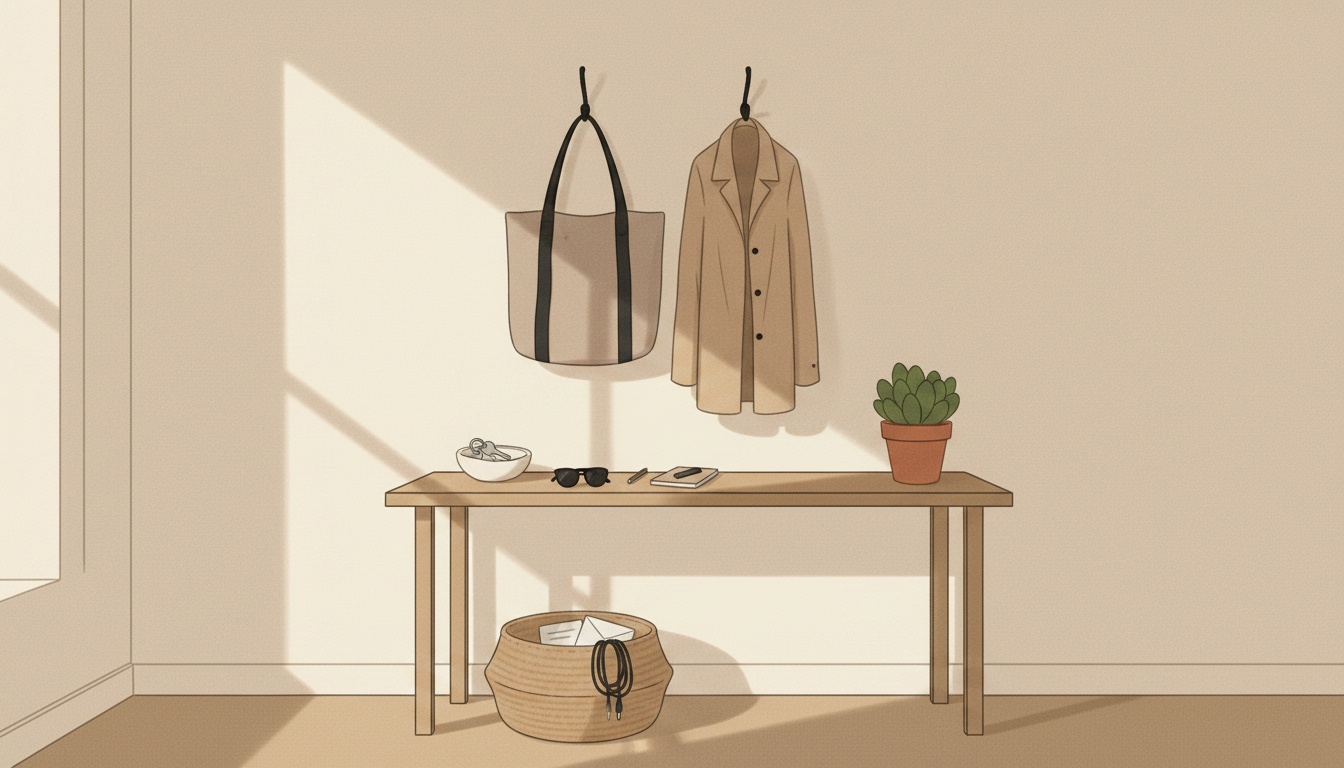
- Bags and keys: add two hooks and a small dish by the door—your future self will feel oddly cared for.
- Clothes: create a “wear again” zone (one hook or one chair—only one) so “not dirty, not clean” doesn’t become a floor ecosystem.
The point isn’t to become stricter with yourself. It’s to design your space so you don’t need willpower to keep it calm.
A Decision Shortcut for “I Might Need This” Items
The hardest items aren’t trash—they’re the maybe-items. The backup cables, the okay-but-not-great sweaters, the gifts you feel weird letting go of. Decision fatigue is real, so give yourself an easier filter.
Use this quick set of questions:
- Would I buy this again today? If not, it’s likely not earning its space.
- Do I use it in my current life—or a fantasy life? (Be kind here. We all have the “future hobby” drawer.)
- Is it easily replaceable in under 20 minutes for under $20? If yes, you can usually let it go.
If you still can’t decide, create a small “maybe box.” Date it. If you don’t open it in 30 days, you’ve just gathered evidence you’re ready to release those items—without forcing a dramatic decision in a tired moment.
Tools That Make Decluttering Benefits Last
Decluttering is only half the win. The lasting relief comes from simple “maintenance systems” that prevent the slow creep back into overwhelm.
Containers Aren’t the Answer—Boundaries Are
It’s tempting to shop for bins before you’ve edited your stuff (we’ve all been there). But containers work best as limits, not storage solutions.
- One basket for scarves means you keep what fits and donate the rest.
- One drawer for tech means mystery cords don’t multiply in every room.
- One shelf for sentimental items means you honor what matters without turning your closet into a time capsule.
If it doesn’t fit in the boundary, the system is telling you something—not shaming you, just informing you.
Try a “Sunday 10-Minute Reset” (Even If You Don’t Love Sundays)
Pick a day that already has a “new week” feeling for you—Sunday, Monday night, whenever. Set a 10-minute timer and reset only what affects your next few days:
- Clear a main surface (kitchen counter or coffee table)
- Empty bags (receipts, random lip balms, paperwork)
- Do a quick fridge scan (toss anything questionable)
- Put laundry in one place (even if you don’t fold it yet)
This is less about cleaning and more about adjusting your environment so Monday-you isn’t wading through Friday-you’s leftovers.
Small changes become powerful when you make them easy to repeat.
Making It Stick When Life Gets Busy Again
Because it will. The goal isn’t to “finish decluttering forever.” It’s to build a home that rebounds quickly—like having a good skincare routine instead of trying to have perfect skin every day.
Use “One In, One Out” for the Categories That Explode
This works best for the areas that quietly overtake your space:
- mugs and water bottles
- beauty samples and skincare “backups”
- throw pillows and blankets
- kids’ art and school papers
- work notebooks and random stationery
When something new comes in, choose one item to donate or recycle. Not to punish yourself—just to keep your storage aligned with your real life.
Create a “Return-to-Zero” Home Base
Pick one small area you reset daily—your kitchen sink, your nightstand, or your desk. This becomes your visual “exhale.” On days when everything else is messy, that one clear spot signals stability and closure.
If you’re not sure where to start, choose the area you see first in the morning or last at night. Those visual cues matter more than you think.
What to Do With Sentimental Clutter (Without Spiraling)
Sentimental items deserve a gentler approach. Instead of sorting everything at once, try a “memory capsule” method:
- Choose one box (a real boundary)
- Keep the items that truly hold meaning, not obligation
- Take photos of bulky items you don’t want to store
- Write a quick note about why something matters—sometimes the story is what you’re trying to keep
You’re allowed to keep memories without keeping every object that’s ever been near them.
Extra Resources (When You Want a Little More Structure)
If you’d like more guidance, it helps to lean on simple prompts and walkthroughs—especially when your brain is tired.
- Decluttering checklists by room or category (printable or digital)
- Short guided declutter videos for drawers, closets, and kitchen resets
- Donation center directories for your local area
- “Capsule wardrobe” and laundry-flow resources to reduce clothing overwhelm
A Calm Home Is a Support System
The real win isn’t having less stuff—it’s having fewer daily obstacles. When your space stops demanding constant micro-decisions, your mind gets to rest. You become more patient in the morning rush, more focused during work blocks, and more present after hours.
Start small, keep it kind, and build systems that match your real life. The decluttering benefits aren’t just about tidy surfaces—they’re about reducing mental load and creating a home that quietly holds you up. You’re fully capable of making that shift, one small zone at a time.
Telegram Galelar
Instagram @galelar_lis
YouTube @galelar
TikTok @galelar_lis