
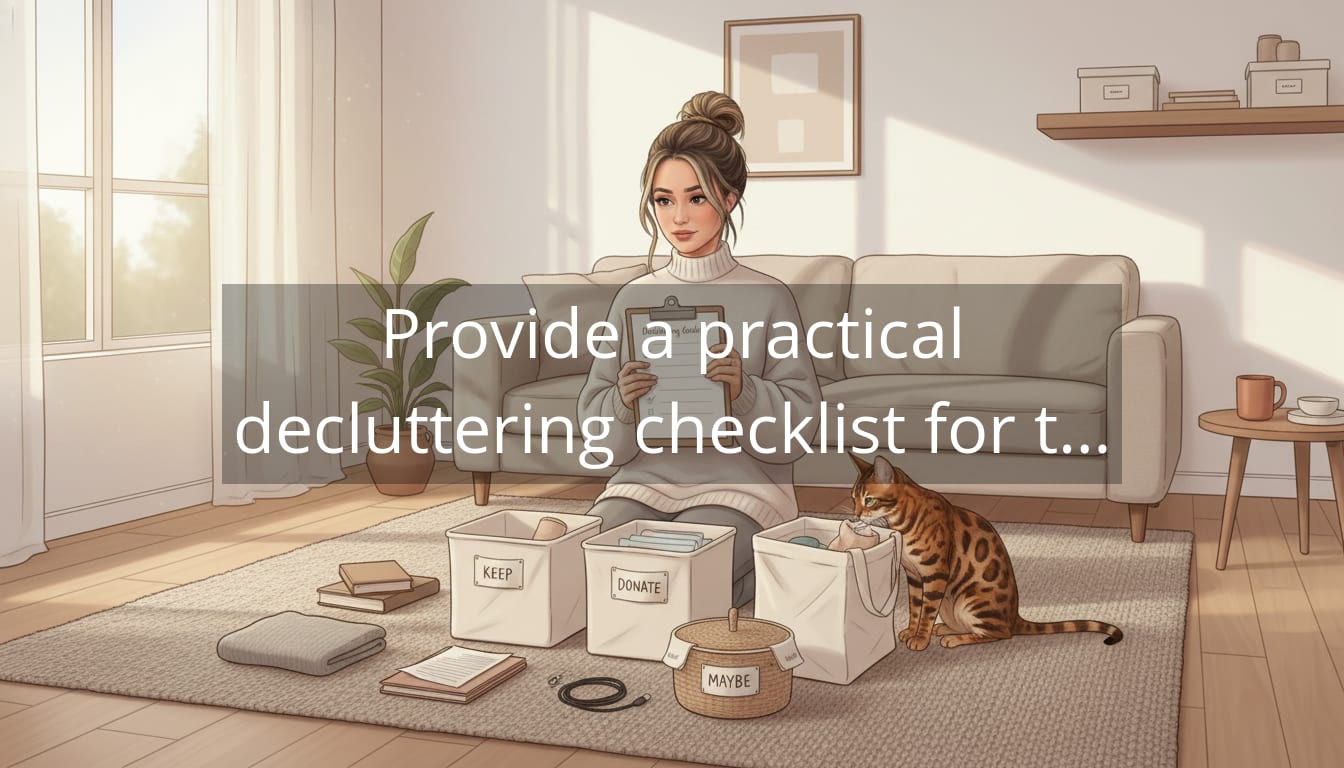
You know that moment when you’re already mentally maxed out, you walk into your home, and the mess feels like it’s talking to you? A decluttering checklist can be the gentle, practical reset button—especially when your calendar is full and your brain is running 37 tabs at once.
For a lot of modern women, clutter isn’t a “you’re messy” problem. It’s a life-speed problem. Stuff accumulates quietly: the skincare that didn’t work but might someday, the drawer of mystery cords, the mail you meant to sort, the “just in case” kitchen gadgets, the clothes you’ll fit into again when things calm down. Add long workdays, side projects, and the general fatigue of decision-making, and every flat surface becomes a default landing pad. Counters turn into inboxes. Chairs turn into wardrobes. And the longer it sits, the more emotionally heavy it feels to deal with.
“Clarity doesn’t come from doing more—it comes from removing what doesn’t belong.”
Here’s the mindset shift that makes decluttering doable: you’re not trying to organize your way out of overwhelm. You’re reducing inputs. A decluttering checklist works because it turns one huge, vague task (“fix my house”) into small, specific decisions you can finish in a single pocket of time.
Your Decluttering Checklist Mindset: Small Zones, Simple Rules
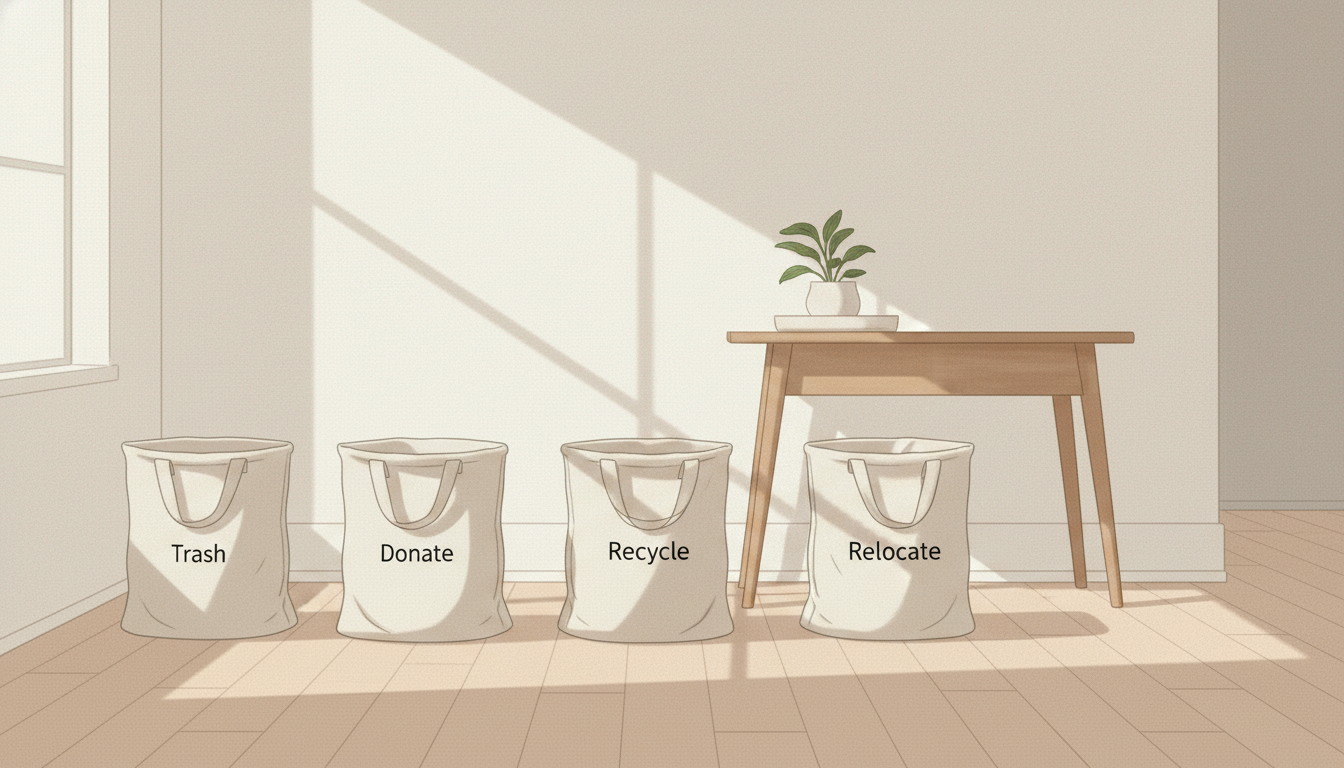
Before you start, grab four containers (bags or boxes are fine) and label them: Trash, Donate, Recycle, Relocate. That’s your whole system. Now choose one tiny zone—one drawer, one shelf, one bathroom counter.
To keep momentum (and avoid getting stuck), use a fast decision rule:
- 20/20 rule: if you could replace it for under $20 in under 20 minutes, you can probably let it go.
- Container concept: empty the space, put back only what you actually use and like, and stop when it’s full.
If you’re short on time, set a 10-minute timer in an app like Focus Booster or the built-in Clock app. You’re not committing to a whole-home overhaul—you’re just proving to yourself that progress can be small and real.
A surprisingly good first win: the bathroom cabinet. Expired products, dried-up makeup, hotel minis, half-used bottles you’re avoiding—easy decisions, quick relief. And once you feel that “ahh” in one spot, it gets much easier to keep going.
Your Decluttering Checklist: A Simple Room-by-Room Flow (When You’re Busy)
Once you’ve got that first “win” (hello, bathroom cabinet relief), the next step is keeping it simple enough that you’ll actually come back to it. The trick isn’t having endless motivation—it’s having a repeatable order of operations so you don’t spend your precious energy figuring out what to do next.
Here’s a gentle flow that works well for real life: start with the spaces that create daily friction first (the places you touch every morning and every evening), then move outward.
1) Entry + “Drop Zone” (10–15 minutes)
If clutter has a headquarters, it’s usually the spot where you walk in and unload. This is high-impact because it affects your mood immediately.
- Clear one surface completely (console table, chair, corner of the counter).
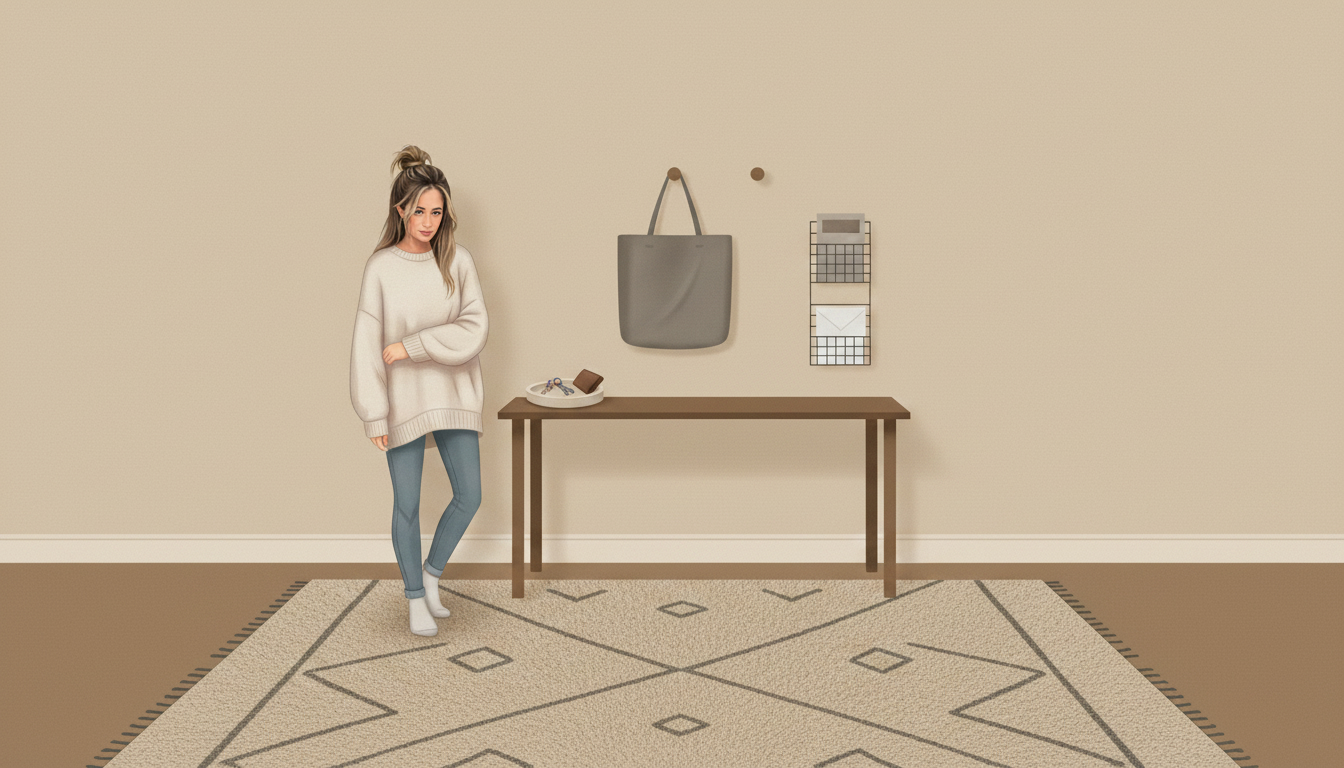
- Create only three “homes” there: keys/wallet, bag, mail (one small tray or folder).
- Anything that doesn’t belong in the entry goes straight into your Relocate bag—don’t leave the area to put it away yet.
Real-life example: If you always drop your bag on a chair, make that chair “not an option” by putting a basket or hook where your hand naturally reaches. You’re not changing your personality; you’re changing the path.
2) Kitchen Counters (10 minutes)
Counters are where visual noise builds fast. And visual noise = mental noise.
- Remove everything that doesn’t need to live on the counter daily (spare oils, random appliances, unopened packages).
- Keep only what you use constantly (maybe the coffee setup, dish soap, and one fruit bowl).
- Choose one tiny “category sweep” inside a drawer or cabinet: expired spices, takeout containers, or mugs you don’t even like.
Helpful rule: If you don’t want to wash it, you probably don’t want to own it. This is especially true for novelty kitchen tools that looked fun online.
3) Paper (Because It Multiplies Overnight)
Paper clutter isn’t just paper—it’s unfinished decisions. And unfinished decisions drain you.
- Put a recycling bin and a shred bag/bin near where paper enters your home.
- Make one small “action folder” for bills, appointments, and anything truly time-sensitive.
- Recycle the rest ruthlessly: flyers, duplicates, old coupons, instructions you can find online in 30 seconds.
Quick script for decision fatigue: Ask, “Is this actionable this week?” If yes, it goes in the action folder. If no, it’s either filed (rare) or recycled (often).
4) Closet (Start With the ‘No’ Pile)
Closets can feel emotional, so make it easier on yourself: don’t start with “maybe.” Start with the obvious no’s.
- Pull out anything visibly worn out (stains, stretched elastic, uncomfortable shoes).
- Remove duplicates you don’t choose first (the “fine” black tees you never reach for).
- Create a small “try again later” section if you need it—limited to a single hanger row or small box.
Real-life example: If you keep saving things for a “future version” of you, pick one realistic timeframe (like 3 months). If it still doesn’t fit your life then, you’re allowed to let it go without guilt.
Two Systems That Make Decluttering Stick (Even When Work Is Wild)
The “Relocate Later” Rule (Prevents the Domino Effect)
The most common way decluttering derails is when you leave the room to put one item away… and suddenly you’re reorganizing a hallway closet and forgetting why you started.
Instead: keep a Relocate bag/box with you. Finish the zone you picked. Then do one quick “relocation lap” at the end—walk through the house and drop items in their homes.
The Donation Station (So You Don’t Re-Decide Things)
Decision fatigue is real. If you decide to donate something, don’t make yourself decide again later.
- Keep one bag or box in a closet or by the door labeled “Donate.”
- When it’s full, schedule a drop-off on the next errand run (or set it in your trunk).
- If the bag sits for weeks, that’s still progress—the items are already out of your daily space.
When You Get Stuck: What to Do With “Maybe” Items
Some things are hard because they’re tied to identity (who you were), optimism (who you want to be), or guilt (how much it cost). A good rule here is: you don’t have to decide forever—you just need a decision that protects your current peace.
- The 30-day box: Put “maybe” items in a box, tape it, write the date. If you don’t open it in 30 days, donate it.
- The ‘display or release’ rule for sentimental items: If it matters, it deserves a proper place. If it’s shoved in a drawer, it’s acting like clutter.
- The ‘one keepsake container’ boundary: One box for memories. When it’s full, something has to leave before something new comes in.
And if you’re thinking, “But I might need it”—that’s usually your brain trying to buy certainty. Most of the time, what you actually need is fewer backups and more trust in your ability to handle life as it comes.
You don’t need more time—you need fewer things demanding your attention.
A Weekly Reset That Keeps Your Home Calm (Without Becoming a Project)
This is the maintenance plan for busy weeks—the one that prevents the “how did it get like this?” moment.
The 10-Minute Daily Close
Pick a time that already exists (right after dinner, before your shower, while your coffee brews). Set a 10-minute timer and do only these:
- Clear one surface (kitchen counter, coffee table, bathroom sink).
- Put away 10 items (or do one small trash/recycling sweep).
- Reset one “hotspot” (entry drop zone, dining chair, nightstand).
This isn’t about being perfect. It’s about waking up to a space that feels supportive rather than demanding.
The 60-Minute Weekly Power Hour
Once a week, choose one contained zone (one drawer, one shelf, one category like “water bottles”). Use your four containers and move fast. You’re building a habit of finishing, not a habit of starting big.
Extra Resources (If You Want Structure Without Overthinking)
If you like having a little more guidance, here are a few simple resources you can look up and save so you’re not reinventing the wheel each time:
- Printable room-by-room checklists (great for quick wins and tracking progress)
- Short timer-based decluttering videos (10–15 minute “reset with me” style)
- Donation drop-off locator tools in your area (so the donate bag actually leaves the house)
- Simple inventory lists for pantry, toiletries, and cleaning supplies (to prevent accidental duplicates)
Calm Living Is Built on Fewer Decisions
A home that feels lighter isn’t the result of one heroic weekend. It’s the result of small, kind choices repeated: fewer “maybe” piles, fewer duplicates, fewer objects waiting for you to manage them.
Keep your decluttering checklist simple. Pick tiny zones. Use your four containers. When your energy is low, do ten minutes and stop—because ten minutes of relief, repeated, changes the way your home feels.
You’re not behind. You’re building a calmer baseline—one smart system at a time—and that’s exactly how mental load starts to loosen its grip.
Telegram Galelar
Instagram @galelar_lis
YouTube @galelar
TikTok @galelar_lis