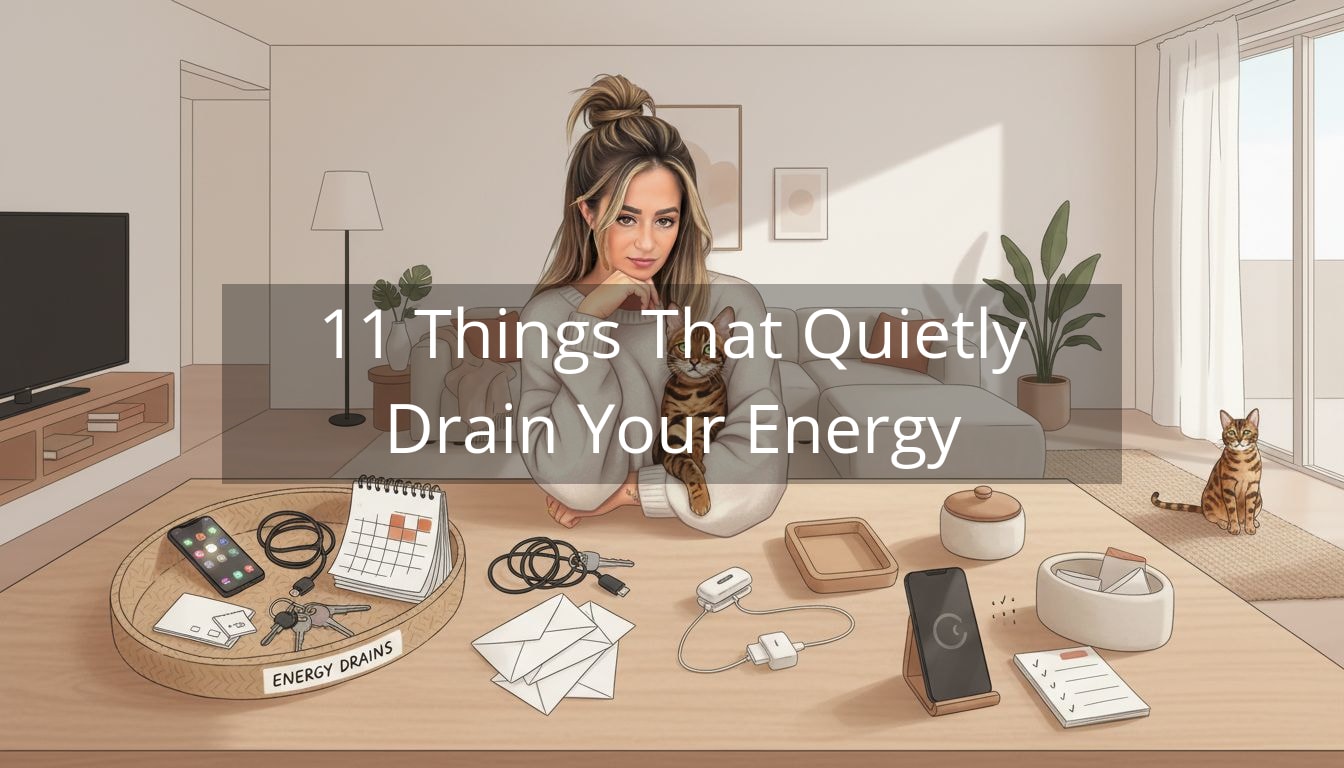
That foggy, slightly panicky feeling at 3:17 p.m.—when you’ve been “busy” all day but somehow you’re behind—usually isn’t a motivation problem. It’s energy drains: the quiet, everyday leaks that nibble away at your capacity until even simple decisions feel weirdly hard.
And the frustrating part is that they rarely look dramatic. You’re not pulling all-nighters. You’re not doing anything “wrong.” You’re just living in 2026: working, replying, coordinating, optimizing—while your brain runs a dozen background tabs you didn’t consciously open.
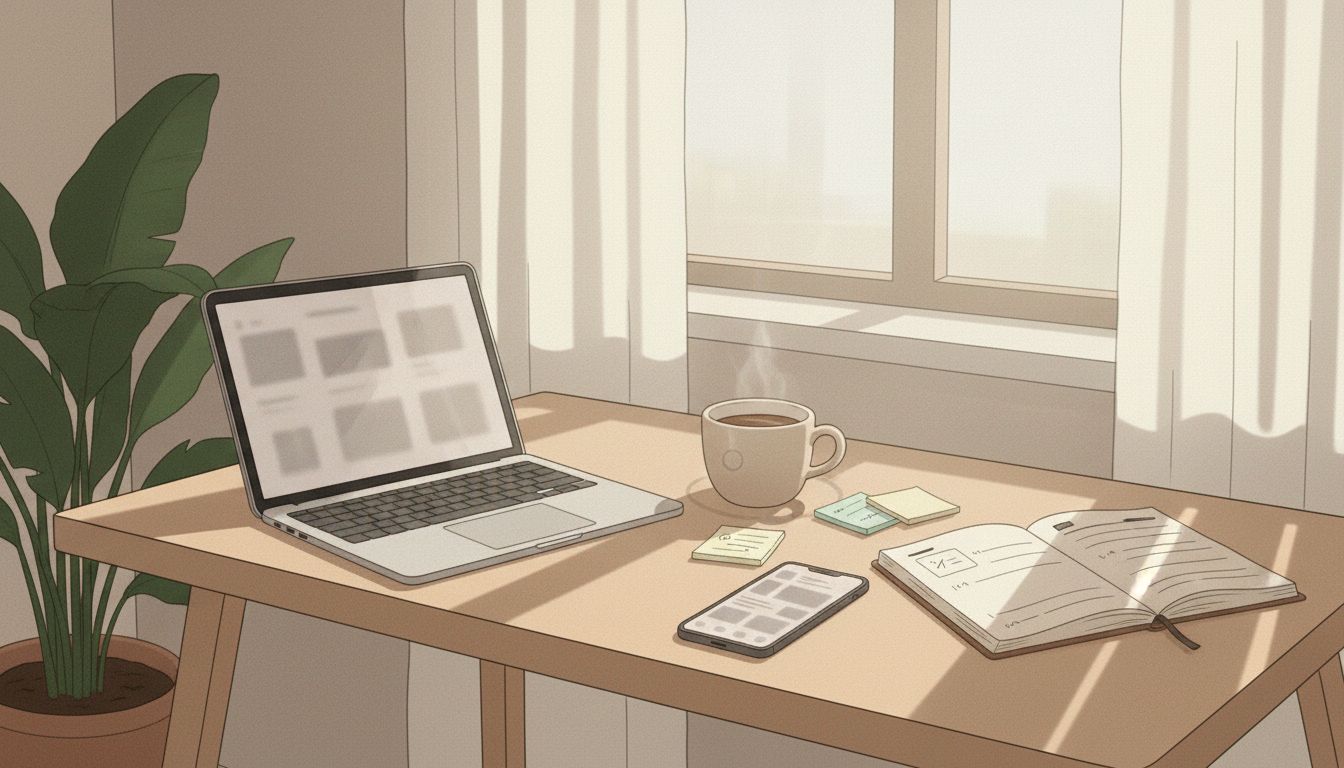
Why these energy drains feel so sneaky (and so personal)
Most modern burnout doesn’t come from one huge thing. It comes from a pattern: constant inputs + zero recovery + too many open loops.
A few realities that make this worse for independent women especially:
- Your attention is being monetized. Notifications, feeds, even “helpful” app badges are designed to pull you back in. That pull costs energy—every single time.
- Your brain treats unfinished things like a threat. Not because you’re dramatic, but because your mind is trying to protect you from forgetting. So it keeps resurfacing the grocery list, the unanswered email, the appointment you still need to book.
- You’re doing more invisible work than you think. Life admin isn’t just “a chore.” It’s decision-making, planning, and emotional regulation. That’s real cognitive labor.
So when you feel wiped out, it’s often not because the day was objectively harder than yesterday. It’s because you were mentally switching, mentally tracking, and mentally bracing all day long.
“Clarity isn’t something you find—it’s something you create by removing what doesn’t belong.”
The 11 quiet culprits that add up fast
Here are the most common energy drains that tend to stack on top of each other. Read them less like a checklist to “fix yourself,” and more like a menu of possible leaks you can patch—one at a time.
-
Too many notifications
Even when you don’t reply, a ping breaks your focus and creates a tiny stress response: What is it? Do I need to handle it? -
Cluttered surfaces
A counter covered in mail, a chair that’s become a laundry pile, a desk that says “unfinished”… it’s visual noise that your brain interprets as open work. -
Poor sleep routine
Not just sleep quantity—sleep timing. Irregular nights make your energy unpredictable, which makes planning your day harder. -
Skipping meals (or “accidentally” eating too late)
Blood sugar crashes can feel like moodiness, brain fog, and low motivation—not just hunger. -
Too many open tasks
This is a huge one. An overstuffed to-do list doesn’t motivate you; it quietly stresses you out all day. -
Constant multitasking
You’re not bad at focusing. You’re just switching. And switching burns fuel. -
Messy digital space
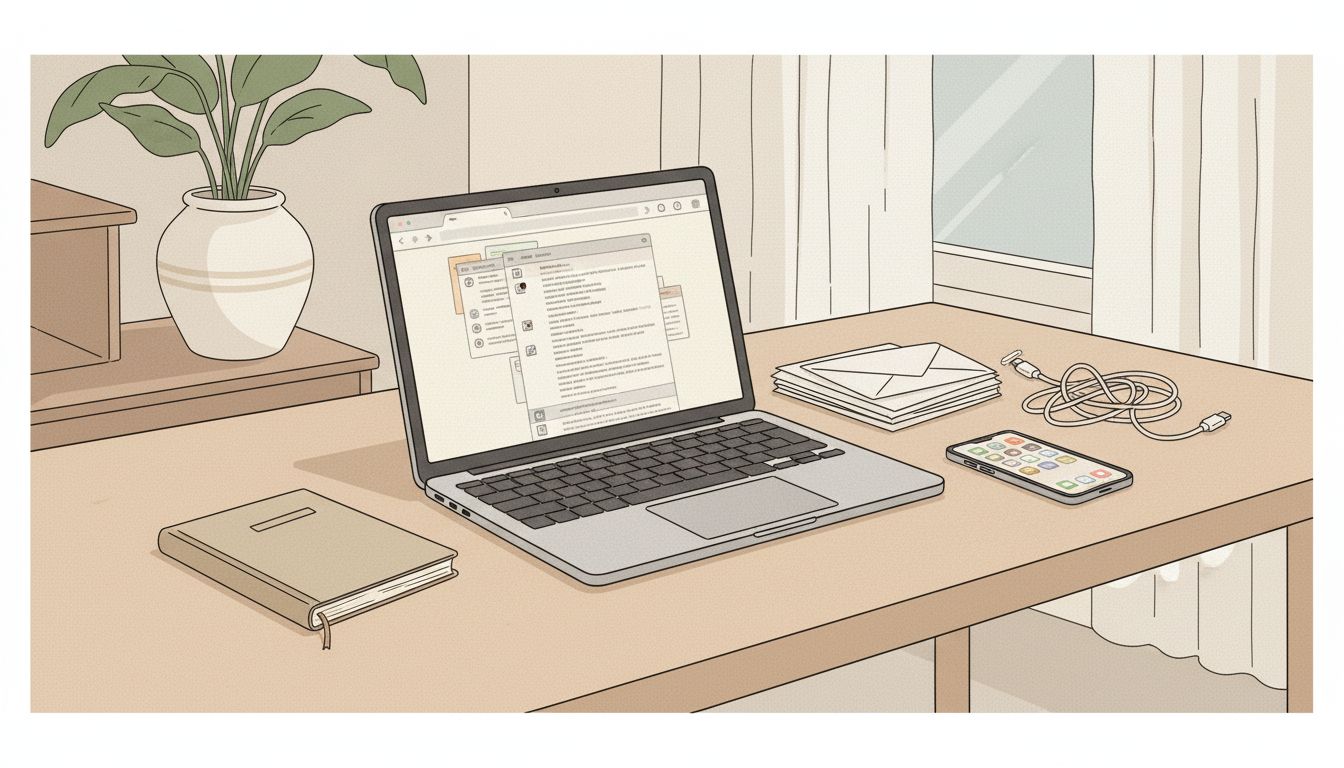
An inbox with 3,000 unread emails. 27 open tabs. A desktop that’s basically a junk drawer. Digital clutter creates the same “unfinished business” feeling as physical clutter. -
Saying yes to everything
Overcommitting drains emotional energy first—then time—then resentment. -
No quiet time during the day
This is the nervous system piece. If there’s no pause, your body stays in “monitoring” mode. -
Too much screen time
Not in a moralizing way—just in a biology way. Constant stimulation fragments your attention and makes rest feel less restorative. -
Not taking real breaks
If your “break” is scrolling while half-thinking about everything you’re behind on, it doesn’t actually refill the tank.
If you recognized yourself in more than a few, that’s not a sign you’re failing. It’s a sign your life is full—and your systems might be too loose for the volume you’re managing.
The core idea: stop trying to “be more energized”—plug the leaks
When people talk about energy, they often jump straight to supplements, morning routines, or some heroic “5 a.m. reset.”
But with these energy drains, the most effective approach is almost boring:
You don’t need more effort. You need fewer leaks.
Meaning: a few small systems that reduce decisions, reduce switching, and reduce background mental tracking.
The goal is calm productivity—where your day isn’t held together by constant self-reminding.
So instead of “How do I become a more disciplined person?” try:
- What’s repeatedly interrupting me?
- What keeps nagging at my brain?
- Where am I doing the same mental work on loop?
That’s where your easiest wins live.
First systems to patch the biggest energy drains (without adding complexity)
We’re not going to fix all 11 today. We’re going to start where the payoff is immediate: attention leaks and open-loop stress. These two alone can make a normal workday feel strangely exhausting.
1) Put notifications on a schedule (so your brain can relax)
Most of us treat notifications like weather—random, unavoidable, always happening. But your phone already has the tools to make this simpler.
Try this low-effort setup (10 minutes once):
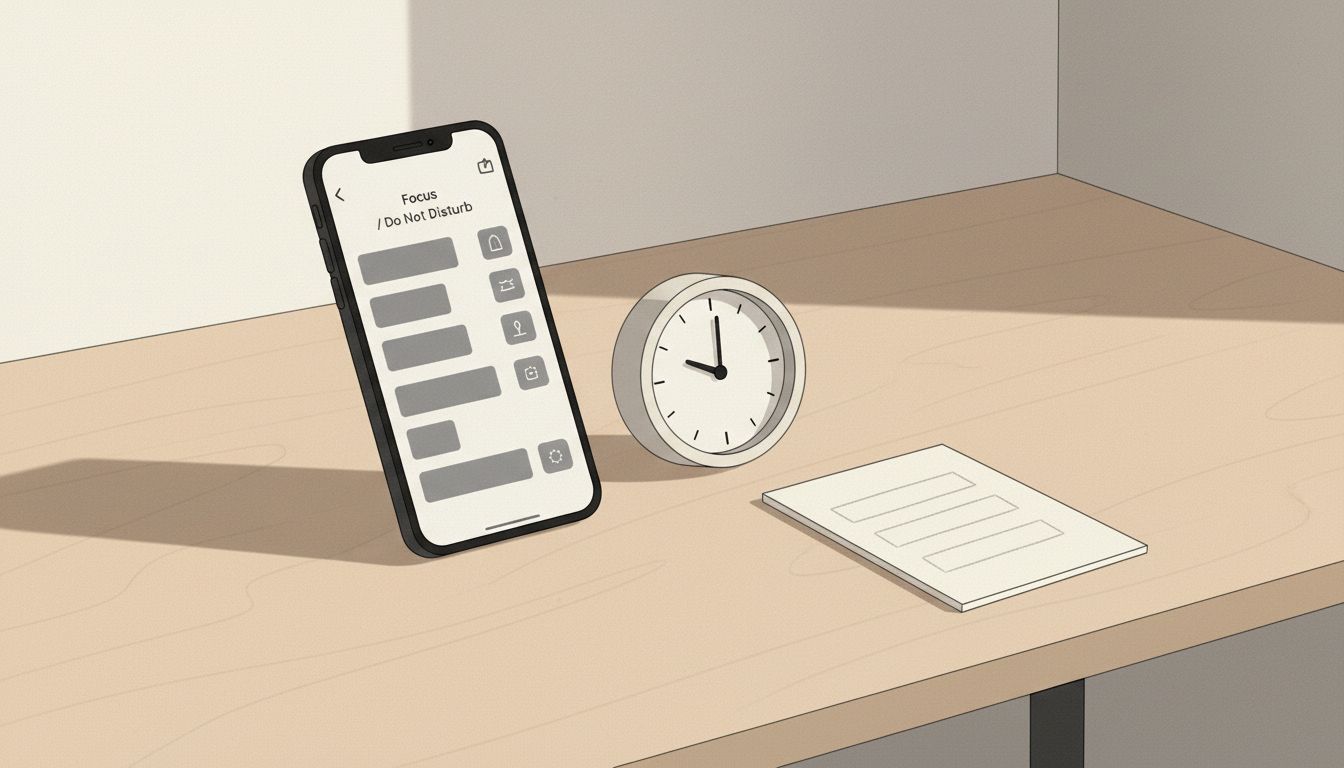
- Use Focus Modes / Do Not Disturb (iPhone or Android) with a schedule:
- Work block (e.g., 9–12): allow calls from favorites + calendar alerts only
- Admin/check-in block (e.g., 12–12:30 or 4–4:30): allow email/Slack/DMs
- Evening wind-down: silence everything except true emergencies
- Turn off badges for apps that aren’t time-sensitive (news, shopping, social). Badges are tiny stressors.
This doesn’t mean you’re unreachable. It means you decide when you’re reachable—which is a completely different nervous system experience.
2) Create one “home” for open tasks (and cap what’s allowed to be open)
One of the most underestimated energy drains is carrying tasks in too many places: sticky notes, messages you left unread “as reminders,” voice notes, screenshots, mental notes, half-written lists.
You don’t need the perfect app. You need a single place your brain trusts.
Two friendly options:
- Todoist (clean, fast, low-friction) for straightforward task lists
- Notion (more flexible) if you like categories, dashboards, or combining notes + tasks
The system that matters more than the app:
- Create an “Inbox” list where everything goes first (no organizing required)
- Create 3–5 core lists only (Work, Personal, Admin, Errands, Ideas)
- Add one rule that protects you from task bloat:
A daily cap: choose five tasks that count as “today.” Everything else is not allowed to compete for your attention.
This is how you reduce the feeling of being chased by your own life.
3) Do a 3-minute digital reset that stops the tab-chaos spiral
Messy digital space is a real energy leak because it keeps you in a constant state of “I might lose something.”
A tiny reset that helps more than you’d expect:
- Close all tabs (bookmark what matters)
- Keep one “working window” only
- Use a tab manager like OneTab (Chrome) if you’re a chronic tab-holder
- Put email in two checks a day (not always-open-in-a-corner)
If you work on a laptop all day, this is the digital equivalent of clearing your kitchen counter. You’re telling your brain: we are not juggling everything at once.
4) Add one daily “quiet minute” (so your nervous system gets proof it’s safe)
This isn’t about meditation perfection. It’s about giving your body a pause—especially if your day is back-to-back content, voices, calls, and inputs.
Simple options:
- Calm or Insight Timer for a 3–5 minute guided reset
- Or no app: sit with a drink and stare out a window, phone face-down
The point is not productivity. The point is recovery inside the day, not only after you’ve completely collapsed at night.
If you do nothing else this week, pick just one drain to patch—notifications or open tasks are usually the quickest relief. Because once your attention stops getting yanked around, you’ll start noticing something important: you actually have energy… it just hasn’t been making it to the end of the day. And there are a few more quiet places it tends to leak, especially in the way we set up our space, our yeses, and our “breaks,” which is where we’ll go next…
Patch the “space + yes + break” leaks (the ones that disguise themselves as personality)
Some energy drains are loud (hello, notifications). But the ones that keep you perpetually tired tend to be quieter: the visual noise you keep stepping around, the “sure, I can do that” reflex, and the breaks that look like rest but don’t actually restore you.
The good news: you don’t need a total life makeover. You need a few default settings that make the easiest choice the calm choice.
5) Cluttered surfaces: build a “landing strip,” not a Pinterest home
If clutter stresses you out, it’s not because you’re messy—it’s because clutter is unfinished information. Your brain reads every pile as “something I should deal with,” which is a sneaky form of background work.
Try this instead of “clean the whole house”:
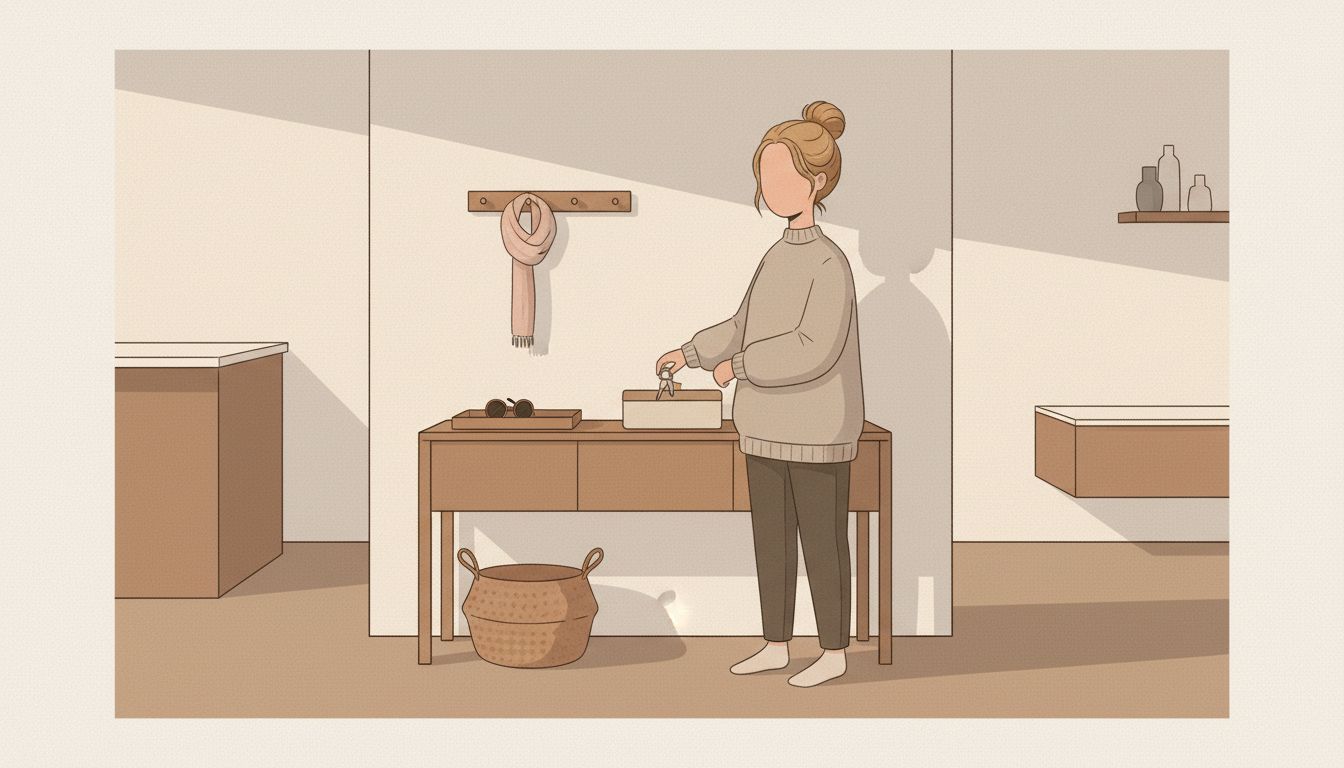
- Create one landing strip near the door (basket, tray, or a single drawer): keys, wallet, sunglasses, dog stuff, whatever you grab daily.
- Create one paper container (vertical file, magazine holder, or lidded box): mail goes in here automatically. No sorting at the counter.
- Choose two surfaces to protect (for most people: kitchen counter + desk). These are your “clear zones.” Everything else can be imperfect.
- Use a 2-minute nightly reset: set a timer, return items to their homes, stop when the timer ends. Consistency beats intensity.
What this does, practically: it removes dozens of micro-decisions (“Where should I put this?” “Should I deal with this now?”) that quietly spike stress.
6) “Yes overload”: replace automatic yes with a simple boundary script
Overcommitting doesn’t usually happen because you’re irresponsible. It happens because you’re capable, reliable, and you can imagine how to make it work—so you do.
The fix isn’t becoming “a no person.” It’s adding one tiny pause between request and answer.
- The pause line (in person): “Let me check my week and get back to you by tomorrow.”
- The pause line (text/email): “I want to give you a real answer—let me look at my calendar.”
- Your gentle no: “I can’t take this on right now, but I’m cheering you on.”
- Your strategic yes: “Yes—I can do X, but not Y. Does that still help?”
If you want a filter that makes decisions even easier, use this one:
- Energy test: “Will Future Me resent this?” If the answer is even a soft yes, it’s a no or a renegotiation.
- Trade test: “What am I trading for this yes—sleep, workout, deep work, patience?” If you don’t like the trade, adjust the yes.
This is one of the most powerful ways to stop energy drains that look like “just being a good person.” You can be generous without being constantly depleted.
7) Real breaks: make them physically different from work (so your brain believes you)
If your “break” is scrolling with one eye on your inbox, your nervous system stays in monitoring mode. That’s why you can take an hour “off” and still feel tired.
Try a break that changes your inputs:
- Light break (3–5 minutes): stand up, drink water, look out a window, unclench your jaw, breathe slower than normal.
- Reset break (10 minutes): quick walk, balcony lap, stretch, or a shower if you work from home.
- Brain-off break (15–20 minutes): music + tidy one small zone, or read a few pages of something soothing (paper if possible).
One helpful constraint: keep “digital breaks” in a container. If you want to scroll, set a timer for 7 minutes. When it ends, you’re done. This keeps screen time from quietly eating your recovery.
Two tiny weekly rituals that prevent energy drains from rebuilding
Systems work best when they’re maintained with almost no effort. These two rituals keep your life from slowly sliding back into chaos—without turning you into a “life admin” machine.
1) The 15-minute Weekly Reset (pick a day, keep it boring)
Put this on your calendar like an appointment. The goal isn’t to “get ahead.” It’s to stop carrying everything in your head.
- 5 minutes: sweep open loops into your task “Inbox” (texts you need to reply to, errands, calls, random thoughts).
- 5 minutes: choose your Top 3 outcomes for the week (not tasks—outcomes). Example: “Submit proposal,” “Book dentist,” “Two workouts.”
- 5 minutes: schedule the first tiny step for each outcome onto your calendar (even 15 minutes counts).
This is how you prevent the “too many open tasks” drain from quietly respawning every Monday.
2) The Daily “Closing Shift” (4 minutes, no perfection)
Before you end work (or before you transition into evening), do a micro close-out. It helps your brain stop spinning after hours.
- Write down the next step for your most important task (one sentence).
- Pick tomorrow’s five “today tasks” (your cap).
- Clear one surface (desk or counter) enough that it feels neutral.
- Put your phone on its evening setting (even if you don’t do anything else).
Importantly: this isn’t about being rigid. It’s about creating an ending, so your day doesn’t feel like one long unfinished thought.
“You don’t rise to the level of your goals—you fall to the level of your systems.”
Conclusion: calm is a skill you can build
If you’ve felt like your energy “should” be better by now, I want you to take that pressure off your shoulders. The issue usually isn’t your drive or your attitude—it’s that your life has outgrown your current defaults.
When you patch energy drains with small, repeatable systems—clear zones, notification schedules, a trusted task home, real breaks, a weekly reset—you get something more valuable than productivity: you get mental quiet. And from that quiet, your best focus, patience, and creativity come back online.
Start with one leak. Make it easier—not perfect. You’re not behind; you’re simply upgrading how you carry what you carry. Calmer living isn’t a personality type. It’s a set of choices you can practice until they become your new normal.
More visual support (if you want to see these ideas in action)
If you’d like extra visual resources and guides, you can explore the links below: