
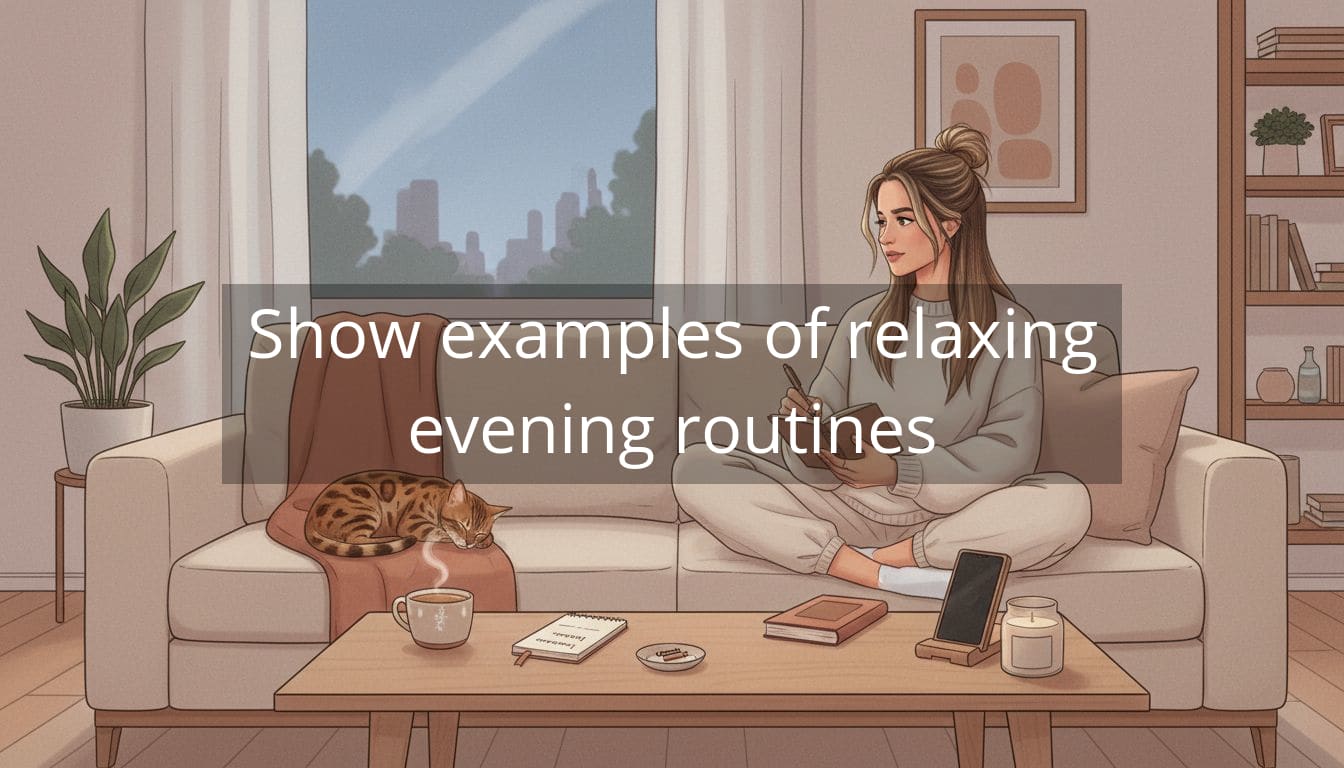
Your brain doesn’t shut off just because your laptop closes. If you’ve been searching for evening routine ideas, it’s probably because your nights are getting eaten by “just one more thing” — one more email, one more scroll, one more mental replay of the day.
The problem isn’t that you lack discipline. It’s that modern life keeps your nervous system on-call. Notifications, bright screens, and the leftover pressure of work (even work you love) all tell your body it’s still daytime. Cortisol stays higher than it needs to be, so even when you finally get in bed, your mind keeps running through tomorrow’s to-dos or today’s awkward conversation. And if you live alone or manage everything yourself, evenings can quietly turn into the time you “catch up” — which never really ends.
A gentler way to think about evening routine ideas
Here’s the mindset shift that actually helps: an evening routine isn’t a long self-care performance. It’s a short, repeatable sequence that creates a buffer between your day-life and your sleep-life. Think 3–5 small steps, in the same order most nights, so your brain learns the pattern and starts powering down automatically.
“Clarity isn’t created by doing more — it’s created by making space.”
Start with one anchor that signals “we’re closing.” For many women, the simplest is a time-based cue: set a recurring phone reminder 60–90 minutes before bed labeled something friendly like “start landing the plane.” (Not a bossy alarm. A nudge.)
A few micro-habits that make it easier tonight
Try stacking one calming action onto something you already do:
- Phone goes to charge across the room right after dinner cleanup (distance beats willpower).
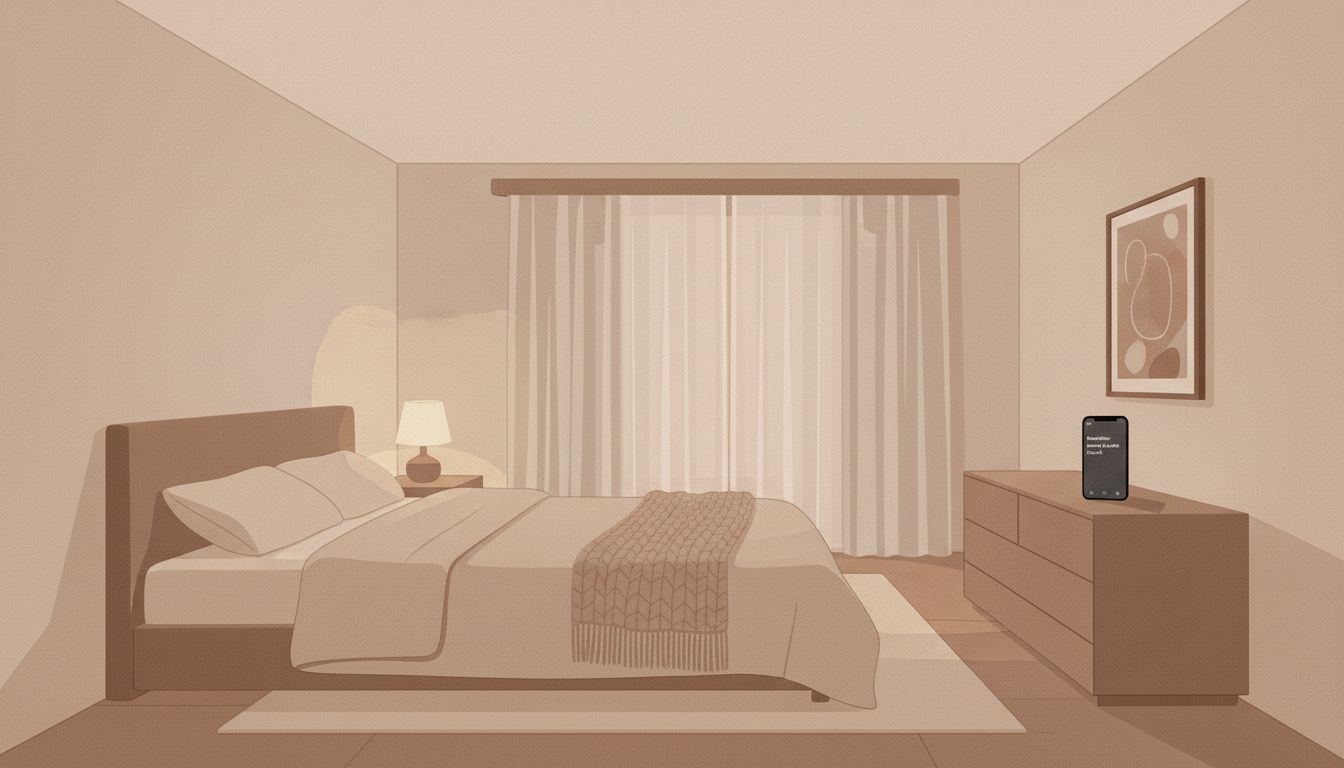
- Dim the lights when you do your skincare or brush your teeth — it’s a physical cue your body understands.
- One-page brain dump in Notes, Notion, or a paper journal: “What’s still looping in my head?” Then add a tiny “tomorrow list” with 3 bullets max.
If screens are unavoidable, use a built-in filter like Night Shift (iPhone) or Night Light (Windows) to reduce the “it’s still daytime” signal. The goal isn’t perfect sleep hygiene — it’s reducing stimulation enough that your mind has somewhere softer to go next.
Evening routine ideas you can actually repeat (without turning it into a project)
The trick isn’t finding the “perfect” wind-down. It’s building a simple structure your brain recognizes, even on messy days. If you can do the same few steps in the same order most nights, your nervous system starts to trust that bedtime is safe, predictable, and not another performance review.
Think of your routine like a short playlist: a beginning track (transition), a middle track (downshift), and an ending track (sleep cue). Below are a few ready-made sequences you can copy as-is or customize.
Routine Option 1: The 20-minute “closeout” (for the nights you’re tired-tired)
- 2 minutes: Reset one surface. Clear the kitchen counter or coffee table. One spot is enough to tell your brain, “The day is handled.”
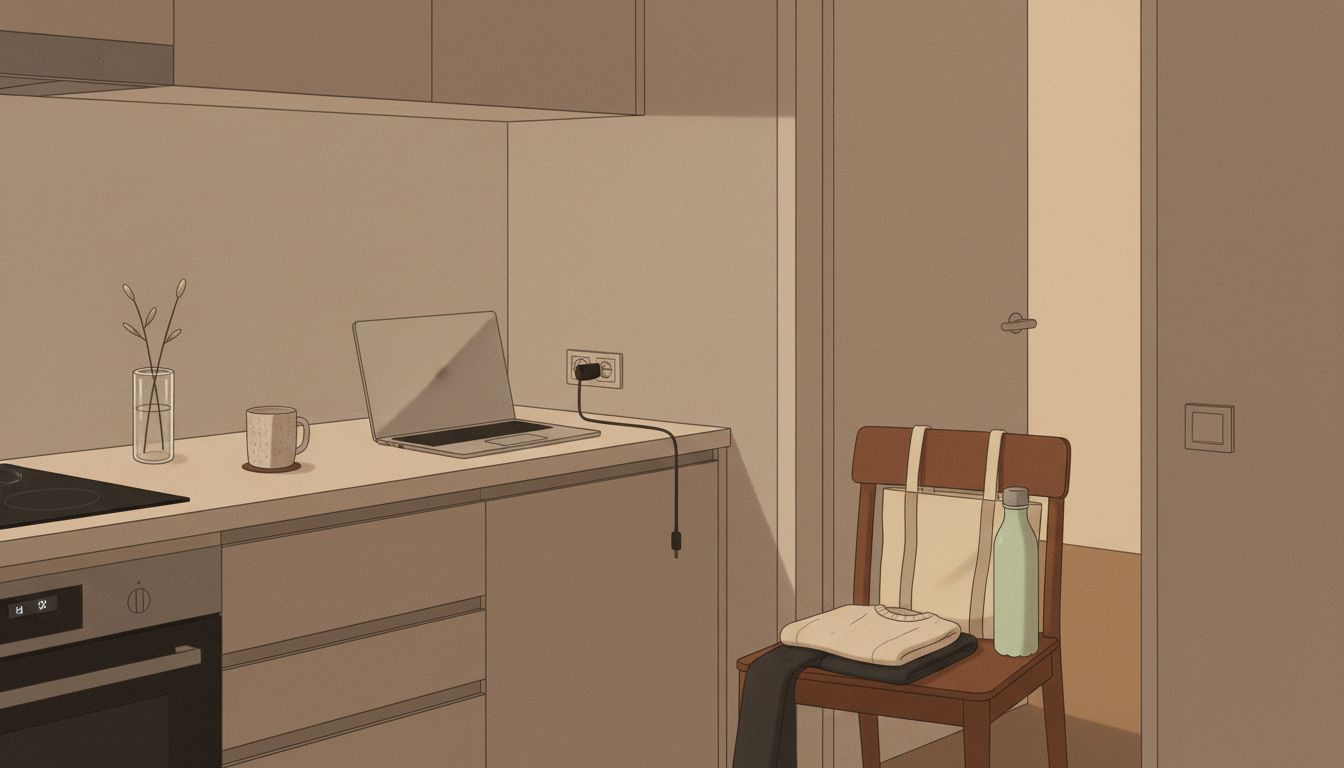
- 5 minutes: Tomorrow’s landing pad. Set out your water bottle, plug in your laptop, lay out clothes, or pack your bag. (This is future-you kindness and it reduces morning decision fatigue.)
- 8 minutes: Hygiene + dim lights. Brush teeth, skincare, change into pajamas with the lights lowered. Your body reads light as a schedule.
- 5 minutes: Brain offload. Write: “Still looping:” + “Tomorrow’s top 3.” Then stop. Not because you’re done with life—because you’re done for today.
This is especially helpful if you tend to get a “second wind” at 10 p.m. and suddenly want to reorganize your pantry or respond to every text you’ve missed.
Routine Option 2: The “soft body” wind-down (when you can feel stress living in your shoulders)
- Warmth cue (5 minutes): A warm shower, heating pad on your neck, or cozy socks—anything that makes your body feel safe and held.
- Gentle movement (8–12 minutes): A slow stretch, legs-up-the-wall, child’s pose, or a short yin-style flow.
- Breathing (3 minutes): Inhale 4, exhale 6 (or any slower exhale). Longer exhales help your body shift out of “on” mode.
- Low-stimulation content (10 minutes): A few pages of a book, a calming playlist, or a quiet audiobook with the screen off.
If you’ve been carrying the day in your jaw and traps, this routine works because it doesn’t require you to “think your way” into calm—you physically guide yourself there.
Routine Option 3: The “quiet mind” routine (for overthinkers and mental reruns)
- Phone goes away first. Not forever. Just to charge across the room while you settle.
- Worry parking lot (5–7 minutes): Write every open loop that’s tugging at you. Then add one next step beside anything urgent (even if the next step is “decide tomorrow”).
- A tiny closure sentence: “I’m allowed to stop now. Tomorrow has its own time.”
- Same closing cue nightly (2 minutes): Lip balm, hand cream, a specific tea, or turning on a bedside lamp—something your brain learns to associate with sleep.
If you live alone or you’re the default “holder” of plans, groceries, chores, and everyone’s calendars, this routine creates a boundary you don’t have to negotiate with yourself each night.
Make your evening routine ideas easier with a simple “menu” system
One reason routines fail is that we try to decide in real time what would be “best.” That’s a lot to ask of a tired brain. A routine menu reduces decisions while still giving you flexibility.
Build a 5-item “wind-down menu”
Choose five low-effort options you genuinely enjoy. Keep the list in your Notes app or on a sticky note by your bed. Examples:
- Read 10 pages of fiction
- Stretch for 8 minutes
- Make herbal tea (finish early enough to avoid extra bathroom trips)
- 3-minute breathe-out-longer breathing
- Skincare + hand cream with dim lights
Then set one rule: pick two items per night, no more. This keeps your routine from morphing into a whole second job.
Use “if-then” planning for predictable obstacles
Most evenings don’t derail because you “failed.” They derail because life happened. Try planning for your most common friction points:
- If I work late, then I do the 20-minute closeout and go to bed.
- If I’m wired from social plans, then I do a warm shower + stretch before getting into bed.
- If I start scrolling, then I plug my phone in across the room and switch to audio (music/audiobook) instead.
This is a quiet kind of self-trust: you’re not hoping you’ll make a good decision when you’re depleted—you’re making it ahead of time.
Small tools that lower stimulation (and don’t require a personality change)
You don’t need a full wellness makeover. A few tiny environment tweaks do a lot of heavy lifting.
- Lighting: Use one warm lamp in the evening instead of overhead lights. If possible, dim lights as soon as dinner is done.
- Charging spot: Create a default “phone home” across the room (or outside the bedroom). Distance beats willpower.
- Sound: A soft playlist, white noise, or a fan can prevent your brain from latching onto every tiny creak and thought.
- Paper nearby: Keep a small notebook and pen by your bed so you don’t grab your phone to “just quickly note something.”
If your space is shared—with a partner, family, or roommates—consider a “soft signal” that you’re winding down: a certain lamp turned on, a candle (unlit is fine if scent is a headache trigger), or headphones that mean “I’m offline now.”
You don’t need a perfect night to have a calmer life—you just need a repeatable way to come back to yourself.
How to know your routine is working (without obsessing over sleep scores)
Better sleep is great, but it’s not the only sign of progress. Look for these quieter wins:
- You stop negotiating with yourself at bedtime (“one more thing…”)
- Your thoughts feel less sticky when you turn off the light
- Mornings feel a little less brittle—fewer frantic choices, less dread
- You recover faster after stressful days because your body recognizes the downshift
If you miss a night (or a week), don’t restart with a strict plan. Restart with the first step only: dim the lights, plug in the phone, or do the one-page brain dump. A routine is a pattern, not a streak.
Extra resources if you want more support
If you’d like additional guidance and ideas to keep this easy, here are a few helpful resources to explore:
- Guided wind-down yoga or stretching videos (look for 10–15 minute bedtime/yin options)
- Simple breathing timers (a basic timer works—no complicated tracking needed)
- Printable evening routine checklists (helpful for visual thinkers)
- Journaling prompt lists for nighttime overthinking
A calm ending to your day is a system—not a personality trait
You don’t need to become someone who meditates for 45 minutes, drinks the exact right tea, and never checks her phone at night. You just need a small, kind structure that reduces stimulation, closes mental loops, and gently transitions you into rest.
Pick one routine option above and try it for three nights. Keep what helps. Drop what doesn’t. The win isn’t doing more—it’s carrying less.
With the right evening routine ideas, your nights can start to feel like a soft landing instead of an extension of your to-do list. And you deserve that kind of calm.
Telegram Galelar
Instagram @galelar_lis
YouTube @galelar
TikTok @galelar_lis