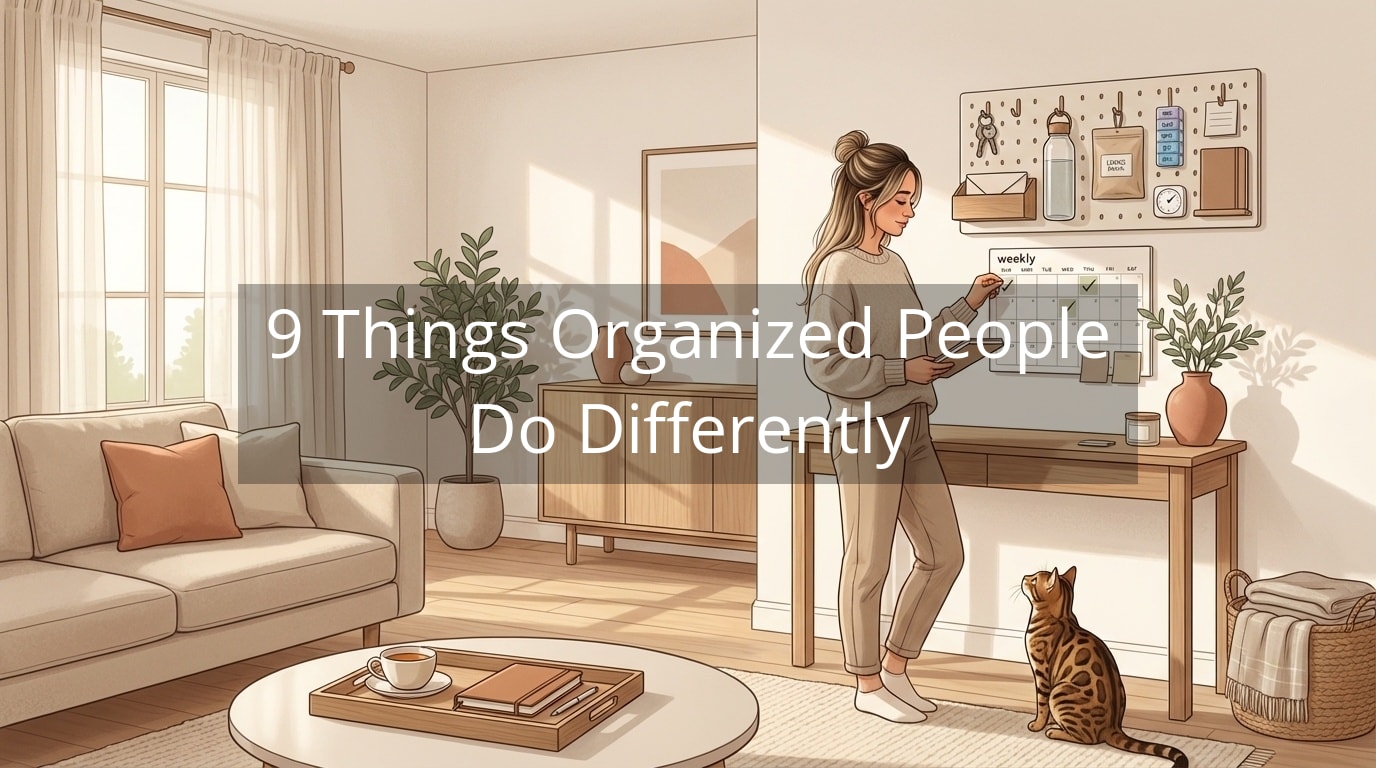
Organized habits aren’t about becoming a different person with color-coded everything and a spotless kitchen at all times. They’re about building a few small defaults that keep your life from feeling like it’s sprinting ahead of you before you’ve even had coffee.
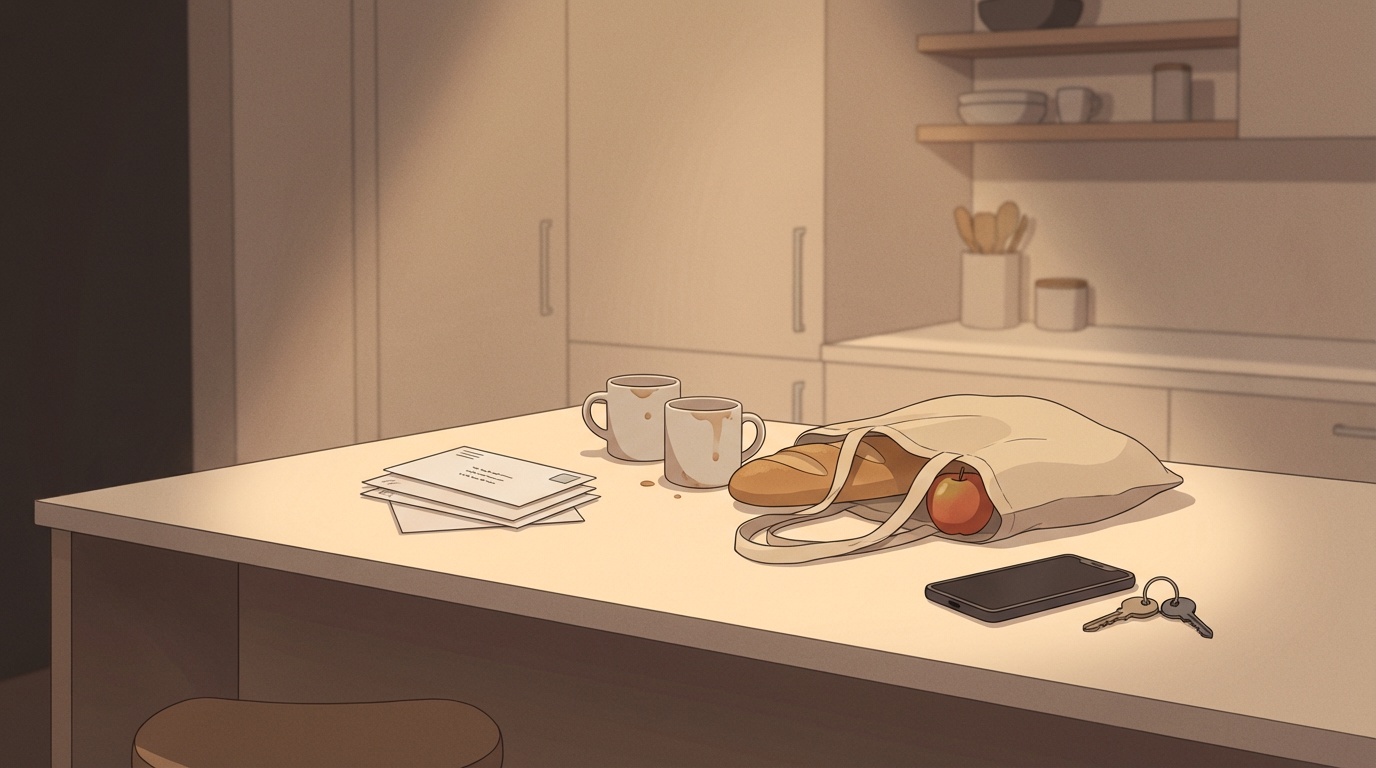
Picture a normal Sunday night: the counter has mail, mugs, maybe a grocery bag you forgot to unpack. Your phone is full of reminders you barely register anymore. You’re trying to “mentally note” what needs to happen this week—work deadlines, a friend’s birthday, the fact that you’re down to one clean bra—and somehow that mental list turns into a low-grade panic instead of a plan.
If that sounds familiar, it’s not because you’re lazy or “bad at adulting.” It’s because modern life is designed to be cognitively loud. And when everything is being tracked in your head, your brain becomes the storage unit, the calendar, the project manager, and the emergency dispatcher all at once.
Why life feels chaotic even when you’re trying your best
Here’s what’s sneaky about overwhelm: it often doesn’t come from having “too much to do.” It comes from having too much to hold.
Most of us are juggling:
- work tasks that arrive through five channels (email, Slack, DMs, meetings, “quick questions”)
- personal life obligations that don’t have clear deadlines (buy gifts, schedule appointments, plan meals, reply to family)
- constant micro-decisions (what to eat, what to wear, when to move your body, what’s urgent vs. just loud)
And the worst part? If you don’t have a system, you end up using the most expensive tool you own—your attention—to remember things that could be stored somewhere else.
That’s why disorganization doesn’t just look like mess. It feels like:
- starting the day already behind
- forgetting small things and then not trusting yourself
- living in a reaction loop (always responding, rarely steering)
- spending your “free time” catching up instead of actually resting
Organized people aren’t living a different life. They’re just not carrying as much of it in their heads.
The real secret: organized habits reduce mental load (not just clutter)
When you watch those “9 things organized people do differently” reels, it can look like magic—like some people were born knowing where their keys are and what’s for dinner.
But the pattern underneath is simple: organized habits are tiny, repeatable behaviors that create reliability. Reliability is what calms your nervous system. Not perfection. Not aesthetic storage bins.
Think about it: when you trust that you’ll capture a task, or that your keys have a home, or that you review your week on Sunday… your brain stops scanning for threats. You stop re-checking and re-remembering. You don’t have to keep reopening mental tabs.
Clarity isn’t a personality trait—it’s a practice you repeat until it feels like home.
That’s why organization is less about a big “reset” and more about a few small defaults that quietly run in the background.
A quick reframe that helps instantly
Instead of asking, “How do I get more disciplined?” try asking:
“What am I currently relying on my brain to remember?”
Because that’s usually the source of the stress.
- remembering to respond to a message
- remembering where you put something
- remembering that you meant to book the dentist
- remembering a great idea you had in the shower
- remembering all the steps of a project without writing down the next action
Organized people build external support for those things—so their brains can do higher-value work: thinking, creating, connecting, resting.
The first foundation of organized habits: capture everything (so your mind can breathe)
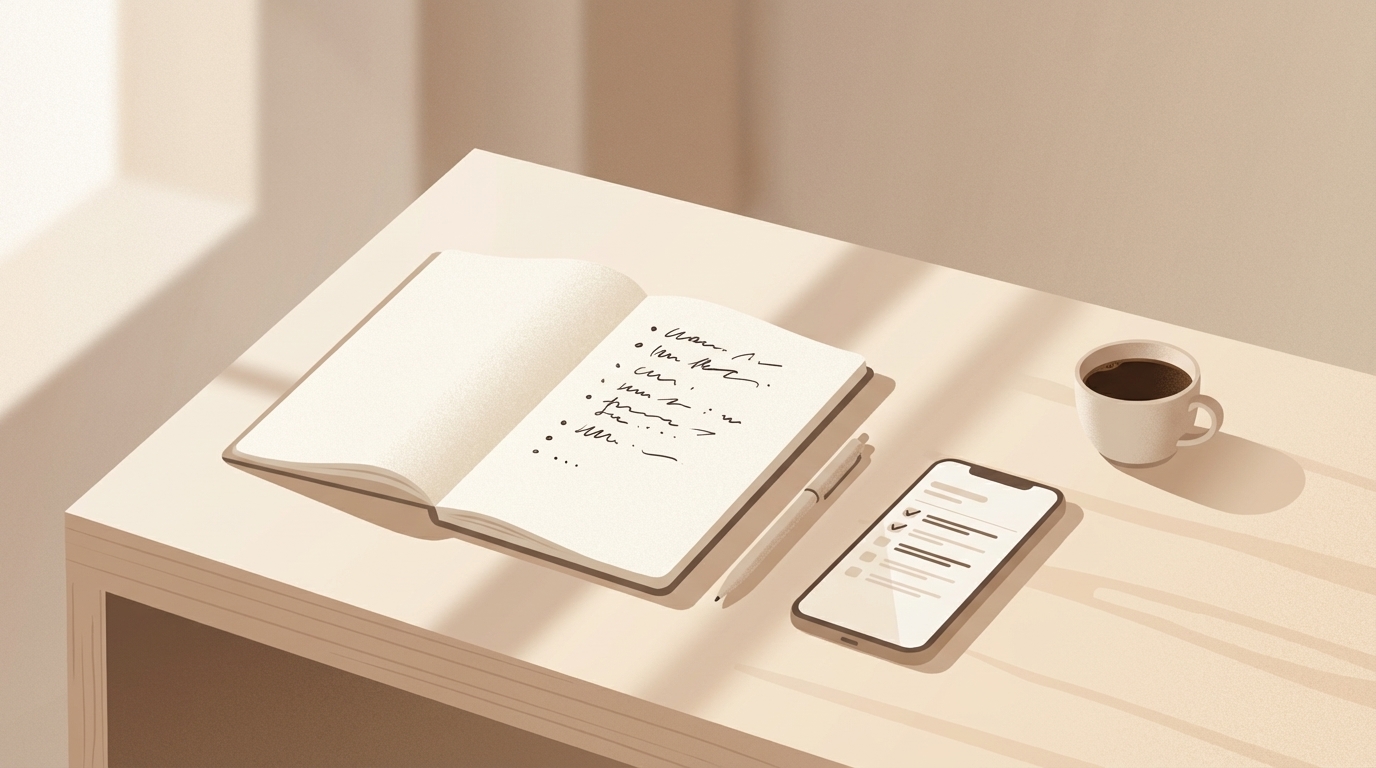
If you only steal one habit from organized people, make it this: they write things down. Not beautifully. Not in a perfectly maintained planner. Just consistently.
Because the moment a task lives only in your head, it becomes mental background noise. You don’t just “remember it”—you subtly monitor it all day.
Build a simple “capture system” (this is the grown-up version of sticky notes)
You need one trusted place where incoming tasks land. The goal is not to organize everything immediately. The goal is to stop hemorrhaging attention.
Pick one:
- Todoist (best if you want quick capture + recurring reminders; you can type “Pay rent every 1st” and it just… does it)
- Apple Reminders (surprisingly solid, especially if you live in the Apple ecosystem)
- Google Keep (great for fast lists and scattered notes)
- Notion (best if you like a “life dashboard” vibe, but only if you keep it simple)
- A notes widget + one paper notebook (honestly, still elite if you use it daily)
Smart-friend rule: if you’re currently using three apps and open browser tabs and your brain, you don’t have “a system.” You have a bunch of places where tasks go to disappear.
The micro-habit that makes this work
Any time you think, “I should remember…” — capture it.
Not later. Not when you “have time.” Because later is exactly when it becomes clutter.
A few examples from real life:
- You’re commuting and remember you need to follow up on a client email → voice-capture it (Siri/Google Assistant) into your task app.
- You’re cooking and realize you’re out of olive oil → add it to a shared grocery list (AnyList is amazing for this).
- You’re falling asleep and remember you need to renew your passport → quick note, then let your brain power down.
This is what organized people are doing differently: they don’t trust “I’ll remember.” They trust their capture tool.
The second foundation: choose 2–3 priorities (because endless lists are emotional sabotage)
Once tasks are captured, the next overload trap is the “everything list.” You know the one: it’s technically accurate, and also completely demoralizing.
Organized people tend to do something that looks almost irritatingly simple: they pick their top priorities.
Not their top 12. Not “everything that matters.” Just the few things that would make today feel like it moved forward.
Try the “Three Wins” plan (calm, realistic, effective)
At the start of the day—or the evening before—choose:
- One must-do (the thing with real consequences if ignored)
- One maintenance task (life admin, emails, invoicing, laundry—something that prevents future chaos)
- One personal win (walk, meal planning, calling your friend back, reading—something that makes you feel like a person)
This is where organized habits become self-respect in disguise. You’re telling your time, “You’re not available for infinite demands.”
Helpful digital tool: calendar blocks that protect your brain
If you do nothing else with your calendar, use it for boundaries, not just appointments.
- Put a 30–60 minute block for your must-do
- Add buffers between meetings when possible
- Create a recurring “weekly reset” placeholder (more on this later)
Google Calendar or Outlook is fine. The magic is treating “focus” and “life admin” like real meetings—because they are.
Where overwhelm shows up first: surfaces, piles, and “I’ll deal with it later”
A lot of people assume organization starts with decluttering closets. But in daily life, chaos usually starts in smaller, more annoying places:
- the kitchen counter that becomes a landing strip for everything
- the chair that holds “not dirty, not clean” clothes
- the desk that slowly disappears under papers and chargers
- the entryway where keys and bags become a daily scavenger hunt
Organized people tend to keep surfaces mostly clear—not because they’re obsessive, but because visual clutter creates mental friction. When you can’t see where to put something, you create a pile. When you create a pile, you create a future task. When you create enough future tasks, you start living in avoidance.
The first tiny system: give the “drop zones” an actual home
Start with the three most common daily-drop items:
- keys
- wallet
- headphones/charger
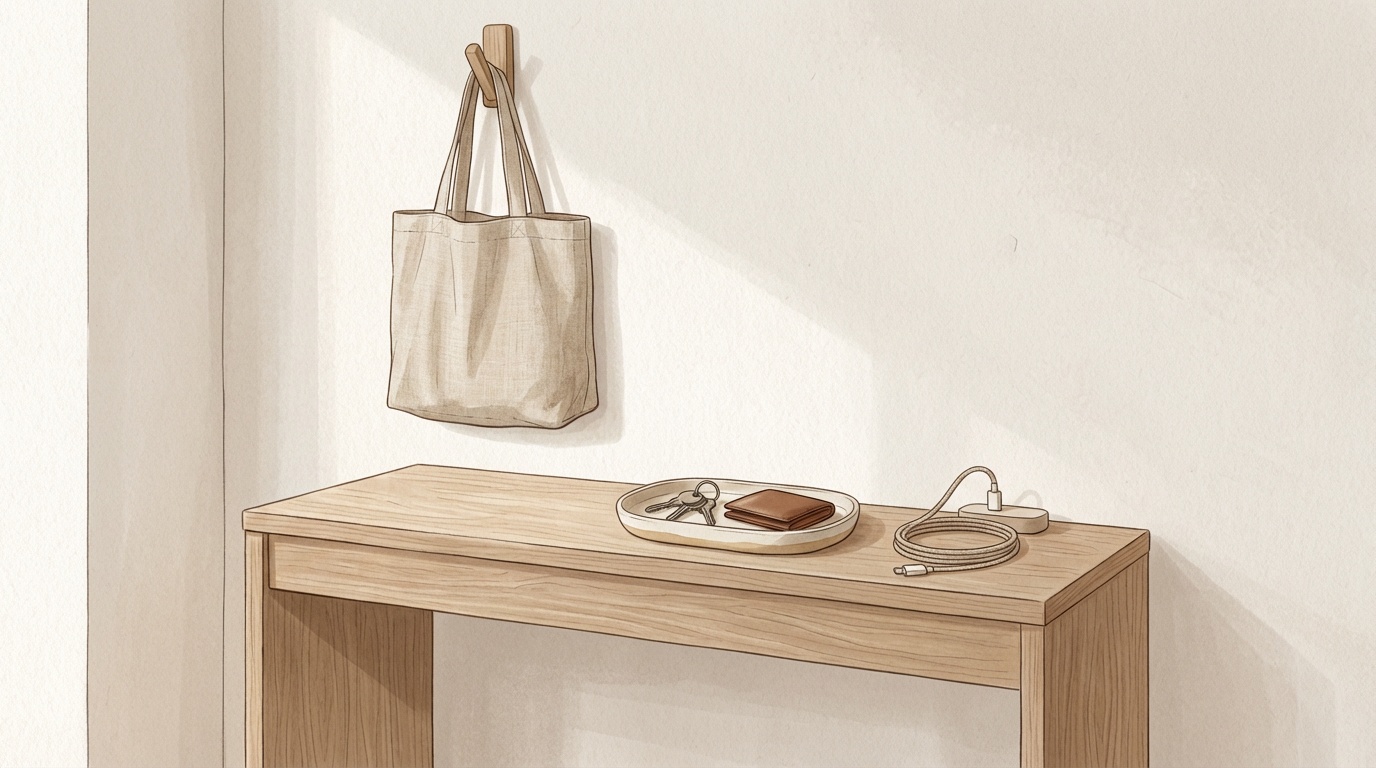
Give them a home that is so easy it feels slightly silly:
- a small tray or bowl by the door
- a hook for your bag
- one charging station instead of cables migrating around the apartment
This is one of those organized habits that pays you back daily. The goal isn’t a perfect entryway. The goal is removing the 7 a.m. chaos tax.
And once you have a “home,” the next habit gets easier: returning things to their place—without it becoming a whole event.
The low-friction rule that prevents pileups: do the tiny thing now
One more pattern you’ll notice with organized people: they don’t let small tasks collect interest.
Not because they love chores. Because they understand momentum.
If it takes less than two minutes—replying to a simple text, filing one paper, putting the mug in the dishwasher—they do it now, so it doesn’t become a heavier task later.
The trick is to apply this selectively, so you don’t spend your whole day doing tiny things and never doing deep work. But as a baseline, it stops your life from becoming a museum of “later.”
At this point, you’ve got the beginnings of something powerful: less mental clutter (capture), clearer direction (priorities), fewer daily friction points (drop zones), and fewer pileups (two-minute tasks). The next step is turning these into gentle routines that actually stick—without needing a personality transplant or a brand-new planner system…
Gentle routines that make organized habits automatic
The goal now is to stop “starting over” every Monday. You want a few anchor routines that run even when you’re tired, busy, or not in the mood. The easiest way to do that is to attach organization to moments that already happen.
The “bookends” method: a 5-minute open + a 10-minute close
Most overwhelm sneaks in at the edges of the day—when you’re rushing out the door or trying to shut your brain off at night. So we build tiny bookends:
- Morning Open (5 minutes): check your capture tool → pick your Three Wins → glance at calendar for any constraints.
- Evening Close (10 minutes): quick reset of main surface → capture stray thoughts → choose tomorrow’s must-do (just one) → set up the first step.
That last part—set up the first step—is where this gets powerful. If tomorrow’s must-do is “send the proposal,” the first step might be: open the doc and leave it in your browser, or paste the bullet points into a draft email. You’re removing friction for Future You.
A realistic “reset” that doesn’t eat your weekend
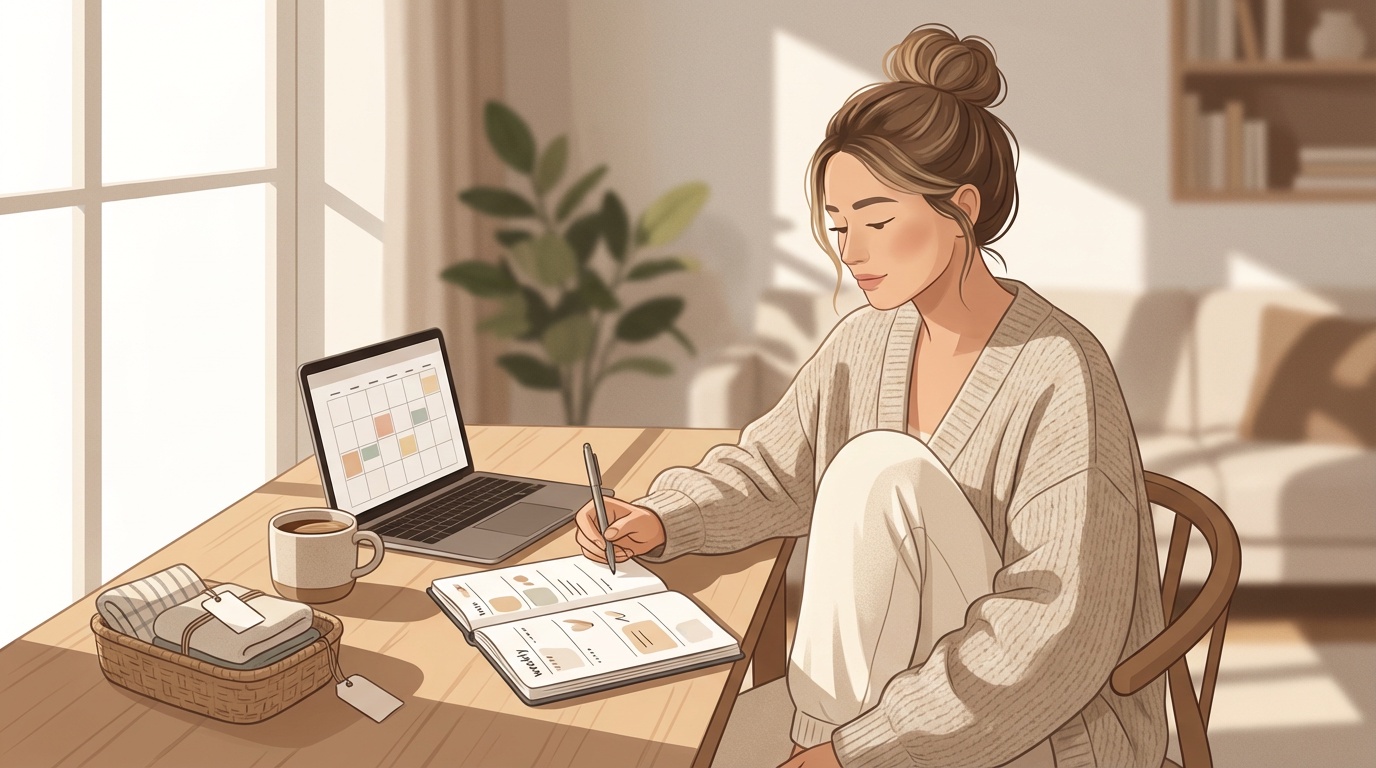
Organized people don’t clean their whole house every week. They reset the parts of life that create the most drag. Try a 30-minute Weekly Reset that’s more about steering than scrubbing:
- 10 minutes: empty your inbox(es)—email, task app, notes—into one list (no perfect sorting required).
- 10 minutes: scan your calendar for the week ahead: meetings, workouts, travel time, deadlines.
- 10 minutes: choose 1–2 “support moves” that will make the week easier (ex: schedule grocery delivery, book the haircut, prep two lunches, plan outfits for 3 days).
If you want this to stick, tie it to something you already do: Sunday coffee, Monday lunch break, Friday final work block. Same cue, same routine, less thinking.
Organized habits at home: systems for the spots that keep breaking
You don’t need a total home overhaul. You need a few “containment systems” that match how you actually live—especially when you’re moving fast.
Make your messy areas official (so they stop spreading)
Most homes have a handful of repeat-offenders: the mail pile, the “almost clean” clothing chair, the bathroom counter, the kitchen island. Instead of fighting them, formalize them:
- The Mail Zone: one vertical file or basket with 3 categories: “To Pay,” “To Reply,” “To File.” Anything else gets recycled immediately.
- The Clothes Zone: add a hook row or a single pretty basket for “wear again.” When it’s full, it’s laundry time—no negotiations.
- The Counter Zone: keep one small tray only. If it doesn’t fit on the tray, it doesn’t live there.
This is quiet but life-changing: you’re limiting the size of chaos so it can’t take over your space (or your brain).
The “one-touch” upgrade: fewer steps between you and putting things away
If returning things to their place feels weirdly hard, it’s usually because the “place” requires too many steps. Organized homes often have one common trait: storage is closer to the point of use.
- If you drop your bag in the bedroom, put the bag hook in the bedroom—not by the door because Pinterest said so.
- If your medications end up on the kitchen counter, create a tiny med tray where you actually take them (within safe storage practices for kids/pets).
- If the scissors keep migrating, buy a second pair and assign homes (kitchen scissors and desk scissors).
This isn’t “extra.” It’s designing your environment so good behavior is the easiest behavior.
Digital organization: stop letting your phone be a second job
Digital clutter is still clutter—just quieter until it suddenly isn’t. A few simple rules can cut down the constant scanning and re-checking.
One inbox rule: decide where tasks go (and where they don’t)
Your brain relaxes when it knows exactly what happens to an incoming request. Create a simple decision tree:
- If it’s a task: goes into your capture tool.
- If it’s an appointment: goes into your calendar immediately (with any prep time noted).
- If it’s reference: save it somewhere searchable (notes app folder) or delete it.
What you’re avoiding: the limbo zone where tasks live in texts, DMs, screenshots, and “I’ll remember.” That’s the mental-load trap.
Notification boundaries that don’t require willpower
Consider a small “notification diet.” Not dramatic—just intentional:
- Turn off notifications for anything that isn’t a real-time human need (most apps qualify).
- Keep only 2–3 allowed interrupters (calls from favorites, calendar alerts, messaging you truly need).
- Batch-check email and social instead of grazing all day (two set times is a great start).
This protects your attention, which is what decision fatigue feeds on.
When you slip (because you will): the repair plan
The difference between people who “stay organized” and people who feel like they’re constantly failing isn’t perfection. It’s having a simple way back.
Use the 15-minute rescue reset
On days when everything feels off, do a quick reset that creates immediate relief:
- 5 minutes: clear one surface (counter, desk, coffee table).
- 5 minutes: capture every open loop you can think of (no sorting, just dumping).
- 5 minutes: pick one next action you can finish today.
You’re not “getting caught up.” You’re regaining traction. That’s the win.
Keep your systems embarrassingly small
If your organizational routine requires the perfect playlist, an hour of free time, and a fresh planner, it’s not a system—it’s a special event. Organized habits stick when they’re:
- Small: easier than procrastinating
- Repeatable: same steps, same order
- Forgiving: works even when you miss a day
You don’t need more motivation—you need fewer decisions.
Conclusion: calm isn’t a personality, it’s a setup
You’re not trying to become some mythical “organized person.” You’re building a life that holds you more gently: a trusted capture system so your brain can breathe, priorities that make the day feel doable, homes for your essentials, and little resets that keep chaos from compounding.
Start with one anchor routine (morning open or evening close), one friction-point fix (a drop zone that actually works), and one weekly reset on your calendar. That’s enough to reduce mental load in a way you’ll feel immediately—and enough to grow into a steadier, calmer rhythm over time.
If you’d like extra help seeing these systems in action, there are additional visual resources available below.