
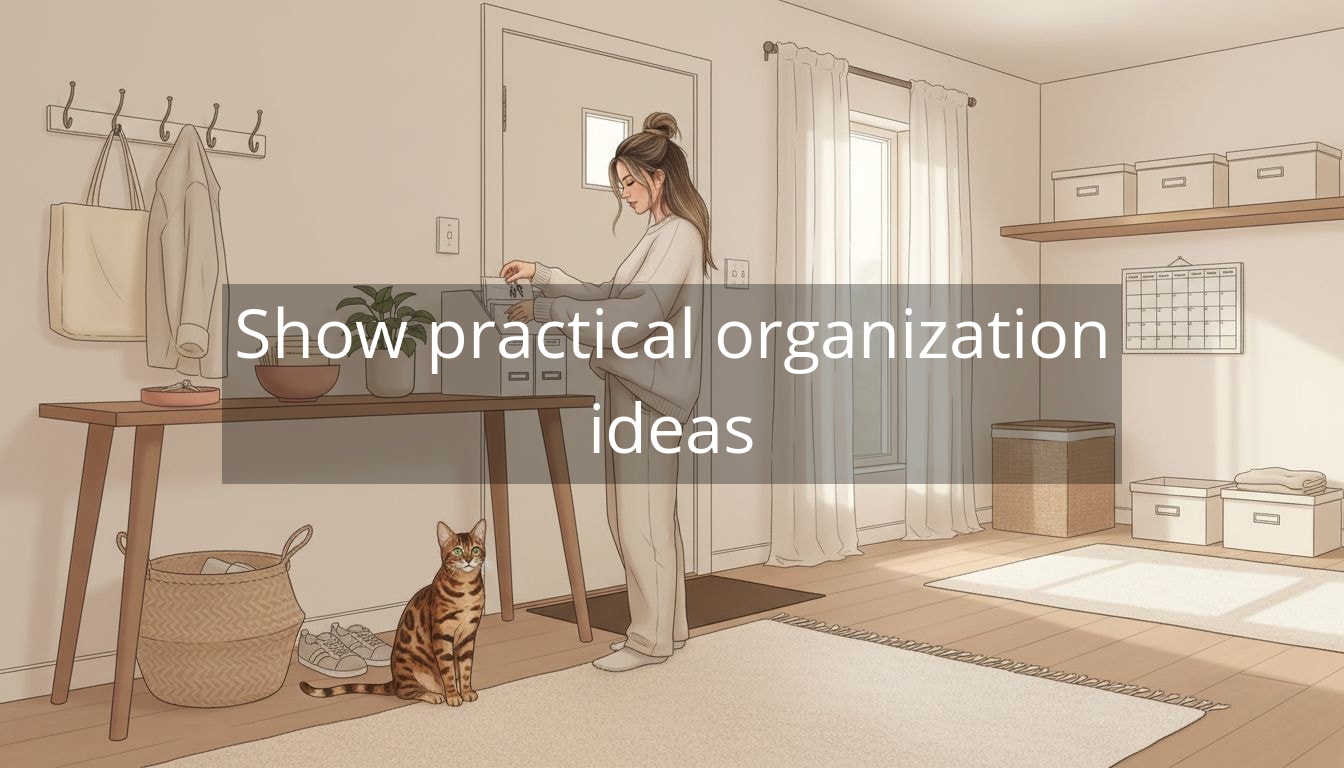
You can scroll through a hundred home organization ideas and still feel like your space is fighting you. Because the real issue usually isn’t a lack of cute bins—it’s that modern life is noisy, fast, and mentally overcrowded.
Think about a normal weekday: you’re answering Slack messages, tracking a delivery, half-planning dinner, and trying to remember where you put the document you swore you filed. Meanwhile, your kitchen counter becomes the “safe place” for random stuff (mail, returns, chargers), and your closet turns into a tightly packed guessing game. Organization breaks down when your home doesn’t have clear landing spots—and when storage is set up like a black hole (deep cabinets, overstuffed drawers, anything “temporarily” placed).
Here’s the mindset shift that actually changes things: home organization isn’t about getting everything put away once. It’s about creating systems that make putting things away easy on your busiest day. If the system requires extra steps, you won’t maintain it (because you’re not failing—your brain is just conserving energy).
“Clarity isn’t created by doing more. It’s created by removing friction.”
Home Organization Ideas That Start With Less Friction
Start with the spots that steal your time daily: the entryway, the kitchen, and your “miscellaneous” surfaces.
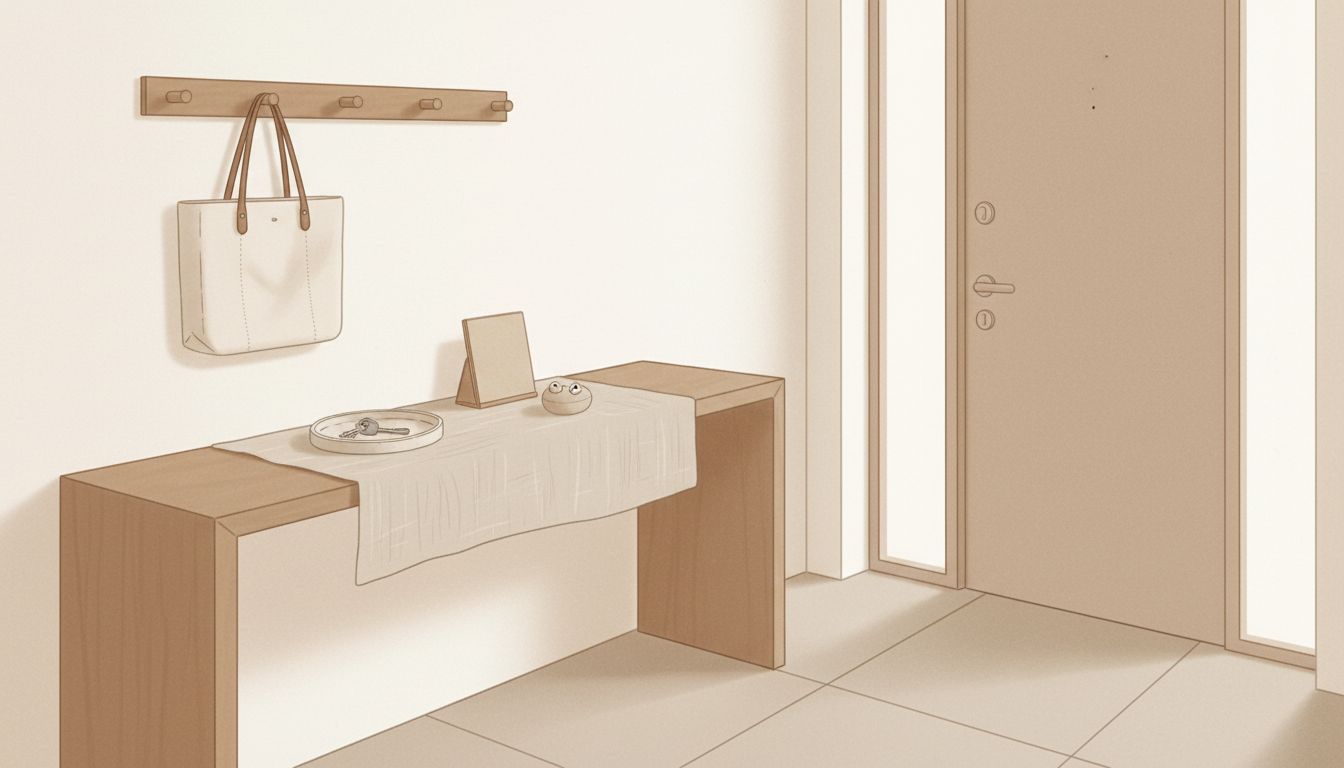
1) Create an entryway landing zone.
Add a simple tray or small bowl near the door for keys, cardholder, and earbuds. If you’re always hunting for something, it doesn’t need a better hiding place—it needs a designated home.
2) Replace “out of sight” storage with “easy to see” storage.
Clear bins (even just a few) instantly reduce the out-of-sight, out-of-mind problem. Pair them with quick labels—yes, even handwritten. If you want it to look clean without overthinking, Canva has simple label templates you can print in minutes.
3) Use one catch-all basket—on purpose.
Instead of letting clutter migrate across every surface, choose one basket as a temporary holding zone. The rule: it’s allowed to exist, but it gets sorted on a specific day (Sunday night works well).
Once these basics are in place, you’ll start noticing which parts of your home need better “zones” instead of more storage.
Home Organization Ideas That Build “Zones” (So Your Stuff Stops Roaming)
When your home feels chaotic, it’s usually because your items don’t just belong to you—they belong to a moment: getting ready, cooking, leaving the house, winding down. “Zones” simply match storage to real life, so you’re not constantly relocating the same things.
A good zone has three elements: a clear purpose, the few items that support that purpose, and an easy reset that takes under two minutes.
Try the “one-step put-away” test
Pick a common item—your scissors, your everyday lip balm, the dog leash. Ask: Can I put this away with one hand, in one motion, without opening three things? If not, the system is too high-friction for your busiest day.
- Swap lidded boxes for open bins where you stash things daily (chargers, sunscreen, mail-to-sort).
- Move the home closer to where you use the item (meds near the coffee mugs, not across the house).
- Lower the “effort bar”: hooks beat hangers for bags you grab constantly.
Small Systems for the Spots That Quietly Create the Most Stress
The kitchen counter (aka the default dumping ground)
If your counter is where decisions go to multiply, you’re not alone. The fix isn’t a bigger counter—it’s giving the “incoming” items a path.
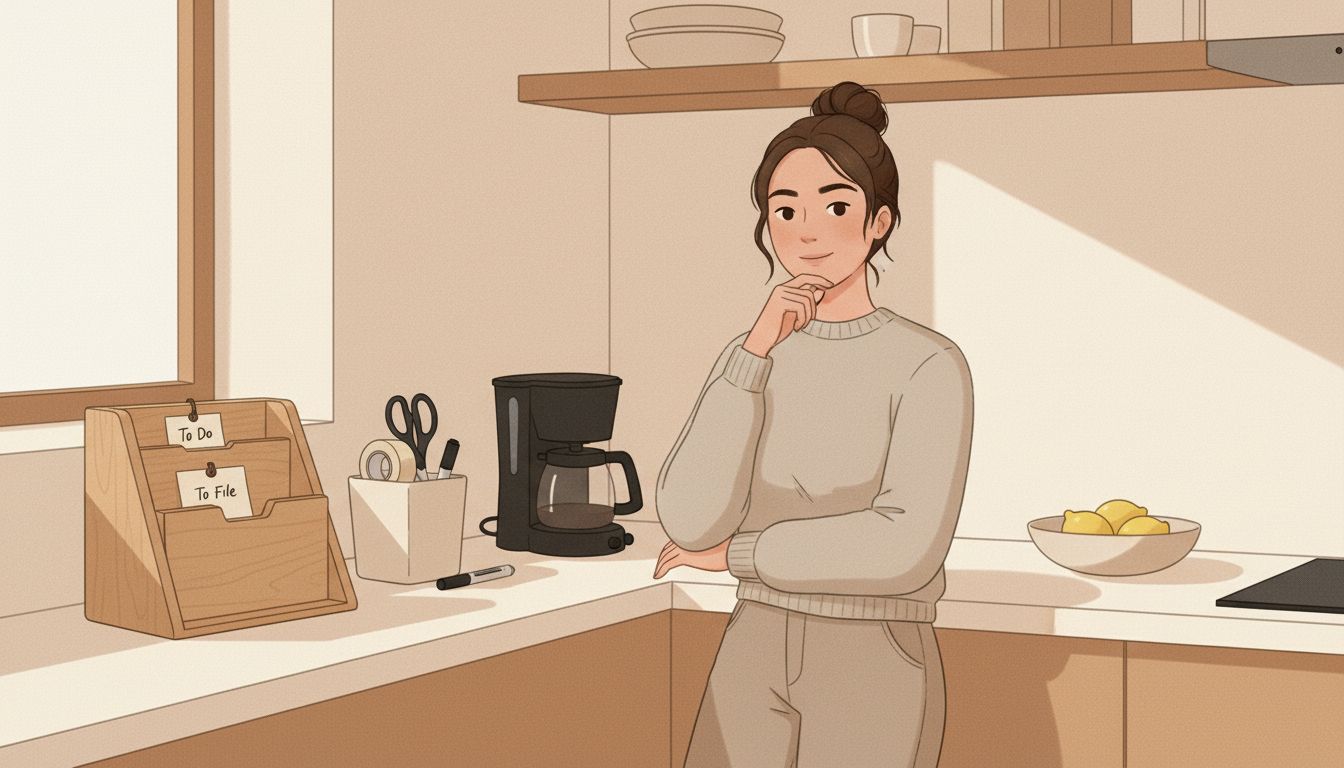
- Create a paper runway: one upright file holder or two-slot sorter labeled “To Do” and “To File.” Mail goes there immediately, not on the counter.
- Limit what lives out: choose a “countertop VIP list” (coffee maker, cutting board, fruit bowl). Everything else earns a cabinet spot.
- Add a tiny returns kit: a small bin with tape, scissors, and a marker. Returns stop becoming a week-long inconvenience.
The closet that feels like a tightly packed guessing game
Closets get stressful when you can’t see your options—so you keep buying “maybe” items and wearing the same three things. Aim for visibility, not perfection.
- Make your “today” section obvious: keep your current-season, most-worn pieces at eye level and within easy reach.
- Create a one-hanger rule for decision fatigue: if something requires special layering, a specific bra, or constant adjusting, store it separately so it doesn’t clutter your daily choices.
- Use a small donation bag in the closet: when something doesn’t fit your life anymore, it goes straight in. No dramatic purge required.
The bathroom drawer that turns into a cosmetic junk drawer
Bathrooms get chaotic because they’re full of tiny categories: hair, skin, teeth, makeup, first aid. The easiest fix is “containers within containers.”
- Use small open cups or trays inside drawers: one for daily makeup, one for hair ties/clips, one for backups.
- Separate “daily” vs “backup”: keep daily items front and center; stash backups in a labeled bin under the sink.
- Set a one-minute reset: wipe the counter and return items to their tray before bed.
Tools That Actually Help (Without Turning Your Home Into a Storage Store)
You don’t need a shopping spree. The most useful tools are the ones that reduce handling and make your categories obvious.
- Clear bins (a few, not fifty): best for pantry overflow, toiletries, hair tools, and “backstock” items.
- Drawer dividers: for the spaces that become instant chaos—kitchen utensils, socks, makeup, office supplies.
- Lazy Susans: ideal for deep cabinets where things vanish (spices, oils, skincare backups).
- Hooks: for bags, headphones, dog leashes, and “I need this every day” items.
- A label system you’ll maintain: handwritten labels are perfectly valid. The goal is clarity, not Pinterest-level typography.
If you’re not sure what to buy (or keep), use this filter: Does this tool make it easier to put things away, or just easier to store more? Choose ease over capacity.
Maintenance Habits That Keep Your Home Organized Without a Weekly Overhaul
Most organization “fails” because maintenance is vague. When you’re tired, vague tasks turn into “later.” The win is making upkeep specific and small.
The 5-minute daily reset (but make it realistic)
Pick a repeatable moment—after dinner, before your shower, right after you put your laptop away—and do only these three things:
- Clear one surface (usually the counter or coffee table).
- Return items to their zones (no reorganizing, just returning).
- Set tomorrow up by one step (water bottle filled, outfit picked, keys in the tray).
This isn’t about being “good.” It’s about saving Future You from waking up to visual noise.
The weekly “catch-all basket” appointment that actually sticks
That catch-all basket you created? Keep it—but give it a clear rhythm.
- Choose a recurring time (Sunday evening, Friday lunch break, whatever is most consistent for you).
- Sort with three quick destinations: Put Away, Donate, Action Needed.
- Cap the time at 15 minutes. If it takes longer, the basket is too big—or too many items don’t have homes yet.
A gentle rule for preventing “stuff creep”
If you notice an area getting messy again and again, don’t assume you need more discipline. Assume you need a clearer category.
Example: if hair tools keep showing up on the bathroom counter, the real category might be “hot tools that need cooling,” and the solution might be a heat-safe bin or open tray under the sink—something that fits how you actually use them.
You don’t need more motivation—you need fewer obstacles between you and the life you want to live.
When You’re Overwhelmed, Use This Quick Reset Order
If your home feels like it’s shouting at you, start with the order that gives the fastest calm:
- Trash first: obvious wrappers, packaging, expired papers.
- Dishes and cups: the quickest visual win.
- Laundry into one container: not sorted, just contained.
- Return the “daily essentials” to their zones (keys, chargers, shoes, bags).
- Stop. You’re not aiming for perfect—you’re aiming for functional peace.
Extra Resources (If You Want More Support)
If you’re in the mood to go deeper, additional resources can make this feel simpler—especially when you don’t want to reinvent the wheel.
- Printable cleaning and reset checklists for daily/weekly routines
- Room-by-room organization guides (kitchen, closet, bathroom, entryway)
- Label templates you can customize quickly
- Short video walkthroughs for setting up zones and storage that stays tidy
A Calm Home Is a System, Not a Personality Trait
The most helpful home organization ideas aren’t the ones that look impressive—they’re the ones that quietly support you on your busiest Tuesday. When your keys have a home, your mail has a path, and your daily items live where you actually use them, your brain gets to unclench a little.
Start small. Pick one zone that would noticeably reduce your mental load—your entryway tray, your counter paper sorter, your closet “today section.” Build a system that’s easy to maintain on a hard day. That’s how calm living becomes normal: not through perfection, but through smarter setups that make life feel lighter.
Telegram Galelar
Instagram @galelar_lis
YouTube @galelar
TikTok @galelar_lis