
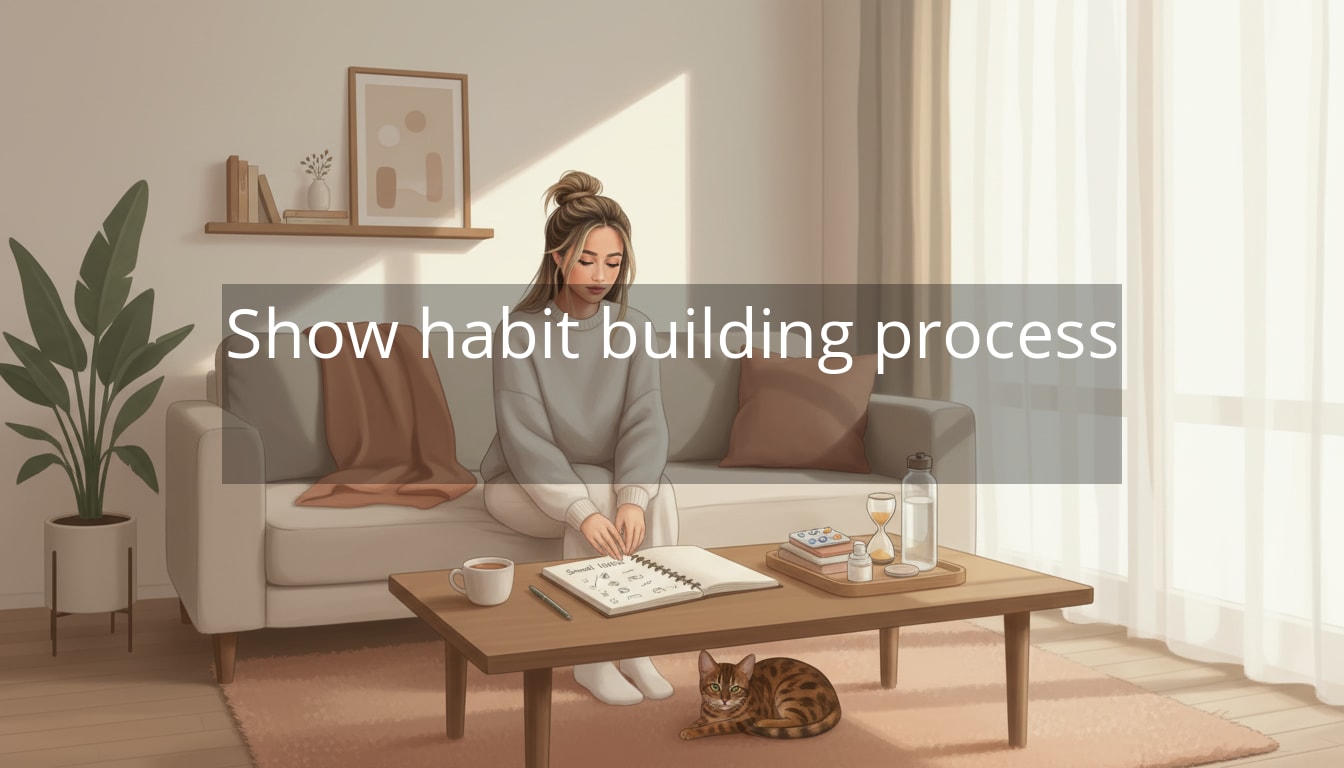
If you’ve been googling how to build small habits while juggling deadlines, texts you “need” to answer, and a to-do list that regenerates overnight—you’re not alone. How to build small habits isn’t about becoming a new person by Monday; it’s about creating tiny actions you can do even on your most overloaded day.
Most of us don’t struggle because we’re lazy. We struggle because modern life is loud. Your brain is making a thousand micro-decisions before noon (what to wear, what to eat, which tab to close, what you forgot), and willpower is a limited resource. So when you set a goal like “work out 4x a week” or “start journaling every morning,” it quietly becomes one more vague obligation. No clear starting point, no obvious trigger, and no immediate payoff—so the habit never gets traction.
Here’s the mindset shift that changes everything: small habits work because they lower the “start-up cost.” Instead of asking your brain for motivation, you build a system that makes the action almost automatic. Research-backed habit models boil it down to a simple loop—cue, routine, reward—and tiny habits make that loop easy to repeat until it sticks.
Clarity isn’t a personality trait—it’s a practice you return to.
How to Build Small Habits Without Overhauling Your Life
Start with a habit so small it feels almost silly—because silly is sustainable. Aim for under two minutes:
- One push-up.
- Floss one tooth.
- Open your notes app and write one sentence.
- Put your water glass on your desk.
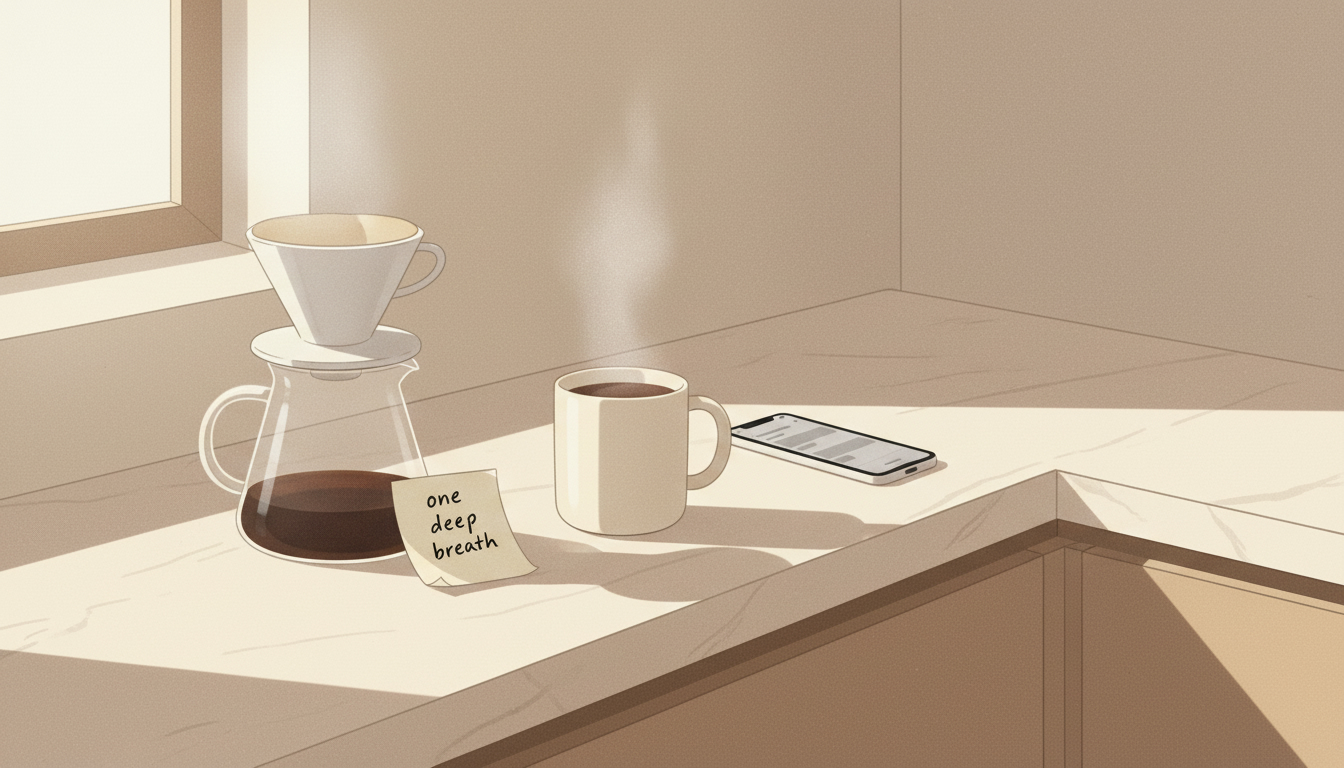
Then attach it to something you already do (this is the “cue” that busy brains need). For example: After I make coffee, I take one deep breath. Or: After I brush my teeth, I floss one tooth.
If you like digital support, keep it lightweight: a simple habit tracker (or even a recurring reminder in Apple Reminders/Todoist) can act as training wheels. The goal isn’t perfection—it’s creating a repeatable moment you can actually complete when your day is chaotic… and letting that consistency quietly build momentum.
How to Build Small Habits When Your Schedule Isn’t “Ideal”
The tricky part isn’t doing a tiny habit once—it’s remembering it when your day goes sideways. The easiest fix is to stop relying on memory and start relying on “environment,” meaning whatever is already around you.

Make the habit visible (so your brain doesn’t have to hold it)
If a habit lives in your head, it competes with everything else. If it lives in your space, it has a chance.
- Want to drink more water? Put a glass on your desk before you go to bed.
- Want to stretch? Leave a yoga mat or towel where you’ll literally trip over it (next to the bed or couch).
- Want to take vitamins? Store them with your coffee pods or tea—right where the morning ritual already happens.
This isn’t about “discipline.” It’s about reducing the number of invisible steps between you and the habit.
Use a short “if-then” plan for chaotic days
Some days you’ll have energy; other days you’ll be lucky to answer one email without feeling personally attacked by your inbox. An “if-then” plan keeps your habit consistent without demanding the same output every day.
- If I’m too tired to work out, then I will do one squat while brushing my teeth.
- If I can’t journal, then I will write one sentence in my notes app.
- If I miss my morning routine, then I will take one deep breath before opening my laptop.
This matters because consistency builds identity (“I’m someone who shows up”), even when the action is tiny.
How to Build Small Habits That Actually Grow (Without Becoming Another Chore)
Small habits are meant to expand—but only after they feel easy. Think of it like turning the volume up slowly instead of blasting sound and hoping your nervous system adapts.
Pick a “minimum” and an “optional upgrade”
This is one of the most sanity-saving ways to scale: define what counts no matter what, and then keep a slightly bigger version available for days you have more capacity.
- Movement: Minimum = 1 push-up. Optional upgrade = 5 minutes of strength or a short walk.
- Decluttering: Minimum = put away 1 item. Optional upgrade = clear one surface.
- Mental clarity: Minimum = write 1 sentence. Optional upgrade = a full page or a voice-note brain dump.
You’re not “failing” when you do the minimum—you’re maintaining the pathway. The upgrade is a bonus, not a requirement.
Grow by adding “one notch,” not a new lifestyle
If your habit is currently one deep breath after coffee, the next step isn’t “10 minutes of meditation every day.” The next step is one notch up:
- One deep breath → two deep breaths
- One sentence → two sentences
- One minute walk → two minutes
This keeps your brain from triggering the “this is going to be a whole thing” alarm.
Let the reward be immediate (not theoretical)
A lot of habits fail because the payoff is far away. Your brain is deciding based on what it gets right now. So give it something small and instant.
- Track it visually: a simple checkbox note, a calendar X, or a single-line habit tracker.
- Use a “done” cue: after you complete the habit, say “done” quietly or take one second to notice the relief.
- Pair it with something pleasant: stretch while your coffee brews, tidy for one song you love, take a breath while you put on hand cream.
The point isn’t to bribe yourself. It’s to teach your brain, “This is safe, simple, and worth repeating.”
A Simple Weekly Reset That Protects Your Habits
If your life is busy, habits don’t usually break because you “lost motivation.” They break because your week gets messy and you don’t have an easy way to recover.
Try a 10-minute “habit reset” once a week
Pick a day that’s already a natural transition (Sunday afternoon, Monday morning, Friday after work). Set a timer for 10 minutes and do three things:
- Keep: Which one small habit felt genuinely helpful?
- Cut: What felt like too much (even if it’s a “good” habit)?
- Anchor: What’s the clearest existing cue you can attach your habit to this week?
This keeps your systems aligned with your real life, not your aspirational one.
When you fall off, restart smaller than you think
This is the part most people skip. When a habit breaks, we often restart at the original “big plan” out of guilt. But guilt is a terrible habit coach.
If you missed a week, your comeback plan could be:
- One glass of water today (not “2 liters starting now”)
- One minute of walking (not “a full workout schedule”)
- One item tidied (not “declutter the whole apartment”)
Small restarts rebuild trust with yourself, which is what actually creates long-term consistency.
Small is not weak. Small is reliable—and reliable is what changes your life.
Extra Resources to Make Small Habits Easier
If you like a little structure (without turning your life into a spreadsheet), here are a few helpful resource types to explore:
- Habit stacking lists: simple prompts that help you attach new habits to existing routines
- Two-minute habit libraries: ideas for tiny habits by goal (energy, calm, movement, home, focus)
- Printable trackers: minimalist weekly checklists that don’t punish you for missed days
- Short guided routines: 3–5 minute stretch or breathing videos for low-effort momentum
Conclusion
Learning how to build small habits is less about self-control and more about creating a life that’s easier to live inside. When you make the first step tiny, attach it to something real, and let “minimum” be enough, you reduce mental load in a way goals alone can’t.
Choose one habit that would make tomorrow feel 5% calmer. Make it so small you can do it on your most overloaded day. Then let it be quiet proof—day after day—that you can build smarter systems and still live gently.
Telegram Galelar
Instagram @galelar_lis
YouTube @galelar
TikTok @galelar_lis