
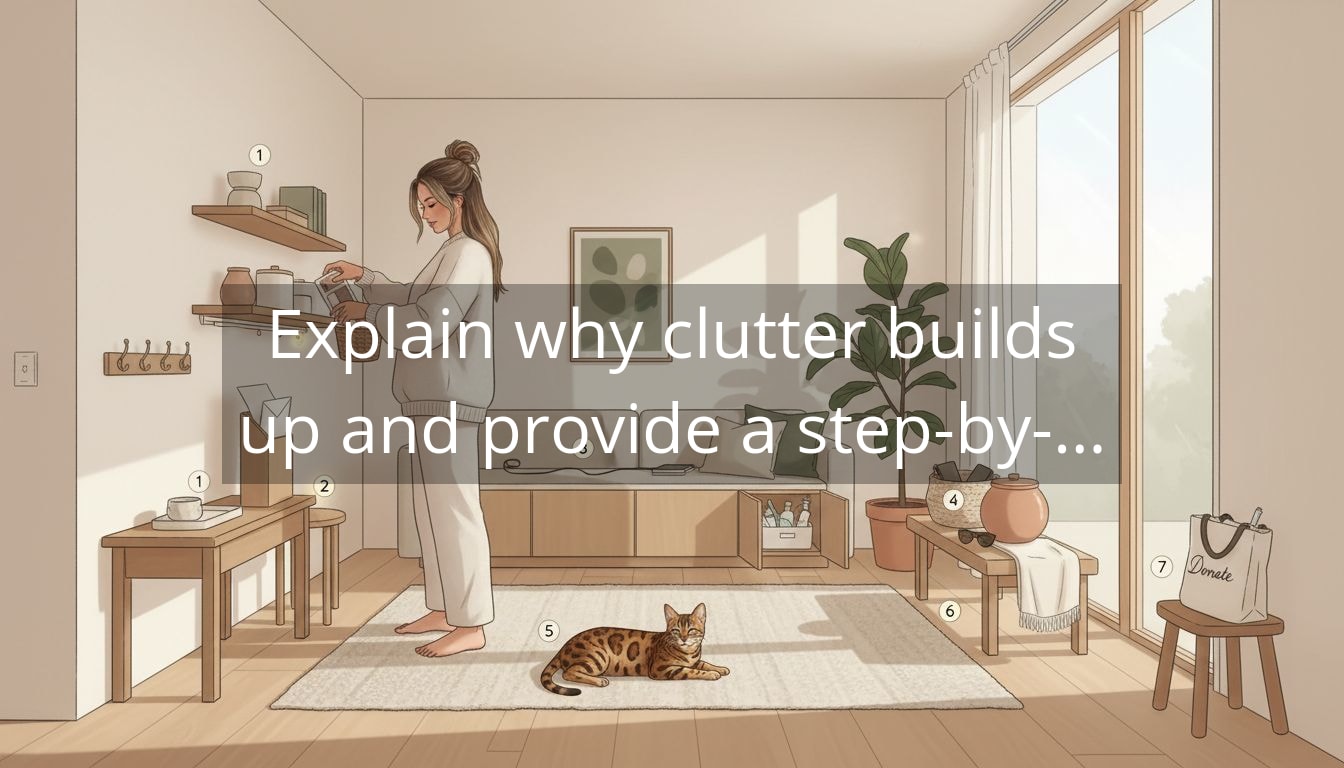
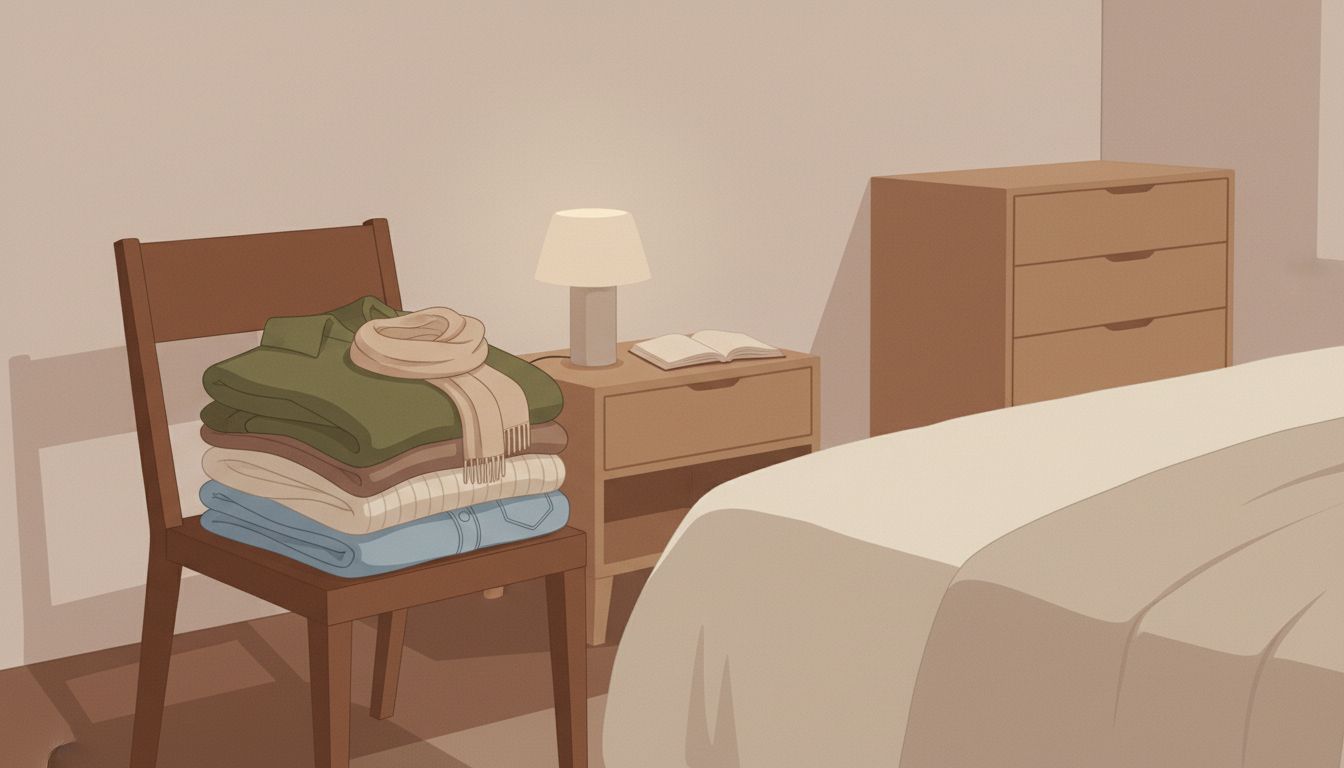
You can Google how to declutter your home all day, but that doesn’t help when you’re standing in your bedroom at 9:47pm, still in your work clothes, staring at a chair full of “not dirty but not clean” laundry. The mental load hits before you even touch anything—because clutter isn’t just stuff. It’s unfinished decisions.
Here’s why it builds up so quietly: modern life is fast, and our homes become the landing pad for everything we don’t have time to process. Things get kept “just in case.” Papers drift from counter to table to mystery pile. Items don’t have a real home, so they live on surfaces. And duplicates sneak in because re-buying feels easier than finding the original (how do we all own eight tote bags?).
The shift that makes decluttering feel doable is this: decluttering is not organizing. Organizing is arranging. Decluttering is deciding. When you start with decisions, the rest gets simpler—because you’re not trying to create a perfect system for items you don’t even want to keep.
“Clarity comes from finishing small decisions, one at a time.”
How to Declutter Your Home Without Overwhelm
The calmest system is also the least dramatic: go small and specific. Not “the kitchen.” Not “the closet.” Choose one contained space you can finish—one drawer, one shelf, one category on a countertop. Small wins build trust with yourself, and that’s the real fuel.
A few practical moves that make this easier immediately:
- Set a 20-minute timer on your phone (or use Focus mode) and pick a micro-zone. Stopping at 20 minutes prevents the “I started and now my whole house is worse” spiral.
- Prep two bags/boxes first: one for trash, one for donations. If you’re feeling ambitious, add a “sell” bag—but only if you’ll list it within 30 days.
- Use a simple note in your phone titled “Homes for things.” As you declutter, jot where items should live (ex: “spare chargers: top desk drawer”). This prevents the classic problem of re-making piles after your first burst of motivation.
Once you choose your first micro-zone, the next step is the one most people skip—and it’s the reason their progress finally starts to feel real.
The Step Most People Skip: Empty It All the Way
Before you start sorting, do the thing that feels slightly annoying but makes everything easier: take everything out of the micro-zone you chose. Drawer. Shelf. Bathroom cabinet. The whole thing.
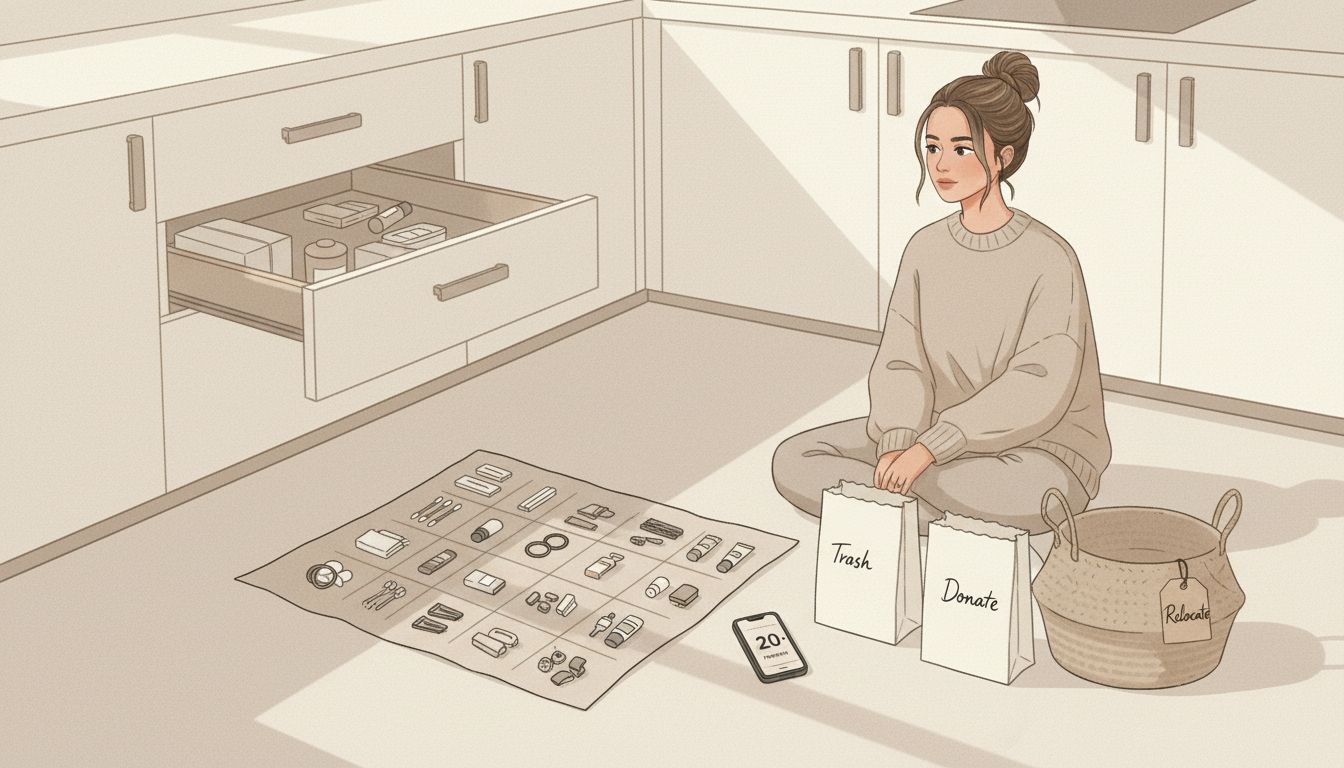
Why it works: when items are half-hidden, your brain stays in “maybe it’s fine” mode. When everything is visible, you can’t unsee duplicates, expired products, and the random objects you’ve been stepping around for months.
If you’re doing this at 9:47pm and you’re tired (relatable), don’t spread it across your entire room. Use a small “staging area”:
-
One towel or sheet on the floor/bed to hold everything you pulled out
-
Two bags/boxes (trash + donate) right next to you
-
One “relocate” bin for items that belong elsewhere (more on this in a second)
The No-“Maybe” Sorting Rule (With Better Questions)
When people stall, it’s usually because they’re asking the wrong question. “Should I get rid of this?” can feel dramatic. Try questions that lead to cleaner decisions:
-
Would I buy this again today? If not, it’s probably not a “keep.”
-
Do I have a real use for this in the next 30 days? (Not a fantasy-self use. A real-life use.)
-
Is this the best version I own? Keep the favorite. Release the backups that make everything harder to find.
-
Is this costing me space and calm? Sometimes the “cost” is daily irritation, not money.
If you feel yourself building a “maybe” pile, call it what it is: deferred decisions. Instead, use a temporary holding rule that still has an ending.
-
The 7-Day Limbo Box: If you truly can’t decide, put it in a labeled box with today’s date. If you don’t go looking for it in seven days, you donate it (no re-opening to re-debate).
How to Declutter Your Home With One Simple Container: The Relocate Bin
This is the missing system that keeps decluttering from turning into “I made piles in three rooms and now I’m overwhelmed.”
Keep one bin/basket with you while you declutter. Anything that belongs in a different room goes into the bin—not into your hands for a detour. Detours are how a 20-minute project becomes a 2-hour spiral.
When the timer goes off, you have two clean stopping points:
-
Option A: Put everything you’re keeping back neatly and take the relocate bin on a quick drop-off loop (2–5 minutes).
-
Option B: If you’re truly out of energy, park the relocate bin by the front door or your hallway and schedule a specific drop-off time (tomorrow morning with coffee counts).
Real-life example: You’re decluttering your bathroom drawer and find hair ties, a phone charger, and a random candle. Instead of walking around the house returning them (and somehow ending up reorganizing the nightstand), everything goes into the relocate bin. Your bathroom drawer still gets finished. Your brain still gets the win.
Put Back Less Than You Think (The “Breathing Room” Rule)
When you’re learning how to declutter your home in a way that lasts, this is the part that changes everything: don’t refill spaces to 100% capacity.
A drawer that’s packed edge-to-edge becomes messy the moment you add one more thing. Aim for 70–80% full. That little bit of breathing room is what makes your system resilient on busy weeks.
-
Kitchen: Keep one “spare” spot in each drawer for the inevitable odd item that shows up mid-week.
-
Closet: Leave hangers spaced enough that putting laundry away isn’t a wrestling match.
-
Entryway: If your shoe area fits exactly eight pairs, you’ll always have nine.
The “Homes for Things” List (So Clutter Stops Reappearing)
Remember that phone note from earlier? Now you actually use it.
After each micro-zone, write one or two simple “rules” for where things live. Not perfect rules—realistic ones that match how you move through your day.
-
“Not dirty but not clean” clothes: One hook or one basket. If the basket is full, it’s a sign to wash or decide—no second chair allowed.
-
Mail: One tray or one folder. Immediately recycle junk mail before it touches the counter.
-
Chargers: One small bin in a single, consistent spot (not “wherever I last saw one”).
-
Returns: A dedicated bag by the door. Receipts go in the bag the moment you walk in.
This is how you reduce mental load: you’re not deciding from scratch every time. Your home starts making the decision for you.
If You Live With Other People, Use “Default Locations”
Shared homes get messy fast when everyone has a different idea of where things go. You don’t need a household meeting—just a few defaults that are easy to follow:
-
One open bin for shared items (remotes, chargers, pens) in the living area
-
One drop zone per person (a hook + small tray) so bags and keys don’t migrate
-
One “I don’t know where this goes” basket that gets processed weekly (no shame, just a system)
Small Habits That Keep Your Home Decluttered (Even When Life Is A Lot)
Decluttering isn’t maintained by willpower. It’s maintained by tiny closing-the-loop habits that take less time than doom-scrolling.
-
The 2-minute reset: Before bed, set a timer and only put away what’s visible in one room. Just two minutes. You’re building the identity of someone who finishes small decisions.
-
One-touch paper: When you pick up a piece of paper, decide immediately: recycle, file, act, or scan. Paper is sneaky because it looks “important” even when it’s not.
-
Donation bag always open: Keep a donation bag in a closet. When you see something that’s done serving you, drop it in. When the bag is full, it leaves the house.
-
Regular “out” day: Choose one day a week (or every other week) when donations and trash actually go out. Otherwise clutter just relocates into bags.
Small choices done consistently create the calm you keep wishing would magically appear.
A Few Extra Resources (If You Want More Structure)
If you like having a little guidance while you build your rhythm, extra resources can help—especially on low-energy weeks.
-
A simple decluttering checklist for common micro-zones (bathroom drawer, pantry shelf, nightstand)
-
A weekly “home reset” routine you can finish in 15 minutes
-
Gentle cleaning and upkeep tools like routine-based apps (for reminders that don’t feel intense) or printable trackers
-
Short videos that demonstrate drawer resets, paper workflows, and closet edits in real homes
Calm, Clear, and Completely Doable
You don’t need a perfect weekend, a massive burst of motivation, or a brand-new set of matching bins. You need a small space, a timer, and a way to finish decisions without creating new piles.
When you learn how to declutter your home with micro-zones, a relocate bin, and simple “homes for things,” you’re not just making your rooms look better—you’re reducing the number of tiny choices your brain has to carry all day.
Start with one drawer. Finish it fully. Let that be proof that you can create calm in your own space—one small, smart system at a time.
Telegram Galelar
Instagram @galelar_lis
YouTube @galelar
TikTok @galelar_lis