
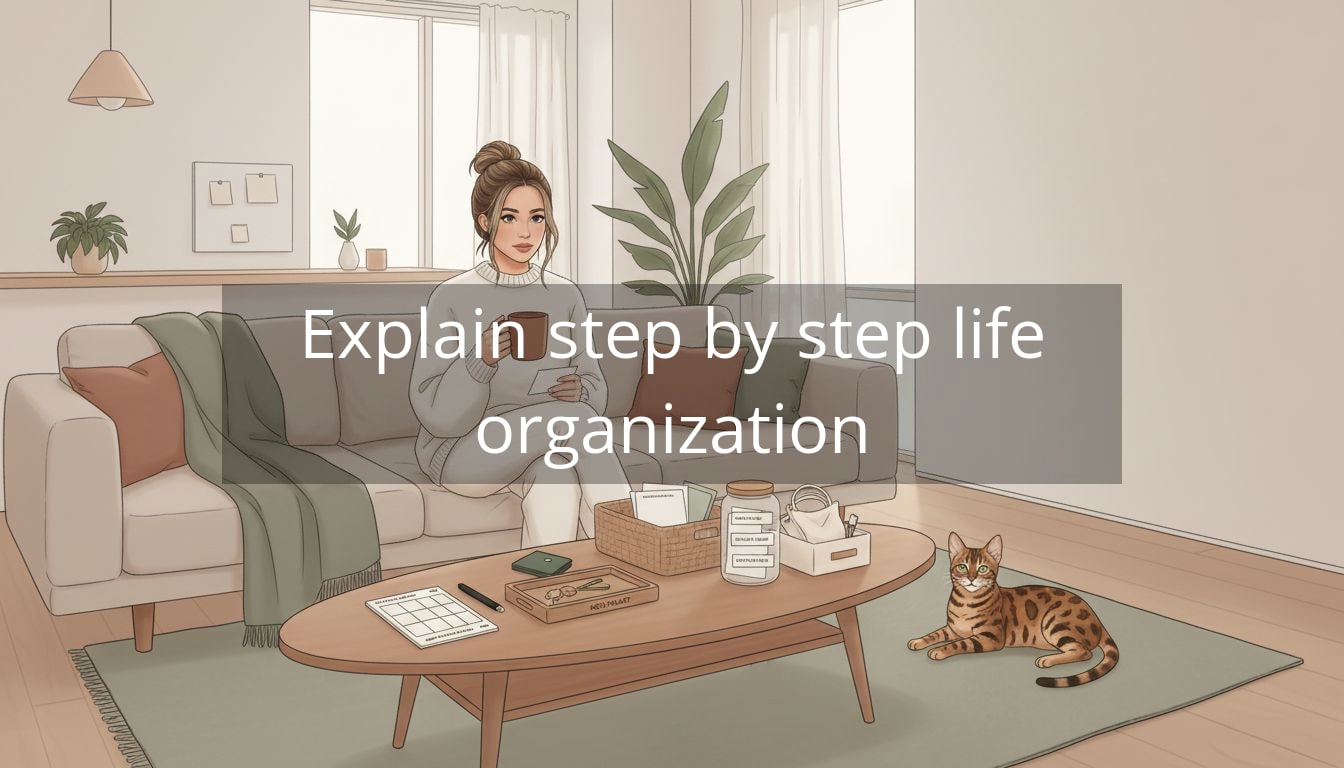
If you’ve been Googling how to organize your life while simultaneously answering Slack, hunting for that one email, and wondering what’s for dinner… you’re not alone. Most of us aren’t “bad at time management”—we’re just managing everything in too many places at once.
Why life feels messy (even when you’re trying)
The chaos usually isn’t coming from a lack of effort. It’s coming from scattered information. A to-do list in your notes app. A reminder in your calendar. A half-written plan in a journal. Tasks living inside emails. Sticky notes on the counter that stop being “helpful” the moment you stop seeing them.
Every time your brain has to remember where something is stored, it burns energy. And when you’re already stretched thin—work deadlines, life admin, relationships, health stuff—those tiny decisions add up fast. You end up reacting all day instead of directing your day.
Clarity doesn’t come from doing more—it comes from knowing what matters and where it lives.
How to organize your life: start with one trusted home base
Here’s the mindset shift that changes everything: organization isn’t about having the prettiest system. It’s about having one reliable place you trust.
Pick a “home base” for anything that is a commitment—tasks, appointments, errands, follow-ups. For many people, that’s a simple combo:
- One calendar (Google Calendar or Apple Calendar)
- One task manager (Todoist, TickTick, or Notion if you prefer an all-in-one workspace)
- Optional: one notes app for ideas (Apple Notes, Google Keep)
Your only job at the beginning is consolidation. Not planning your perfect week. Not color-coding your entire life. Just capturing the loose threads into one system so they stop floating around in your head.
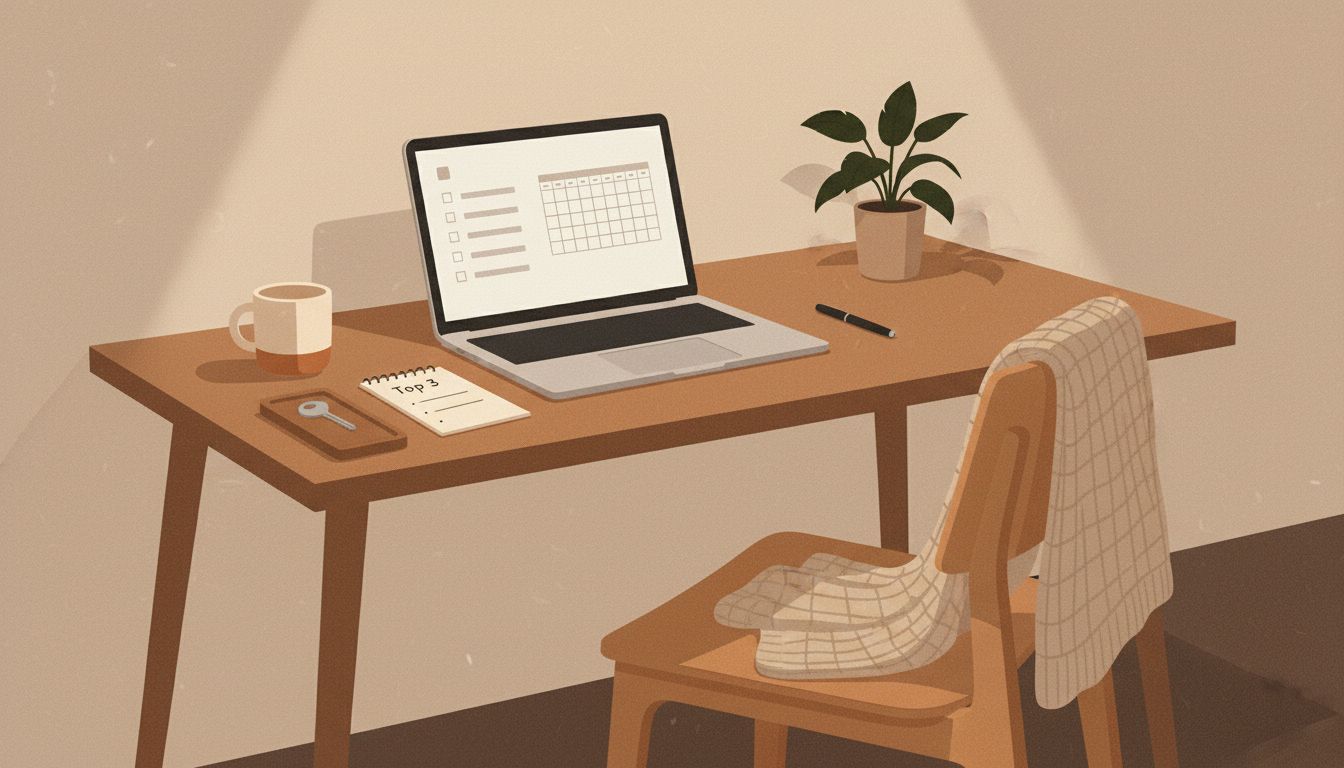
A practical rule that helps immediately: if something takes under two minutes (replying to a quick email, filing a document, booking an appointment), do it now—so it doesn’t become another “small thing” haunting you later.
Once everything has one home, you can finally see what you’re actually carrying—and start making cleaner, calmer decisions about it.
Turn your “home base” into a gentle daily rhythm (not another thing to manage)
Once everything has a place, the next step is keeping it from quietly sliding back into chaos. The goal isn’t a flawless routine—it’s a small rhythm that makes your system feel supportive, even on messy weeks.
Think of your home base like a kitchen counter: if you clear it for 60 seconds every day, it stays usable. If you ignore it for ten days, suddenly you’re moving piles just to make coffee.
The 5-minute daily reset that keeps you organized
This is the easiest maintenance habit I know for anyone learning how to organize your life without making it a whole personality.
- Step 1: Empty your head. Open your task manager and add any loose thoughts: “book dentist,” “send follow-up,” “buy birthday card.” No judgment, just capture.
- Step 2: Check tomorrow’s calendar. Look for anything that changes what’s realistic (early meeting, commute, appointment, kid pickup).
- Step 3: Pick your “Top 3.” Choose three tasks that would make tomorrow feel like a win. Not twenty. Three.
- Step 4: Make the first step obvious. If one of your Top 3 is “work on presentation,” add a subtask like “outline 3 key points” so you’re not staring at a vague mountain.
- Step 5: Set one tiny boundary. Example: “No errands after 6,” or “Lunch away from my desk,” or “One admin block at 4 PM, then stop.”
Real-life example: If you know tomorrow has back-to-back calls, your Top 3 might be “submit expense report,” “finish one slide,” and “order groceries.” That’s a day you can actually live inside.
Make your calendar do more than hold meetings
Most calendars are brutally honest: they show what other people want from you—and very little of what you need to function.
A simple upgrade is to treat your calendar as “reality planning,” not just appointment storage.
- Add buffers on purpose. If a meeting ends at 2:00, block 2:00–2:15 for notes, bathroom, water, reset. It sounds small, but it prevents that frantic, always-behind feeling.
- Block life admin. A 30-minute “life admin” block twice a week covers returns, forms, scheduling, and the inbox tasks that sneak into your weekends.
- Protect one recovery pocket. Even 20 minutes. A walk, stretching, quiet coffee—something that reminds your nervous system it’s allowed to exhale.
If time blocking has ever felt too rigid, try “theme blocks” instead: one block for admin, one for deep work, one for errands. You’re giving your day shape without trying to predict every minute.
A quick rule for decision fatigue: separate “when” from “what”
Decision fatigue usually comes from deciding the same thing over and over. Your system can prevent that by separating two choices:
- “What” goes in the task manager. Everything you might do lives there.
- “When” goes on the calendar. Only the few things you’re truly committing to get time on the calendar.
This keeps your calendar clean and believable—while your task manager holds the full menu of options. You stop waking up to a day that’s already impossible.
Systemize the repeat stuff (so you stop re-inventing your week)
The biggest win in learning how to organize your life is realizing you don’t need to “try harder.” You need fewer repeat decisions.
Pick two areas that create the most friction and give them a simple default plan.
Two easy systems that make life feel instantly lighter
- The “home reset” checklist (15 minutes). A tiny list you can do on autopilot: clear kitchen counter, quick dishes sweep, start one load of laundry, reset living room, take out trash if needed.
- The “food basics” plan. Not a perfect meal plan—just 5–7 default dinners you don’t have to think about. (Example: sheet-pan chicken + veggies, tacos, big salad + protein, pasta + frozen veg, breakfast-for-dinner.)
These aren’t glamorous systems—but they remove the exhausting “what should we do?” loop that eats up your evening energy.
Create a “Sunday list” without turning Sunday into a workday
If weekly planning makes you feel trapped, try a gentler version: a short list of categories you glance at once a week. Ten minutes is enough.
- Upcoming: appointments, deadlines, events
- Needs attention: bills, forms, follow-ups, household
- Personal: health, relationships, something fun
- One win: the single thing that would make next week easier
The point is not to plan a perfect week. It’s to prevent that Thursday-night realization that you forgot the one important thing again.
Declutter your system so it stays trustworthy
Your “home base” only works if you trust it. And trust comes from keeping it clean enough that you can actually see what matters.
A simple weekly review (15–20 minutes)
- Close open loops: reply, schedule, delete, delegate, or add a next step
- Scan the calendar: check the next 7–14 days for prep you’ll need
- Prune the task list: if you’ve ignored something for weeks, either break it down, move it to “Someday,” or admit it’s a no
- Choose next week’s focus: one personal, one practical, one work-related
This is where your system starts to feel like it’s holding you—not the other way around.
You don’t need a more disciplined brain—you need a kinder system.
Extra support (when you want it)
If you’d like help setting up your home base or strengthening your routines, there are lots of solid resources out there. A few helpful places to look:
- YouTube walkthroughs for your chosen tool (Todoist, TickTick, Notion, Apple Reminders) to learn one clean setup
- Weekly review templates (searchable and printable) if you prefer paper guidance
- Time-blocking examples for different schedules (hybrid work, shift work, caregiver routines)
- Minimalist meal planning guides focused on repeatable “default dinners”
A calmer life isn’t about doing more—it’s about holding less in your head
If your life has felt messy, it’s not because you’re failing. It’s because you’ve been trying to manage too many commitments without one clear container for them.
Start small: one calendar, one task manager, one place for ideas. Then keep it alive with tiny rhythms—a 5-minute daily reset and a short weekly review. Over time, you’ll notice something subtle but powerful: you’re not bracing for your day anymore. You’re directing it.
You deserve systems that reduce mental load, make room for real rest, and help you show up to your life with a little more calm. Not perfectly—just steadily, and with more breathing room than before.
Telegram Galelar
Instagram @galelar_lis
YouTube @galelar
TikTok @galelar_lis