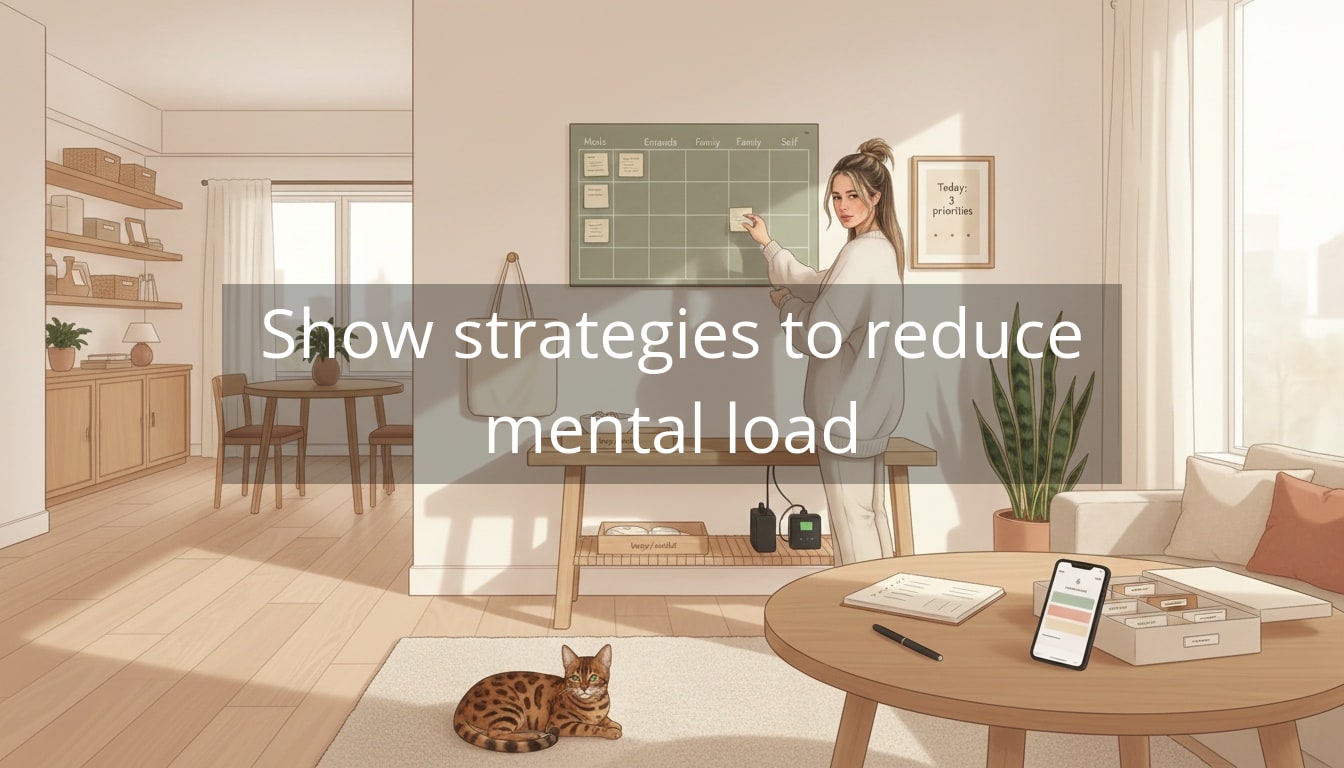
Your brain wasn’t designed to be a 24/7 control tower, yet so many of us live like it is. If you’ve been Googling how to reduce mental load while answering Slack messages, remembering you’re out of conditioner, and mentally drafting tomorrow’s grocery list… same.
Mental load is the invisible work of remembering, anticipating, and coordinating life. It’s not just “do the thing,” it’s “keep the thing from being forgotten.” The dentist appointment doesn’t happen because you went—it happens because you noticed the reminder card, checked the calendar, booked a slot that worked, and made sure you’d still have childcare, time off, and the right insurance card. That constant background tracking quietly drains your attention, patience, and sleep.
So why does it feel worse lately? Because modern life adds fuel: nonstop notifications, more micro-decisions (what to cook, wear, buy, reply), and responsibilities that have no clear “done” moment—especially the anticipatory stuff like noticing when a friend needs support or when the household is about to run out of toilet paper. Even when tasks are “delegated,” you may still be the one monitoring whether they actually get handled, which keeps your nervous system stuck in that low-level vigilance.
How to Reduce Mental Load by Offloading (Not Optimizing)
Here’s the mindset shift that helps most: you don’t need to become more efficient—you need fewer open loops living in your head. The goal is cognitive offloading: moving reminders, plans, and decisions into a system you trust.
“Clarity doesn’t come from doing more—it comes from carrying less.”
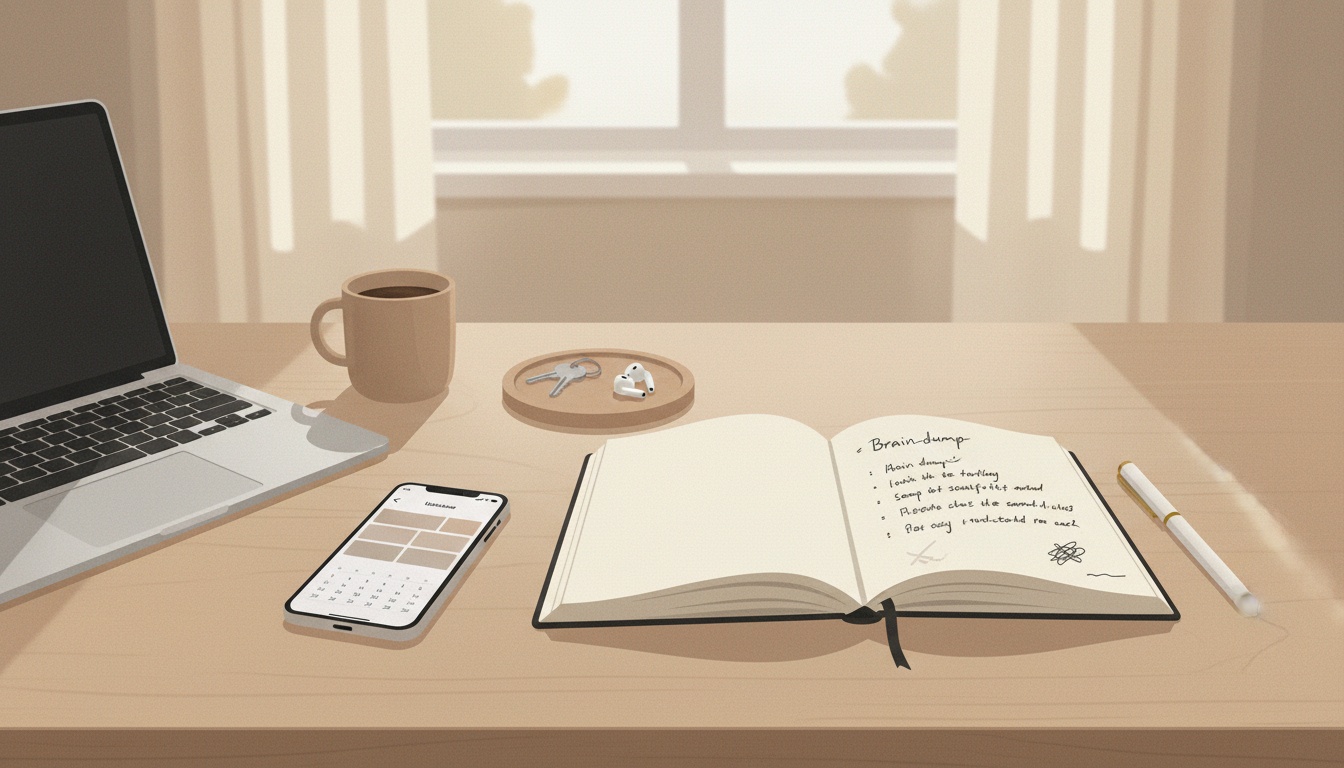
Start small with a 5-minute brain dump. Open Notes, Todoist, or a paper notebook and write everything down—errands, tasks, worries, ideas, “don’t forget to…” items. Don’t organize yet; just get it out of your working memory.
Then create one simple “home base” that you’ll actually use:
- A shared Google Calendar for time-based commitments
- A shared list in Todoist (or any family list app) for repeatables like groceries, supplies, and admin tasks
- A quick-capture tool (Siri/Alexa or a widget) so thoughts don’t boomerang back at bedtime
Once your brain trusts there’s a place to put things, it stops trying so hard to hold them all at once—and that’s where the calm starts to show up.
How to Reduce Mental Load with Shared Ownership (Not “Helping”)
Once you have a home base for tasks, the next relief comes from changing the structure of responsibility. Because here’s the tricky thing: a task isn’t really “delegated” if you’re still the one tracking it, reminding about it, and noticing when it didn’t happen.
A practical reframe is this: aim for full ownership, not assistance. Ownership means the person doing the task also holds the thinking—timing, supplies, follow-through, and troubleshooting.
Use the “Who Owns the Loop?” question
Pick 3–5 recurring life loops (the kinds that keep reappearing in your head) and assign them clearly. For example:
- Meals loop: planning, grocery list, shopping order/pickup, and knowing what’s for dinner
- Kids/admin loop: school emails, forms, picture day, class events, teacher gifts
- Home supplies loop: noticing what’s low, ordering, restocking
- Appointments loop: annual checkups, dentist scheduling, insurance cards, calendar entries
Then ask: Who owns this loop end-to-end? If the answer is “me, but they help,” that’s usually where your mental load is hiding.
A simple script that keeps it calm (and clear)
If these conversations tend to get tense, try language that stays factual and forward-looking:
“I’m trying to reduce the amount I’m holding in my head. Can you fully own the school-lunch loop—planning, supplies, and making sure it happens—so I’m not tracking it too?”
No over-explaining. No courtroom-style evidence. Just a clear request for ownership.

Build “Default Decisions” so Your Day Stops Asking So Much of You
A huge chunk of mental load isn’t chores—it’s deciding. What to eat. What to wear. When to work out. When to clean. Tiny choices stack up and quietly drain your patience.
The goal isn’t to become rigid; it’s to create a few gentle defaults that make weekdays feel less like a pop quiz.
Create a 3–3–3 meal rhythm (easy, repeatable, not boring)
If meal planning makes you want to lie down, try this low-effort structure:
- 3 “no-brainer” breakfasts you rotate (Greek yogurt + fruit, eggs + toast, smoothie)
- 3 “plug-and-play” lunches (leftovers, salad kit + protein, freezer dumplings)
- 3 dinners you can make on autopilot (sheet pan, tacos, pasta + veggie + protein)
Keep a note called “Default Meals.” When your brain asks, What’s for dinner? you don’t have to reinvent dinner. You just pick one of the three.
Try a “weekday uniform” (even if you love fashion)
This isn’t about dressing the same every day; it’s about reducing decision points. A weekday uniform can be a simple formula like:
- Black trousers + knit top + sneakers
- Jeans + button-down + loafers
- Midi dress + cardigan
When you’re running late and already answering messages, removing one morning decision can feel like a deep breath you didn’t know you needed.
Automate the Boring Stuff (So Your Brain Can Do Better Things)
Automation is one of the most underrated answers to how to reduce mental load—because it eliminates the “remembering” piece entirely.
Start with one category: home essentials
Pick the items that trigger that recurring low-grade anxiety (“We’re probably almost out…”). Common ones:
- toilet paper, paper towels
- laundry detergent, dishwasher pods
- soap, shampoo, conditioner
- pet food, coffee, vitamins
Then choose one strategy:
- Recurring delivery for predictable items
- Calendar reminders for seasonal refills (air filters, skincare restock)
- A “running list” that lives on your phone home screen (so it’s one tap, not a memory test)
Batch the admin life tasks you keep re-opening
Admin work is sneaky because it never feels fully finished. Try giving it a container:
- One 30-minute “life admin” block weekly (bills, appointments, returns, forms)
- One “waiting on” list (so you don’t re-remember unanswered emails all week)
- One spot for documents (a folder in your email or cloud storage for receipts, insurance info, school forms)
When admin tasks have a home and a time, they stop tapping you on the shoulder at random moments—like when you’re trying to fall asleep.
Mini Habits That Quiet the Background Noise
Systems handle the logistics. But your nervous system also needs a signal that it’s safe to stop scanning for what you might be forgetting.
Try a 2-minute “closing shift” at night
Before bed, do a tiny reset that ends the mental loop:
- Write down tomorrow’s top 1–3 priorities
- Check your calendar for any time-based commitments
- Set out one thing that makes tomorrow smoother (lunch container, gym clothes, laptop)
This isn’t a huge routine. It’s just a gentle “we’re handled” message to your brain.
Protect one pocket of “no-input” time
If your mind is always processing something—news, texts, podcasts, notifications—it rarely gets to land. Create one small boundary that feels doable:
- 10 minutes in the morning before you check messages
- phone stays out of the bedroom
- do not disturb during meals
Even a small pocket of quiet can reduce that constant sense of being mentally “on call.”
You don’t need a perfect routine—you need a reliable way to stop carrying everything alone.
Your “Calm Setup” Checklist (Pick 3 to Start)
If you want a simple way to move from insight to action, choose just three of these for the next week:
- Make one home base (shared calendar + shared list)
- Assign one full life loop to someone else (true ownership)
- Create Default Meals in your notes app (3–3–3)
- Automate one category of essentials
- Do a 2-minute closing shift before bed
- Set one no-input pocket daily
Small on purpose. The win isn’t doing everything—it’s building trust that your systems will catch you.
Additional resources to support you
If you’d like extra support beyond this article, here are a few helpful places to keep learning and refining what works for your life:
- A simple “mental load” checklist you can use to spot hidden loops in your week
- A weekly planning template (15 minutes) for calendar + admin + meals
- Guided breathing or mindfulness sessions for downshifting at night
- Shared-family organization tools (calendar, list, and reminder app options)
Conclusion: Lighter Doesn’t Mean Less Capable
Reducing mental load isn’t about becoming more efficient or proving you can handle it all. It’s about building a life where your brain isn’t the only place everything can live.
When you offload open loops into trusted systems, create a few default decisions, and shift tasks into real ownership (not “help”), you get something genuinely valuable back: attention. Patience. Space. The feeling that you can exhale.
Start with one small change this week. Calm living isn’t a personality type—it’s a setup. And you’re absolutely capable of building one that supports you.
Telegram Galelar
Instagram @galelar_lis
YouTube @galelar
TikTok @galelar_lis