It’s easy to tell yourself you’ll invest in yourself “when things calm down.” But if your life looks anything like most modern women’s lives, calm doesn’t arrive on its own—you have to build it on purpose, in small decisions that add up.
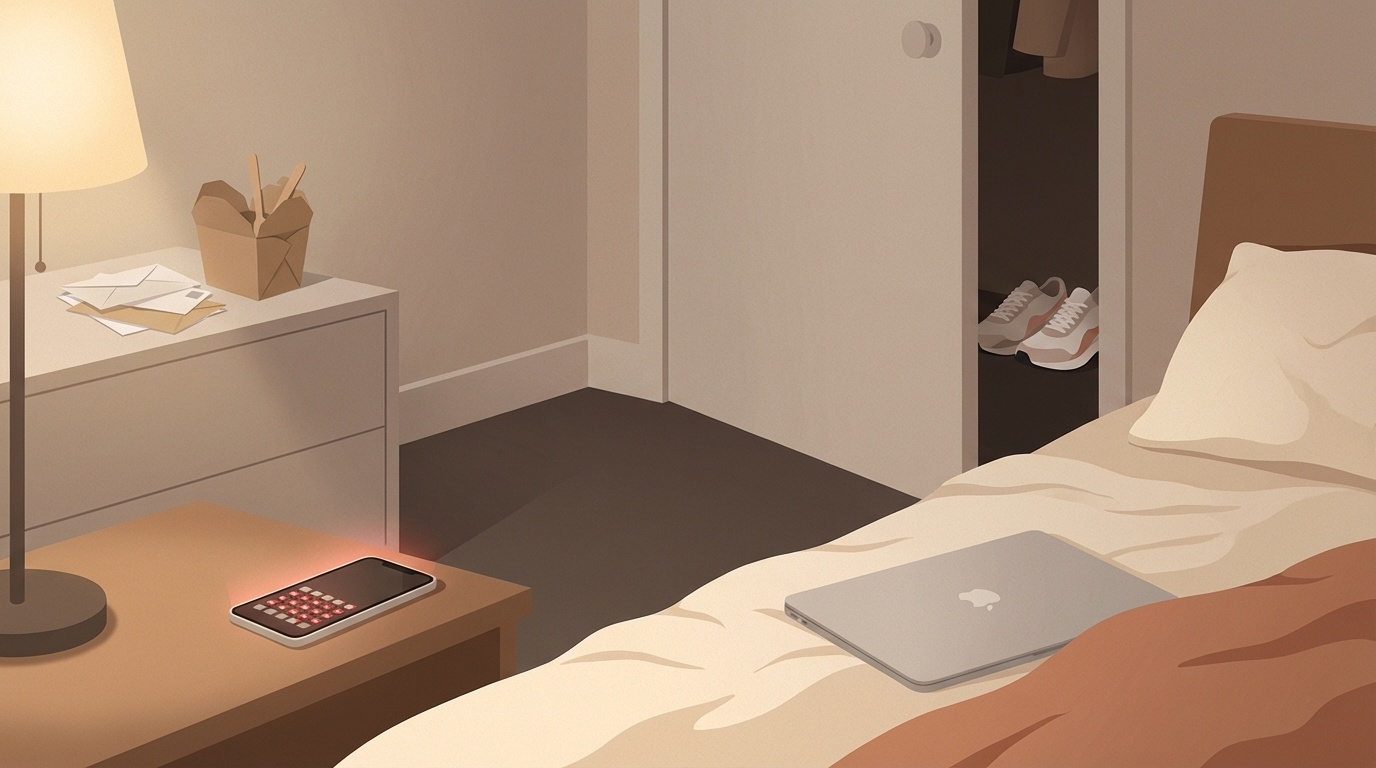
Picture a very normal Thursday: you close your laptop at 8 PM after meetings that bled into emails that bled into “just one more thing” for your side project. The fridge is basically takeout archaeology. Your running shoes are still clean… because they haven’t left the closet. You get into bed with the intention of “winding down,” and somehow it’s midnight and you’ve absorbed 47 people’s morning routines without actually having one of your own. Then you wake up groggy, impatient at minor inconveniences (including the coffee machine), and quietly annoyed at yourself.
None of this means you’re failing. It means you’re overloaded—and you’ve been using the only tool that seems to work in the moment: push harder.
Why modern life creates mental overload (even when you’re doing “fine”)
The tricky thing about burnout in this season of life is that it doesn’t always look like a dramatic collapse. More often, it shows up as:
- decision fatigue (you can plan a project launch, but can’t decide what to eat)
- low-level anxiety that hums all day
- resentment at your calendar—yet also fear of slowing down
- feeling behind no matter how much you do
- “brain fog” that makes easy tasks feel weirdly hard
And it happens for some very unsexy reasons:
1) You’re running too many open loops.
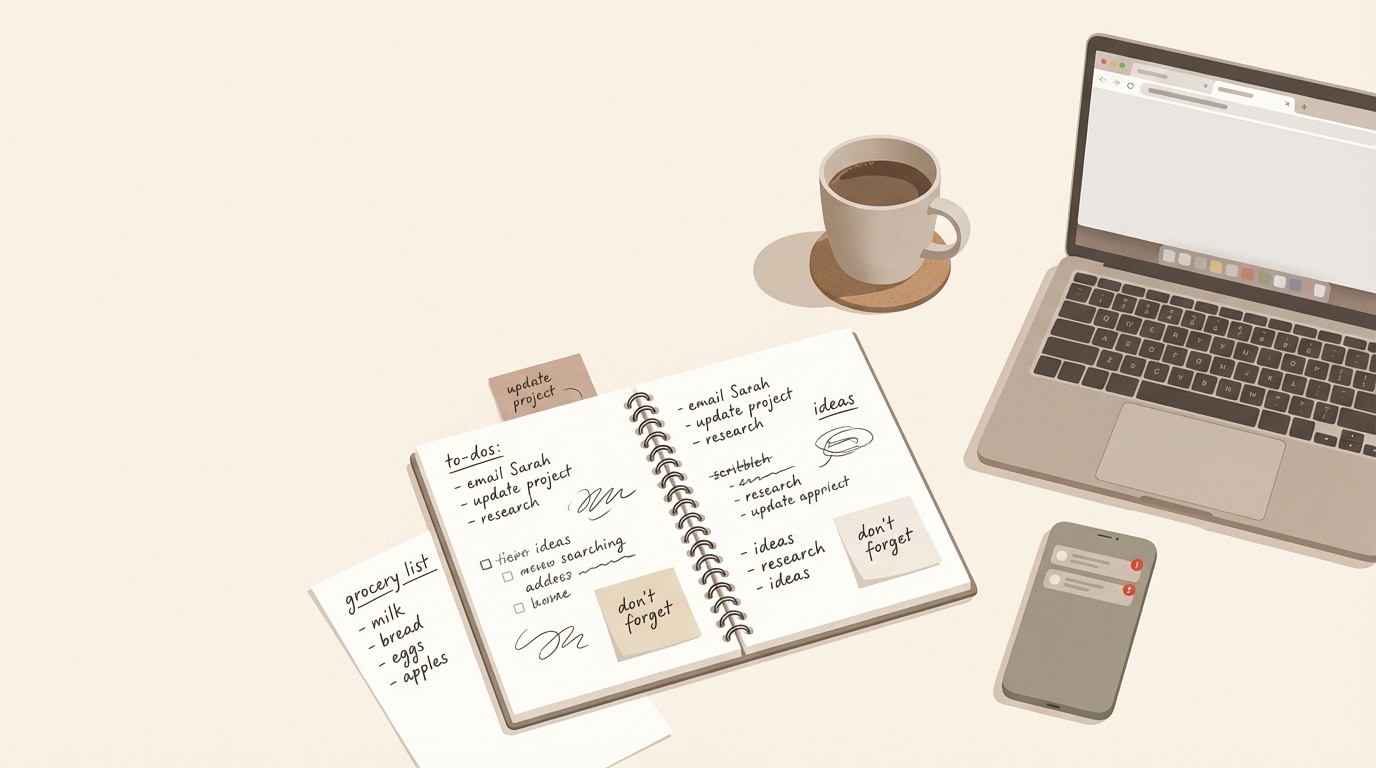
Slack messages, unread texts, a half-finished grocery list, a dentist appointment you keep forgetting to book, the idea you had for content, the subscription you need to cancel. Your brain keeps them all in a little mental holding pattern… which takes real energy.
2) Your day has more inputs than recovery.
We take in information constantly—news, social media, meetings, notifications, podcasts, messages. But we rarely process it. Recovery isn’t just sleep; it’s also downtime, movement, quiet, and space to think one whole thought.
3) We’re rewarded for output, not upkeep.
You get praise for being productive, reliable, capable. You generally don’t get applause for eating a decent lunch, going to bed on time, or taking a walk—yet those are the things that keep the “capable” version of you online.
That’s why this topic matters: when you invest in yourself, you’re not adding one more thing to your to-do list. You’re stabilizing the system that completes the to-do list in the first place.
The core idea: treat your energy like your most valuable asset
We’re used to thinking of “investing” as a money thing—retirement accounts, real estate, a course that will raise your income. But the highest-return investment is often more basic: your energy, focus, emotional stability, and physical wellbeing.
Because when those are running well, everything gets easier:
- you make clearer decisions (and stop second-guessing yourself)
- you follow through more consistently (without needing drama-level motivation)
- you feel less reactive in relationships
- you’re more creative, more patient, more resilient
And when those are neglected, everything gets heavier:
- you “can’t focus,” then shame yourself for it
- you chase quick fixes (sugar, scrolling, impulse spending, late-night “me time” that isn’t restful)
- you power through… until you can’t
“When your life feels loud, clarity usually isn’t missing—it’s just buried under unprocessed noise.”
So instead of looking for a total reinvention, think of this as a gentle check-in. A return to fundamentals.
H2: 8 ways to invest in yourself (as a real-life system, not a perfect routine)
Here’s the framework we’re working with—eight simple categories that cover most of what your “human system” needs:
- Eating nourishing food
- Making time for hobbies
- Moving your body regularly
- Taking real downtime
- Learning new skills
- Caring for your mental health
- Setting clear goals
- Getting enough sleep
Nothing flashy. No “5 AM club.” Just foundations.
And here’s what I want you to notice: these aren’t just “healthy habits.” They’re levers. If you pull the right one, you get relief fast—because it reduces the background strain that makes everything feel hard.
A quick reality check: why you can’t do all eight at once
If you’ve ever tried to overhaul your life on a Monday (new meals! new workouts! new skincare! new journaling!), you already know the ending: by Thursday you’re exhausted, and by Saturday you’ve declared yourself “not a routines person.”
So we’re not doing that.
Instead, you pick the one area that would make the next two weeks feel noticeably lighter. That’s your entry point. Not because it’s the most “important,” but because it’s the one your body and brain are asking for.
To help you choose, let’s connect this to real life—the kind of friction you’re likely dealing with.
Three everyday burnout scenarios—and which “investment” helps first
Scenario 1: The 2 PM crash that makes you question your intelligence
It’s mid-afternoon. You’re staring at a simple email and the words won’t assemble themselves. You snack, you scroll, you try coffee (bad idea), and you still feel foggy.
That’s often not laziness. It’s usually a combo of fuel + movement + overstimulation.
A starter investment:
- Nourishing food: aim for “protein + color” at lunch (not perfection—just a stabilizer).
- Movement: a 10-minute walk outside counts. You’re not training for anything; you’re clearing stress chemistry.
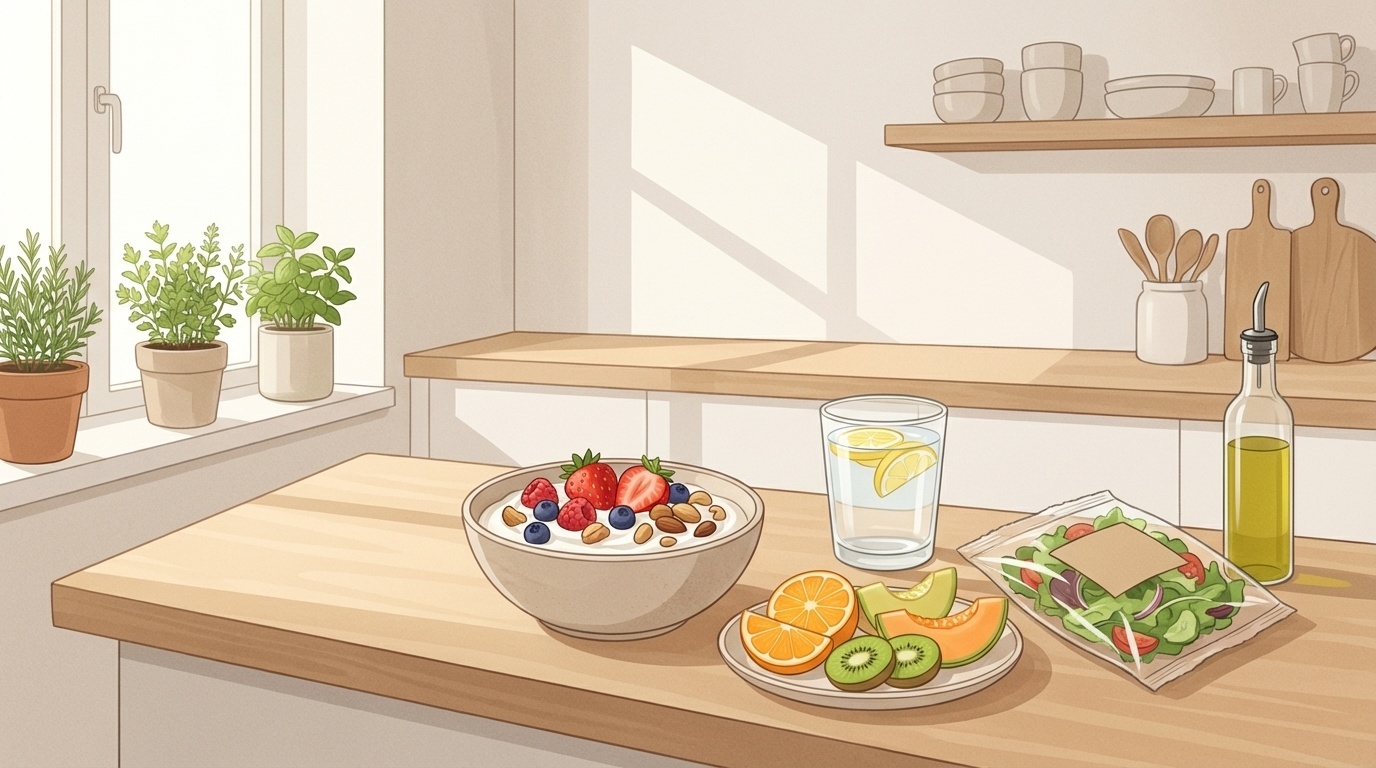
A tiny system that makes this easier: keep one “default lunch” on repeat for busy weeks (something you can assemble, not cook). For example: Greek yogurt + berries + nuts; or rotisserie chicken + bagged salad + olive oil; or eggs + toast + fruit. Defaults are underrated—especially when your brain is tired.
Scenario 2: You’re doing everything right… and still feel kind of empty
You hit deadlines. You show up. You’re reliable. But joy feels like a “someday” item—something you’ll get back to after you’re done being responsible.
That’s usually a signal for hobbies + downtime + mental health support.
A starter investment:
- Hobbies: pick something that produces nothing useful. (Yes, really.) Reading fiction, painting badly, learning nails, doing puzzles, dancing in your kitchen.
- Mental health care: even five minutes of journaling can be a pressure valve—especially if you’re carrying more than you talk about.
This isn’t indulgent. It’s maintenance. Joy is part of how you stay functional long-term.
Scenario 3: Decision paralysis (your tabs are open in your brain)
You’re thinking about changing jobs, launching a project, moving, dating, budgeting, your family… and every choice feels heavy. You procrastinate not because you don’t care, but because your brain is overloaded.
This is often where sleep + goals do the most immediate work.
A starter investment:
- Sleep: not a perfect bedtime—just a consistent wind-down start time.
- Clear goals: one “north star” for the next quarter. Not ten. One.
When you’re rested and you know what matters most, decisions stop feeling like threats.
The gentle rule: systems beat willpower (and you only need one to start)
When you’re already stretched thin, relying on motivation is like relying on good weather. Nice when it happens. Not a strategy.
The goal is to create tiny structures that make the right thing the easy thing—especially on chaotic days.
Here are a few low-effort digital tools that support the first layer of investing (without turning your life into an app circus):
1) A “life admin” capture tool (to stop holding everything in your head)
If you do nothing else, do this: choose one place to catch loose thoughts and open loops.
Options:
- Apple Notes / Google Keep for fast capture
- Notion if you like organizing and linking things
- Todoist if you want quick, satisfying check-offs
Use it for: “Dentist,” “buy new sports bra,” “send invoice,” “book flight,” “idea for newsletter,” “gift for mom.” Your brain relaxes when it trusts it won’t forget.
A simple practice: a 60-second “brain dump” once a day—before bed or after your workday. It’s shockingly calming.
2) Calendar blocks for your future self (the kind kind)
If you’re waiting to “find time” for movement, hobbies, or downtime, it won’t happen—because time gets found by whoever shouts loudest (usually work).
Use Google Calendar (or whatever you already use) and create two repeating blocks:
- one small block for movement (even 15 minutes)
- one small block for rest/joy (30 minutes, twice a week)
Name them like commitments, not wishes: “Walk + reset” or “Low-stimulation hour.” You’re training your calendar to reflect that you live here too.
3) A sleep boundary that doesn’t rely on self-control
Sleep is the first thing to go when life gets busy—and the first thing that makes everything harder.
Try one digital boundary:
- iOS Focus / Android Digital Wellbeing to dim your phone and silence notifications at a set time
- set a recurring alert that simply says: “Start closing the day.”
Not “go to sleep now.” Just “start.” That’s more realistic, and it still changes the trajectory of your night.
The point of these tools isn’t to optimize your life into a spreadsheet. It’s to reduce friction so you can actually follow through on the basics—food, movement, rest, learning, support—without needing a personality transplant.
And once you have even one or two of these foundations steady, something subtle but powerful happens: you stop feeling like you’re constantly catching up… and you start noticing what your life actually needs next.

How to make “invest in yourself” stick: the 15-minute baseline
That “what does my life need next?” moment is where most good intentions die—because you can see what you need, but you can’t see how to fit it in. So let’s make it ridiculously doable.
Here’s the baseline I recommend when you’re busy-busy: 15 minutes a day dedicated to keeping your human system steady. Not as a new task. As the thing that makes the rest of your tasks less stressful.
Think of it like brushing your teeth for your brain and body: small, consistent, non-negotiable-ish.
A simple weekly rhythm (so you’re not deciding every day)
Decision fatigue loves open-ended plans. Instead, give yourself a light structure:
- Mon / Wed / Fri: movement (10–20 minutes) + protein-forward lunch default
- Tue / Thu: downtime or hobby (30 minutes, low stimulation, no productivity allowed)
- Weekend: one “reset block” (60 minutes for life admin + food basics + light planning)
This is not a perfect routine. It’s an anti-chaos scaffold. And you can swap the days—what matters is that you’re not renegotiating with yourself every morning.
The “default settings” that reduce mental load fast
If you take nothing else from this, take this: you don’t need more discipline—you need fewer decisions.
1) Build two default meals you can repeat without boredom
When you’re overloaded, cooking becomes emotional labor. So we simplify: choose two meals you can assemble in under 5 minutes.
- Default lunch: “protein + color” (rotisserie chicken + bagged salad + olive oil; or cottage cheese + tomatoes + crackers; or tuna + cucumber + avocado)
- Default dinner: “one pan + one bag” (sheet pan salmon + frozen broccoli; or eggs + spinach + toast; or pre-cooked lentils + jarred sauce + greens)
Keep the goal tiny: consistent fuel that prevents the 2 PM crash and the 9 PM scavenger hunt. Your future self will feel like she has a personal chef. She doesn’t—she has a system.
2) Create a “closing shift” for your day (10 minutes)
This is the fastest way to calm the nervous system because it stops the day from mentally spilling into the night.
Try this 10-minute sequence:
- 2 minutes: quick tidy in one zone (kitchen counter, bedside table, or your bag)
- 3 minutes: brain dump into your capture tool (no sorting—just out of your head)
- 3 minutes: pick tomorrow’s “Top 1” and one support task
- 2 minutes: set up one small kindness (water by bed, outfit out, coffee ready, headphones charged)
That’s it. You’re telling your brain: “We’re handled.” This is one of the most practical ways to invest in yourself without adding pressure.
3) Use the “two-tab rule” to fight overstimulation
If you’re constantly consuming, your mind never gets to finish a thought. A small boundary that works surprisingly well:
- Work mode: maximum two browser tabs at a time (yes, it will feel weird at first)
- Off mode: choose one input (podcast or social or TV)—not all three stacked
Your brain isn’t broken. It’s just been living in a thousand tiny interruptions. This rule restores a sense of completion.
Mini-systems for each of the 8 investments (pick one)
You don’t need to master all eight categories. Pick one to stabilize first, then let it ripple.
Eating nourishing food (without meal-prep panic)
- Grocery rule: always buy 1 “protein shortcut” (eggs, rotisserie chicken, tofu, Greek yogurt)
- Backup plan: keep one “emergency dinner” at home (frozen dumplings + greens, or soup + bread + fruit)
- Office/day out tip: keep a desk snack that actually feeds you (nuts, beef/turkey stick, protein bar you genuinely like)
Hobbies (the kind that refill you)
- Make it small: a “20-minute hobby” list (sketch, dance, read fiction, language app, puzzle)
- Make it easy: store the hobby where you can see it (book on couch, sketchpad on table)
- Make it protected: one weekly block that’s treated like an appointment
Moving your body regularly (no motivation required)
- Minimum effective dose: 10 minutes counts
- Pair it: only listen to a favorite podcast or playlist while walking
- Remove barriers: keep shoes and a layer by the door
Taking real downtime (so it actually restores you)
Rest isn’t “scroll until you feel worse.” Real downtime has a beginning and an end.
- Try: a 30-minute “low-stimulation hour” (tea, shower, stretching, fiction, sitting outside)
- Protect it: phone in another room or on Do Not Disturb
- Notice: if you struggle to rest, that’s a sign you need it—not that you’re bad at it
Learning new skills (without turning it into homework)
- Pick one tiny skill per quarter: Excel shortcut mastery, public speaking, negotiation, cooking basics, a creative tool
- Use the “commute slot”: 10 minutes of learning during a walk, train ride, or morning coffee
- Anchor it to a problem you actually have: learning sticks when it reduces friction this month
Caring for your mental health (simple, not performative)
- Journal prompt that works: “What am I carrying that I haven’t named?”
- Boundary script: “I can’t do that this week, but I can next week / I can do X instead.”
- Support upgrade: if you’ve been white-knuckling for months, consider talking to a professional—strength is using support, not avoiding it
Setting clear goals (so your brain stops spinning)
Your mind calms down when it knows what matters most.
- Choose one north star: for the next 90 days
- Define “done”: what does success look like in one sentence?
- Weekly check-in (10 minutes): what’s the next smallest step?
Getting enough sleep (without a perfect bedtime)
- Start-time over bedtime: pick a consistent “start winding down” time
- Make nights easier: charge your phone outside the bed if possible
- One upgrade: dim lights after dinner—your body reads this as safety
The calm plan for chaotic weeks: the “Minimum Viable Self-Care” list
Some weeks are survival. That’s okay. The goal is to avoid the “I fell off, so I quit” spiral.
Create a short list—your Minimum Viable Self-Care—that you can do even when work is heavy or life is messy:
- Drink water before coffee
- Eat one protein-forward meal
- Step outside for 5–10 minutes
- Do a 60-second brain dump
- Start wind-down at a reasonable hour (even if sleep isn’t perfect)
When you keep these basics, you stay connected to yourself. And that’s the whole point of investing: you’re reducing the cost of being you.
Small, steady care is not a detour from your goals—it’s the structure that lets you reach them without breaking yourself.
Conclusion: you don’t need a new life—just a kinder system
You’re not behind. You’re not failing. You’re managing a lot in a world that asks for constant output, constant availability, constant coping.
When you invest in yourself, you’re not chasing a glow-up or trying to become a different person. You’re building calmer routines and smarter systems that protect your focus, reduce mental load, and give you more of your own life back.
Start with one baseline change. One default meal. One small calendar block. One nightly “closing shift.” Let it be imperfect and still real. The payoff isn’t just productivity—it’s peace. And you deserve a life that feels steadier on the inside, not just impressive on the outside.
Telegram Galelar
Instagram @galelar_lis
YouTube @galelar
TikTok @galelar_lis