
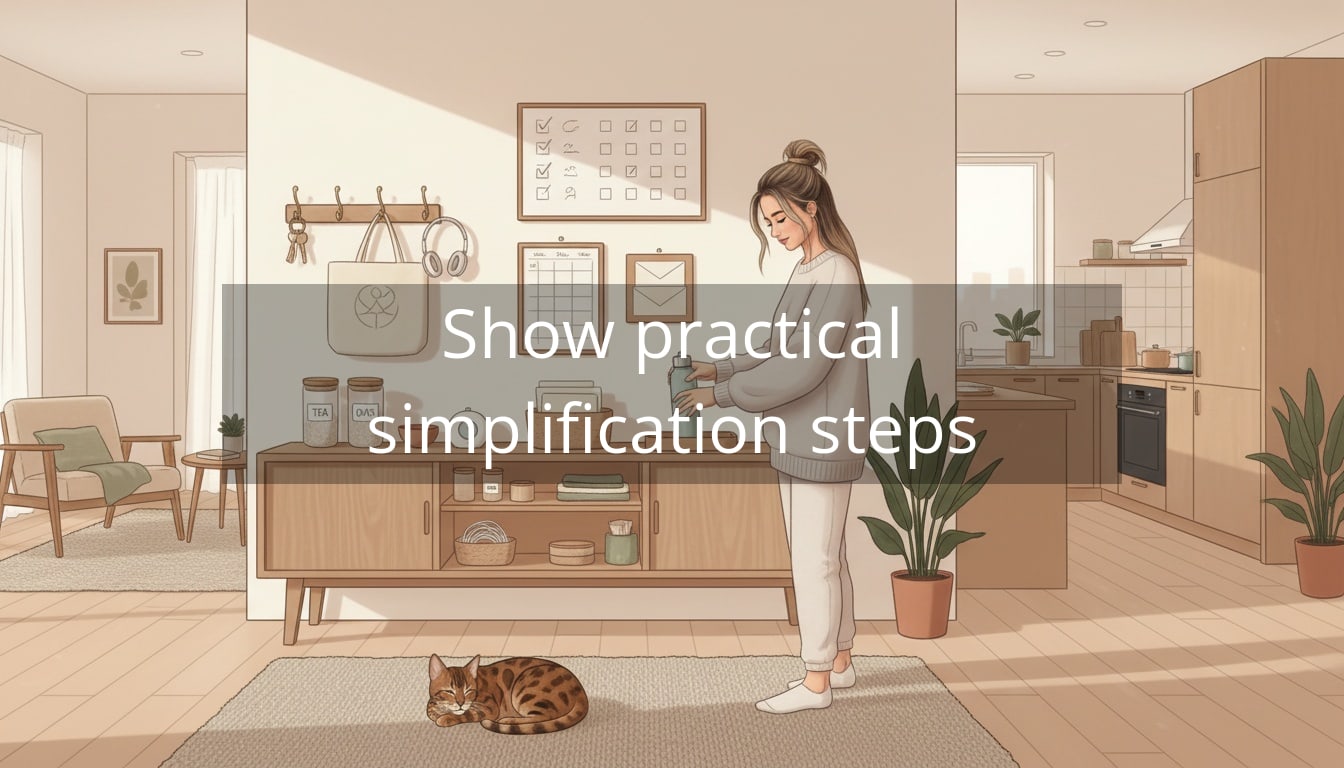
Your house isn’t “that messy,” but it still feels like there’s never a clean surface. Your inbox has 1,247 unread emails, your calendar has too many overlapping commitments, and even choosing what to wear somehow feels like a project. That’s usually the moment minimal living tips start sounding less like an aesthetic and more like a lifeline.
The tricky part is that modern overload doesn’t come from one big problem—it’s death by a thousand tiny decisions. We accumulate duplicates because they’re convenient, keep clothes “for later,” stay subscribed because canceling takes effort, and say yes because it’s easier than explaining no. Add constant marketing and the low-grade pressure to keep up, and your space (and brain) quietly fills up.
Here’s the mindset shift that makes minimal living actually doable: minimal living isn’t deprivation. It’s curation. You’re not trying to live with nothing—you’re trying to keep what genuinely supports your life and let the rest stop taxing your attention.
Clarity isn’t something you find—it’s something you make by removing what doesn’t belong.
Minimal Living Tips That Start Working This Week
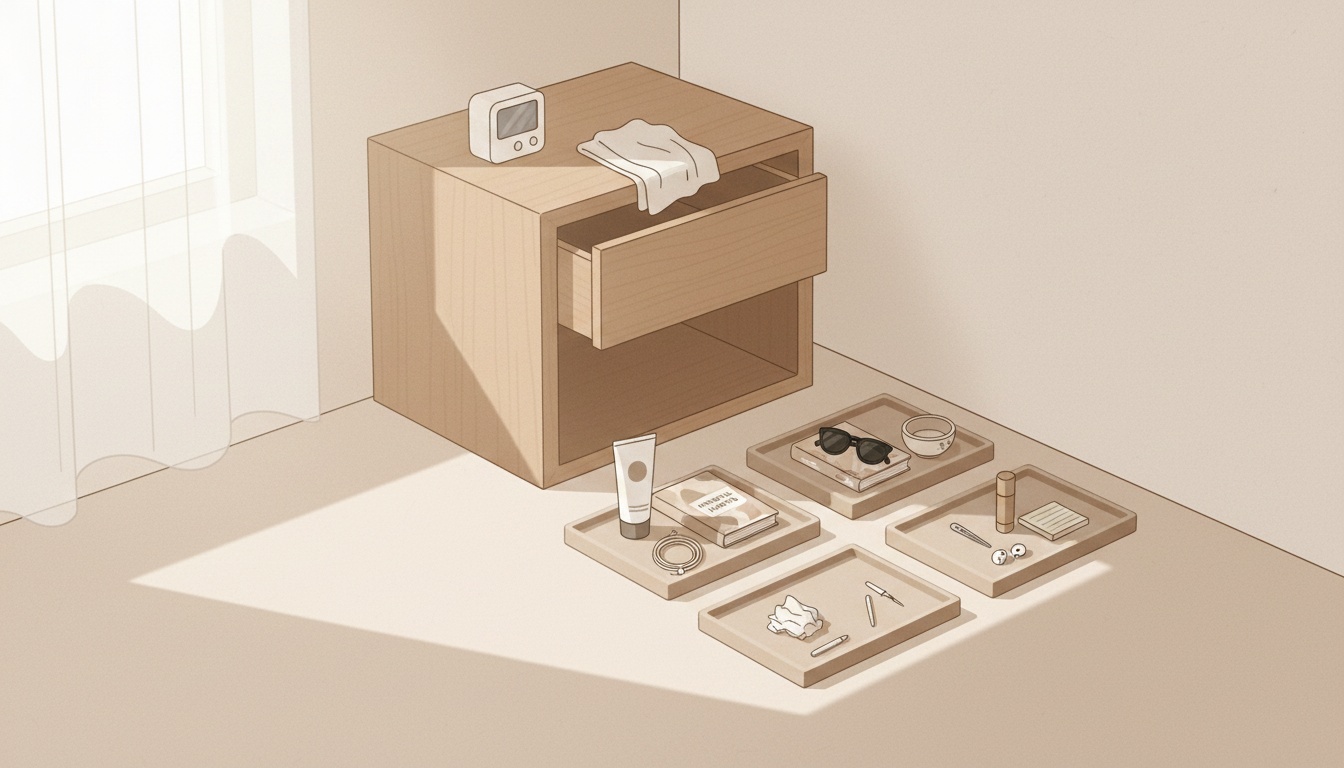
Start small enough that you won’t procrastinate. Pick one contained spot—your bedside table drawer, the “doom shelf,” or the kitchen utensil holder—and set a 20–30 minute timer. You’re not “decluttering your home.” You’re just finishing one tiny zone.
Use a simple filter as you touch each item: purpose or joy (right now). If it’s neither, it’s not neutral—it’s taking up space and asking for mental energy.
A few systems that make this easier:
- The four-pile method: keep / donate / trash / relocate (relocate items must be put away immediately).
- A permanent donation bag by the door: when you find something that doesn’t fit your life, you don’t negotiate with yourself—you drop it in.
- A digital note for “things I’m tempted to buy”: keep a list in Apple Notes/Notion. If you still want it after 48 hours, you can revisit it with a clearer head.
Once you get one small win under your belt, you’ll start noticing where clutter is really coming from—your habits, not your storage. And that’s where simplification gets interesting.
Minimal living tips that stop clutter at the source
Once you notice clutter is coming from habits, you get to move from “cleaning up” to “designing your life.” The goal isn’t a home that looks perfect—it’s a life that’s easier to maintain on a normal Tuesday when you’re tired.
1) Give everything a “home” (but keep it realistic)
Most messy surfaces aren’t a “too much stuff” problem as much as a “no landing zone” problem. Minimal living works better when your space has obvious answers to everyday questions:
- Where do keys go? A small bowl or hook by the door.
- Where does mail go? One tray—open, sort, recycle immediately.
- Where do half-worn clothes go? A single chair, basket, or one designated hook (not five).
- Where do charger cords live? One box, labeled, with only the ones you actually use.
If you’re constantly “putting things away” into complicated systems, you won’t keep up. Aim for low-friction homes—places that are easier than leaving the item out.
2) Use a simple “container rule” to prevent re-accumulation
Pick a container for each category and let the container set the limit. It’s gentle, visual, and it makes decisions faster.
- Skincare: One shelf. If it doesn’t fit, something leaves.
- Mugs: One cabinet section. When you get a new favorite, donate the old least-favorite.
- Kids’ art: One memory box per child per year (keep the best, photograph the rest).
- Holiday decor: One bin per holiday. No extra “just in case” tote.
This isn’t about being strict. It’s about protecting your space from becoming the storage unit for every version of you.
3) Set “closing shifts” instead of marathon cleaning days
A small daily reset is one of the most underrated minimal living tips because it prevents weekend overwhelm. Think of it like closing a café: a quick sweep so tomorrow starts calmer.
- 5-minute kitchen close: dishes in dishwasher/sink, counters cleared, coffee set up if you drink it.
- 2-minute living room reset: throw blankets folded, cups returned, one quick tidy pass.
- 1-minute entryway check: shoes lined up, bags hung, keys in their bowl.
The magic is consistency, not intensity. You’re reducing the number of “restarts” your brain has to do.
4) Go after the hidden clutter: duplicates and “almost” items
This is where most homes quietly bleed space: three scissors, five black tanks that fit slightly differently, a drawer of mystery cables, fifteen travel-size products you never actually travel with.
Try a quick “duplicates sweep” in one category at a time:
- Pick your favorite (the one you reach for first).
- Keep one backup if it’s a true essential (like phone charger, mascara, white tee).
- Release the rest—donate, recycle, or trash without over-explaining it to yourself.
If you’ve been saving “almost usable” items (tight shoes, scratchy sweaters, gadgets that sort of work), consider this permission: it’s okay to stop managing things that make your life harder.
Minimal living tips for your calendar and mental load
Physical clutter is obvious. Calendar clutter is sneakier because it looks like “being a good person” or “staying on top of life.” But a packed schedule creates the same effect as a packed drawer: you can’t find breathing room.
Try a “Hell Yes or No” check (with a kinder middle step)
Instead of forcing yourself into dramatic boundaries overnight, use a three-option filter:
- Yes: energizing, aligned, genuinely important
- No: dread, resentment, obligation, “I guess I should”
- Not now: lovely, but not for this season
“Not now” is powerful. It lets you keep your identity (“I’m someone who likes book clubs / workouts / hosting”) without committing your current life to it.
Create one “no-decisions” daypart
Decision fatigue is real. Give yourself one small block where fewer choices are required—especially if you’re already managing a lot at work.
- Morning: same breakfast, same getting-ready playlist, pre-set outfit formula
- After work: a repeating “default dinner” list (5 meals you can make on autopilot)
- Evening: one wind-down routine you don’t negotiate with (shower, tea, book, bed)
Minimal living isn’t only about having less. It’s about having fewer tiny decisions draining you all day.
Do a subscription and notification sweep (the digital version of clearing a counter)
If your phone constantly asks for your attention, your brain can’t fully rest. A 20-minute digital reset can feel like immediate relief.
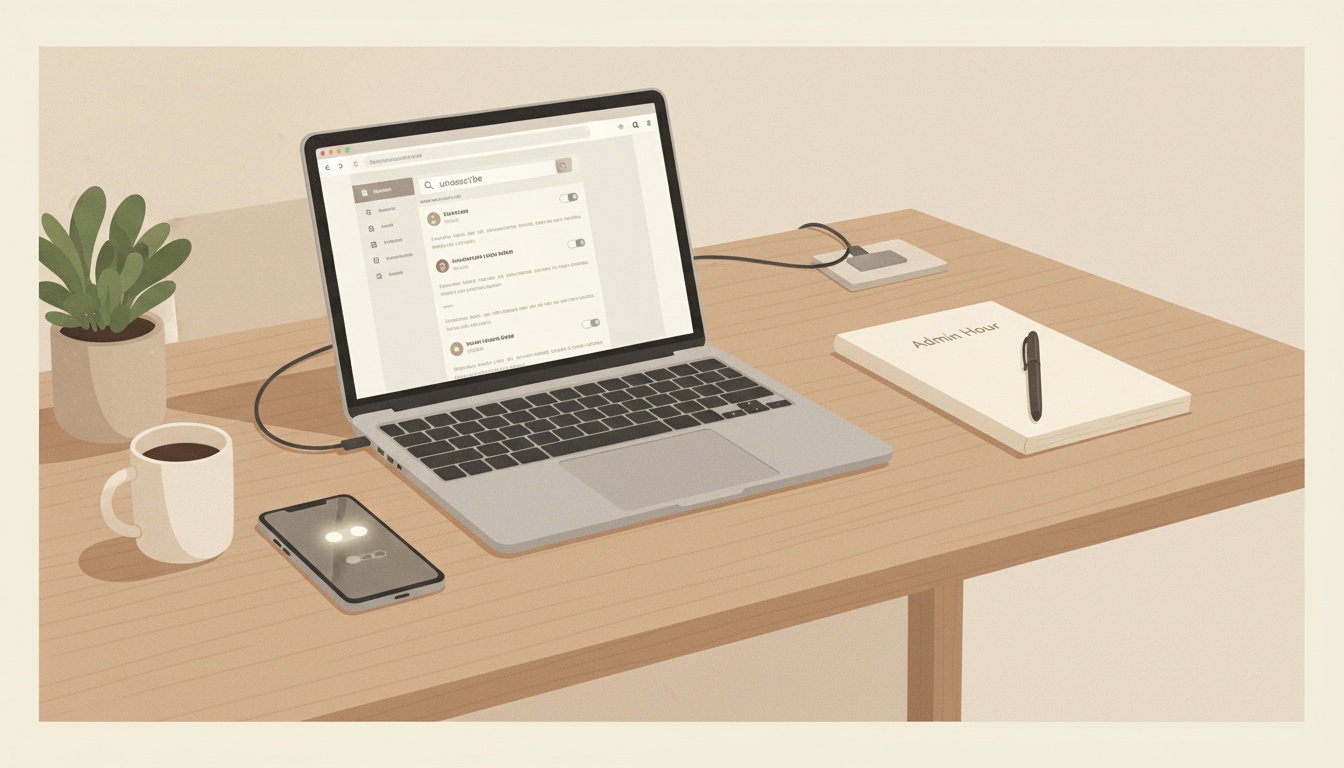
- Unsubscribe fast: search your email for “unsubscribe” and remove anything you wouldn’t miss.
- Turn off non-essential notifications: keep calls/texts, remove social + shopping pings.
- Clean your home screen: move tempting apps off the first page; keep only what supports your life.
- One “admin hour” weekly: bills, appointments, emails—contained, not leaking into every day.
If you want one tiny starting point: delete one app you “check without thinking.” Notice how often your thumb reaches for it out of habit.
Shopping and bringing less in (without feeling deprived)
Decluttering helps, but lasting change comes from slowing the inflow. The most sustainable minimal living tips are the ones that make “bringing things in” a little more intentional—without turning you into someone who never buys anything fun.
Use a “one in, one out” rule for high-clutter categories
You don’t have to do this for everything. Pick your top three categories that tend to multiply:
- clothes
- books
- beauty products
- kitchen gadgets
- throw pillows/blankets
When something new comes in, something old leaves. It keeps your space stable without constant decluttering sessions.
Try the “future you” check before buying
Before you hit purchase, ask three quick questions:
- Where will this live? (If you don’t know, it’s a clue.)
- What will I stop using if I buy this? (If “nothing,” you’re adding a category.)
- Will I maintain it? (Dry clean, special batteries, hand wash, refills, accessories.)
This is not about guilt. It’s about protecting your future energy and your future weekends.
Small, steady edits create the kind of calm you can actually live inside.
Make it stick: a gentle rhythm that doesn’t require perfection
If you’ve ever decluttered and then watched it all slowly creep back, you’re not alone. The “stickiness” comes from having a rhythm—light, repeatable, and forgiving.
A simple monthly rhythm
- Week 1: one small clutter zone (drawer, shelf, bathroom cabinet)
- Week 2: digital sweep (unsubscribe, photos, downloads folder)
- Week 3: calendar check (one commitment to drop, delegate, or postpone)
- Week 4: no-spend or low-spend weekend (use what you have; reset habits)
You can do this in 30–60 minutes per week. Minimal living doesn’t need a dramatic “before and after.” It needs a maintenance pattern your real life can tolerate.
What to do when you get stuck (because you will)
Some stuff is emotionally loaded: gifts, aspirational clothes, “I should be this person” items. When you hit that wall, try these softer prompts:
- Would I buy this again today? If not, it’s okay to let it go.
- If this disappeared, would I replace it? If no, it’s not essential.
- Am I keeping this for guilt? Guilt is not a storage plan.
- Could a photo preserve the memory? Often, yes.
And if you truly can’t decide, make a “maybe box” with a date on it. If you don’t open it in 30–60 days, donate it. Your future self will be a surprisingly honest judge.
Additional resources when you want a little more structure
If you’d like extra support, there are plenty of helpful checklists, routines, and visual walkthroughs available—especially for the categories that feel hardest to tackle.
- Printable decluttering checklists by room (quick wins for small pockets of time)
- Weekly reset routines (30–60 minutes to keep a home from spiraling)
- Capsule wardrobe guides (outfit formulas that reduce decision fatigue)
- Digital clutter clean-up tutorials (email, photos, and notification resets)
- Library and local community resources (donation options, recycling, swap events)
A calmer life is built on fewer friction points
The best minimal living tips don’t require you to become a different person. They simply remove the little obstacles that steal your attention all day: the pile you step around, the overstuffed drawer you avoid, the constant pings, the “maybe someday” items that quietly demand mental storage.
Start by choosing one small spot to curate this week, then protect that win with a simple boundary: a container limit, a donation bag, a quick closing shift, a 48-hour pause before buying. These are small systems, but they add up to something big—less noise, fewer decisions, and a home (and schedule) that supports you instead of chasing you.
You don’t need perfect minimalism. You need breathing room. And you’re absolutely capable of creating it—one calm choice at a time.
Telegram Galelar
Instagram @galelar_lis
YouTube @galelar
TikTok @galelar_lis