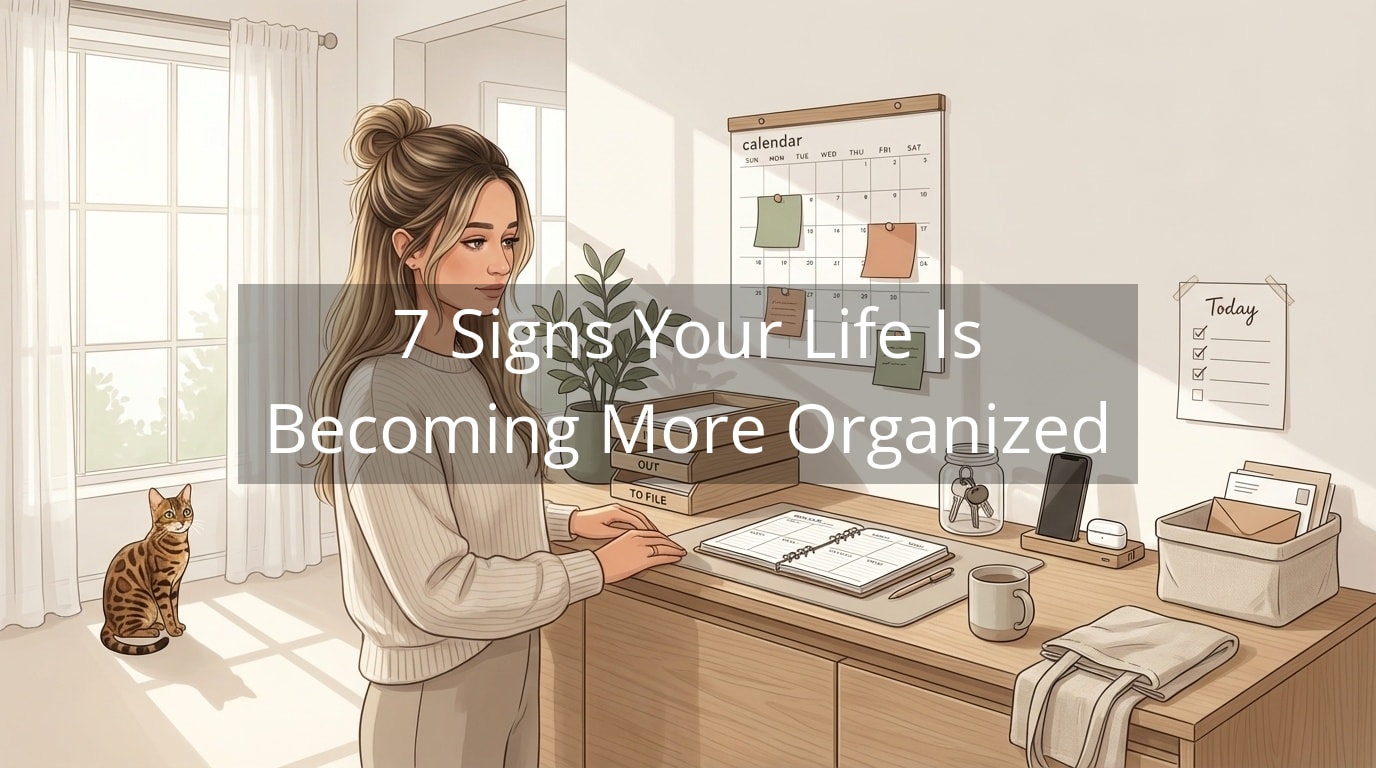
A more organized life usually doesn’t start with color-coded binders or a dramatic “new me” Monday. It starts with tiny moments where you realize you’re not bracing for your own day anymore.
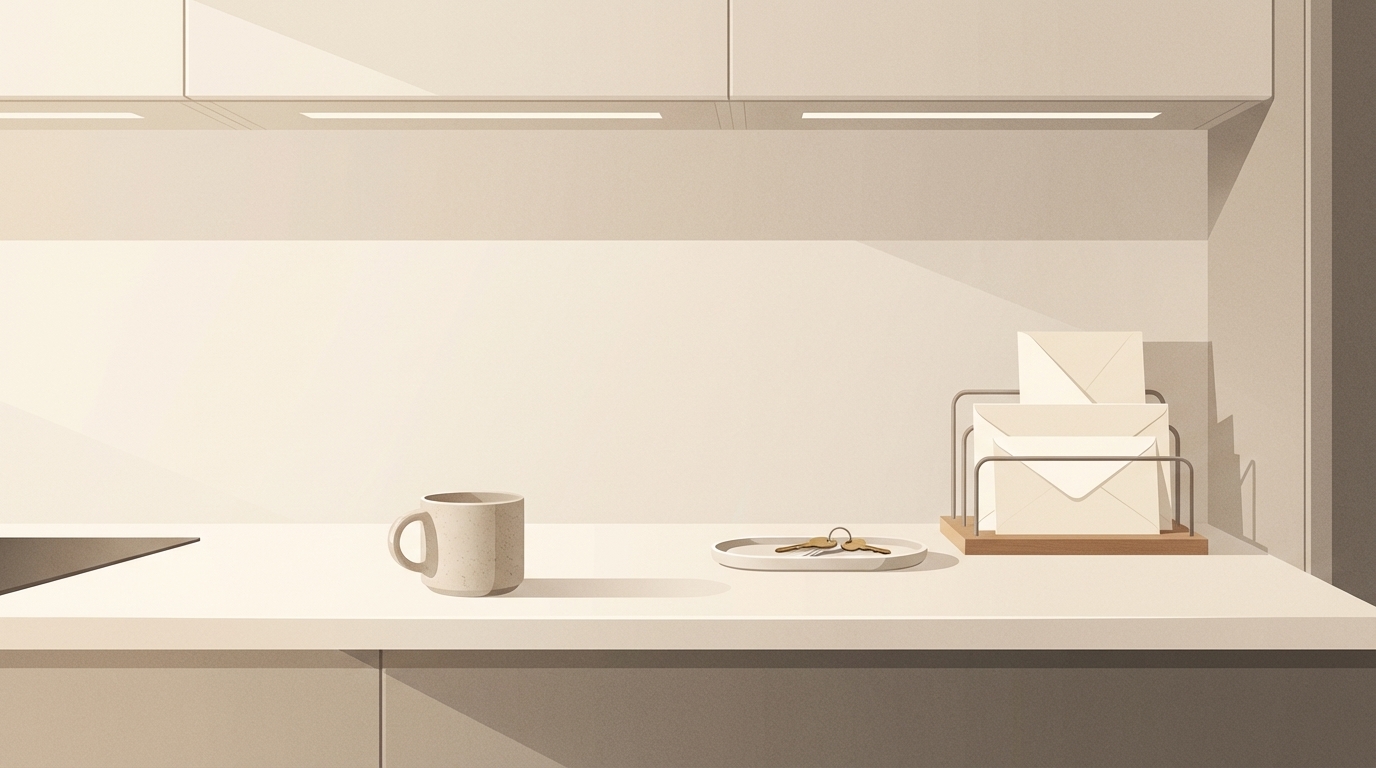
Maybe you’ve had one of those mornings recently: you wake up and, for once, you don’t feel behind before your feet hit the floor. Your phone isn’t already screaming with notifications. You can find your keys. You pour coffee without angrily moving a pile of mail from one counter to another. And it’s not that life is suddenly easy—it’s that it feels… a little less chaotic.
If that sounds unfamiliar, you’re not alone. Modern life is basically designed to keep our brains in reactive mode. And for women who work, run projects, manage homes, manage themselves, and still try to drink water and call their moms, “getting organized” can feel like one more impossible standard.
The thing is: organization isn’t a personality trait. It’s not something you are or aren’t. It’s a set of supports—small systems you build so your brain doesn’t have to hold everything at once.
Why life feels so messy (even when you’re doing everything “right”)
When people say they want to be more organized, they often mean something deeper:
- “I’m tired of always feeling like I’m forgetting something.”
- “I can’t relax because there’s always something I should be doing.”
- “Simple tasks take forever because I have to find everything first.”
- “I’m functioning, but it’s fragile—one missed email and the whole week collapses.”
That’s not laziness. That’s mental load.
Here’s what makes “modern messy” different from regular busy:
1) Your life has too many input streams
Slack messages. Calendar invites. Texts. Grocery apps. Subscription renewals. Doctor portals. Work dashboards. School newsletters. Group chats. The mental overhead isn’t the tasks themselves—it’s tracking where each task lives.
So even if you’re capable and motivated, your attention is constantly being pulled. Your brain becomes an open-tab browser with 37 tabs, three of them playing music, and one you can’t find.
2) You’re doing invisible work all the time
A lot of what drains us isn’t “doing”—it’s remembering.
Remembering to reorder vitamins. Remembering that the dog is almost out of food. Remembering that your friend’s birthday is coming and you don’t want to be that person again. Remembering that the document you need is somewhere in a folder called “Final_FINAL_2.”
When you don’t have systems, you become the system. And that gets exhausting.
3) You’re making too many tiny decisions per day
Decision fatigue is real. It shows up as:
- standing in front of the fridge even though you have food,
- re-reading the same email because you can’t process it,
- postponing small tasks because they feel strangely heavy.
Disorganization isn’t always mess. Sometimes it’s friction. And friction steals energy you actually need for your life.
“Clarity isn’t something you find—it’s something you build, one small decision at a time.”
The core idea: organization is a support system, not a self-improvement project
If you take one thing from this: a more organized life isn’t about doing more. It’s about needing to remember less.
The goal isn’t a perfect routine. The goal is fewer “oh no” moments:
- Oh no, I forgot that payment.
- Oh no, I didn’t respond.
- Oh no, that appointment is today.
- Oh no, I can’t find the thing.
When your life gets more organized, you start noticing quiet signals:
- your mornings have less urgency,
- your space stops yelling at you,
- you know what matters today (and what doesn’t),
- you can actually rest without mentally narrating your to-do list.
And the best part is: these changes are usually the result of a few deceptively simple systems.
Not big overhauls. Not “new year, new planner.” Just small, repeatable choices that reduce mental drag.
Start here: the “capture, decide, reset” framework (simple, not fussy)
Most organization systems—digital or not—are just versions of three steps:
- Capture what’s in your head
- Decide what needs to happen (and when)
- Reset your spaces and lists so they don’t rot into chaos again
If you’re overwhelmed, this matters because it gives you a way out that doesn’t rely on motivation. You don’t have to feel “on top of everything.” You just need a place for things to go.
Let’s make that practical.
H2: A more organized life starts with capturing your mental load
If you constantly feel like you might be forgetting something, it’s because you probably are—because your brain was never meant to be a storage unit.
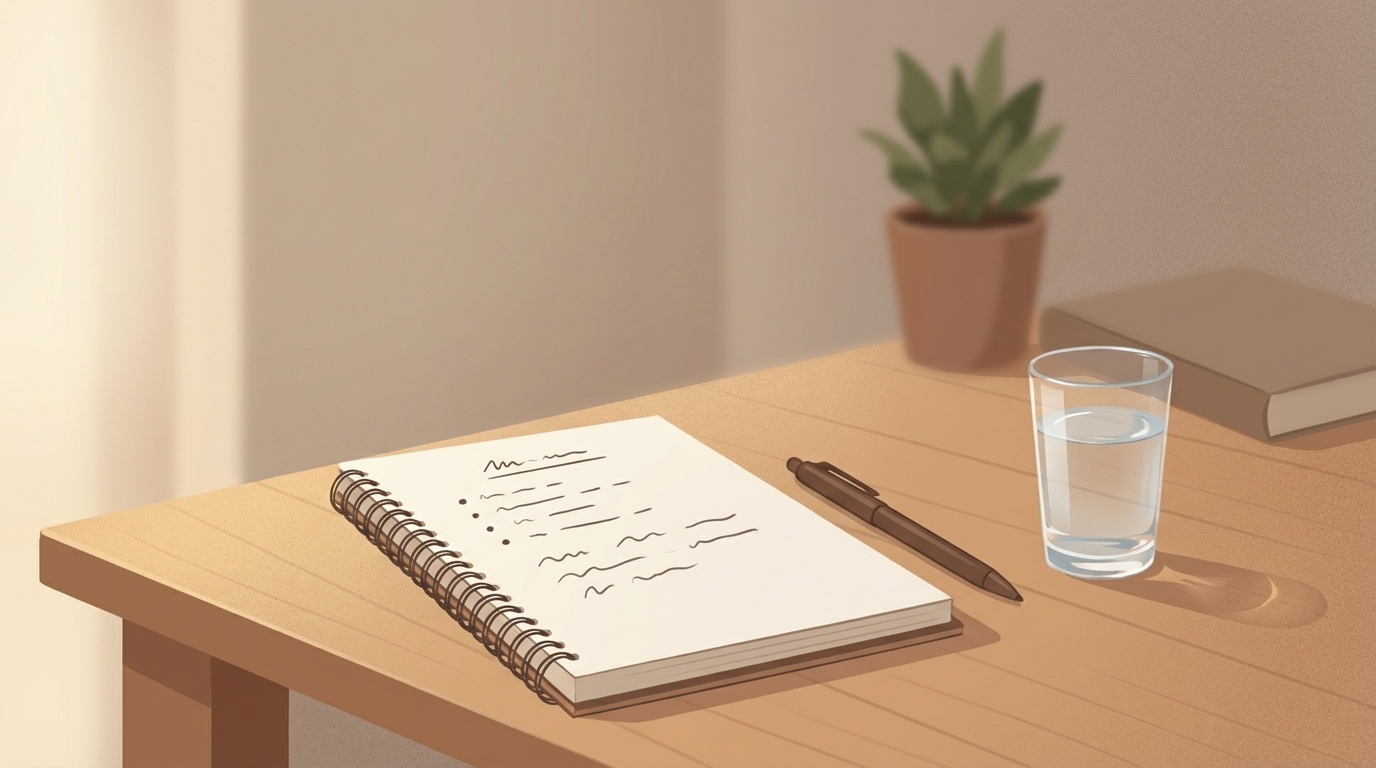
The first system I recommend (because it’s immediate relief) is a daily capture habit: a quick brain dump where you move swirling thoughts into a trusted place.
Your 2-minute brain dump (the lowest-effort reset)
Once a day—ideally evening or first thing in the morning—open a note and list anything that’s taking up mental space:
- tasks (“book dentist appointment”)
- worries (“follow up with client… did I sound weird?”)
- errands (“return package”)
- life admin (“renew car registration”)
- little reminders (“text Sara back”)
No organizing while you write. This is capture, not planning.
Digital tools that make this effortless
Choose one place. Not five. One.
- Apple Notes or Google Keep if you want fast and minimal.
- Notion if you like all-in-one dashboards (great, but only if you won’t overbuild it).
- Day One if you want it to feel reflective—like journaling that also clears your head.
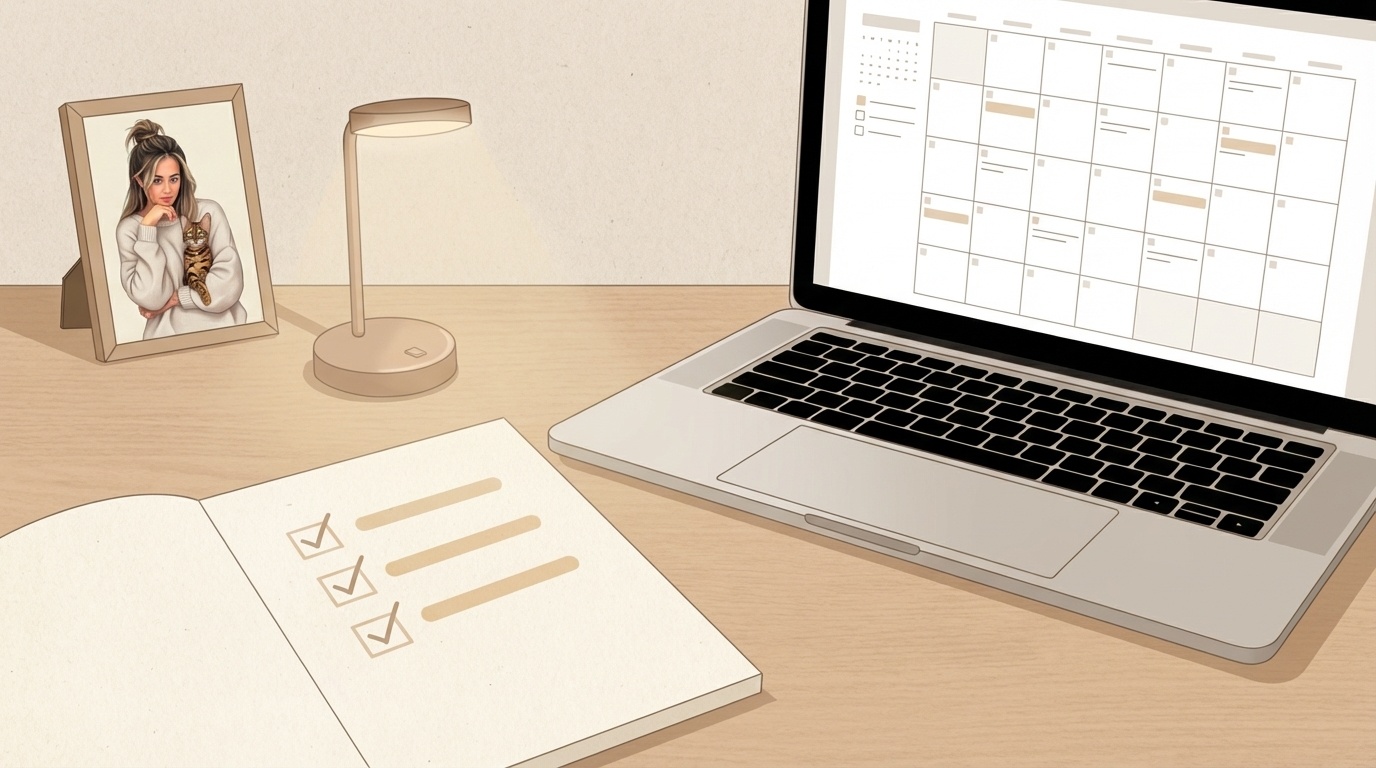
The tool doesn’t matter as much as the trust: “If it’s in there, I won’t lose it.” That’s where your nervous system starts to unclench.
Why this works (even if nothing else changes yet)
Because mental clutter behaves like physical clutter: when everything is “out,” you can’t focus. Capturing tasks gives your brain proof that nothing is slipping through the cracks.
If you do nothing else this week, do this. It’s often the beginning of that subtle shift where life starts feeling more held.
Next: turn loose thoughts into real priorities (without making a massive to-do list)
Once you’ve captured the swirl, the next skill is deciding what actually matters today—not in theory, not in your ideal life, but in the real one with emails and laundry and your energy levels.
A lot of “disorganization” is really just priority fog. When everything feels equally urgent, you either:
- do random small tasks for dopamine,
- or freeze because you don’t know where to start.
Try the “2–3 Musts” rule
Instead of a huge list, pick 2 or 3 must-do outcomes for the day.
Not twenty. Not “clear inbox.” Outcomes like:
- “Send the proposal.”
- “Pay the bill + schedule the appointment.”
- “Outline the presentation.”
Then (and this part is important), keep a small list of “nice if it happens” tasks so they stop begging for attention.
Digital tools that help you see priorities cleanly
- Todoist: great for recurring tasks and keeping lists from multiplying everywhere.
- Structured (iOS/Android): if time-blindness is an issue, the visual timeline makes the day feel more realistic.
- Google Calendar or Fantastical: if your life is truly appointment-driven, your calendar should be your command center—not just a place meetings happen to you.
The point isn’t to perfectly plan every hour. It’s to remove that 9:30 a.m. panic where you realize you’re already behind and you never even chose what “winning” today looks like.
A small but powerful “reset” that makes everything easier tomorrow
This is where most people fall off: they capture and they plan… but they don’t reset. And then their systems slowly fill up like a junk drawer.
So here’s one reset that gives a disproportionate return:
The 10-minute “closing shift”
Before bed (or whenever you’re done working), set a timer for 10 minutes and do three things:
- Put obvious things back (a micro tidy—no deep cleaning)
- Look at tomorrow’s calendar once
- Write your 2–3 musts for the next day
That’s it.
This is how calmer mornings are made: not by becoming a morning person, but by making the next day easier to enter.
And if you’re thinking, “That sounds nice but my evenings are chaos,” that’s fair. Even doing one of the three steps counts. The win is consistency, not perfection.
At this point, you’ll likely start noticing early signals: fewer frantic searches, fewer forgotten tasks, slightly calmer starts. And once that foundation is in place, you can build systems that handle the two biggest day-to-day stressors for most women: clutter hotspots (the places where mess magically reproduces) and recurring life admin (the bills, appointments, renewals, and reminders that keep sneaking up like jump scares).
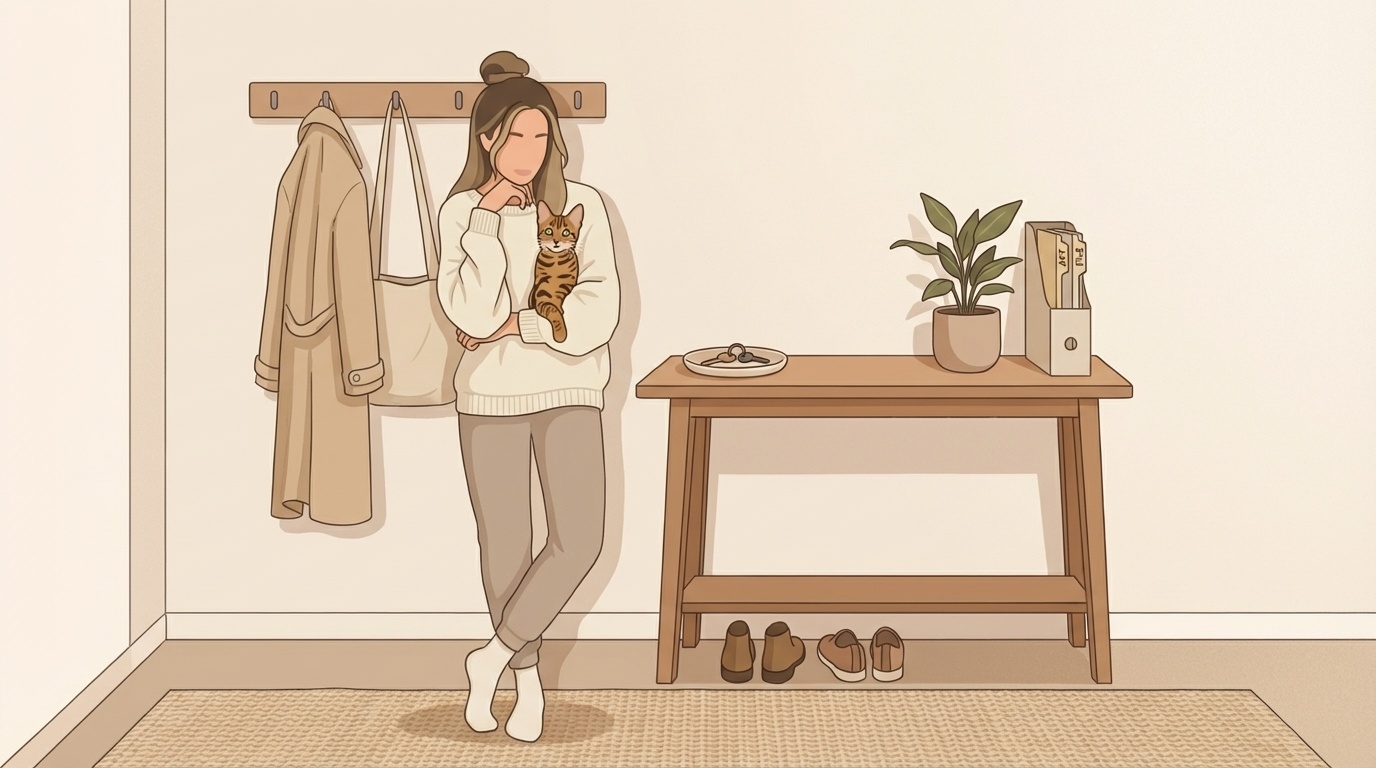
Because the secret to feeling organized isn’t controlling everything—it’s designing your life so fewer things can turn into emergencies in the first place…
Clutter hotspots: design your space so it stops “re-cluttering” itself
Most messy homes aren’t messy everywhere. They’re messy in the same 3–5 places on repeat: the entryway, the kitchen counter, the bedside table, your car, the chair that becomes a clothing museum. Those are clutter hotspots, and they’re not a character flaw—they’re a design problem.
A hotspot happens when an item has no obvious “home,” or the home exists but takes too many steps to use. Your brain will always choose the path of least resistance, especially when you’re tired.
The “One Home + One Step” rule
For anything that regularly lands in a hotspot, give it:
- One home (not “anywhere in this room”)—a specific container, hook, tray, or drawer.
- One step to put away (open bin, shallow drawer, visible hook). If it requires moving three things first, it won’t happen on a Tuesday.
Example: the entryway pile. If your keys, sunglasses, and earbuds always migrate to the counter, don’t try to “be better.” Put a small tray or wall hook where they already land. That’s not giving in—that’s building a more organized life around real behavior, not ideal behavior.
Set up “landing pads” (so your counter can be a counter again)
Landing pads are tiny, intentional drop zones. They reduce chaos because they remove the decision: Where does this go?
- For bags: one hook per person, at the height you’ll actually use.
- For mail: one vertical file labeled “Act” and “File” (not a flat pile that breeds).
- For daily essentials: a small bin or tray for wallet/keys/lip balm—nothing else.
Keep them comically simple. If a landing pad becomes a junk drawer, it’s usually too big or too vague. Smaller containers create better boundaries.
Recurring life admin: stop getting jump-scared by bills, renewals, and appointments
Here’s the sneaky truth: the tasks that drain you most aren’t hard—they’re recurring. They keep reappearing, so your brain never fully relaxes. The goal is to stop relying on memory and start relying on a system that quietly repeats itself.
Create a “Life Admin Day” (60 minutes, once a week)
Pick one consistent window—Sunday afternoon, Monday morning, Friday lunchtime. Put it on your calendar like a meeting you don’t cancel. During that hour, you handle the small but weighty things that otherwise leak into every day.
If you want a simple agenda, use this checklist:
- Money: pay any bills due this week, check upcoming auto-payments, scan for anything weird.
- Appointments: schedule/refill/follow up (dentist, vet, annuals) while you’re already in admin mode.
- Home: order essentials (dog food, contacts, toiletries) before they become emergencies.
- Communication: reply to the 2–3 messages you’ve been avoiding because they require thought.
This is how you turn “I keep meaning to…” into a contained routine that doesn’t chase you all week.
Use “default decisions” for the things you repeat
A surprising amount of decision fatigue comes from re-deciding the same things: what’s for breakfast, when you work out, when you do laundry, what day you clean, when you plan.
Try defaults like:
- Default meals: 2 breakfasts + 2 lunches you can rotate without thinking.
- Default laundry rhythm: one or two set days (even if the loads vary).
- Default planning: a 10-minute weekly look-ahead (calendar + top priorities).
Defaults aren’t rigid rules; they’re a relief. You can always override them—but most days you won’t need to.
Seven signs you’re building a more organized life (and how to reinforce each one)
Progress often looks boring from the inside—which is why it helps to know what to look for. If a few of these are true, you’re not “behind.” You’re building something that holds.
- Your mornings feel calmer. Reinforce it by doing a mini version of your closing shift: keys in the tray, quick counter clear, tomorrow’s musts written.
- You know your top priorities. Reinforce it by keeping your daily list small: 2–3 musts + a short “nice-to-do” list.
- Your space feels less cluttered. Reinforce it by giving clutter hotspots a container and a label (even a simple sticky note works).
- You forget fewer things. Reinforce it by turning “remember to…” into a recurring reminder or calendar event the moment you think of it.
- Small tasks take less time. Reinforce it with a daily 15–20 minute admin sprint (timer on, no multitasking).
- Your schedule feels more realistic. Reinforce it by adding buffers: travel time, decompression time, and “catch-up” blocks.
- You actually rest (without guilt). Reinforce it by treating rest as planned recovery, not a reward you earn by suffering.
If you only pick one to focus on, choose the one that would make your week feel noticeably lighter. That’s usually the best return on effort.
When you fall off (because you will): the “gentle reboot” method
Even the most organized people don’t stay perfectly organized. They just recover faster—and without drama.
The gentle reboot (15 minutes)
- Minute 1–5: quick capture—brain dump everything buzzing in your head.
- Minute 6–10: pick tomorrow’s 2–3 musts (not the whole universe).
- Minute 11–15: reset one hotspot (just one): entryway, counter, desk, bedside.
This gives you traction again without requiring a full “get my life together” weekend.
“You don’t need more motivation—you need a smaller restart.”
Conclusion: calm isn’t something you stumble into—it’s something you set up
A more organized life isn’t about becoming a different person. It’s about building a few dependable supports so your brain can stop acting like a 24/7 reminder app. When you capture what’s swirling, choose a handful of true priorities, and reset the friction points that keep turning into emergencies, your days start to feel steadier.
And that steadiness matters. It creates mornings with less urgency, evenings with less mental noise, and a kind of quiet confidence that you can handle what’s coming—because you’re not handling it all at once in your head.
Keep this simple. Pick one system—just one—and let it earn your trust. Calm living doesn’t require perfection. It requires a few smart choices that take care of future you.
Additional visual resources
If you’d like extra visual guidance and updates, you can find more resources here: