It’s wild how small habits can be the difference between “I’m fine” and “I’m one more email away from unraveling.” If you’ve been feeling like your brain has 37 tabs open (and one of them is playing music you can’t find), you’re not imagining it—modern life is set up to quietly overload you.
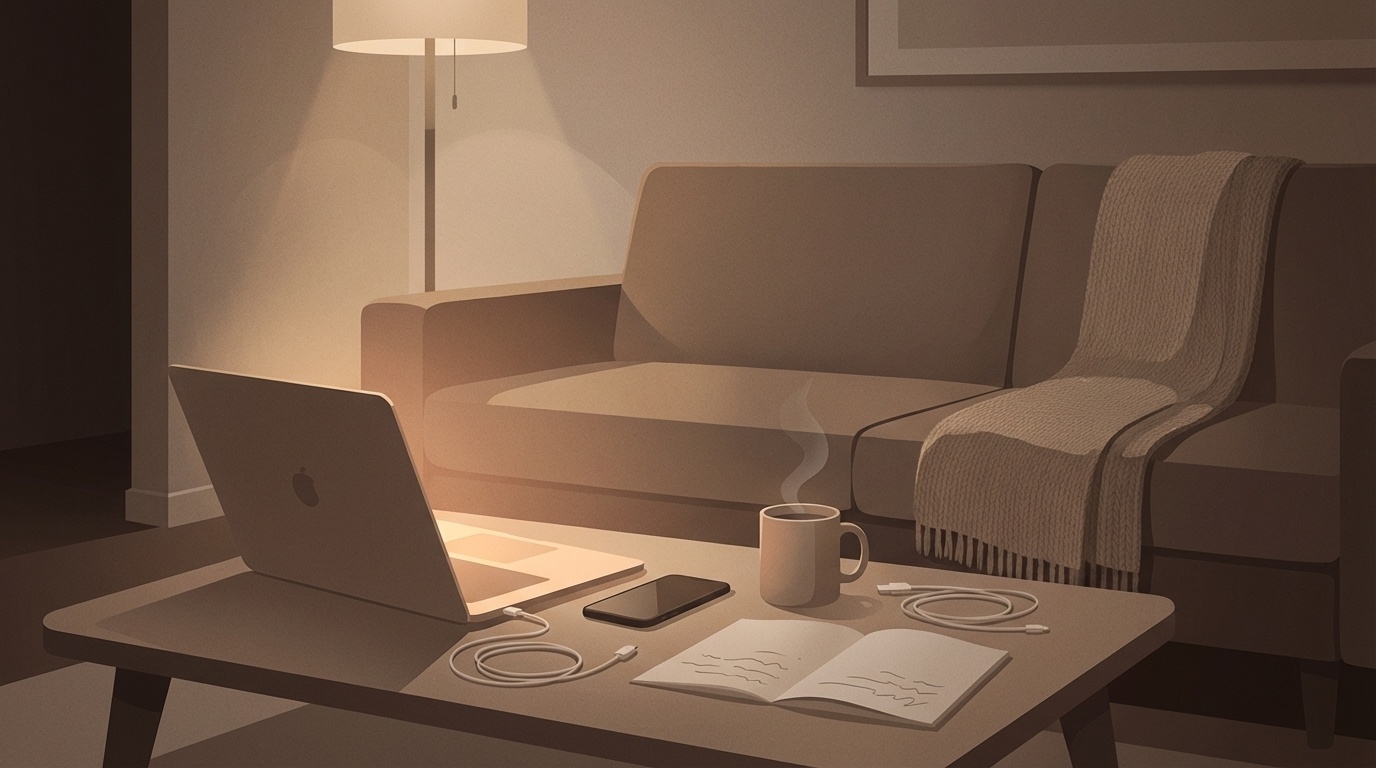
Picture a pretty normal Thursday: it’s 8 PM, you finally close your laptop after back-to-back meetings, client messages, and the one ongoing project that keeps shape-shifting. Your shoulders feel glued to your ears. You tell yourself you’ll do something soothing, but somehow you’re on Instagram, then you’re in the kitchen, then you’re scrolling again… and sleep feels like a rumour. It’s not dramatic. It’s just… heavy.
And the frustrating part? From the outside you’re functioning. You’re working, paying bills, keeping plants alive (mostly), remembering birthdays (somehow), and still feeling like you’re behind on life.
Why life feels harder than it “should” (even when nothing is technically wrong)
A lot of us grew up thinking burnout is what happens when you push too hard. But what many women are experiencing now is subtler: mental overload.
Not just “too much work,” but too many micro-decisions, too much screen exposure, too many context switches, too little recovery. Your brain isn’t only doing your job—it’s also:
- managing dozens of tiny admin tasks (appointments, renewals, groceries, messages)
- carrying emotional labour (checking in, remembering, smoothing)
- reacting to constant input (notifications, news, social feeds, group chats)
- trying to self-regulate without enough real breaks
So even when you do get a “rest moment,” it often isn’t restorative. Scrolling looks like downtime, but it keeps your nervous system stimulated. Same with answering “one last thing.” Same with half-resting while thinking about tomorrow.
This is why the idea of a full life overhaul—new routine, new diet, new workout plan—can feel almost insulting. You don’t need more homework. You need relief.
Small changes don’t just improve your day—they reduce the number of times you have to rescue yourself from it.
The core idea: a few tiny anchors that make your day feel lighter
When life feels heavy, the answer usually isn’t intensity. It’s support.
Think of the next month of your life like a slightly wobbly bookshelf. You don’t need to rebuild the whole thing. You need a few stabilizers—small, repeatable actions that quietly hold you up from underneath.
That’s where small habits come in. Not “reinvent yourself” habits. More like tiny anchors that:
- regulate your energy (so afternoons don’t feel like walking through syrup)
- smooth your stress response (so you’re less reactive and more steady)
- reduce decision fatigue (so everything doesn’t require a pep talk)
- improve sleep quality (so you can actually recover)
These work because they’re aligned with your biology, not your willpower.
Small habits that actually move the needle (without taking over your life)
There are five that come up again and again in wellbeing research because they’re boring in the best way: simple, repeatable, and shockingly effective when done consistently.
You do not need to start all five at once. In fact, please don’t. The power here is choosing one or two and letting them become almost automatic.
1) Morning sunlight (10–20 minutes)
This is the least glamorous habit with the biggest “why am I suddenly more okay?” effect.
Morning light helps set your circadian rhythm—the internal clock that influences sleep quality, energy, mood, and even appetite cues. When your brain gets that “it’s morning” signal early, it tends to make nighttime wind-down easier later.
Practical version (real life edition):
- stand on your balcony with your coffee
- walk to the corner and back
- sit near a window if you truly can’t get outside (outside is better, but do what you can)
If you’re someone who wakes up and immediately opens email… consider this your gentle alternative.
2) Water across the day (around 2 liters, adjusted for you)
Dehydration is sneaky. It doesn’t always feel like thirst—it can feel like brain fog, irritability, fatigue, and that vague sense that everything is harder than it needs to be.
The key is “across the day,” not panic-chugging at 9 PM.
Practical version:
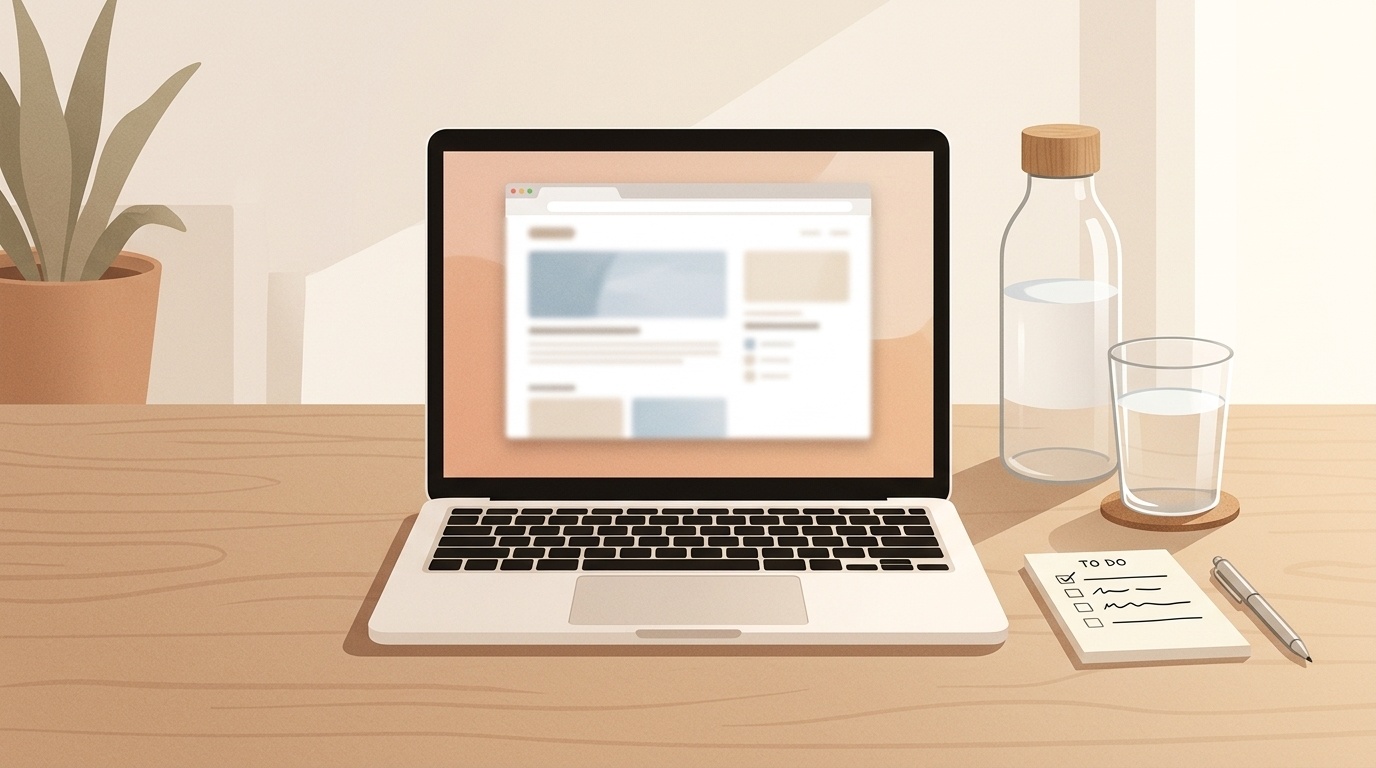
- one glass in the morning (stacked with brushing teeth or making coffee)
- keep a bottle within reach during work blocks
- make drinking water the thing you do while waiting for pages to load, calls to start, pasta to boil
This habit is less about perfection and more about reducing unnecessary fragility.
3) Ten minutes of movement (not a workout—movement)
The point isn’t fitness. It’s a nervous system reset.
A short walk, a stretch, a quick dance break while you’re waiting for a meeting to start—these tiny bursts help your body metabolize stress hormones and reintroduce motion into a day that’s mostly sitting and thinking.
If you’re stuck at a desk, movement also helps your mind stop feeling like it’s trapped in your skull.
Practical version:
- 10-minute walk after lunch
- 5 minutes of stretching + 5 minutes of tidying
- “phone call = walking call” when possible
4) A real break every 60–90 minutes
Not a “break” where you check messages in a different room. A break where your brain actually shifts gears.
Most of us are asking our attention to do something it wasn’t built for: continuous high-focus effort with constant interruptions. That’s how you end up feeling fried at 3 PM and still unable to stop working at 8 PM.
A short break interrupts the workday creep—the “just one more thing” spiral.
Practical version:
- stand up and look out a window
- refill water
- do a 2-minute stretch
- step outside for fresh air if you can
This one habit can make your day feel 20% less aggressive.
5) Sleep as a non-negotiable (7–9 hours, realistically)
I know. Everyone says sleep. But here’s what’s different: we often treat sleep like a reward for finishing, when it’s actually the foundation for coping.
When sleep is inconsistent, everything gets louder: stress feels sharper, focus gets slippery, cravings get intense, emotions get more tender. You become more likely to rely on caffeine, scrolling, and “I’ll fix it tomorrow.”
Sleep doesn’t fix your life—but it makes your life feel fixable.
Why these habits are so hard to keep (and how to stop relying on motivation)
If you’ve tried to “be a morning person” or start a perfect routine before, you probably already know this: motivation is not reliable. Especially when you’re mentally overloaded.
That’s why the goal isn’t to become disciplined. The goal is to create scaffolding—simple systems that make the right thing easier than the default thing.
A few low-effort supports that work beautifully with small habits:
Use your phone like an assistant, not a slot machine
- Put a single reminder on your lock screen: “Sunlight + water.”
- Change your morning alarm label to something kinder than “WAKE UP!!!” Try: “Step outside for 5 minutes.”
- Add a “daily anchors” widget (iPhone Shortcuts or Android widgets) with just 2–3 actions.
Make hydration and breaks automatic with gentle tools
- WaterMinder or Hydro Coach: reminders that are customizable (so it doesn’t feel like nagging)
- Stretchly (free) or a simple Pomodoro timer: cues for micro-breaks so you don’t have to remember
- Google Calendar: block two “reset slots” during your heaviest work hours so your day stops becoming one long blur
The point of these tools isn’t tracking for the sake of tracking. It’s reducing the number of times you have to think about taking care of yourself.
Add “anchors” to moments that already exist
This is the secret weapon: attach the habit to something you already do.
- Coffee → step outside with it (sunlight)
- Opening your laptop → drink water first (hydration)
- Finishing a call → 3-minute walk around your space (movement)
- Hitting a mental wall → set a 6-minute reset timer (break)
When the habit is linked to a cue, it stops feeling like an extra task and starts feeling like part of the day’s architecture.
And once your day has a little architecture, you’ll notice something subtle but powerful: you spend less time rescuing yourself from exhaustion. You recover faster. You don’t hit that “why am I like this” moment as often.
The next step is choosing which of these small habits will become your first stabilizer—based on where your life is currently leaking the most energy—and setting it up so it happens with almost no friction… which is where a simple “anchor routine” starts to come together.
Build an “anchor routine” that runs even on your messiest days
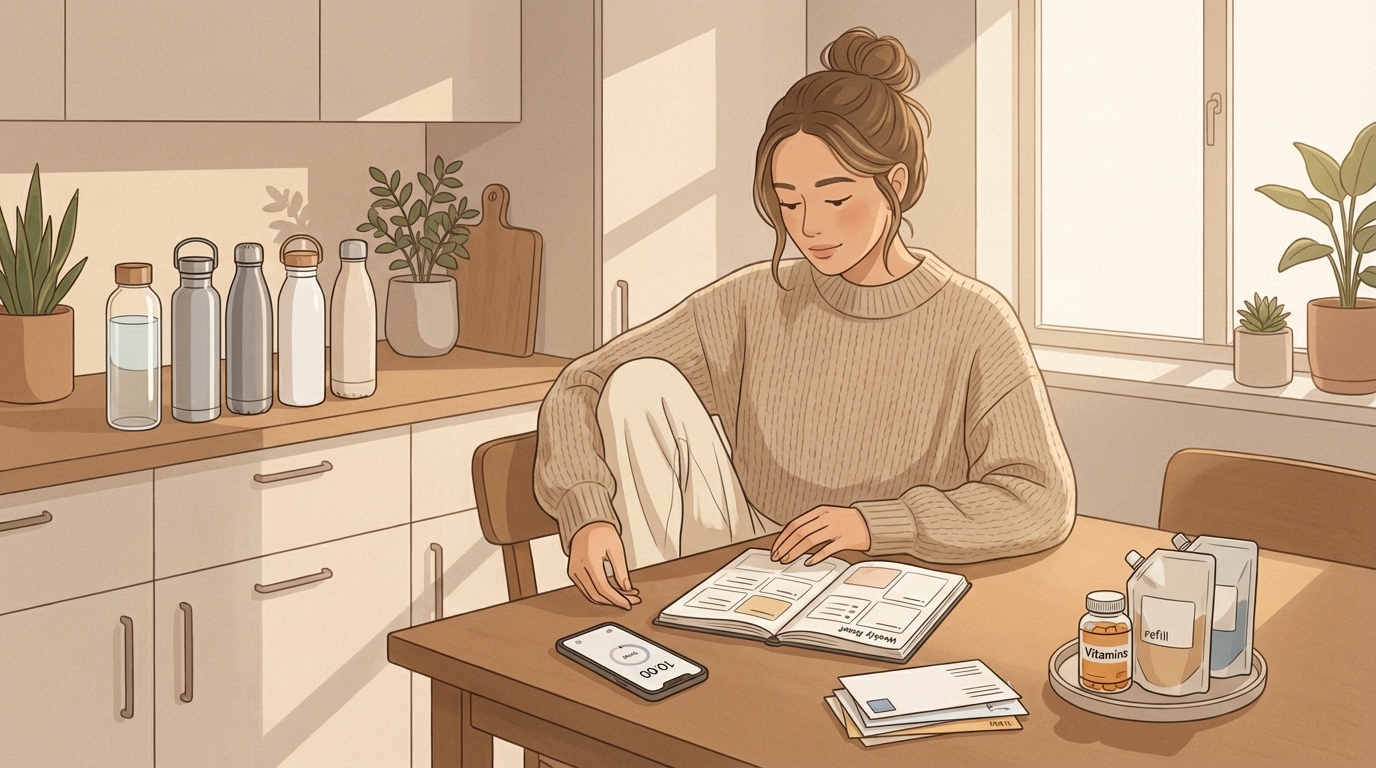
Here’s the trick: don’t build a routine for your best-self fantasy life. Build it for the version of you who’s tired, rushed, and a little emotionally brittle by 4 PM.
An anchor routine is just a couple of tiny actions that happen in the same order, tied to moments that already exist. It’s not a perfect morning routine. It’s a reliability plan.
A simple way to choose your first stabilizer (based on your “leak”)
If you’re not sure where to start, pick the small habit that plugs the biggest daily energy leak:
- If your mornings feel chaotic: choose morning sunlight (it sets the tone fast).
- If your afternoons crash: choose water + a real break (it’s often hydration + attention overload).
- If your evenings disappear into scrolling: choose a sleep cue (one tiny action that signals “we’re winding down”).
- If your body feels stiff and your brain feels loud: choose 10 minutes of movement (it discharges stress without requiring motivation).
The “2 + 1” anchor routine (tiny, flexible, extremely doable)
Pick two anchors that fit into your day easily, plus one anchor that supports sleep. Example:
- AM anchor: step outside with your first drink (sunlight + water stacked together)
- Midday anchor: 10-minute walk after lunch (or right before your first afternoon meeting)
- PM anchor: plug your phone in outside the bedroom (or put it across the room) at a set time
You’re not trying to be impressive. You’re trying to be supported.
Small habits that stick: lower the friction, don’t raise the pressure
When a habit “doesn’t stick,” it’s rarely a character flaw. It’s usually one of these:
- It requires too many steps.
- It’s competing with a stronger default (hello, phone).
- It’s not attached to a cue, so you have to remember it from scratch.
- It’s too big for your current capacity.
Make the habit the path of least resistance
Try one friction-reducer per habit:
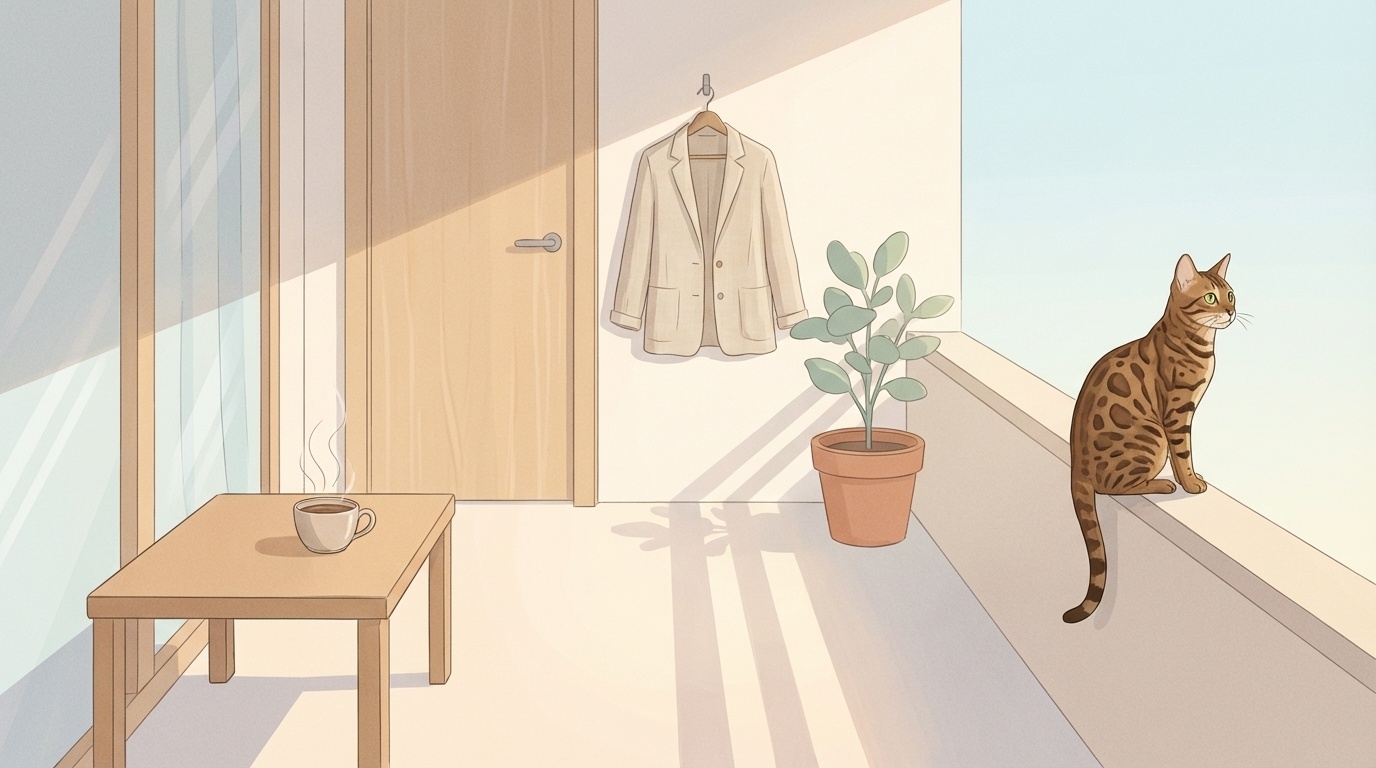
- Sunlight: keep your “outside layer” (hoodie/coat/shoes) in one grab-and-go spot near the door.
- Water: keep a full bottle where your hand already lives (desk, bedside, passenger seat). If it’s out of reach, it basically doesn’t exist.
- Movement: choose “no-transition movement” (stretch while the kettle boils, walk during a voice note, squats while brushing teeth).
- Breaks: use a timer so you don’t have to be the manager of your own workday.
- Sleep: make the first step comically small (wash face, plug in phone, dim one lamp). The first domino matters most.
Use “minimums” so you don’t quit on imperfect days
This is one of the calmest mindset upgrades you can make: decide ahead of time what “counts” when your day goes sideways.
- Sunlight minimum: 2 minutes on the balcony or at the front door.
- Water minimum: one full bottle by noon.
- Movement minimum: 3 minutes of stretching or a walk to the end of the street.
- Break minimum: stand up and look out a window for 60 seconds.
- Sleep minimum: in bed with lights low at a consistent time—even if you don’t fall asleep instantly.
The goal is continuity. Your nervous system loves “we do this now,” even when it’s small.
A weekly reset that reduces decision fatigue (without stealing your Sunday)
If your brain feels like it’s constantly catching up, a short weekly reset can remove an entire layer of background stress. Think 20–30 minutes, once a week, on purpose.
The 30-minute “life admin sweep”
- 10 minutes: open notes/calendar and do a quick scan of the week (appointments, deadlines, travel time).
- 10 minutes: handle the top 3 annoying tasks (book the appointment, pay the invoice, order the refill).
- 10 minutes: set up your environment (fill water bottles, restock an easy breakfast, choose 2 outfits if that helps mornings).
This isn’t about being “on top of everything.” It’s about not carrying a swarm of tiny undone tasks in your head all week.
Write a “default plan” for your hardest time of day
Decision fatigue hits predictably. For most people it’s either late afternoon or late evening. Create a tiny script for that time so you don’t have to negotiate with yourself when you’re depleted.
- Afternoon default: water + 6-minute break + 10-minute walk (or stretch) before caffeine or snacking.
- Evening default: snack/protein + shower or face wash + phone on charger + one low-stimulation activity (book, gentle show, stretching).
When you have a default, you spend less time “figuring it out,” and more time actually feeling better.
“You don’t rise to the level of your goals—you fall to the level of your systems.”
Conclusion: calm is something you can build
If your life has felt heavy lately, it doesn’t mean you’re doing it wrong. It usually means you’ve been operating without enough support while the world keeps asking for more attention, more decisions, more output.
The good news is that calmer living doesn’t require a personality transplant or a perfect routine. It’s built through small habits that stabilize your days: a little light, a little water, a little movement, real breaks, and sleep protected like it matters (because it does).
Pick one anchor. Make it easy. Let it be imperfect but consistent. Over time, those tiny stabilizers turn into a life that feels less like constant coping—and more like you actually have space to breathe, think, and enjoy what you’ve worked so hard to build.
For extra visual support and quick reminders you can save, there are additional resources available below: