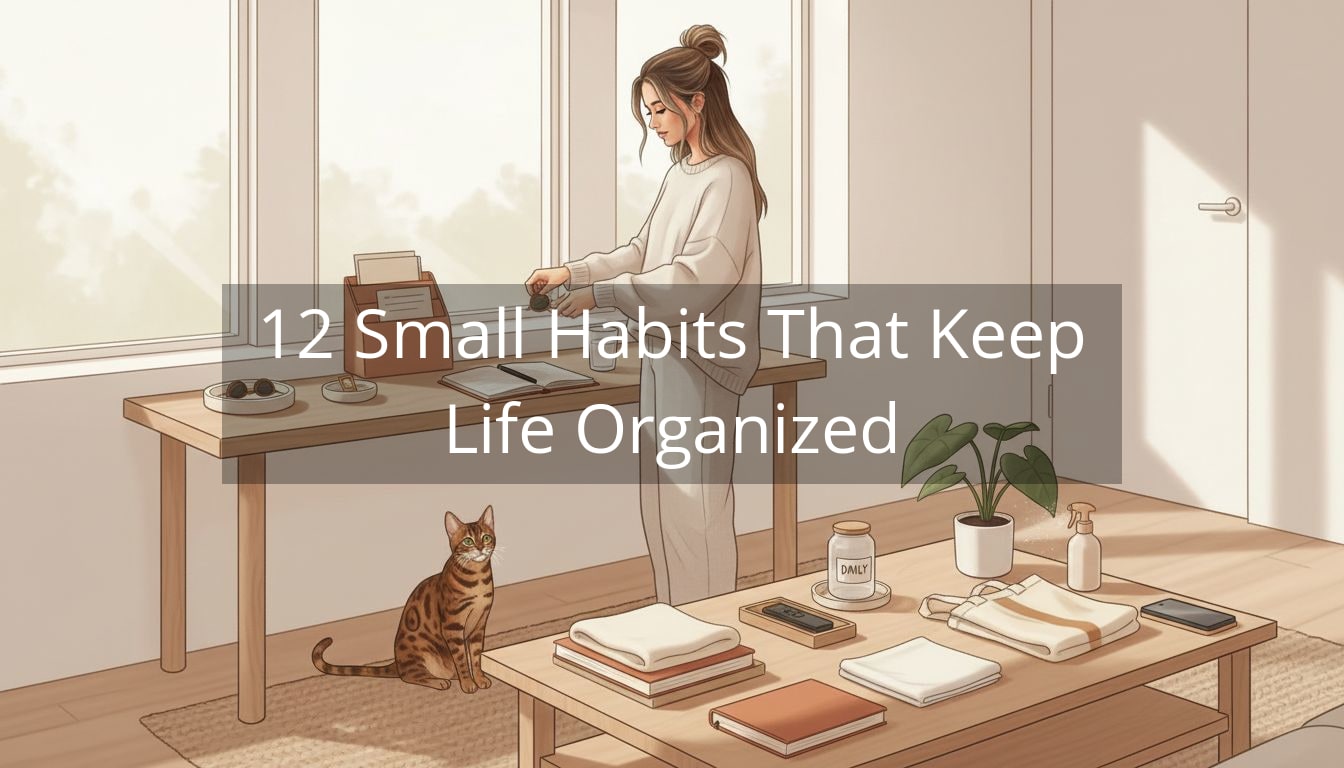
Small habits organization sounds almost too simple to be the answer, especially when your life feels like a browser with 37 tabs open. But if you’ve ever stood in your doorway at 7 PM—bags sliding off your shoulder, brain fried from meetings, errands, and decision-making—only to be greeted by a kitchen counter covered in mail, reusable containers, and a “why is this here?” scarf… you know the specific kind of tired that mess creates.
It’s not the mess itself. It’s what the mess represents: undone tasks, delayed decisions, and one more thing asking something of you when you have nothing left to give.
The modern overwhelm problem (and why it keeps happening)
A lot of us are trying to run adult life on willpower. We tell ourselves we’ll “catch up this weekend,” or we wait for a magical day when we’ll have the energy to organize everything at once. Meanwhile, daily life keeps generating stuff—paper, packages, laundry, dishes, half-finished projects, skincare empties, Amazon returns—like a printer that won’t stop.
Here’s what’s really going on beneath the clutter:
- Decision fatigue is real. Every item out of place is a tiny question: Where should this go? Do I need it? Deal with it now or later? Multiply that by 50 and your nervous system starts treating your home like an inbox you’re failing.
- Transitions are chaos magnets. Entryways, kitchen counters, bedside tables, the chair-that-isn’t-a-chair (you know the one) become “landing pads” because you’re moving fast. And when you’re moving fast, you default to dropping—not finishing.
- We’re overestimating future energy. “I’ll do a big reset later” assumes Future You is more rested, more motivated, and more available. But Future You is usually… just you, again, at 7 PM, with the same human limits.
That’s why disorganization feels so personal. It can start to sound like a character flaw—lazy, messy, behind. But it’s usually a systems problem: too many open loops and not enough gentle structure to close them.
“Clarity isn’t a personality trait—it’s a practice you return to.”
Why “tiny” beats “total overhaul” (and how small habits actually work)
This is where the whole idea of small habits organization becomes quietly powerful. The goal isn’t a perfectly curated home. It’s a home that doesn’t drain you.
Big clean-outs and Sunday marathons can feel satisfying in a dramatic, makeover-before/after way—but they’re hard to repeat. They require time, energy, and a fairly rare combination of motivation + no interruptions. They also carry a hidden cost: if your only strategy is “do it all at once,” your default state becomes “let it build until I can’t stand it.”
Small habits flip that.
Instead of relying on occasional intensity, you build light maintenance into your actual life—minutes, not hours. Think of it as compound interest for your space: tiny actions that prevent mess from graduating into “project status.”
A few examples of what I mean (these will sound almost laughably simple, but stay with me):
- returning items to their “home” after using them
- clearing one surface (not the whole room)
- doing a 5-minute tidy at a predictable time
- an evening kitchen reset (so mornings don’t start in survival mode)
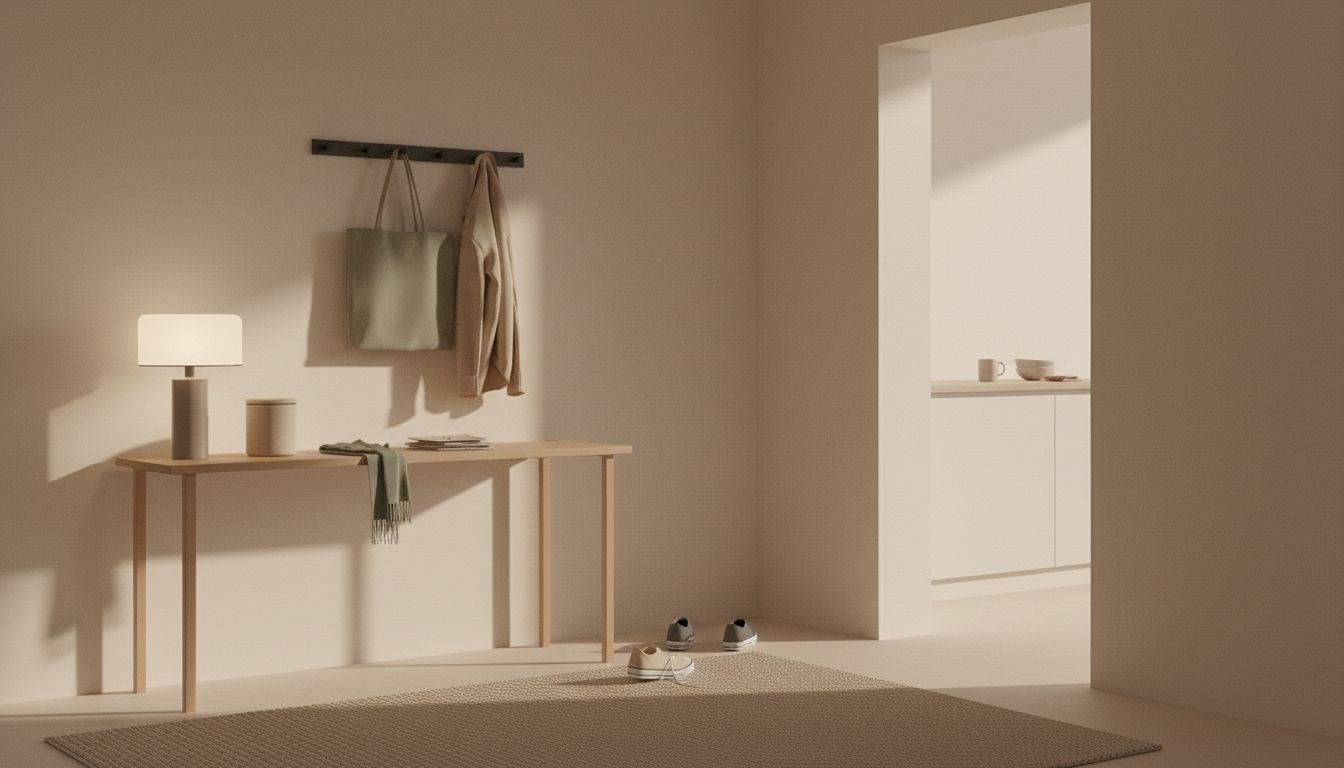
- keeping entry areas “low clutter” so you’re not wading through shoes and tote bags
- preparing a little for tomorrow (clothes, lunch items, charging devices)
These aren’t aesthetic rules. They’re friction reducers. Each one closes a loop your brain would otherwise keep tracking in the background.
Why small habits organization creates a calmer home (without perfection)
Let’s make it practical: the real benefit of small habits isn’t that your counters look nice. It’s that your home stops constantly interrupting you.
A “gently maintained” home does three things for a busy, modern woman:
-
It lowers the number of decisions you make after work.
If your keys always go in one bowl, that’s one less scavenger hunt. If your mail has one designated spot, you’re not moving the same pile around for five days. -
It reduces the emotional drag of unfinished tasks.
Visual clutter is also mental clutter because it’s full of implied obligations: “put away,” “sort,” “return,” “deal with.” When you shrink the backlog, you feel lighter—fast. -
It makes “resetting” feel normal, not dramatic.
You don’t need the fantasy of a free weekend. You just need a few reliable moments where things return to baseline.
And here’s a truth I wish someone had told me earlier: being organized isn’t about being naturally tidy. It’s about having fewer decisions to make in the first place.
The hidden villain: “flat surfaces” and open loops
If we’re being honest, most home chaos isn’t spread evenly across your entire living space. It collects in the same hotspots:
- kitchen counters
- the dining table you “barely use” (because it’s covered)
- the entryway/console table
- your nightstand
- the bathroom counter
- that one chair
These surfaces become default storage because they’re convenient—and because you’re usually in motion when you set things down. So one of the smartest early moves is not “organize the whole house.” It’s to create micro-systems for your hotspots so they stop re-cluttering immediately.
That’s the difference between tidying as a constant struggle and tidying as a quick reset.
The core system: a daily “close the day” reset
If you only borrow one idea from this (for now), let it be this: create a tiny ritual that signals your brain, we’re done for today.
Not a deep clean. Just closure.
A “close the day” reset usually lives in the kitchen because the kitchen is where the day shows up—coffee stuff, lunch containers, packages, random ingredients, a glass you keep refilling and somehow never wash. When the kitchen is chaotic, it leaks into everything: your morning mood, what you eat, how capable you feel.
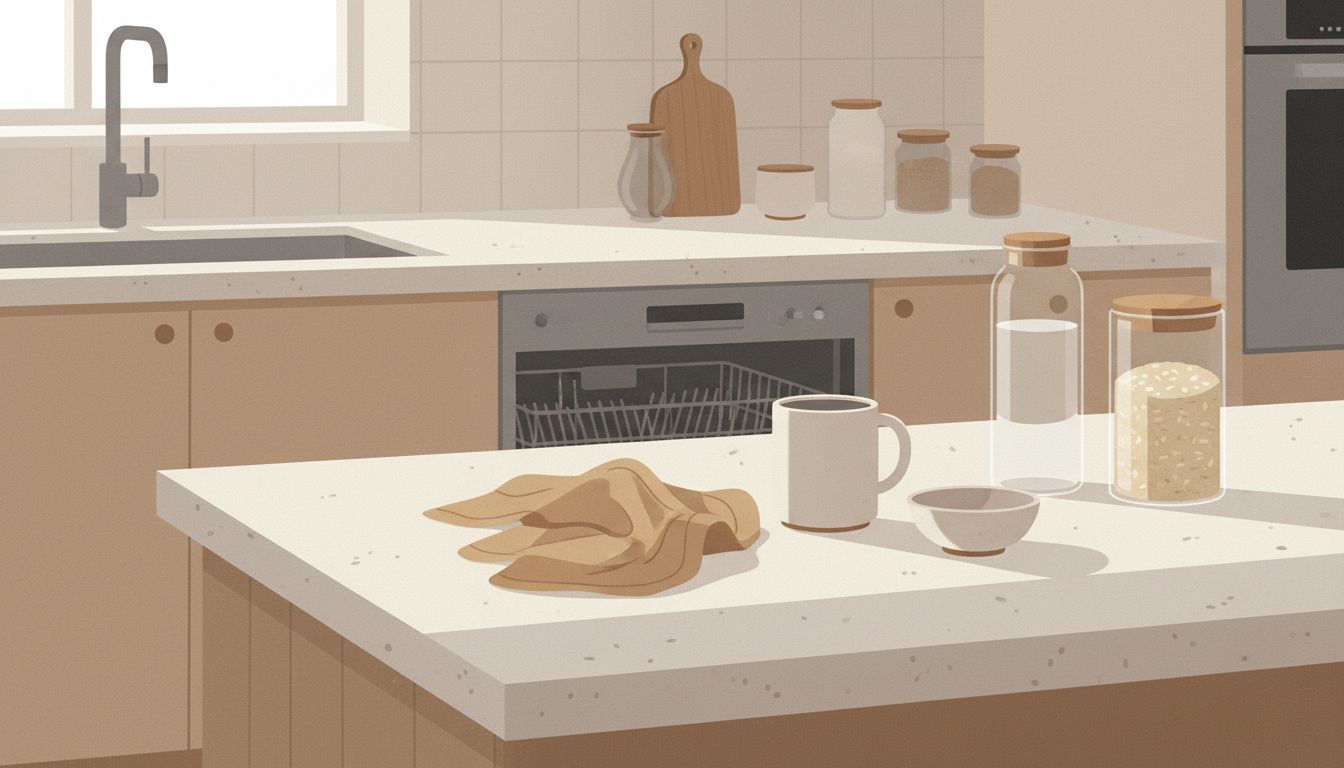
A simple evening kitchen reset might look like:
- load or start the dishwasher (or stack dishes neatly if no dishwasher)
- wipe the counter where you’ll make coffee/breakfast
- put away 5–10 items that don’t belong there
- set out one thing that helps tomorrow (water bottle, mug, oats, lunch container)
This is not about waking up to a spotless Pinterest kitchen. It’s about waking up to a space that doesn’t immediately start negotiating with you.
Two digital tools that make these habits easier (because remembering is the hard part)
If your brain is already carrying work tasks, social plans, family logistics, health stuff, and a running list of “shoulds,” the hardest part of home habits isn’t doing them—it’s remembering them at the right time.
Two tools that help without turning your life into a productivity cosplay:
1) A recurring reminder app (Todoist, Apple Reminders, or Google Tasks)
Create a short list of recurring home resets so you don’t have to hold them in your head. Keep it unromantic and specific.
Examples:
- “8:15 PM — Kitchen reset (5 min)”
- “Daily — Clear one surface (pick one)”
- “Wed — Empty fridge of leftovers (5 min)”
The win here isn’t the app itself—it’s that you stop relying on mental load as your operating system.
2) A timer (your phone is enough)
Timers work because they shrink the task psychologically. Five minutes feels safe. Five minutes doesn’t require motivation. Five minutes is just a tiny sprint.
Try this: set a 5-minute timer and do one category only (trash + dishes) or one zone only (entryway). When the timer ends, you stop. You’re building trust with yourself—not trying to punish yourself into cleanliness.
The first “small habit stack” to try this week
If your home feels especially chaotic right now, start with a stack that supports your day at its most vulnerable points: arrival, evening, and tomorrow morning.
- Arrival (60 seconds): keys + bag go to the same place every time
- Evening (5 minutes): kitchen counter reset + dishes contained (washed, stacked, or loaded)
- Tomorrow (2 minutes): set out one item that prevents morning scrambling (clothes, lunch container, charger)
That’s it. That’s the stack. Not because you can’t do more—but because starting smaller makes it repeatable, and repeatable is what changes your baseline.
And once those three moments start feeling smoother, you’ll notice something interesting: you begin to trust your space again. You walk into your home and it doesn’t immediately ask for payment in the form of your energy.
The next layer is creating a couple of “catch zones” that prevent clutter from migrating across every surface—especially for the papers, packages, and miscellaneous items that don’t have an obvious home…
Create “catch zones” that stop clutter from spreading
The items that don’t have an obvious home—mail, packages, receipts, returns, random cords, the face mask you took off in the car—are the ones that migrate. The mistake most of us make is trying to force these items to live in “proper” places (a drawer, a shelf, a filing system) before we’ve built the middle step: a simple, temporary landing zone.
Think of catch zones as your home’s shock absorbers. They take the hit so your counters and tables don’t have to.
Start with two catch zones (that you can empty in under 5 minutes)
If you add too many, they become new clutter piles. Two is usually the sweet spot:
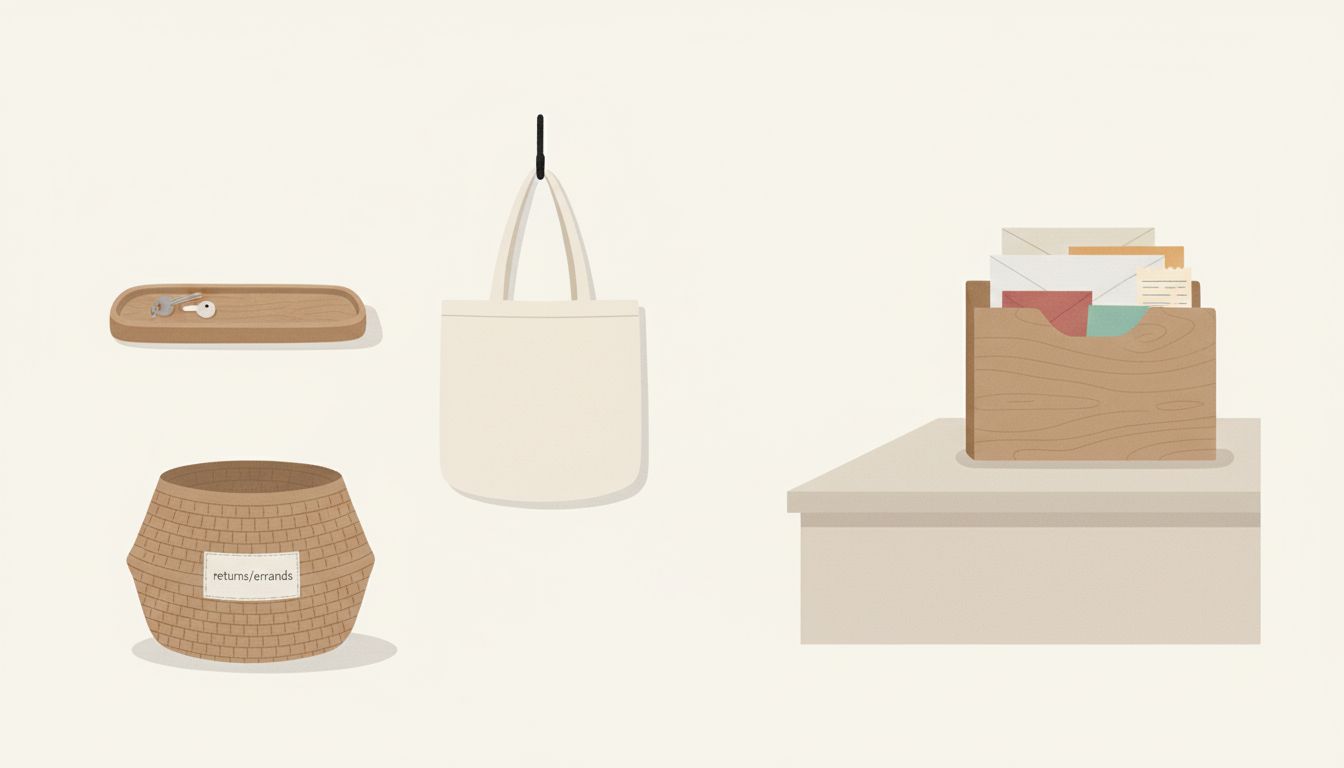
- Entry catch zone: a tray/bowl + one small basket
- Kitchen catch zone: a basket or vertical file holder for paper
What goes where:
- Tray/bowl: keys, earbuds, lip balm, sunglasses—tiny essentials you’ll hunt for when you’re stressed.
- Basket: “not right now” items that need action (return, donate, fix, bring to work).
- Paper spot: mail, invites, school forms, receipts you actually need—anything that becomes a countertop sheet-cake.
The rule that makes this work: catch zones are temporary by design. They’re allowed to be messy for a day, but they are not allowed to become permanent storage.
The 1-minute “sort or park” decision
When something enters your home, give yourself only two options:
- Sort: it goes to its true home immediately (file, pantry, closet, trash).
- Park: it goes into the correct catch zone to be handled later.
This keeps you from doing that exhausting thing where you move the same object to five different surfaces while your brain whispers, “Deal with me.”
Build a paper system that doesn’t require a high-functioning adult mood
Paper is a special kind of chaos because it’s both physical clutter and an obligation. And if you’re like most of us, you don’t need a complex filing setup—you need a system that works even when you’re tired.
The “3-folder” paper setup (simple enough to maintain)
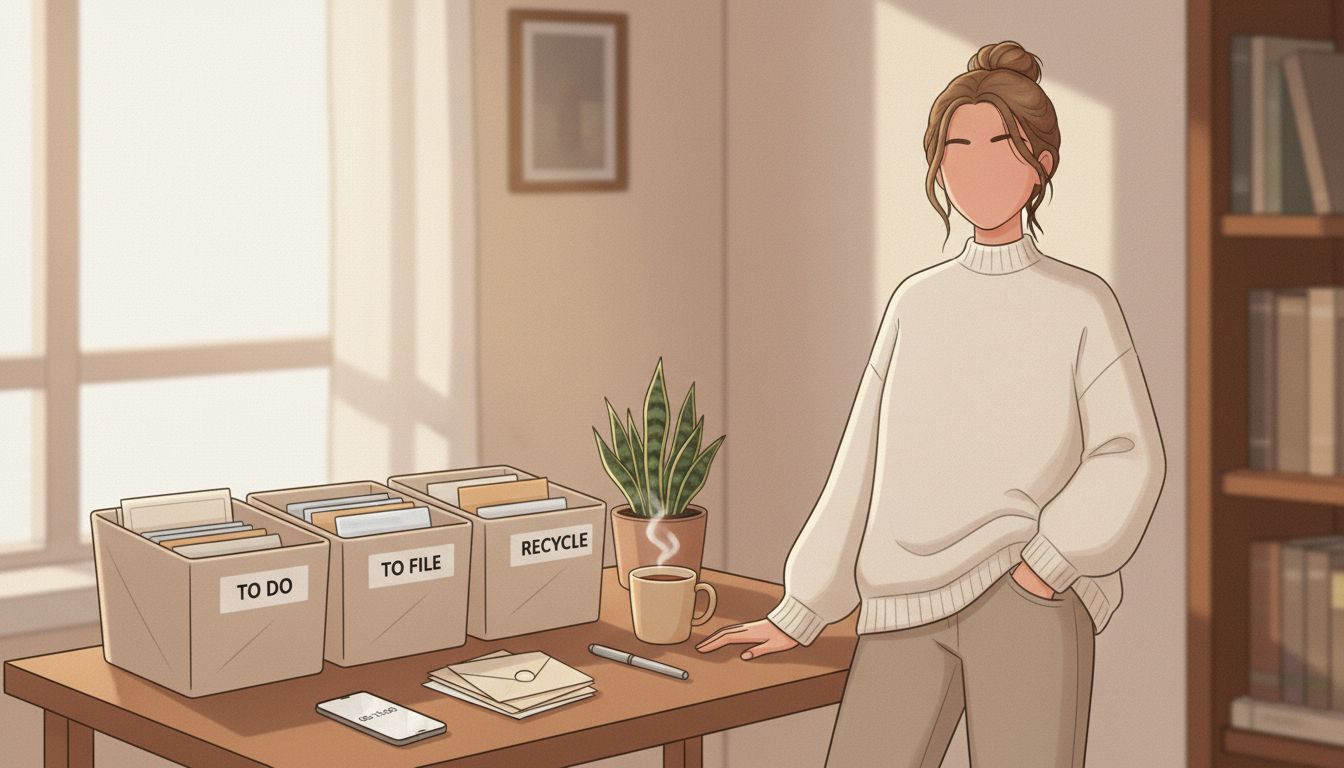
You can do this with folders, a small accordion file, or three labeled magazine holders. Label them:
- TO DO: forms to fill out, bills to pay, appointments to book, returns to process
- TO FILE: documents you’ll keep (insurance, taxes, contracts) but don’t need today
- TO RECYCLE: junk mail, inserts, duplicates
Here’s the key: your daily job is not to “finish paper.” Your daily job is simply to route paper into one of the three places. That alone clears the counter and closes a huge number of open loops.
A weekly 12-minute paper date (yes, schedule it)
Pick a day that’s already a transition (Sunday afternoon, Wednesday evening—whatever fits your rhythm). Set a timer for 12 minutes:
- Empty the TO RECYCLE section.
- Handle 1–3 items from TO DO (not all of them—just a few).
- Move anything you’re keeping into TO FILE.
If the timer ends and you’re done, great. If not, you stop anyway. The win is consistency, not heroics.
Use “small habits organization” to shrink decision fatigue at its source
Once your catch zones and paper flow are in place, the next level is making daily life require fewer choices. Decision fatigue isn’t just “too much to do”—it’s “too many small decisions stacked on top of each other.”
Choose default homes (so you’re not re-deciding every day)
Defaults are calming because they eliminate negotiation. A few high-impact defaults:
- One place for keys/wallet/headphones (always the same).
- One place for unopened mail (never the counter “just for now”).
- One place for returns (a bag or basket near the door).
- One laundry workflow you can repeat (even if it’s not perfect).
If something doesn’t have a default home, your brain has to solve it every time. And on a busy Tuesday night, your brain will choose “set it down” because it’s the cheapest option in the moment—until it becomes expensive later.
Try the “one-touch-ish” rule (because perfect one-touch is unrealistic)
The classic advice is “touch it once.” Real life is messier. So use the version that actually works:
- If you can put it away in under 30 seconds, do it now.
- If you can’t, put it in the right catch zone (not a random surface).
This protects your future energy without demanding unrealistic discipline.
12 small habits that keep life organized (without making your home your second job)
Here’s a practical menu you can steal from. You don’t need all 12. Pick 3–4 that support the hardest parts of your day, and let the rest be “later habits.”
- Return items to their home after use (or to a catch zone if you’re rushed).
- Clear one surface daily (just one: nightstand, coffee table, bathroom counter).
- 5-minute tidy at a predictable time (after dinner or before bed works well).
- Evening kitchen reset (contain dishes, wipe one counter, set up tomorrow’s coffee/water bottle).
- Keep the entryway low-clutter (shoes contained, bags hooked, keys in the same spot).
- Fold blankets and reset pillows (a 20-second cue that the room is “closed”).
- Do a “trash sweep” (walk around with a bag and remove obvious trash).
- Open windows for 5 minutes (fresh air makes your home feel reset fast).
- Contain papers immediately (route into TO DO / TO FILE / TO RECYCLE).
- Weekly mini-reset (12–20 minutes: empty catch zones + quick paper date).
- Let go of one unused item weekly (a shirt, a mug, a stray cable—keep it tiny).
- Prep one thing for tomorrow (outfit, lunch container, charger, gym shoes).
How to choose your starter habits (a quick self-diagnosis)
If you’re not sure where to begin, match habits to the pain point:
- If mornings feel chaotic: evening kitchen reset + prep one thing for tomorrow.
- If you’re always losing things: default home for keys/wallet + entry catch zone.
- If your counters stress you out: clear one surface daily + paper routing system.
- If weekends turn into catch-up marathons: 5-minute tidy + weekly mini-reset.
Make it stick: gentle accountability without the “new personality” pressure
The goal is to stop relying on motivation. Your habits should work on low-energy days, not just your best days.
Use “anchoring” instead of willpower
Anchor a habit to something you already do:
- After you start the kettle → 60-second counter clear.
- After you brush your teeth → quick bathroom reset (wipe sink, put products back).
- After dinner → 5-minute kitchen close.
If you keep waiting for a free block of time, your home will keep reverting to “default chaos.” Anchors create a predictable rhythm your brain can relax into.
Keep the bar intentionally low (so you actually clear it)
On hard days, your version of organized might be: dishes stacked neatly, counters wiped in one spot, items parked in catch zones. That still counts. That still reduces mental load.
Small steps done consistently beat big steps done occasionally.
Conclusion: calmer living is a system, not a personality
If your home has been feeling like one more demanding inbox, the fix isn’t to “try harder.” It’s to make your space easier to maintain when you’re already tired—which is exactly why small habits organization works. Tiny resets, reliable catch zones, and simple defaults don’t just make things look better; they make your days feel lighter.
Start with one small habit stack (arrival, evening, tomorrow). Add one catch zone. Route the paper. Give yourself five minutes, not five hours. You’re not aiming for perfect—you’re building a home that supports you back.
If you’d like additional visual resources and quick walkthroughs, those are available below.