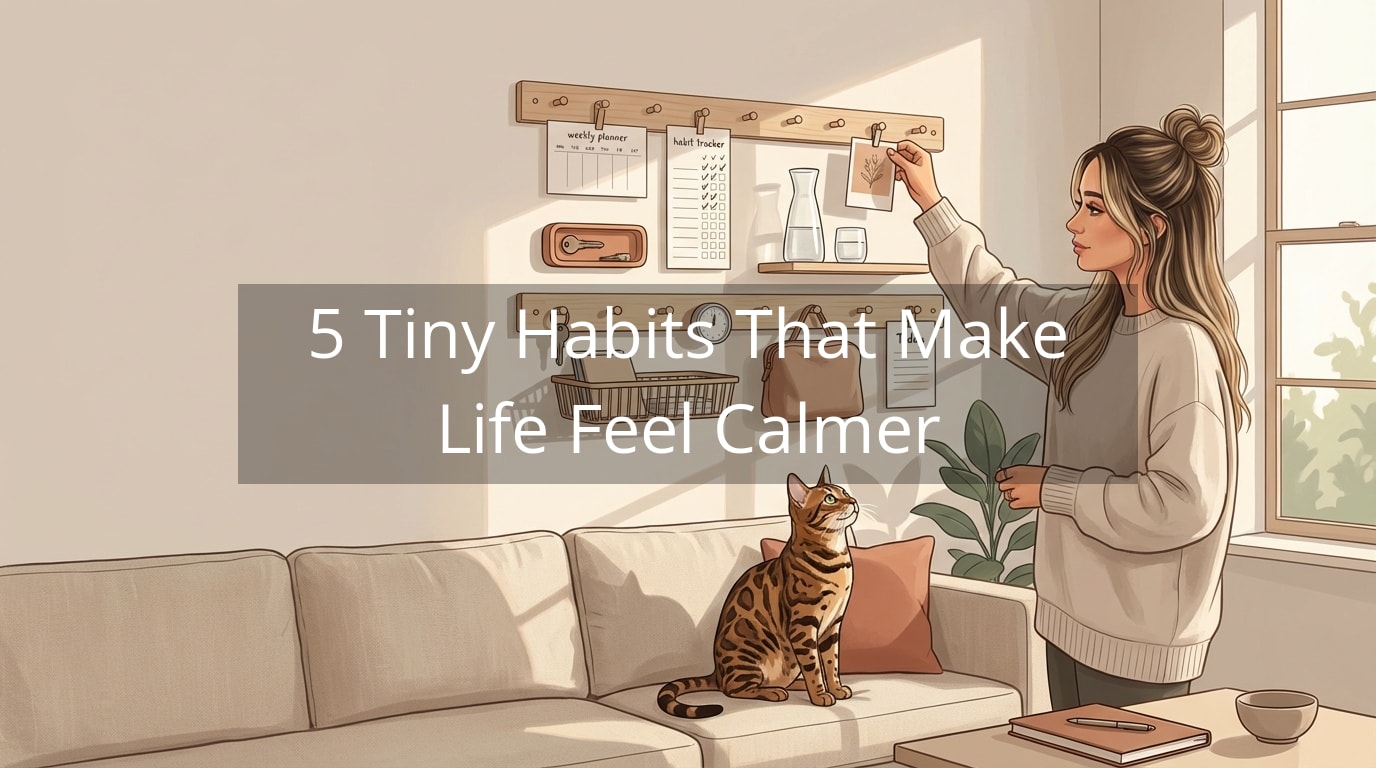
Life can genuinely feel calmer with tiny habits—not because you suddenly have fewer responsibilities, but because your brain finally gets fewer open loops to carry around. And if you’ve been trying to “get it together” with big routines that collapse the second work gets intense, tiny habits are the more realistic place to start.
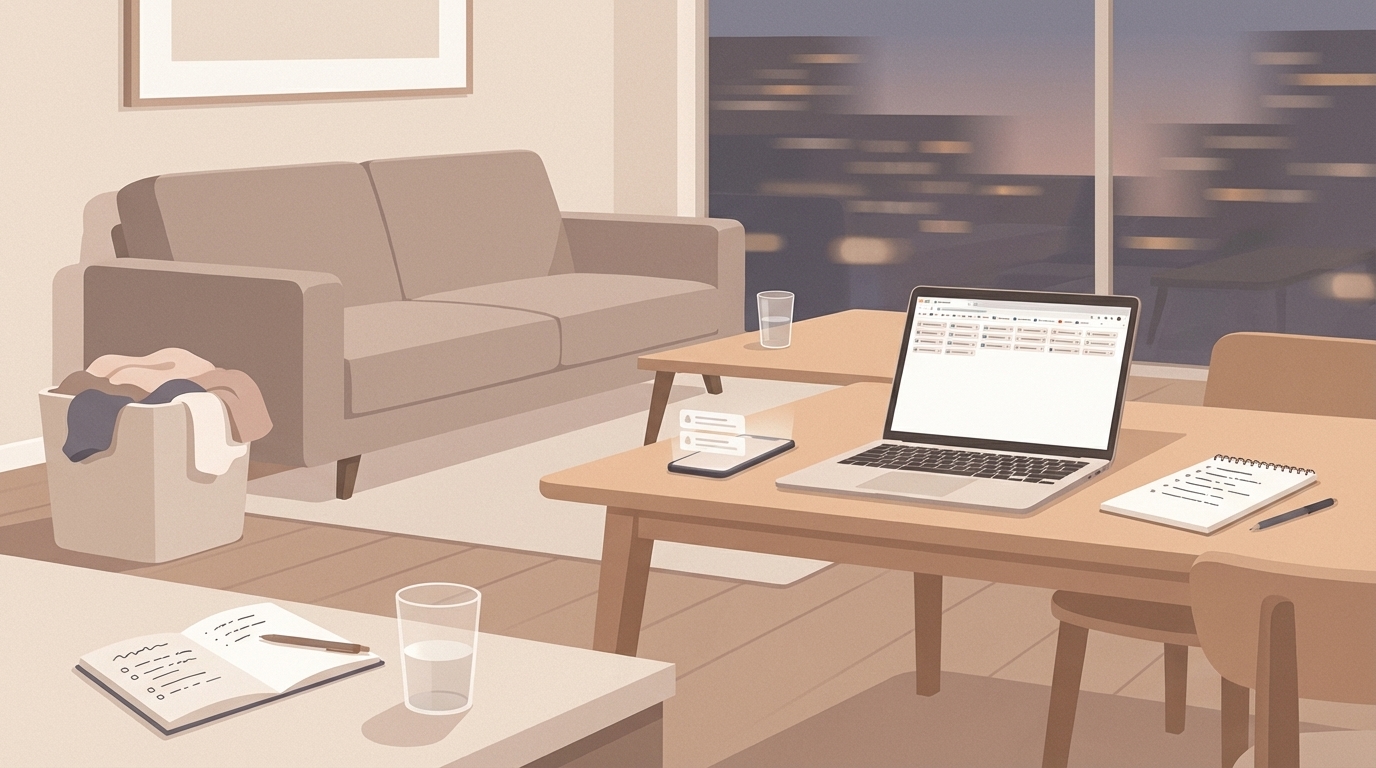
It usually hits around early evening: you’re done with meetings (or client calls), you’ve squeezed in groceries or a workout or a quick scroll that wasn’t supposed to be a quick scroll… and somehow you still feel behind. Not behind on one specific thing—just behind in a foggy, everywhere-at-once way. Your body is on the couch, but your mind is sprinting through a mental checklist: reply to that email, schedule the dentist, remember to text your friend back, figure out what’s for dinner, deal with the laundry, plan tomorrow, drink more water, stop being “bad” at relaxing.
That feeling isn’t you being dramatic. It’s modern mental load, and it’s incredibly predictable.
Why you feel overloaded (even when you’re doing “fine”)
Most of us grew up thinking stress comes from having too much to do. But the sneakier culprit is often too much to remember.
Today’s overload has a few common sources:
- Constant input. Notifications, Slack messages, voice notes, news, social content, group chats. Even “fun” apps are still decisions and stimuli.
- Invisible admin. Life management tasks don’t look like work, but they take real energy: tracking packages, refilling prescriptions, rescheduling appointments, managing subscriptions, keeping up with personal finances.
- No clean boundaries. When your laptop lives where your dinner happens, your brain never fully clocks out. The unfinished work is right there.
- Decision fatigue. You might not be doing heavy decisions all day—but you’re doing hundreds of micro-choices: what to eat, what to wear, when to answer, what to prioritize, whether you’re failing at adulthood if your kitchen counter is chaotic.
And here’s the part no one says clearly enough: your brain interprets “unfinished” as “unsafe.” Not in a dramatic way—just in a low-grade, background-alert way. Open loops (unanswered messages, clutter piles, vague plans) stay active in your working memory and quietly drain your focus.
“Clarity isn’t a mood—you create it by closing small loops.”
This is why you can have a good job, a decent routine, and a life you’re proud of… and still feel like you’re living in a browser with 47 tabs open.
The core idea: calm comes from closing tiny loops
When people talk about calm, they often make it sound like a personality trait. Like some women are just naturally serene and the rest of us are… not.
But calm is often a system outcome.
That’s where tiny habits are so powerful. Not because they’re “cute” or trendy, but because they do something your nervous system craves: they create small moments of completion. And completion is soothing. Completion tells your brain, we’re handling it.
Think of tiny habits as “micro-resets” you can actually fit into your life without needing a personality transplant.
The goal isn’t to build a perfect morning routine or a color-coded planner life. The goal is to introduce a few small actions that:
- reduce mental noise
- reduce visual noise
- reduce tomorrow-anxiety
- create reliable pause points in your day
Once you do that, everything feels a little less sharp around the edges.
Tiny habits that make life calmer (without adding another big “routine”)
Before we get into specific habits, I want to name one rule that changes everything:
Your habit has to feel almost too easy.
If it feels like “another thing,” it won’t stick—especially for women who already run on competence and adrenaline.
So the habits that work best tend to be small, sensory, and practical. Here are a few that create a noticeable shift quickly because they interrupt overload at the source.
1) Morning light: a two-minute signal that the day has started (not your phone)
If you wake up and immediately absorb your phone—emails, headlines, messages—your brain starts the day in reaction mode. You’re available before you’re even awake.
Stepping outside for 2–5 minutes of natural light is like giving your body a clean cue: we’re up, we’re here. It helps regulate your circadian rhythm (which affects mood and energy), and it’s surprisingly grounding.
Realistic versions that count:
- stand on the balcony in pajamas
- open a window and literally just look outside
- walk to the mailbox without turning it into “a whole walk”
If you want to make it stick, don’t rely on motivation. Add a gentle reminder in a low-friction habit tracker like Streaks (iOS) or even a recurring reminder in your phone labeled something friendly like “2 minutes of sky.”
2) The 10-minute reset: one clear surface that makes your brain exhale
A messy home isn’t a moral failure. But visual clutter is still stimulus, and stimulus is still draining.
A “10-minute reset” is exactly what it sounds like: set a timer, pick one small area, and restore it to neutral. Not perfect—neutral.
Good targets:
- kitchen counter (the emotional hotspot of many homes)
- desk surface (especially if you work from home)
- entryway dump zone (bags, mail, shoes, chaos)
What makes this calming isn’t that your home becomes spotless. It’s that your brain gets one clear signal: something is handled.
Digital tool that helps: use your phone timer (simple) or pair it with a focus mode like Do Not Disturb so you’re not getting pulled into messages mid-reset. If you like structure, a routine app like Routinery can nudge you through a short “Reset” sequence without you having to think.
3) The brain dump: stop using your mind as a storage unit
If you’ve ever tried to relax and found yourself thinking, Don’t forget to… don’t forget to… don’t forget to… you’ve already met the problem.
A brain dump is mental hygiene. You take everything swirling in your head—tasks, worries, ideas, reminders, random “oh yeah!” thoughts—and you move it onto paper (or a note) without organizing it.
This matters because your brain is not designed to be a reliable to-do list. It will keep resurfacing the same thoughts at the worst times: in the shower, in bed, mid-meeting, while you’re trying to fall asleep.
The key is keeping it frictionless:
- a notebook by the bed or on your desk
- a pinned note on your phone called “Dump”
- a voice note if typing feels like too much
If you like digital systems, Notion is great for “infinite dumping” because you can later tag or sort (ideas vs errands vs work). If you want something simpler and more journal-like, Day One works beautifully—especially if you like voice-to-text when you’re tired.
The point isn’t to create a perfect plan. It’s to stop carrying everything internally.
A quick reality check (so this doesn’t become “one more thing”)
You don’t need all of these today. In fact, trying to install five new habits at once is a reliable way to end up doing none of them by next Wednesday.
Pick the one that matches your current pain point:
- waking up anxious → morning light
- home feels chaotic → 10-minute reset
- mind won’t shut up → brain dump
And keep it intentionally small. Two minutes counts. Three lines in the notebook counts. One clear surface counts.
Because the magic of tiny habits is that they don’t demand a new life. They slip into the life you already have—and start creating little pockets of calm you can actually feel.
And once you have one pocket of calm, it becomes much easier to build the next… because you’re no longer trying to change everything from inside the overwhelm.
4) The slow tea moment: a daily pause that doesn’t require “being good at meditation”
If your days feel like they’re happening to you, you need a tiny interrupt—something that tells your nervous system, we’re not in a chase right now. A slow tea moment is exactly that: one warm drink, no multitasking, no input.
This isn’t about tea specifically (though it’s lovely). It’s about building a sensory bookmark into your day—something your body recognizes as a downshift.
How to make this one actually work (even on chaotic days)
- Keep it short. Aim for 3–7 minutes. The win is the pause, not the length.
- Make it phone-free on purpose. Put your phone face down or in another room. If needed, use Do Not Disturb for 10 minutes.
- Give your hands something to do. Hold the mug with both hands. Feel the warmth. This is a simple grounding cue.
- Pair it with a spot. Same chair, same corner, same window. Location becomes an anchor—your brain learns “this place = exhale.”
When you’re tempted to scroll, remind yourself: scrolling feels like a break, but it’s usually more decisions, more input, more tiny emotional reactions. The slow drink is a break in the truer sense—less information, more presence.
5) Plan tomorrow tonight: the “close the tabs” ritual your brain will thank you for
If evenings are when your mind starts time-traveling—replaying today and panicking about tomorrow—this is your gentle fix. Planning tomorrow tonight isn’t about making a perfect schedule. It’s about giving your brain a container so it stops trying to hold everything while you sleep.
The 3–2–1 plan (simple enough to do when you’re tired)
- 3 priorities: the three things that would make tomorrow feel like a win (keep them realistic).
- 2 quick prep actions: tiny favors to morning-you (pack lunch, set out workout clothes, move the report to the top of your desk).
- 1 personal cue: one sentence about how you want to feel tomorrow (e.g., “steady,” “unrushed,” “clear-headed”).
This works because it turns a vague cloud of “everything” into a short, visible list. And once it’s visible, your brain can stop rehearsing it at 2 a.m.
If you want to keep it frictionless, do it on a sticky note or a notes widget on your phone. The tool matters less than the reliability.
How to make tiny habits stick when life gets busy (without turning them into another performance)
Most habits don’t fail because you’re undisciplined. They fail because they’re too big to survive a normal week. The best tiny habits are the ones that still “count” when you’re exhausted, traveling, PMS-ing, or in a deadline sprint.
Use the “Minimum Viable Habit” rule
Decide the smallest version you’ll do on hard days—the version that keeps the identity alive.
- Morning light: open the window and take 3 breaths.
- 10-minute reset: clear one surface (even if it’s just your bedside table).
- Brain dump: write three bullets.
- Slow tea moment: one minute holding a warm mug, no phone.
- Plan tomorrow tonight: write one priority only.
This is how you build consistency without relying on ideal conditions.
Stack habits onto what’s already happening
Habit stacking is the grown-up secret. You don’t need more time—you need better placement.
- After brushing your teeth → step to the window for morning light.
- While your coffee brews → jot a brain dump.
- Right after dinner → 10-minute reset before you fully crash.
- When you plug in your phone at night → write tomorrow’s 3–2–1 plan.
The cue is the glue. When the cue is stable, the habit doesn’t have to be heroic.
Create “calm defaults” to reduce decision fatigue
Decision fatigue is sneaky because it doesn’t feel like making decisions—it feels like being slightly annoyed all day. Calm defaults remove repeat choices.
- A default breakfast for weekdays (rotate 2–3 options).
- A workday uniform (a few mix-and-match outfits you don’t have to think about).
- A default weeknight dinner template (protein + bagged salad + one carb, for example).
- A default reset time (like 6:30 p.m.) so you’re not negotiating with yourself nightly.
Defaults aren’t boring—they’re freeing. They reserve your brainpower for the choices that actually matter.
A simple “Calm Stack” you can run on autopilot
If you like the idea of a system (but not a rigid routine), try this: pick one habit for morning, one for evening, and one for whenever you feel overloaded.
- Morning: 2 minutes of light
- Evening: 3–2–1 plan
- Overload moment: quick brain dump
That’s it. Three small actions that cover the three common overwhelm points: starting the day, ending the day, and the “I can’t think” moments in between.
Once those feel normal, you can add the 10-minute reset or the slow tea moment—not because you “should,” but because you’ll finally have the bandwidth.
Small things done consistently create a life that feels easier to live.
Conclusion: calm isn’t something you earn—it’s something you build
If you’ve been waiting to feel calmer before you get organized, consider this your permission slip to flip the order. Calm comes from fewer open loops, fewer micro-decisions, and more tiny moments of completion.
You don’t need a whole new personality or a perfect routine. You need a handful of tiny habits that meet you where you are—on the busy days, the messy days, the “I can’t do one more thing” days. Those are the days they matter most.
Start with one pocket of calm. Let it prove to your brain that you’re safe, capable, and not behind—you’re just human, living in a loud world with better systems now.
Telegram Galelar
Instagram @galelar_lis
YouTube @galelar
TikTok @galelar_lis