If your days feel like a constant low-level emergency, you’re not imagining it—and tiny habits stress is one of the most practical ways to change that without rearranging your entire life. The goal isn’t to “fix” you; it’s to give your nervous system tiny exits from the pressure loop you’re stuck in.
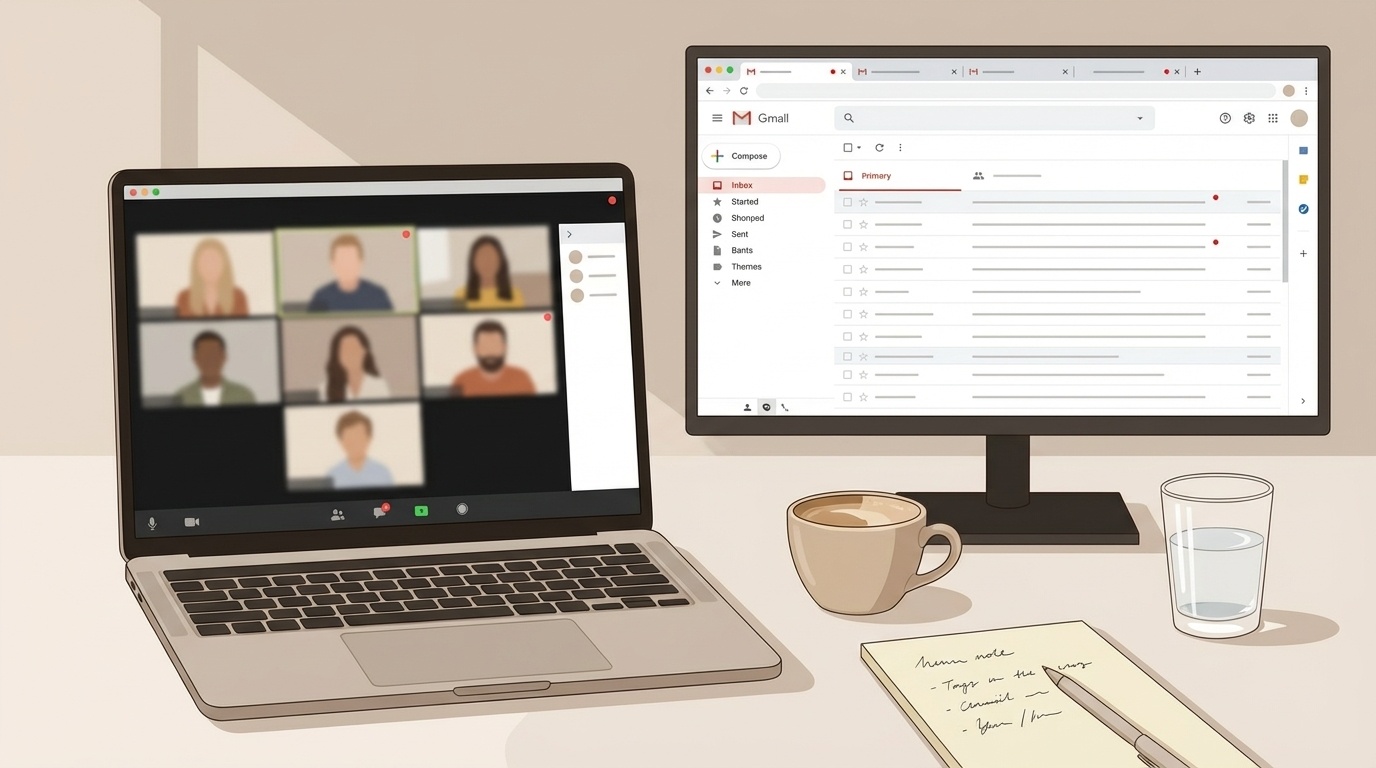
Picture a pretty normal weekday: you’re three meetings deep, Slack is blinking, your inbox is quietly multiplying, and you’ve been holding your breath without realizing it. By noon, your shoulders are creeping up toward your ears, your jaw is tight, and you’re doing that thing where you keep switching tabs because you can’t decide what to start first. Nothing is technically on fire… but your body is acting like it is.
And that’s the important part: stress isn’t only created by big dramatic problems. It’s created by unbroken intensity—hours of input, decisions, notifications, and emotional context-switching with zero recovery time.
Why modern life creates so much “invisible” stress
Most of us aren’t overwhelmed because we’re weak at time management. We’re overwhelmed because modern work (and modern life) asks our brains to carry too much open inventory:
- half-finished tasks you’re mentally tracking (“Don’t forget to reply to that email”)
- background worries (“I should catch up on the gym / my mom / my finances”)
- constant micro-interruptions (pings, banners, badges, vibrations)
- the pressure of responsiveness (being reachable has quietly become a job requirement)
This creates cognitive load—your mind running too many processes at once. The result is that even when you finally sit down to do the thing you planned to do, your brain feels like it has 37 browser tabs open. You’re not lazy. You’re saturated.
This is also why the usual “solution” doesn’t work. When you’re already maxed out, the idea of a huge routine overhaul—30-minute morning meditation, perfect meal prep, a pristine morning routine—can feel like adding homework to a day that’s already too full. Big changes ask for daily motivation and willpower, which are the first things to disappear when you’re stressed.
Small changes, on the other hand, are built for real life.
Small pauses don’t steal time from your day—they give your mind somewhere to land.
The core idea: tiny pauses that interrupt the stress cycle
Here’s the quiet truth underneath most calm routines: they aren’t calm because the person has fewer responsibilities. They’re calm because they have more micro-recovery built in.
That’s what tiny habits do. They create brief, consistent moments that tell your body, “We’re safe enough to soften.” And because they’re small, you can actually do them on a Tuesday when you’re tired and your calendar is rude.
Think of tiny habits stress as a “nervous system budget.” If your day is full of withdrawals—deadlines, decisions, emotional labor—then tiny habits are the tiny deposits that keep you from going into overdraft.
Why tiny habits tend to stick (when everything else falls apart)
Tiny habits work because they don’t rely on you becoming a new personality.
- They reduce the activation energy. Three deep breaths is easy to start. A 45-minute wellness routine is not.
- They create proof, not pressure. You get a small “I did something supportive” moment, which builds trust with yourself.
- They’re easier to attach to real life. You don’t need special time; you need a reliable trigger (like closing your laptop after a call).
And yes—your brain loves completion. Even small wins can create a subtle motivation loop. When a habit is small enough to succeed at consistently, it stops feeling like self-improvement and starts feeling like self-respect.
Start with a simple system: “Anchor + Action”
Before we get into specific habits, you’ll make your life easier if you use this tiny structure:
- Anchor: an existing moment that already happens (closing a Zoom call, making coffee, sitting down at your desk)
- Action: a tiny habit that takes 30 seconds to 5 minutes
That’s it. No elaborate tracking. No “new routine.” Just pairing something you already do with a tiny stress-reducing action.
Here are a few anchors that work in real life:
- after you end a meeting
- before you open your inbox
- when you stand up to refill water
- when you start lunch
- when you plug in your phone at night
Now let’s layer in the first handful of tools that make these tiny habits easier to remember and easier to repeat.
Tiny habits stress: the first practical tools that make calm feel doable
You don’t need a dozen new apps. But a few digital supports can turn “I should do that” into something that actually happens when you’re busy.
1) Use “micro-boundaries” with Focus Modes (phone + desktop)
Every notification is a tiny demand—on your attention, your nervous system, and your sense of control. Even if you don’t open it, your body still registers it as input.
A simple tiny habit: choose one window each day (even 30–60 minutes) where notifications are genuinely off.
Tools that make it effortless:
- iPhone Focus / Android Do Not Disturb: schedule it (so you don’t have to remember)
- Slack “Pause notifications”: set it for a block of time when you need your brain back
- Gmail notifications OFF (yes, really): if email is required for your job, you can still check it—just on your timing
A realistic example: 9:30–10:30 is “no pings” time. If someone truly needs you urgently, they can call. Everything else can wait an hour. Most things are not as urgent as they look in banner form.
2) Schedule pauses like meetings (because your calendar believes you)
If you only rely on “when I have a moment,” you’ll never have one. Your day will expand to fill itself. A calendar block is a small psychological boundary that says: this matters.
A tiny habit that helps: add two 5-minute “reset” blocks to your calendar—one late morning, one mid-afternoon.
Label ideas that feel non-cringey:
- “Reset”
- “Walk + air”
- “No-screen coffee”
- “Admin buffer”
- “Close loops”
This isn’t about rigid scheduling. It’s about giving your brain a heads-up that recovery is part of the plan, not something you earn only after you’re depleted.
3) Create one “brain-dump” note you always use (cognitive offloading, but make it easy)
A big part of stress is your brain trying to remember everything at once. The fastest relief often comes from a simple external container: one place where thoughts can go so they stop circling.
A tiny habit: 3 minutes of brain-dump writing when you sit down to work—or when you feel the “too much” feeling kick in.
Tools to keep it frictionless:
- Apple Notes (a pinned note called “Brain Dump”)
- Google Keep (one ongoing note)
- Notion (one page, no fancy template required)
- A paper notebook you don’t try to make pretty
The key is not where you write—it’s that you don’t make yourself decide where every time. Decision fatigue is real, and stressed brains don’t need more choices.
4) Start using the “Top 3” list (not a full to-do list)
A long to-do list can be useful, but it can also be an anxiety artifact: a living document of everything you’re not doing. If your list makes you feel behind the moment you look at it, it’s not organizing you—it’s pressuring you.
A tiny habit: choose your three most important tasks for the day.
Not the only tasks. Not your entire life. Just three things that would make the day feel anchored.
Where to put it:
- at the top of your paper planner
- in a daily note in Notion
- as a sticky note on your desk
- as the first line in your “Brain Dump” note (Top 3: ___)
This works because it reduces decision churn. When you finish something, you don’t have to renegotiate your entire day—you return to the list and continue.
The interesting thing is that none of these are dramatic. They’re almost offensively small. But once you start pairing them with the right anchors—after a call, before email, during lunch—they begin to create something you can actually feel: a day with punctuation marks. A day where your mind isn’t sprinting from morning to night without ever getting to exhale.
And from there, it gets much easier to add the truly stress-reducing micro-habits—ones that take less than five minutes, don’t require special equipment, and still create that immediate “my shoulders just dropped” effect…
…and those are the ones that quietly add up to a completely different baseline.
Five-minute micro-habits that make tiny habits stress feel manageable (even on chaotic days)
When you’re already at capacity, the best habits are the ones that work with your day—not the ones that require a perfect mood, a perfect schedule, and a perfectly quiet house. Think “small enough to do while your brain is complaining.”
1) The “three breaths + drop your shoulders” reset (30 seconds)
This is the fastest nervous-system interrupt I know, because it’s discreet and doesn’t require a setting change.
- Anchor: after you send an email, end a call, or stand up from your chair
- Action: inhale slowly through your nose, exhale longer than you inhale, and actively drop your shoulders on every exhale
- Why it works: the longer exhale cues “we’re safe,” and the shoulder drop stops your body from bracing without permission
Keep it simple: you’re not trying to become a meditation person. You’re telling your body to unclench before it forgets how.
2) A 10-sentence brain dump (2–3 minutes)
If you’re someone whose stress mostly comes from mental tabs—remembering, tracking, worrying—this one pays off immediately.
- Anchor: when you open your laptop, or right before you start your “Top 3”
- Action: write 10 quick sentences that start with “I need to remember…” “I’m worried that…” “I can’t forget…”
- Rule: no organizing while dumping (organizing is a separate task)
Example:
- I need to remember to reply to Jenna.
- I’m worried I’ll miss the deadline.
- I can’t forget to order the birthday gift.
Then stop. The point is cognitive offloading, not producing beautiful insight.
3) The “two-minute close loop” (2 minutes)
A lot of daily stress isn’t from big projects—it’s from tiny open loops that whisper, you’re behind. This micro-habit is basically emotional housekeeping.
- Anchor: before lunch or at the end of your workday
- Action: pick one small loop and close it fully (send the one-line reply, book the appointment, file the document, add the task to the correct list)
If you’ve ever felt instant relief after sending a two-sentence email you were avoiding, you’ve felt the power of loop-closing.
4) The “phone face-down + one sip” pause (1 minute)
This looks almost too easy, which is why it works on days when everything feels harder than it should.
- Anchor: first sip of coffee/tea, or pouring a glass of water
- Action: put your phone face-down, take one slow sip, and notice temperature + texture (that’s all)
This teaches your brain that not every micro-moment has to be filled with input—an underrated way to reduce decision fatigue.
5) The outside-light lap (5 minutes)
When you’re wired and stuck, changing your environment matters more than “thinking your way out of it.”
- Anchor: after a high-effort meeting or during the mid-afternoon dip
- Action: step outside (or to a window), let your eyes look farther than your screen, and walk for five minutes
If you can’t leave: stand, stretch your chest/neck, and look across the room. The goal is to stop the “screen tunnel” your nervous system gets trapped in.
6) A 60-second “tomorrow preview” that prevents morning panic
Morning stress often comes from waking up into a cloud of unknowns. Give Future You something to land on.
- Anchor: plugging in your phone at night
- Action: write: Top 1 priority for tomorrow, one appointment/time to remember, and one supportive thing (like “walk at lunch”)
This isn’t full planning. It’s a tiny handrail.
A simple “calm loop” system: pick 3 habits, assign 3 anchors, repeat
Here’s where people accidentally overcomplicate things: they try to do every helpful habit every day. You don’t need that. You need a loop that’s easy enough to repeat under pressure.
Your calm loop:
- 1 morning anchor (opening laptop, first coffee, getting dressed)
- 1 midday anchor (lunch start, refill water, after a meeting)
- 1 evening anchor (closing laptop, plugging phone in, brushing teeth)
Example calm loop (realistic for a busy weekday):
- Morning: Open laptop → 10-sentence brain dump
- Midday: Start lunch → outside-light lap (5 minutes)
- Evening: Plug in phone → 60-second tomorrow preview
That’s enough to reduce tiny habits stress in a way you can actually feel, because you’re building recovery into the structure of your day—without requiring extra time blocks or a new identity.
How to handle the “I forgot” days (without turning it into self-criticism)
You will forget. Your brain is busy, not broken. The trick is to design a gentle restart that doesn’t require motivation.
Use the “If I missed it, I do the smallest version” rule
- Missed your walk? Step outside for 30 seconds and take 3 slow breaths.
- Missed your brain dump? Write three bullets, not ten sentences.
- Missed your reset blocks? Do a shoulder drop the next time you touch a door handle.
This keeps the habit alive. Consistency isn’t perfection—it’s returning quickly.
Make “friction removal” your main productivity move
If a habit feels hard, don’t assume you lack discipline. Assume there’s friction. Reduce it.
- Put the reminder where the habit happens: a sticky note on your laptop that says “Breathe.”
- Default your tools: keep one pinned “Brain Dump” note (so you don’t have to decide where to write).
- Pre-decide your anchors: “After every meeting, I do 3 breaths.” No debate.
You don’t need more willpower—you need smaller steps and kinder defaults.
Conclusion: calm isn’t a personality trait—it’s a set of tiny supports
If your life is full, your stress makes sense. But it doesn’t have to be constant. The most sustainable way to feel better isn’t to overhaul everything—it’s to add punctuation marks to your day: breaths, boundaries, quick resets, and a few tiny systems that stop your mind from carrying so much open inventory.
Start with one anchor and one action. Make it almost laughably easy. Let it be imperfect and still real. Over time, these tiny habits become a kind of quiet self-trust: proof that even on busy days, you can reduce mental load, soften your nervous system, and move through life with more steadiness.
If you’d like additional visual resources and guides to support these routines, you can explore more here: