
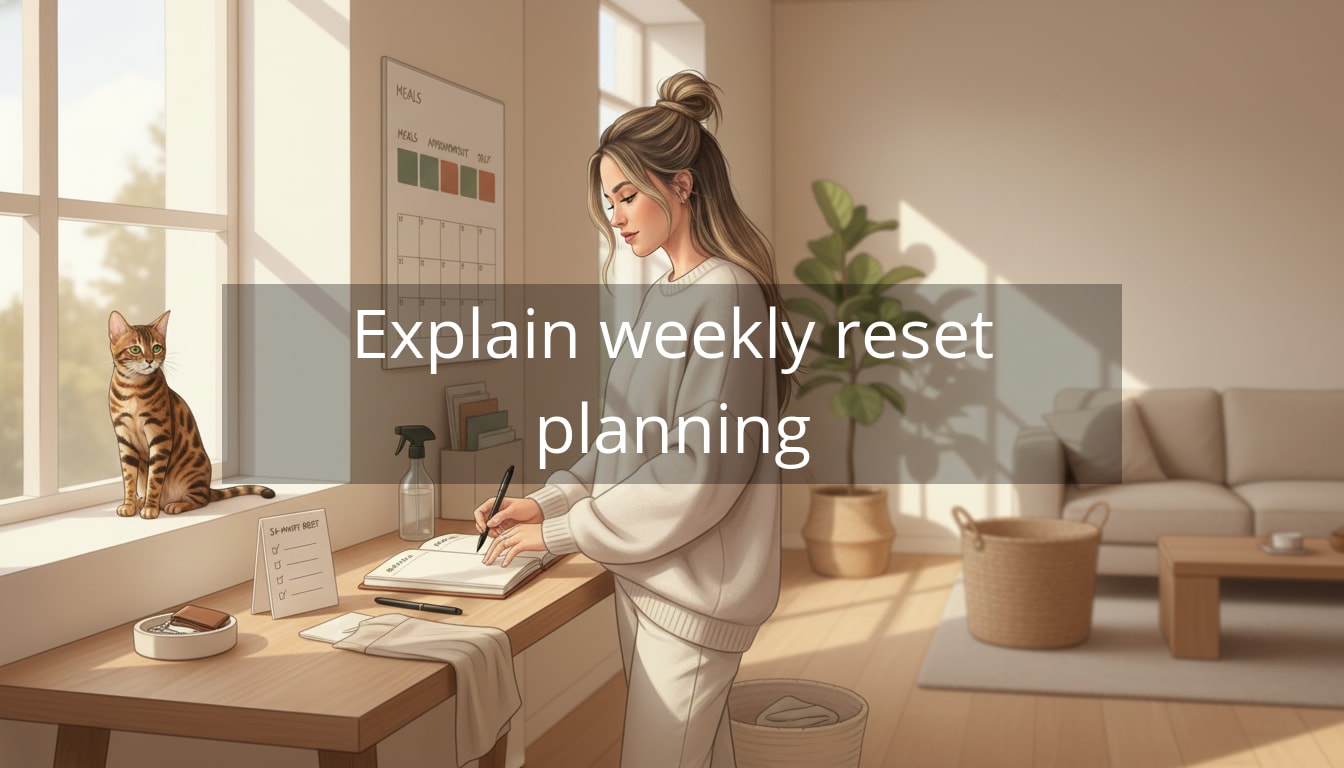
A weekly reset routine is the antidote to that Sunday-night spiral where you’re half-resting, half-panic-scrolling, and mentally listing everything you didn’t get to. With a simple weekly reset routine, the week stops feeling like something that happens to you—and starts feeling like something you’re gently steering.
If your brain feels like it has 37 tabs open, it’s not a personal failure. It’s modern life doing what it does: constant notifications, blurred work/home boundaries, and a steady drip of tiny chores that never fully get “done.” When you don’t have a designated checkpoint, the clutter builds—physical clutter (bags by the door, a fridge full of random condiments) and mental clutter (unanswered texts, tasks you keep rewriting, that nagging feeling you’re forgetting something). That buildup creates decision fatigue, so even small choices—what’s for dinner, when to work out, what to tackle first—start to feel weirdly heavy.
The Weekly Reset Routine: a small system with a big payoff
Think of a reset as a closing ritual for the week and a soft launch for the next one. Not a “perfect life” plan. More like restoring order so future-you isn’t starting from chaos.
“Clarity isn’t found in doing more—it’s found in clearing space.”
The mindset shift is simple: you’re not trying to catch up; you’re creating a clean baseline. Most resets take 30–60 minutes and follow three gentle phases:
- Review: What worked? What felt hard? What’s still open?
- Clear: A quick sweep of the spaces (and thoughts) that stress you out most.
- Plan: A light outline so Monday doesn’t begin with triage.
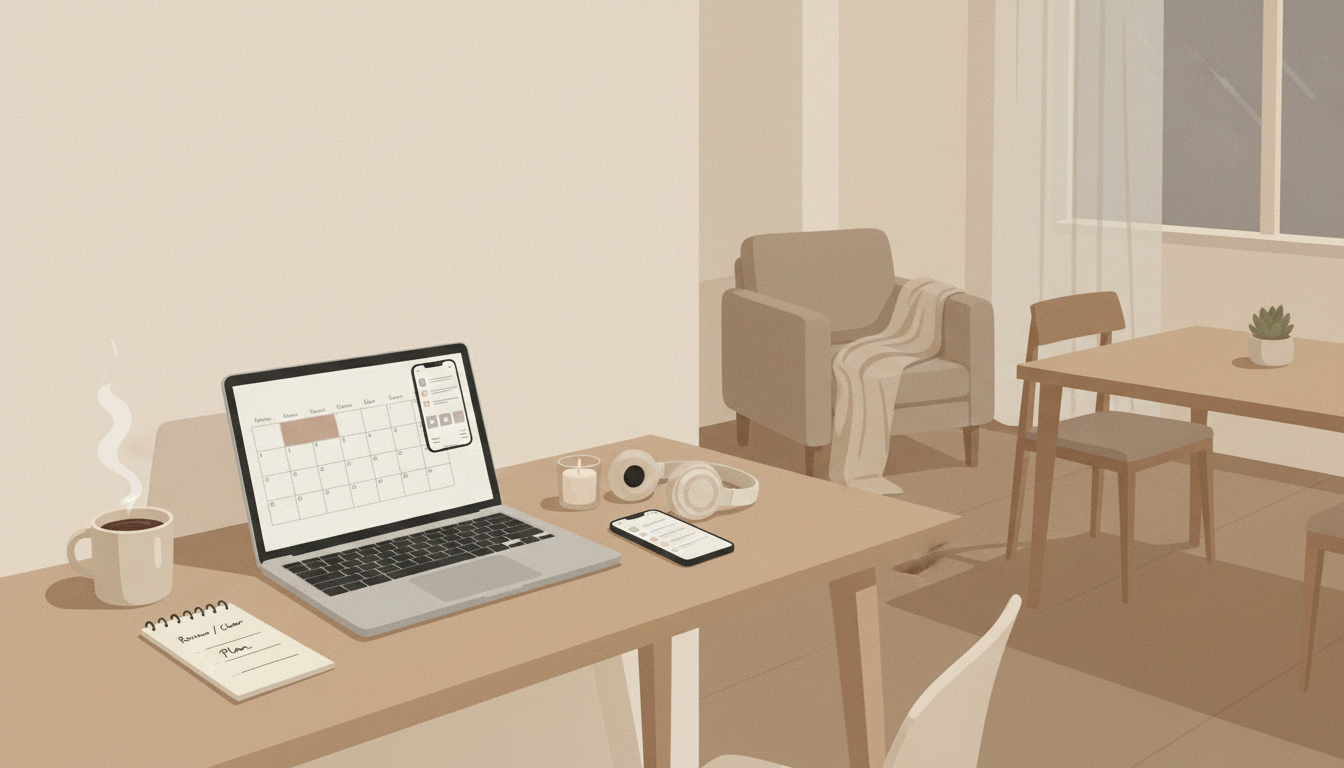
To make it easy, keep your tools minimal. A notes app or a paper checklist works beautifully. If you like digital structure, try a repeating “Weekly Reset” block in Google Calendar, plus a short checklist in Notion (or Apple Notes) with the three phases. Set a 20-minute timer, put on a familiar playlist, and start with one high-impact area—like clearing your kitchen counter or tossing expired fridge items—so you get an immediate “exhale” moment before you plan anything.
Your Weekly Reset Routine (Step-by-Step, Without Making It a Whole “Project”)
The easiest way to make a reset stick is to make it feel like a relief—not a performance. So instead of resetting “your whole life,” you’ll reset a few pressure points that tend to create the most mental noise: your calendar, your kitchen, your laundry situation, and your open loops (the stuff you keep carrying around in your head).
Here’s a simple flow that works even when you’re tired and don’t want to think too hard.
1) Review: close the week before it follows you into Monday
Set a timer for 10–15 minutes. Open your calendar and your notes app (or planner) and do a quick sweep:
- Scan your past week: What did you handle well? What felt messy or stressful?
- Collect loose ends: Write down anything unfinished—even small things like “book dentist” or “reply to Hannah.” Getting it out of your head is the win.
- Choose one lesson: Something simple like “Meetings drained me; I’ll block a buffer next week,” or “Takeout happened because I didn’t have lunch options.”
Real-life example: If you notice you skipped workouts, don’t turn it into a character assessment. Just name the friction: “I didn’t have a planned time.” Next week, you block two 25-minute slots and call it good.
2) Clear: a small sweep that changes the whole mood
This is the part that creates the “exhale.” The trick is choosing high-impact surfaces—the areas you see constantly. You’re not deep-cleaning baseboards. You’re removing visual stress.
- Kitchen counter reset: Clear counters, wipe them down, empty the sink.
- Fridge mini-audit: Toss expired items, consolidate leftovers, do a quick “what needs to be used?” check.
- One load of laundry: Start it at the beginning of the reset so it runs in the background. If you finish it, amazing. If not, at least you’ve reduced future friction.
- Bag/entry sweep: Put away receipts, return items to their homes, restock essentials (lip balm, charger, hand sanitizer—whatever you always need).
A helpful rule: if you only have 10 minutes, clear one surface and one open loop. For example: “clear the counter” + “schedule the appointment.” That’s still a reset.
3) Plan: give next week a simple shape
This is not the moment to design a fantasy week. Your goal is a gentle outline that reduces daily decision-making.
- Calendar first: Look at what’s already real (meetings, appointments, social plans).
- Pick 1–3 priorities: The outcomes that would make next week feel successful.
- Pre-decide two bottlenecks: Usually food and time. Decide what you’ll eat for a few key meals and when you’ll handle one or two important tasks.
- Create “minimum viable” support: A grocery list, a work block, a quick reminder.
Real-life example: If Wednesday is stacked with calls, plan a “no-cook dinner” night (rotisserie chicken + bagged salad, freezer dumplings, breakfast-for-dinner). You’re not lowering your standards—you’re protecting your energy.
Make It Fit Your Life: 30 Minutes, 60 Minutes, or Split Across Days
Some weeks you’ll have more capacity than others. A reset works best when it has versions—not rules.

The 30-minute “Good Enough” reset
- 5 minutes: collect open loops (notes app brain dump)
- 10 minutes: clear one surface + sink
- 10 minutes: calendar scan + pick top 3 priorities
- 5 minutes: quick grocery add-to-cart or list
The 60-minute standard reset
- 15 minutes: review + migrate tasks
- 25 minutes: kitchen + fridge sweep + start laundry
- 20 minutes: plan meals (lightly) + block calendar
The split reset (for unpredictable schedules)
- Friday: work review + task migration (10–15 minutes)
- Saturday: home clear (20–30 minutes)
- Sunday: plan + groceries (15–20 minutes)
If your weekends are packed, a Monday morning reset can work beautifully too—especially if it’s just planning and a quick tidy. The goal isn’t the day. It’s the checkpoint.
Tools That Keep Your Weekly Reset Routine Simple (Not Complicated)
You don’t need a perfect planner ecosystem. You need a few reliable “homes” for information so your brain stops trying to store everything.
A minimalist setup that covers almost everything
- One calendar: Google Calendar or Apple Calendar—anything you actually check.
- One running list: Notes app, Notion, or a paper notebook for open loops and weekly priorities.
- One checklist: A short, repeating “Reset” list you can copy-paste each week.
A simple Weekly Reset checklist you can copy
- Review last week (wins, stress points, unfinished tasks)
- Brain dump open loops
- Clear counter + sink
- Fridge check (toss, consolidate, note what to use)
- Start one load of laundry
- Look at next week’s calendar
- Choose top 3 priorities
- Decide 3–4 easy meals
- Make grocery list/add to cart
Tip: Keep your checklist short enough that you don’t feel resistance when you see it. You can always do more, but your system should work even on low-energy weeks.
Small Habits That Protect the Reset (So It Doesn’t All Collapse by Tuesday)
Your weekly reset works best when it’s supported by tiny “maintenance moments.” Not daily overhaul—just little closures.
- The 5-minute night reset: Load the dishwasher (or rinse and stack), clear one surface, set out one thing you need tomorrow.
- The running grocery list: Add items the moment you notice them. Future-you shouldn’t have to remember.
- The two-touch rule (when possible): Try to handle something fully when you pick it up—hang the coat, file the paper, put the item in its home.
- A weekly “life admin” pocket: One 20-minute block midweek for bills, scheduling, returns, and forms—so your reset doesn’t have to carry it all.
These habits are small, but they dramatically reduce the amount of “catch-up energy” your reset requires.
You don’t need more discipline—you need fewer open loops.
When You Fall Off (Because You Will): the Gentle Restart Plan
Some weeks get away from you. That doesn’t mean the system failed. It means you’re human.
If you miss your weekly reset routine, use this quick restart:
- Do a 10-minute reset the next day: clear one surface, brain dump, pick one priority.
- Protect one meal decision: choose an easy plan for dinner and lunch (even if it’s grocery-store shortcuts).
- Choose the next reset time immediately: put it on the calendar before you forget.
This keeps you from sliding into the “I’ll start over next week” trap. You’re allowed to restart midweek.
Extra Resources to Help You Build Your Own Rhythm
If you want a little more structure, it can help to borrow templates and prompts until your routine feels natural. Here are a few resource ideas you can look for and save:
- A printable weekly reset checklist you can keep on the fridge or inside a planner
- A simple meal-planning template with a short “repeat meals” list
- A Sunday planning prompt list (wins, lessons, priorities, open loops)
- A guided reset video (30–60 minutes) you can play while you tidy and plan
A Calm Week Isn’t an Accident—It’s a System You Can Repeat
The real magic of a weekly reset routine isn’t that your home looks perfect or your week goes exactly as planned. It’s that you start from a clearer baseline. You spend less time re-deciding, re-finding, and re-remembering. You stop relying on mental gymnastics to keep life running.
Keep it small. Keep it kind. Choose a few high-impact steps, repeat them often, and let the routine do the heavy lifting. You deserve weeks that feel steadier—not because you’re doing more, but because you’re carrying less.
Telegram Galelar
Instagram @galelar_lis
YouTube @galelar
TikTok @galelar_lis