
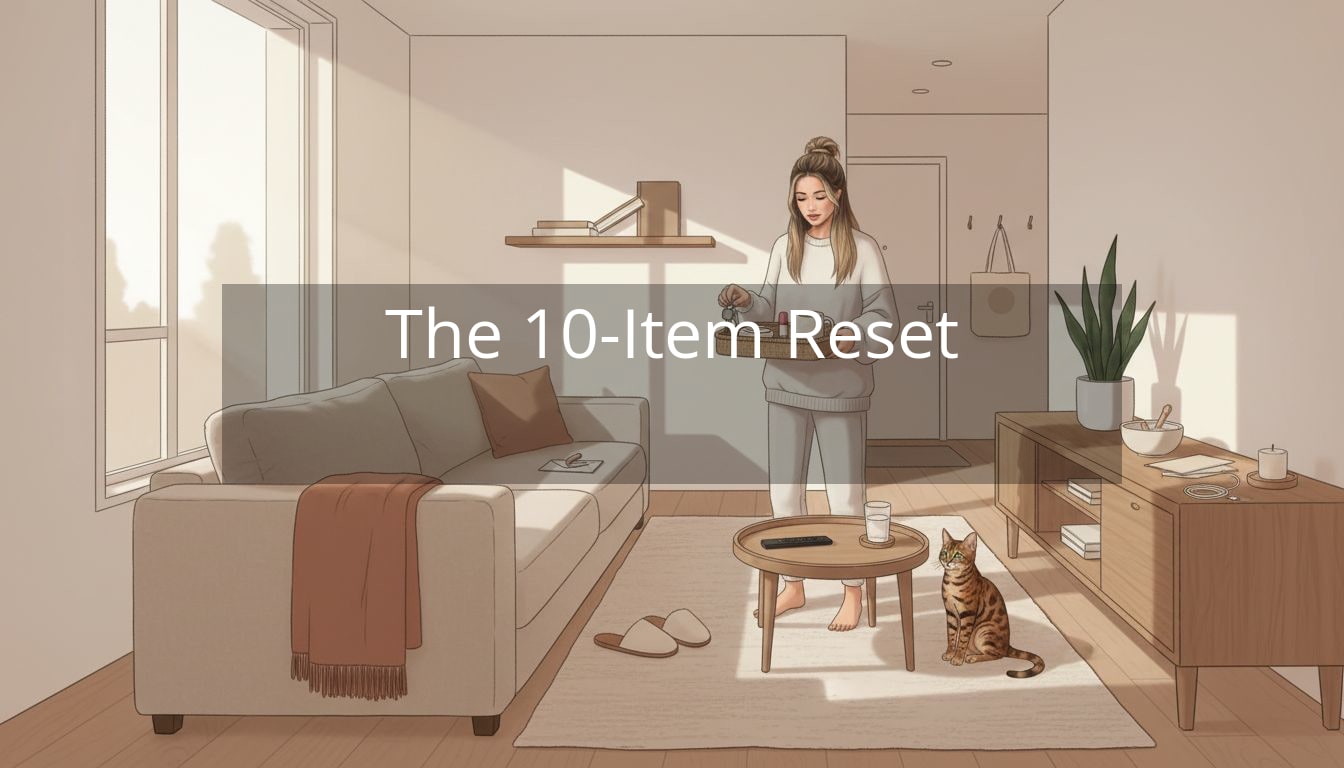
If your evenings regularly end with you staring at “not even that bad” clutter and feeling weirdly frozen, the 10 item reset might be the gentlest way back to calm. It’s a tiny, specific action that cuts through the mental noise when your home (and brain) feel like they’re running too many tabs.
You know the moment: it’s after work, you finally close your laptop, and you want your home to exhale with you. But instead, your eyes land on the dining chair that has become a clothing habitat, the counter that’s hosting a mail pile you don’t remember inviting, and a constellation of chargers, cups, and “I’ll deal with that later” items. Nothing is technically urgent… which somehow makes it harder. Because where do you even start?
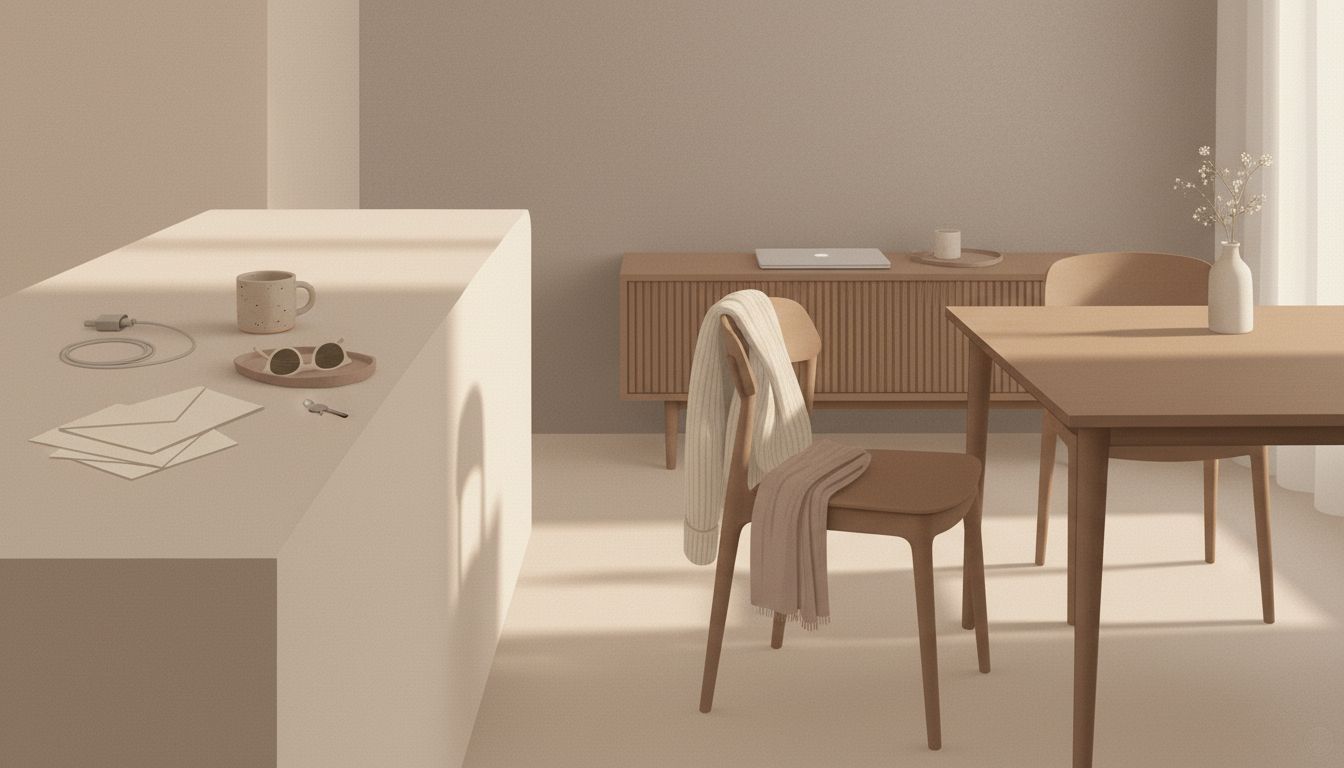
And that’s the real problem most of us are dealing with: not mess, exactly—decision fatigue.
Why “starting” feels so hard now (even when you’re capable)
Modern life isn’t just busy; it’s mentally loud. Many of us work in roles where we’re constantly switching contexts—Slack message, client email, grocery order, calendar reshuffle, group chat, laundry timer. Your brain spends the whole day triaging micro-decisions. Then you walk into your space and it asks you to make… a hundred more.
- Where does this go?
- Do I keep this?
- Is this trash or recycling?
- Do I need to deal with this bill right now?
- Why is there a single sock in the hallway?
The clutter isn’t only physical. It becomes visual input your nervous system has to process. And when you’re already running on thin bandwidth, a dramatic “reset the whole house” plan can feel like punishment, not self-care.
So instead of doing anything, you do the most reasonable thing your brain can think of: you postpone. You tell yourself you’ll handle it tomorrow, on the weekend, when you have more energy. But the mess sits there, quietly taxing you each time you pass it—like a background app draining your battery.
What you actually need isn’t motivation. It’s a tiny system that reduces the number of decisions required to begin.
Clarity often comes from small, kind actions repeated—not big bursts of willpower.
The 10 item reset: a micro-system that breaks overwhelm
At its heart, the 10 item reset is almost comically simple: put away exactly 10 things, then stop.
Not “tidy until the room is perfect.” Not “do a power hour.” Not “finally get your life together.” Just ten items that are not in their home… returned to where they belong (or removed from the space).
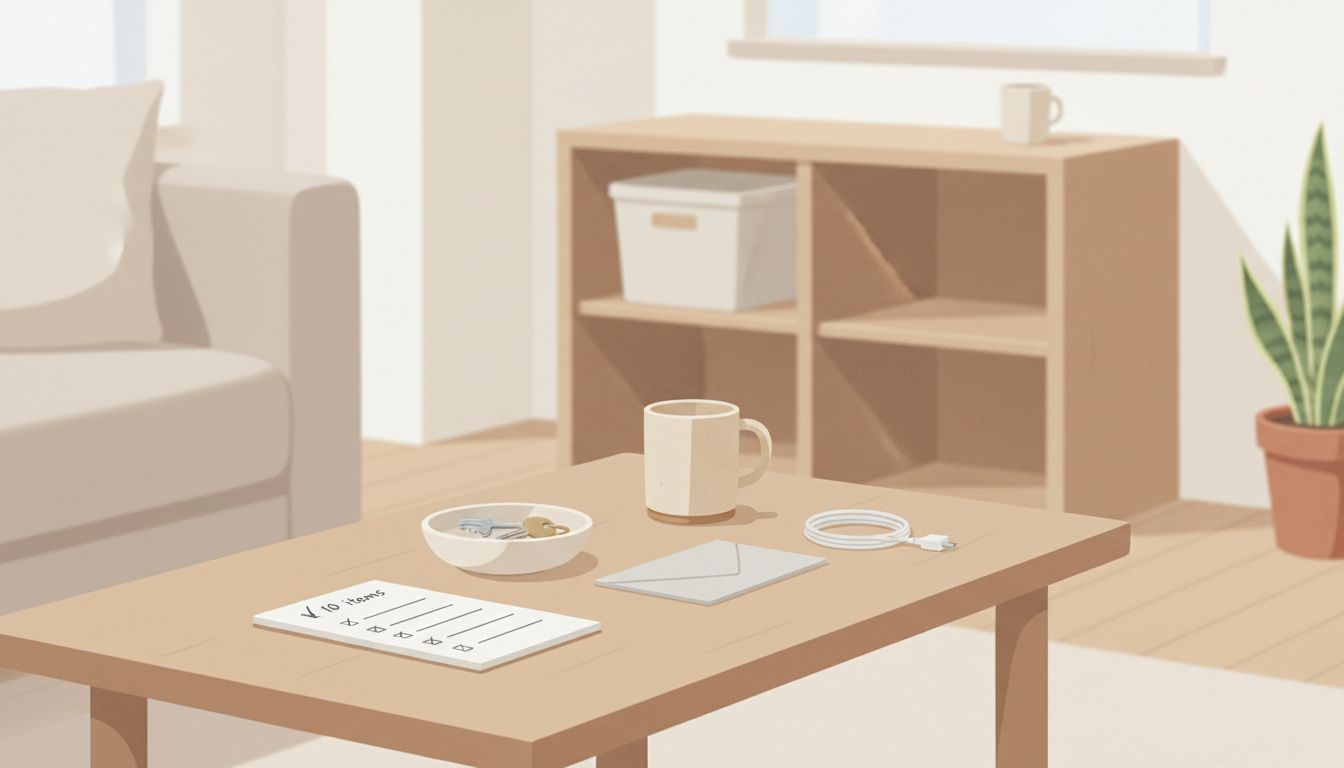
That’s it. And it works because it’s built around a few truths we don’t talk about enough:
- Starting is the hardest part. Once you begin moving, momentum shows up.
- Constraints are calming. “Ten items” is a boundary your brain can handle.
- Small wins interrupt stress loops. You get a quick visual payoff, which makes your environment feel safer and quieter.
It’s also quietly anti-perfectionist. The method gives you permission to do a small, contained action—without turning it into a whole life project. You’re not “failing” because you didn’t do everything. You’re practicing a reset you can repeat tomorrow.
What counts as an “item” (so you don’t overthink it)
An item is one discrete thing you can pick up and place somewhere else. Examples:
- one mug
- one jacket
- one envelope
- one toy
- one hair clip
- one charger
- one cookbook left on the counter
If you grab a cluster (like a handful of pens), be kind to yourself: either count them as individual items if you want structure, or count them as one “category scoop” if you need ease. The point is forward motion, not courtroom rules.
Why this helps even if you’re not “a tidy person”
Because it’s not an identity change. It’s a friction reduction tool.
Most people don’t need more discipline. They need fewer open loops. The 10 item reset closes loops quickly: “this belongs in the hamper,” “this goes to recycling,” “this lives in the drawer.” Each closed loop lowers the sense of chaos just a little.
And those “just a little” moments are where your home starts feeling supportive again—especially if you’re juggling work, relationships, health habits, and the endless admin of being an adult.
Where the 10 item reset shines in real life (the everyday chaos zones)
This isn’t for the days you have unlimited time and want to reorganize your pantry for fun. This is for normal days—the ones where you get to the end and still want to feel like you live here, not just collapse here.
1) The post-work drop zone (a.k.a. the “I’ll deal with this later” table)
You come in, you set things down, you walk away. Totally normal. But within 24 hours, it becomes a mini-museum of your week: receipts, a water bottle, earbuds, yesterday’s coffee cup, a package you opened and left.
A 10 item reset here might look like:
- pair and put away 2–4 shoes
- hang 1–2 jackets
- trash/recycle 2 pieces of mail
- return 1–2 random items (sunglasses, lip balm, chargers)
It’s not magic—it’s just enough to make tomorrow-you feel welcomed instead of judged by the entryway.
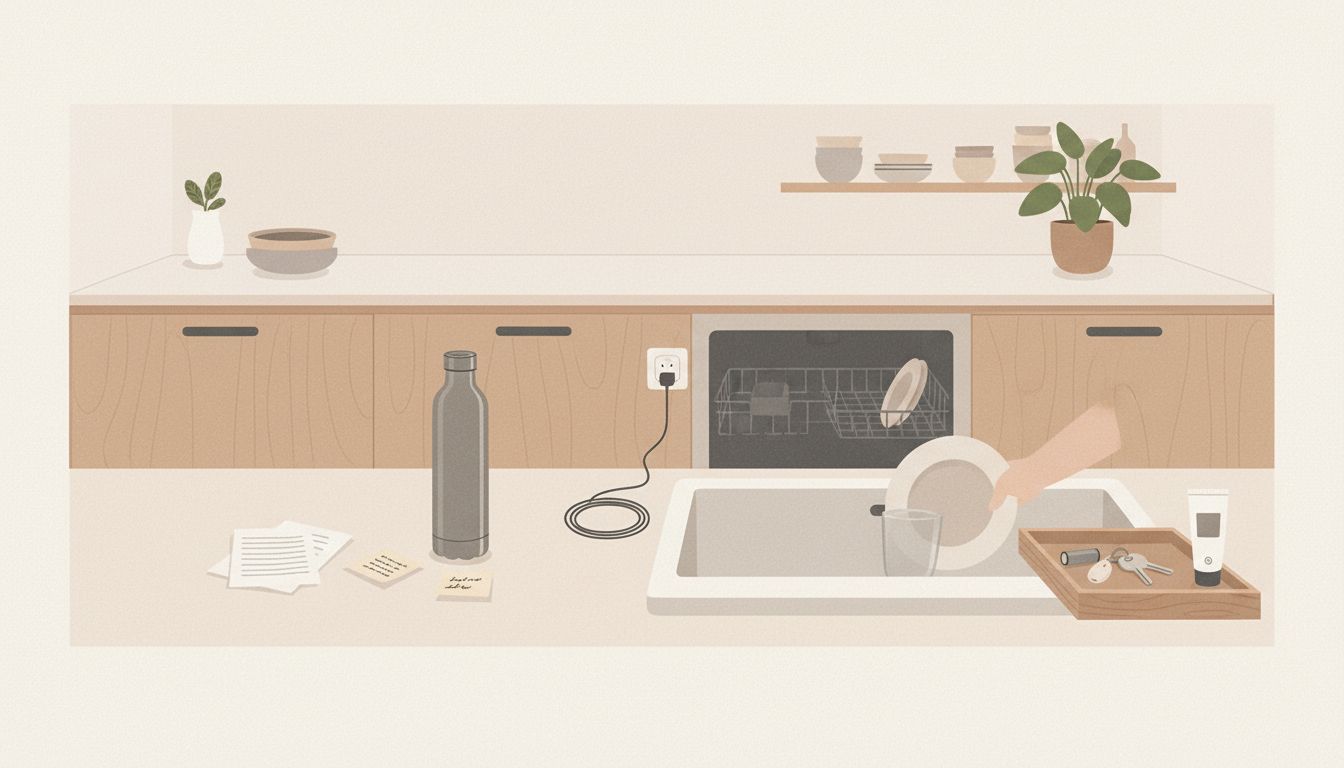
2) The kitchen counter that turns into a command center
For a lot of us, the kitchen isn’t just where we cook. It’s where we charge phones, open packages, sort mail, snack while answering emails, and have “quick conversations” that leave traces behind.
The counter gets noisy fast. And when the counter is noisy, cooking feels harder than it needs to be.
A 10 item reset could be:
- 4 dishes into the dishwasher/sink
- 3 papers filed or recycled
- 3 “homeless” objects back to their spots (honey in pantry, vitamins in cabinet, scissors in drawer)
The result isn’t a magazine kitchen. It’s a counter you can use without feeling immediately behind.
3) The bedroom that’s supposed to restore you (but visually wakes you up)
If your chair is wearing clothes and your nightstand is juggling skincare samples, books, and cords, your brain reads it as unfinished business. Even if you’re tired, your mind stays slightly alert—like it still has to manage your space.
Ten items here might be:
- 5 pieces of clothing to closet or hamper
- 2–3 stray products into a drawer/bin
- 2 papers moved to a single “to process” spot
This is less about tidiness and more about giving your nervous system a cleaner landing pad at night.
Make it stick: tiny tools that turn the reset into a real system
The beauty of the 10 item reset is that you can do it with zero supplies. But a few small supports can make it feel almost automatic—especially if your brain is already carrying a lot.
The one-basket helper (the simplest “I can’t deal with this right now” solution)
Keep one attractive basket or bin in a high-traffic area (entryway, stairs, hallway, kitchen corner). During a 10 item reset, anything that belongs in another room goes in the basket.
You’re basically separating tidying from putting away.
This matters because “walking things to other rooms” is where many resets die. A basket lets you gather quickly and keep moving. Later—when you have a minute—you do a one-trip drop-off round.
A timer that prevents the perfectionist spiral
If “I’ll just do ten things” turns into “now I’m reorganizing the entire closet” (hello, it’s me too), use a timer.
Set 5 minutes. Do your 10 item reset. Stop when it goes off—even if you feel like you could keep going. The point is to teach your brain: this is safe, small, and finishable.
Your future self will trust you more when your resets don’t turn into surprise marathons.
A light digital layer (for the mental clutter side of the mess)
A lot of physical clutter is actually information clutter: papers, receipts, reminders, coupons, appointment cards. If you want to reduce paper piles without creating a complicated filing hobby, use a simple scan-and-tag approach.
Options that work well for real life:
- Evernote (or a notes app you already use) for quick scans + searchable tags like “tax,” “warranty,” “medical.”
- A simple folder in Google Drive called “Receipts” or “Home Admin,” where you drop photos in the moment.
During a 10 item reset, you can scan one or two papers, file them digitally, and recycle the originals. That’s a double win: your counter clears and your brain stops worrying you’ll lose something important.
If you like checklists, you can also create a tiny recurring task in Todoist or Notion—something as small as: “10 item reset (kitchen or entry).” Not as a guilt ping. More like a gentle bookmark in your day that says: this is how we close the loop.
Because when your home has even one small, reliable reset built in, everything starts feeling more doable—laundry, meals, work blocks, sleep. Not perfect. Just calmer.
And once you’ve tried the 10 item reset a few times, you’ll start noticing something important: certain categories show up again and again—the same surfaces collecting the same types of clutter—which is actually useful information about what your home system is asking for next…
Use the patterns to fix the “why” (not just the mess)
When the same stuff shows up in the same spots, it’s not a personal flaw—it’s a systems issue. Your home is giving you data. The goal isn’t to tidy harder; it’s to make the “right” action the easiest action.
Step 1: Name your repeat offenders (in 30 seconds)
After a few resets, you’ll notice the usual suspects. Pick one zone and list the top 3 things that repeatedly land there. That’s all—no deep reflection required.
- Entryway pile: mail, keys, sunglasses
- Kitchen counter: papers, chargers, water bottles
- Bedroom chair: “worn but not dirty” clothes, bags, towels
Now you’re not dealing with “clutter.” You’re dealing with three categories—and categories are much easier to design for.
Step 2: Give each category a “home that matches reality”
Most clutter happens when the home is either too far away, too fiddly, or doesn’t exist at all. A good home is close to where the item naturally lands and takes one step to use.
- Keys/sunglasses: a small bowl or wall hook by the door (not inside a drawer you never open)
- Mail: one vertical sorter with only two slots: “Act” and “File” (fewer slots = fewer decisions)
- Chargers: a single charging station basket (so cords stop migrating around the house)
- “Worn-not-dirty” clothes: a couple of hooks or a dedicated basket (so the chair can go back to being a chair)
This is the quiet upgrade that makes the 10 item reset feel almost unfairly easy—because you’re no longer improvising where things go every single day.
The “Reset Menu”: pre-decide your 10 so you never have to think
Decision fatigue loves vague goals. So instead of asking yourself what to reset each night, create a tiny menu you can rotate. You’re basically turning tidying into a default setting.
Create 3 go-to resets (copy/paste these)
1) The “Tomorrow Me” reset (entry + living room)
- Hang up 2 items (coat/bag)
- Put away 2 pairs of shoes
- Trash/recycle 3 pieces of paper
- Return 3 stray items to their homes
2) The “I want a calm morning” reset (kitchen)
- Load or wash 5 dish items
- Clear 3 counter items into homes (vitamins, scissors, spices)
- Wipe one small surface if you have energy (optional, not required)
3) The “sleep comes easier here” reset (bedroom)
- Put 5 clothing items into hamper/closet
- Return 3 nightstand items (cups, products, cords)
- Put 2 “floating” items into a single bin (papers, hair tools)
Keep the list in your Notes app or taped inside a cabinet. The win is that you don’t have to negotiate with yourself at 9:30 PM. You just pick a menu item and go.
Make it even lighter: two rules that prevent re-cluttering
Rule 1: If it takes more than 2 minutes, it goes to a “next step” container
This protects your reset from turning into a life admin session. If you pick up something that requires thinking (a bill, a return, an RSVP card), put it in one designated container:
- “Act” folder for papers
- “Returns” bag by the door
- “Elsewhere” basket for items that belong in other rooms
Your reset stays fast, and your brain stops opening new tabs.
Rule 2: Don’t upgrade the whole system—upgrade one friction point at a time
If your kitchen counter keeps collecting vitamins, don’t reorganize the entire kitchen. Add one small bin where they actually belong. If the bathroom becomes product chaos, add one “daily use” tray and one “backup” bin. Small container, big relief.
When you can’t face “put away”: the 10 item reset, modified
Some days you’re not going to have the energy to make ten correct decisions. That’s normal. On those days, keep the spirit of the system—small, finishable, calming—without requiring extra thinking.
Option A: The “10-into-a-bag” reset (trash or donate)
Grab a bag and collect 10 obvious exits: empty packaging, old receipts, expired samples, worn-out hair ties, random clutter you already know you don’t want. You don’t have to organize anything—just reduce volume.
Option B: The “10 surfaces” reset (one touch each)
If “items” feels hard, do ten quick touches: clear one small patch of counter, one corner of the coffee table, one spot on the nightstand. Micro-clearing counts. Your home still gets quieter.
Option C: The “10 item reset with a buddy” (body doubling, but make it cozy)
Call a friend, put them on speaker, and do your ten while they do theirs. No big discussion required—just companionship. It’s weirdly effective for nervous-system days.
Turn it into a ritual (so it doesn’t rely on motivation)
The most sustainable version is the one that’s attached to something you already do. Pick a trigger and keep it consistent for two weeks:
- After dinner, before you sit down (the “closing shift”)
- While the shower warms up (quick bathroom reset)
- While coffee brews (kitchen counter reset)
- Right after you change into home clothes (entryway drop zone reset)
And keep your bar low on purpose. If you do a 10 item reset three times a week, that’s 30 items returned to calm—without one dramatic cleaning spree.
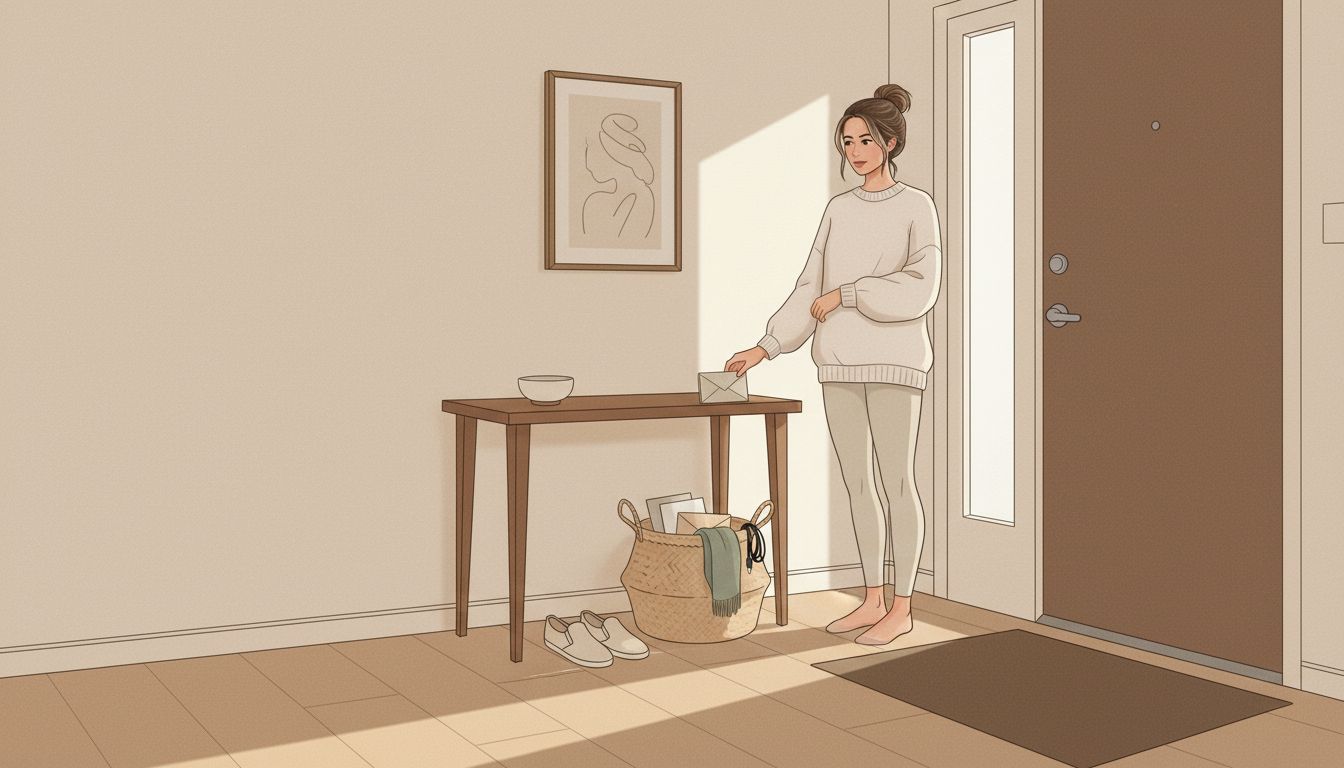
Small resets done consistently create the kind of calm you can actually live inside.
Conclusion: calm doesn’t require perfection—just a reliable reset
If your home has been feeling a little too loud, this is your reminder that you don’t need a full overhaul to feel better in it. You need a tiny, repeatable system that respects your energy and reduces decisions when you’re already carrying a lot.
The 10 item reset works because it’s kind. It gives you a finish line. It helps your space support you again—quietly, steadily, without demanding a whole Saturday or a whole new personality.
Tonight, pick ten things. Put them where they belong. Then let yourself stop. That’s not “not enough.” That’s you building calm the smart way—one small reset at a time.
More visual support (if you want it)
If you’d like additional visual resources and project context, you can explore these pages: