
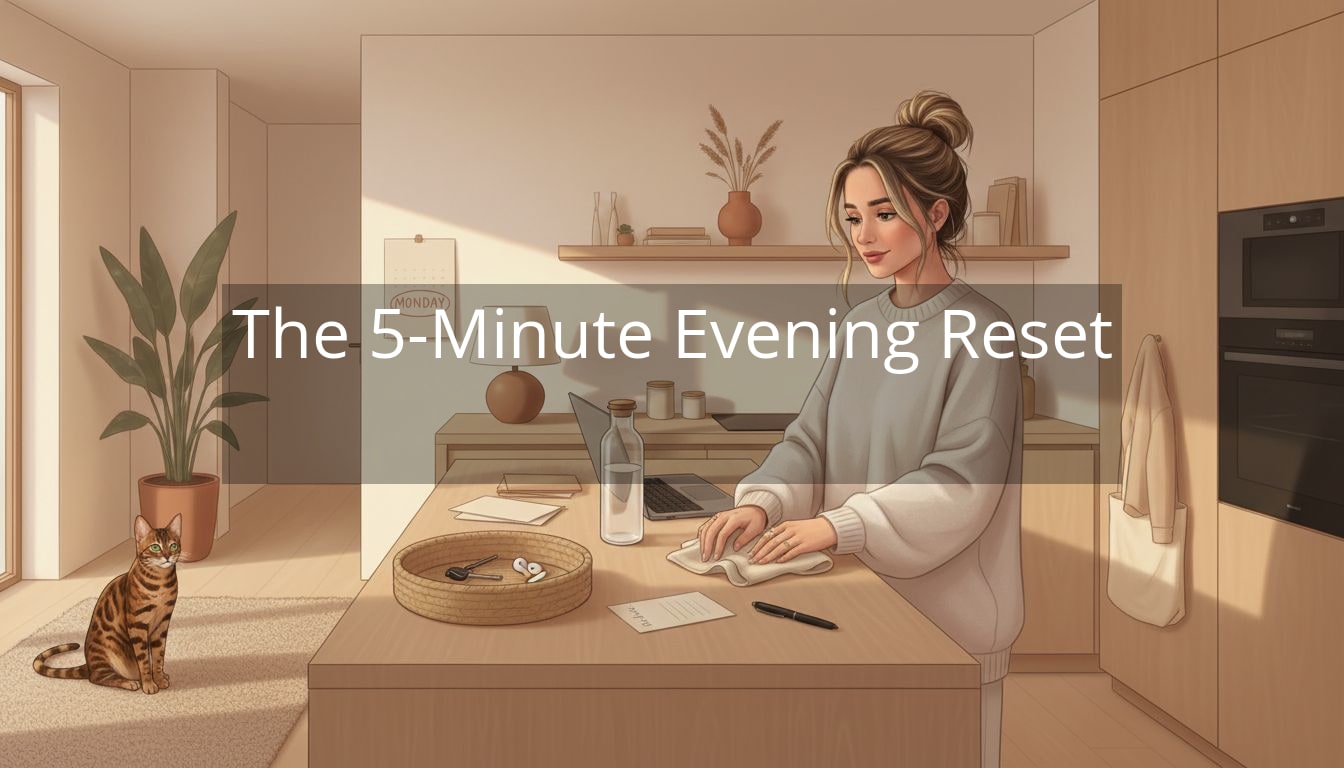
Your evening reset routine doesn’t need to be aesthetic, perfect, or Pinterest-worthy to change your mornings. It just needs to exist—consistently enough that you stop waking up to yesterday’s mess (physical and mental) before you’ve even had water.
You know the feeling: it’s technically a normal weekday morning, but it starts like a tiny emergency. The counter is cluttered with a mug you forgot about, a stack of mail you meant to sort, and the “where are my keys?” game begins. Your bag is half-packed, your brain is already negotiating with time, and somehow you’re stressed before you’ve even opened your laptop. It’s not dramatic… it’s just draining.
And the frustrating part is that this kind of morning chaos doesn’t come from being lazy or “bad at routines.” It usually comes from being a capable, busy woman who’s holding a lot at once.

Why mornings feel harder than they should
Modern life creates a very specific kind of overload: lots of tiny responsibilities that aren’t hard individually, but heavy in aggregate.
- Your home is also your office (or your office keeps bleeding into your home).
- Your phone is also your brain (calendar, reminders, messages, notes, banking, social plans).
- Your day doesn’t really “end,” it just… fades out while you’re answering one more text or thinking about tomorrow’s meeting.
So instead of closure, you go to bed with open loops: don’t forget to email her back, I need to run to the post office, what am I wearing tomorrow, did I pay that bill, where is the form I printed? None of these thoughts are huge. But together they create a background hum of alertness.
Clutter plays into this more than we like to admit. Not because your space has to be minimalist to be peaceful, but because visual mess equals unresolved decisions. Every item left out is a tiny question your brain has to re-process the next day: Where does this go? Is this important? Do I need to deal with this right now?
That’s decision fatigue—before you’ve even brushed your teeth.
And then there’s the sneaky piece: mornings are when willpower is supposed to be highest, but it’s also when time is tight. A chaotic environment forces you to spend your best mental energy on the least meaningful tasks: searching, sorting, reacting.
What you actually need isn’t a stronger morning routine. It’s a gentler “closing shift” for your day.
“Clarity isn’t a personality trait—it’s something you create when you give your mind a place to land.”
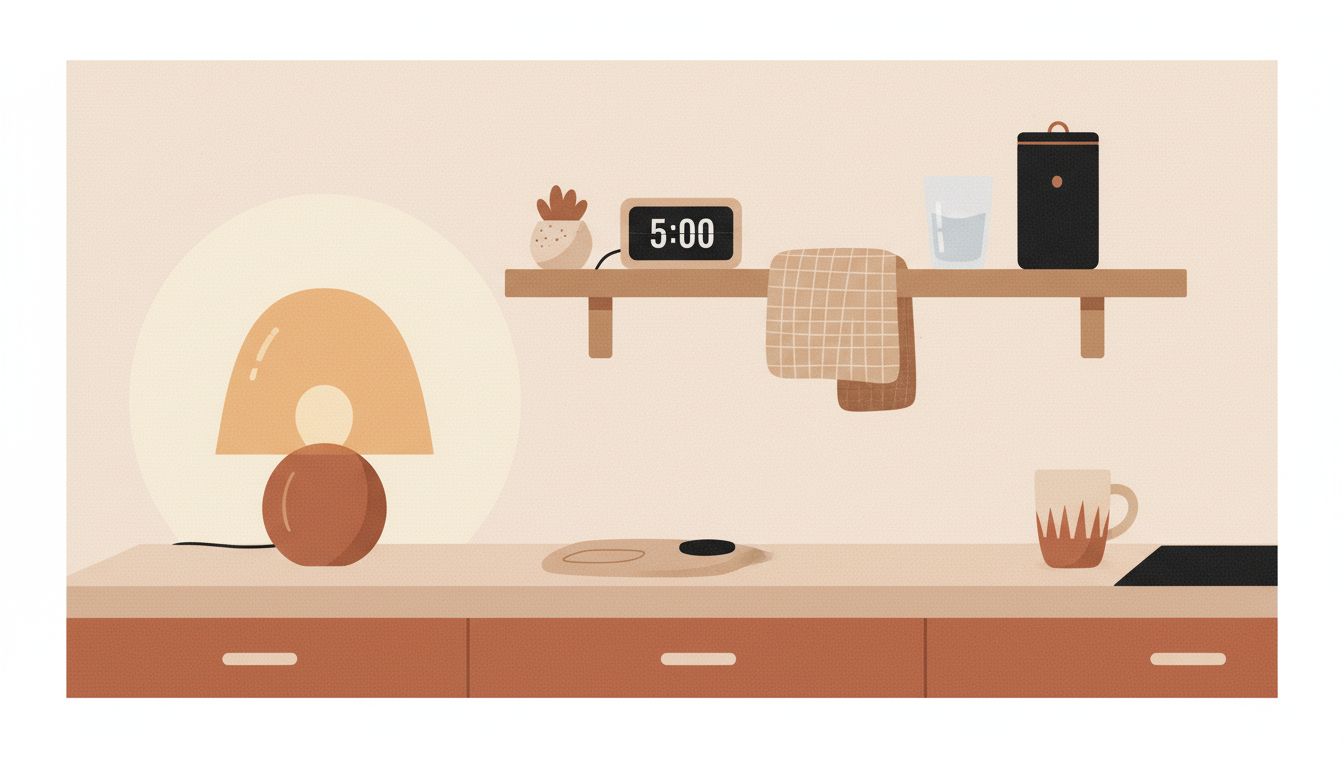
The core idea: a 5‑minute evening reset routine (not a whole evening overhaul)
The point of an evening reset routine isn’t to clean your house. It’s to reduce friction for tomorrow-you.
Think of it like resetting a hotel room before housekeeping arrives: you’re not deep-cleaning the bathroom, you’re restoring order just enough that the space feels usable again. Five minutes is important here—not as a cute hook, but because it keeps the ritual small enough to be doable even when you’re tired.
This is the sweet spot: short, specific, and repeatable. It helps in three ways:
- It lowers cognitive load. When a few key areas are clear, your brain stops scanning for unfinished business.
- It creates a “done” signal. You’re telling your nervous system: today is handled; it’s safe to power down.
- It protects your morning focus. You begin the day with fewer decisions and fewer obstacles.
No moralizing. No “successful people wake up at 5 a.m.” energy. Just a quiet system that makes everyday life feel less sharp around the edges.
What the 5-minute reset actually looks like
Here’s a simple structure that works because it’s specific. You can do it in any order, but the steps matter because they target the highest-chaos zones.
1) Clear one surface (the one that’s yelling at you)
Pick one: the entry table, kitchen island, nightstand, desk corner, dining table-turned-office. You’re not organizing a drawer. You’re creating one small patch of visual calm.
A clear surface is like mental blank space—you don’t realize how much you need it until it’s there.
2) Reset the kitchen counter (your morning launchpad)
Even if you don’t cook much, the kitchen counter is where mornings start: coffee, water, breakfast, vitamins, grabbing a snack. When it’s cluttered, your morning begins with “move things around” instead of “begin.”
This step can be as basic as: dishes to the sink or dishwasher, a quick wipe, and put the random stuff (receipts, hair ties, packaging) into a temporary “deal with later” spot.
3) Put five things back where they belong
Five is magic because it’s finite. Your brain can do five even when you’re exhausted.
Examples that count:
- keys onto the hook or tray
- laptop into its sleeve
- charger back to the drawer
- shoes back to the closet
- the one random candle you carried into the bathroom (why do we do that?)
This isn’t about perfection—it’s about restoring “homes” for the items that otherwise create morning scavenger hunts.
4) Prepare one thing for tomorrow
This is the part that quietly reduces anxiety. Choose one micro-prep that will make your morning smoother.
Some options:
- set out your outfit (even just top + bra + socks—enough to remove decisions)
- pack your work bag
- prep your coffee station (mug out, beans ready, filter in)
- put lunch ingredients on the front shelf so you see them
- open the document you need first thing and leave it queued (seriously, this one is underrated)
You’re not trying to “win tomorrow.” You’re trying to remove one speed bump.
5) Shift the lighting to softer modes
This step seems optional until you try it. Bright overhead lights keep your brain in daytime mode. Warmer, softer light is a cue: we’re transitioning.
If nothing else, turn off the big light and switch to a lamp. If you want to make it effortless, smart bulbs are genuinely helpful here (more on that in a second).
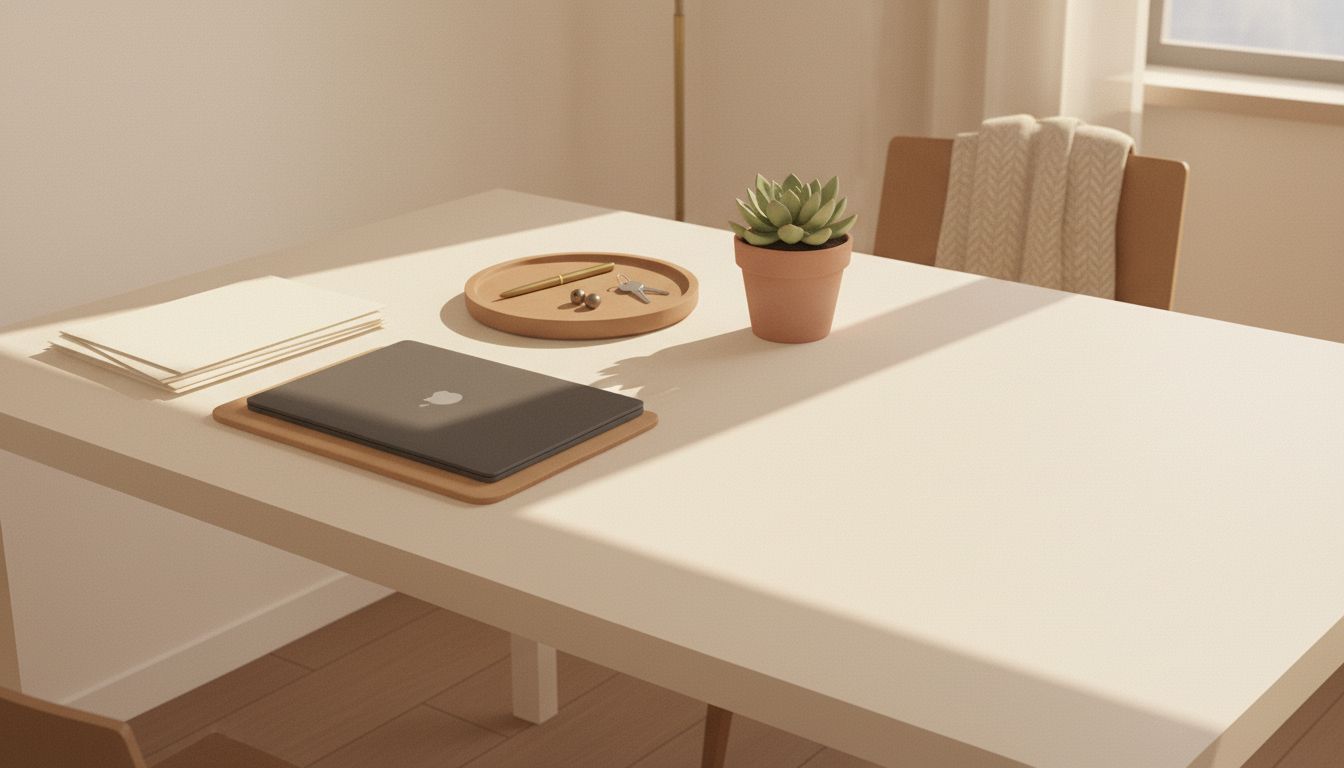
A few digital tools that make the routine feel automatic (not demanding)
If you’re someone who does well with systems, the right tools can make your evening reset routine feel less like “one more thing” and more like a gentle runway into rest.
Use a 5-minute timer (yes, really)
A timer does two things: it creates urgency (in a good way) and it gives you permission to stop when it ends.
- iPhone: Timer in the Clock app + label it “Reset”
- Android: Google Clock timer, same idea
- Bonus: set it to a sound that feels calm, not like an alarm that triggers your stress response
You’re not timing because you’re intense. You’re timing because you’re tired—and boundaries help.
Try a tiny “Tomorrow List” instead of a big to-do list
If your evenings get mentally noisy, it helps to have one place where tomorrow’s loose ends can live so they don’t have to live in your head.
Apps that work well for this:
- Todoist or TickTick: create a simple “Tomorrow” list with 3–5 items max
- Apple Reminders (underrated): a “Tomorrow” list + one recurring reminder called “Evening Reset”
Key rule: this isn’t a list of everything you’ve ever wanted to do with your life. It’s just tomorrow’s essentials, so your brain can unclench.
Make Step 5 effortless with smart lighting (optional but powerful)
If you’re the kind of person who gets a second wind at 9:30 p.m. under bright lights, smart bulbs can be a surprisingly practical mental-health purchase.
- Philips Hue or Govee: set a “Wind Down” scene that automatically turns on warm, dim light at a certain time
- You can also connect routines so when you say “Goodnight,” the lights dim and you stop negotiating with yourself
It’s not about being fancy. It’s about removing one more decision at the end of a long day.
How to make this feel like self-respect (not self-discipline)
The biggest reason evening routines fail is because they’re framed like a virtue test: If I were more put together, I’d do this. But a reset works best when it’s framed as future-you kindness.
Instead of asking, “Do I have the energy to clean?” try asking:
- “What would make tomorrow morning 10% easier?”
- “What’s one small gift I can leave for myself?”
- “What would I love to wake up to?”
Because the goal isn’t to impress anyone. The goal is to wake up and feel like your life is supporting you, not chasing you.
And once you start thinking of the evening reset routine as closing out your day—like putting a gentle bookmark in your life—it gets easier to actually do it… especially when you choose a version that fits your real evenings (the ones where you’re tired, slightly overstimulated, and just want to melt into the couch for a minute).
The next step is figuring out what your personal “high-impact reset zones” are (because not everyone’s chaos begins in the kitchen), and how to customize the reset so it works even on the messiest, most low-energy nights—like when you get home late, or you’re finishing a project, or you can’t imagine doing one more responsible thing tonight…
Find your high-impact reset zones (so you’re not resetting the wrong things)
The fastest way to make this routine feel “too hard” is to reset areas that don’t actually change your mornings. Your goal is to identify the 2–3 zones that most often create friction—then make those your default.
A quick way to spot your personal chaos triggers
For the next few mornings, notice what’s slowing you down. Not in a self-judgy way—more like you’re collecting data.
- If you lose things: your high-impact zone is the entryway (keys, wallet, earbuds, badge).
- If you start the day behind: your high-impact zone is the kitchen counter (coffee, water bottle, lunch, vitamins).
- If you feel mentally messy: your high-impact zone is the desk / dining table office setup (papers, chargers, sticky notes, half-finished tasks).
- If you wake up irritated: your high-impact zone is the bedroom (clothes pile, nightstand clutter, phone cords everywhere).
Once you know your zones, you don’t need to “do the whole house.” You just need to reset the areas that most directly influence your morning mood and momentum.

Build an “always works” evening reset routine for low-energy nights
Most routines fail on the nights you need them most: when you get home late, when you’re overstimulated, when decision fatigue is peaking. So the secret isn’t motivation—it’s having a floor version that still counts.
Use the 3–2–1 method when you’re exhausted
If five minutes feels like a lot, do this:
- 3 items back where they belong (keys, charger, jacket).
- 2 surfaces touched (a quick clear of the kitchen counter + one “yelling” surface).
- 1 thing prepared for tomorrow (outfit, bag, or coffee setup).
This keeps the spirit of the routine intact: fewer morning decisions, fewer missing items, and a space that feels like it can hold you.
Create “landing pads” so you stop tidying the same things every day
If you’re constantly resetting the same clutter, it may not be clutter—it may be homelessness. Give the repeat offenders a designated spot that’s easy to use when you’re tired.
- Entry tray or bowl: keys, sunglasses, lip balm, earbuds.
- One inbox for paper: mail, forms, receipts (sort later; contain now).
- A small bin near the couch: chargers, remote, current book, hand cream.
- A “work closes here” spot: laptop sleeve + notebook + pen, all together.
When your system is easy, the reset becomes automatic. When your system is complicated, your brain negotiates with it—and negotiating is exactly what you’re trying to reduce.
Make it stick with tiny rules (that protect your brain on autopilot)
Your routine doesn’t need more steps. It needs fewer decisions. A couple of simple rules can turn your reset into something you do without thinking about it.
Rule 1: “Nothing in hands” when leaving a room
This is a gentle, no-extra-time habit: any time you get up, take one thing with you and put it where it belongs. It prevents the nightly pile-up that makes the evening reset routine feel like a bigger job than it is.
Rule 2: Close the kitchen before you close your phone
If your nights end with “one more scroll,” try flipping the order:
- Do the two-minute kitchen reset (dishes to sink/dishwasher, quick wipe).
- Then let yourself sit down.
This works because you’re using a natural reward (rest) to reinforce the reset—without turning it into a punishment.
Rule 3: The “tomorrow list” is capped
Decision fatigue loves an endless list. Give your mind a boundary: 3 priorities for tomorrow, max.
- If it’s important but not urgent, park it in a separate “Later” list.
- If it’s urgent, it earns a slot on the 3-item list.
- If everything feels urgent, that’s usually a sign you need a quick triage—not a longer list.
This is how the routine reduces mental noise, not just physical clutter.
Examples you can copy (so you don’t have to reinvent it)
If you work outside the home
- Clear the entry surface (keys, badge, bag).
- Pack your bag fully (including charger, water bottle, lunch container).
- Choose an outfit “enough to decide” (top + bottoms + shoes).
- Set a 5-minute timer and stop when it ends.
If you work from home
- Reset your desk: close laptop, stack papers, plug in devices.
- Set tomorrow’s first tab/document open (one clear starting point).
- Clear the kitchen counter so your morning starts gently.
- Switch lighting to warm/dim as the final cue.
If your evenings are unpredictable
- Do the 3–2–1 low-energy reset.
- Put only “must-find” items in their home zones (keys, wallet, meds).
- Prep one thing that prevents morning stress (coffee station or bag).
Notice the theme: you’re not trying to control life. You’re creating a small pocket of stability inside it.
Small resets done consistently beat big overhauls done occasionally.
Conclusion: calm isn’t a personality trait—it’s a system you can practice
If your days feel full and your brain feels loud, you don’t need to become a different person to feel more peaceful. You need a few repeatable moves that lower friction where it counts.
Your evening reset routine is one of those moves: a quiet closing ritual that says, “Today is handled.” It clears just enough visual clutter to soothe your nervous system and just enough mental clutter to stop rehearsing tomorrow in your head.
Keep it small. Keep it flexible. Let it be imperfect and still real. The win isn’t a spotless home—it’s waking up to a morning that feels softer, steadier, and more supportive of the life you’re already managing so well.