

If your home gets messy faster than feels fair, you’re not imagining it—and you’re definitely not alone. When your home gets messy on repeat, it’s rarely because you “don’t try hard enough.” It’s usually because modern life is set up to create small piles everywhere… and you’re the only one assigned to notice them.
You know the moment: you walk in after a day of calls, decisions, and trying to be a functional adult. You drop your bag on the floor just for now. A package sits on the counter because opening it feels like one more task. The chair in your bedroom quietly accepts another “not dirty, not clean” outfit. And by the next morning, your space feels like it’s nagging you before you’ve even had coffee.
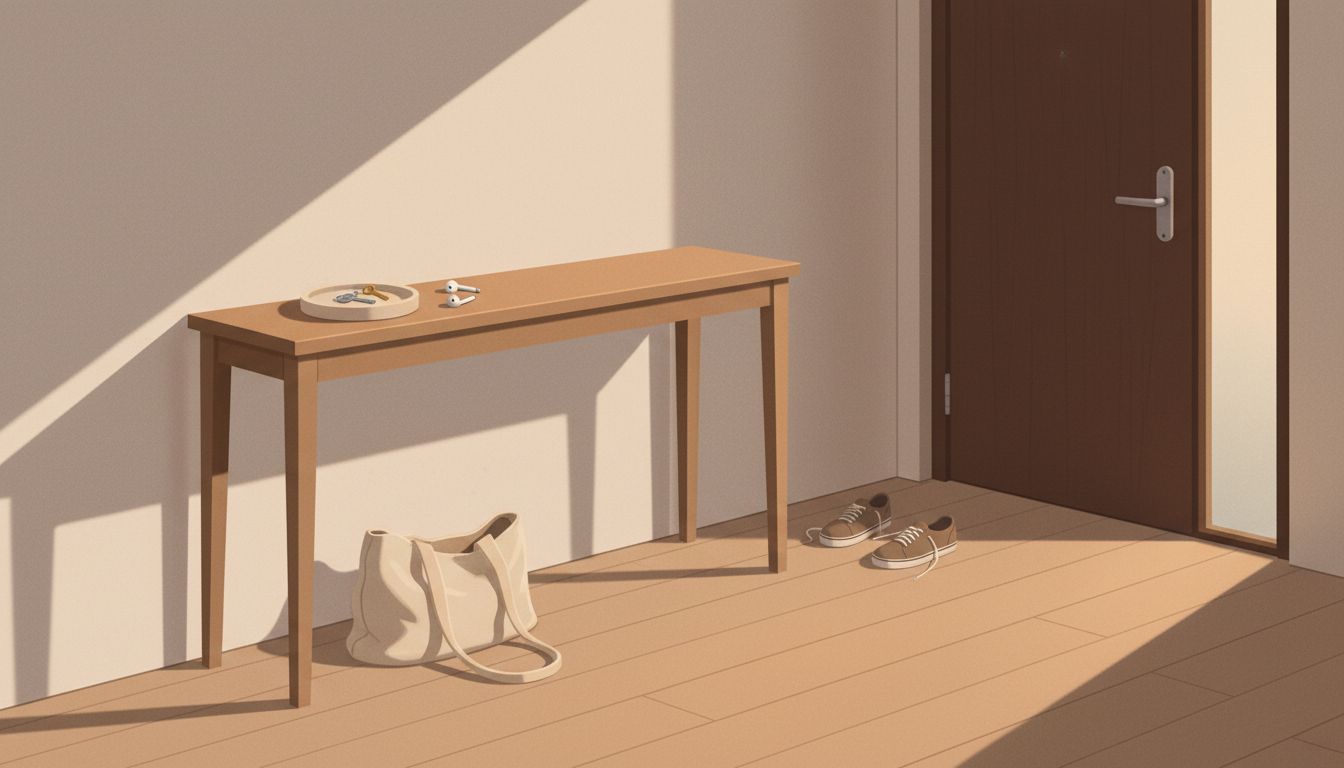
The frustrating part is that none of these choices feel dramatic. They’re tiny. Reasonable, even. But they stack—fast.
Why your home gets messy (even when you’re not “a messy person”)
Most homes don’t get chaotic in one big explosion. They get chaotic through micro-deferrals: small moments where you postpone a decision.
- Where should this go? (Not sure—later.)
- Do I recycle this box now? (Not now—later.)
- Is this outfit clean enough to rewear? (I’ll decide later.)
The mess isn’t the thing itself—it’s the paused decision attached to the thing. And those paused decisions accumulate like browser tabs in your brain.
A few patterns show up again and again:
1) The “just for now” drop zone
Keys on the counter. Shoes by the door. A mug on the coffee table. None of these are crimes. The problem is that “now” turns into hours, then days, and suddenly every surface becomes a negotiation.
This is one reason your home gets messy so quickly: flat surfaces become default storage when they aren’t protected by a simple system.
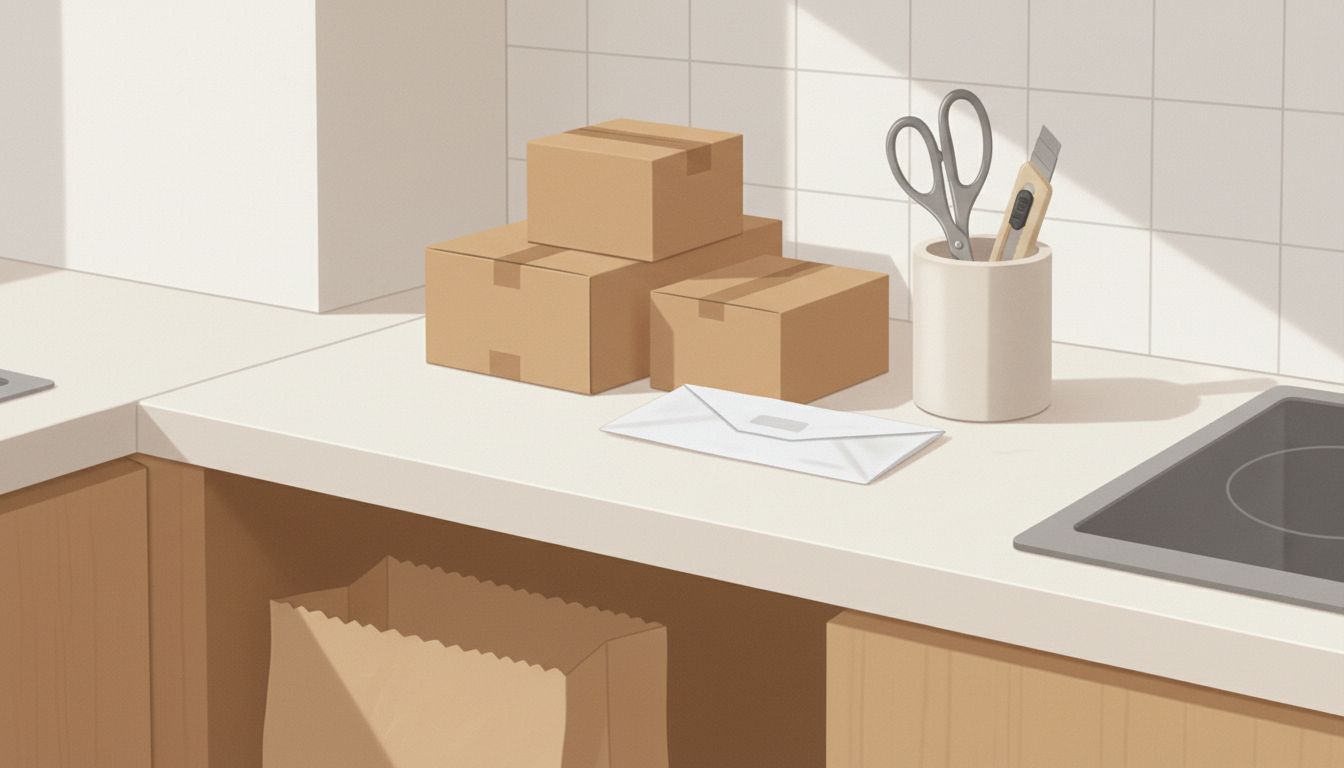
2) Unopened packages = visual noise
Online shopping is convenient, and deliveries are basically part of modern infrastructure at this point. But unopened boxes create a specific kind of stress: they’re not just clutter, they’re unfinished business.
Even when you’re not actively thinking about them, your brain is registering: I need to deal with that.
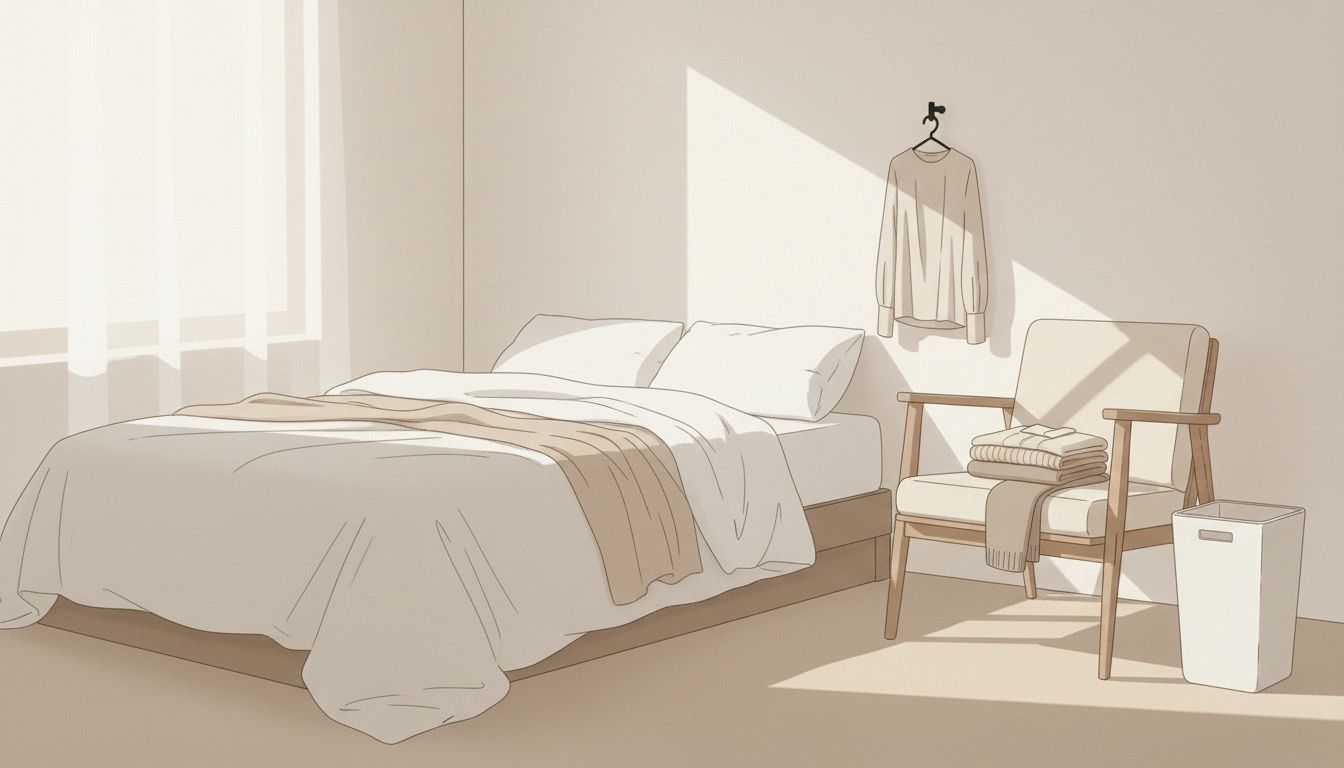
3) The chair that turns into a laundry ecosystem
You know the chair. The one that isn’t technically a hamper, but also isn’t really furniture anymore.
This happens because it’s solving a real problem: you need an in-between space for “worn but not dirty,” “tried on,” “will fold later,” or “I can’t face laundry tonight.” Without an actual plan for those categories, the chair becomes the plan.
4) “Homeless” items migrate to wherever life happens
Cords, lip balms, returns, random papers, that one candle you moved during cleaning and never re-homed—these are the items without a clear address.
When things don’t have a home, they don’t go away. They spread. And you spend more time re-finding them than using them.
5) Work-from-home blur (even if you’re not fully remote)
Even if you don’t have a formal home office, life admin expands to fill any available space: the dining table becomes a planning desk, the kitchen counter becomes a mail station, the coffee table becomes a “quick sorting area.”
It’s not that you’re doing it wrong. It’s that the boundaries between work, rest, and home management are thinner than ever—and your environment reflects that.
Clutter is often just postponed decisions asking for your attention.
Why it hits modern independent women especially hard
There’s a specific kind of mental overload that comes from running your own life—whether that means a demanding job, a side project, a business, or simply being the person responsible for your schedule, your meals, your house, and your future.
Your mind is already full of:
- calendar math (“wait, when can I do laundry?”)
- life maintenance (groceries, bills, returns, appointments)
- work tasks that never fully finish
- personal goals you care about but can’t always prioritize
So when your home gets messy, it’s not just “stuff on the counter.” It becomes another open loop—another thing you’re subtly carrying.
And here’s what makes it feel so discouraging: you can spend a solid hour cleaning, genuinely try, and then two days later it looks like you did nothing. That’s not because you failed. It’s because the system that creates the mess is still running.
The core idea: stop cleaning the mess—interrupt the mess-making moments
A calm home usually isn’t the result of big cleaning days. It’s the result of small friction-reducing systems that prevent clutter from forming in the first place.
Think of it like this:
- Cleaning is what you do when clutter has already consolidated.
- Systems are what you put in place so clutter can’t consolidate as easily.
We’re aiming for fewer “Where do I put this?” moments—and faster answers when they appear.
The goal isn’t perfection. It’s lower household decision fatigue.
Start with the two places where clutter is born: surfaces and transitions
If you want a high-impact change without turning your weekend into a purge marathon, start here:
1) Protect one “anchor surface”
An anchor surface is one spot that, when clear, makes your whole home feel more under control. For many people, it’s:
- the kitchen counter
- the entryway console
- the dining table
- the coffee table
Pick one. Not all. Just one.
Then make it lightly sacred. Not in a strict way—more like: this surface is not a long-term storage unit.
A simple rule that works: nothing sleeps here overnight (except intentional decor).
This alone helps when your home gets messy because it cuts down the visual noise that makes everything feel worse than it is.
2) Build “landing pads” for transition moments
Most clutter happens when you’re transitioning:
- coming in the door
- changing clothes
- finishing a meal
- ending a work session
- getting ready for bed
So instead of relying on motivation, you create tiny supports:
- a hook where your bag naturally wants to land
- a tray for keys and earbuds
- a clearly defined “incoming” bin for mail/returns
- an actual hamper where the chair is currently doing unpaid labor
The principle is simple: make the right action easier than the messy one.
First set of micro-systems that actually fit busy days
No dramatic house overhaul required. These are small, repeatable, and designed for the “I’m tired and I can’t think” version of you.
The One-Minute Finish
If something takes less than a minute—hang it up, toss it, put it in the bin—do it now. Not as a moral standard. As a kindness to your future self who doesn’t deserve twelve tiny tasks disguised as a “mess.”
This is especially useful for:
- junk mail
- taking cups to the sink
- hanging a jacket instead of chair-ing it
Touch It Once (for the two biggest culprits)
Two categories create a disproportionate amount of clutter fast:
- packages
- clothes
So we make them “touch once” categories:
- Packages: open → remove item → recycle box immediately.
- Clothes: hamper, hanger, or drawer—no third option.
If you need a third option (because you’re human), we’ll eventually give it structure, like a small “re-wear” hook or basket. But we don’t let the chair be an unspoken junk drawer.
The 7-Minute Surface Reset
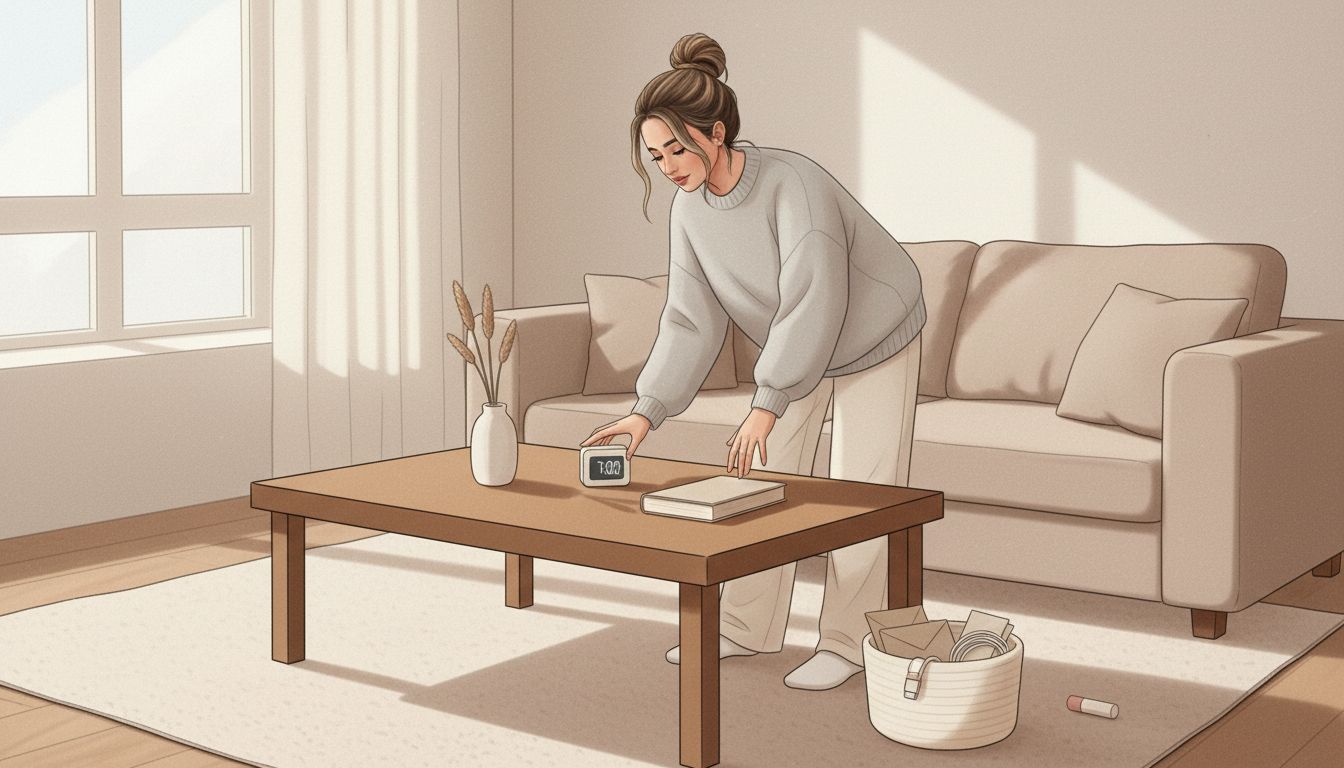
Set a timer for 7 minutes and reset your anchor surface. Not the whole kitchen. Not the whole living room. Just the one surface that changes the emotional temperature of your space.
Seven minutes is short enough that you don’t negotiate with yourself—and long enough to produce a visible win.
Digital tools that help when your brain is already full
If you’re the type who loves a good app—not because you want more to manage, but because you want fewer mental tabs—a few tools can support these resets without adding pressure.
A recurring reminder that doesn’t feel like nagging (Todoist or TickTick)
Set one recurring task like:
- “7-min counter reset (Sun–Thu)”
- “Open packages + recycle (daily)”
- “Chair reset (8:30pm)”
The magic is that you’re not relying on memory. You’re outsourcing recall so your brain can do better things.
A zone-based cleaning app that prevents the “I forgot for three weeks” problem (Tody)
Tody is great if you like seeing household tasks distributed over time rather than saved for a dreaded cleaning day. You can set “zones” (like entryway, bathroom, kitchen counter) and make the upkeep feel more even—and less like you’re constantly behind.
What matters most isn’t the app itself. It’s the shift from reactive cleaning to light maintenance with prompts.
And once you have one anchor surface protected and one or two transition points supported, you’ll start to notice something important: the same life is happening—work, errands, fatigue, ambition—but your space stops reflecting it quite so loudly.
Because the real issue was never that you couldn’t keep up.
It was that the small mess-making moments were happening all day… and no one ever taught you a low-effort way to close them without turning your evenings into a second shift.
The next step is choosing the exact “clutter hotspots” in your home (the chair, the counter, the entryway) and giving each one a simple rule and a simple container, so your defaults change without you needing a personality transplant…
Give each hotspot a “rule + container” so your default does the work
Think of clutter hotspots as tiny departments in your home. Each one needs two things: a simple rule (what belongs here, what doesn’t) and a container (where it goes when life is moving fast). This is how you stop relying on willpower—especially on the days your home gets messy because you’re running on fumes.
The entryway: stop the “just for now” pile at the door
Rule: Everything that comes in gets one of three outcomes: hang, drop (in a tray), or route (to the inbox bin).
Container set:
- Hook(s): bag, keys lanyard, light jacket—whatever you usually “temporarily” put on a chair.
- Small tray: keys, earbuds, lip balm, sunglasses (aka the tiny things that vanish).
- One “inbox” bin: mail, returns, random receipts, that one item you need to put somewhere later.
The inbox bin matters because it keeps papers and “life admin objects” from spreading across surfaces. It’s allowed to be messy inside the bin. The win is that it’s not everywhere else.
The chair: replace guilt with an actual “in-between” system
Most “laundry chair” chaos is your brain trying to create categories without tools. So give it tools.
Rule: Clothes can only be in one of these places: hamper, hanger, or re-wear zone.
Container set:
- Hamper where the chair is: if the chair is in your bedroom and the hamper is down the hall, you’ve already identified the problem.
- A few matching hangers: make “hang it back up” feel frictionless (yes, this matters).
- Re-wear zone: a hook behind the door, a slim basket, or a small designated shelf for “worn but fine.”
Keep the re-wear zone intentionally small. If it overflows, that’s not a moral failure—it’s just data that the category is too permissive. Small zone = natural boundary.
The counter (or dining table): create a “clear by default” workflow
When your home gets messy, the kitchen counter is often the first place you feel it—because it’s where everything lands. Your goal isn’t a perfect showroom counter. It’s a counter that resets quickly.
Rule: Counters are for active use, not storage. Anything that’s “not active” gets parked.
Container set:
- One catch-all basket near the kitchen: for items that belong elsewhere (hair ties, batteries, rogue candles). This is your “I can’t deal with this right now” landing zone that isn’t the counter.
- Paper station: a file sorter or folder with 3 labels: “To Pay,” “To File,” “To Return.” Nothing complex.
- Package tool: scissors + box cutter + tape in one small caddy so opening/recycling takes seconds, not a scavenger hunt.
If you’re sharing space with a partner/roommate, this is the moment to make it collaborative: the counter doesn’t become “yours to manage.” It becomes a shared system with shared rules.
Two routines that keep things calm without turning into a “second job”
The 2-Minute “closing shift” (night)
This is not a deep clean. It’s a quick signal to your nervous system: we’re done for today. Set a timer and do only the highest-impact moves.
- Take cups to the sink (or dishwasher)
- Reset the anchor surface (just the one you chose)
- Do a fast chair check: hamper/hanger/re-wear zone
- Put anything stray into the “elsewhere basket” (deal with it later on purpose)
Two minutes sounds almost too small—until you do it for five nights and realize you stopped waking up to visual stress.
The 20-Minute “systems reset” (weekend)
Once a week, you’re not cleaning—you’re restoring your systems so they keep working. This is where you empty the bins that made your weekdays easier.
- Empty the entryway inbox bin (file, toss, or add to a “returns” bag)
- Recycle any lingering cardboard (if any survived the “touch it once” rule)
- Return the “elsewhere basket” items to their actual homes
- Do a quick re-wear zone edit (hang up what’s truly clean; laundry what isn’t)
If you hate weekends being swallowed by chores, this is your compromise: just enough structure to prevent the full Sunday spiral.
When your home gets messy, use the “capacity check” (not self-criticism)
Sometimes mess isn’t about habits—it’s about capacity. If you’re in a heavy work season, dealing with family stuff, or just plain exhausted, your home is going to show it. The goal isn’t to push harder; it’s to adjust the system to match reality.
Try these three capacity-based adjustments
- Lower the bar temporarily: protect one anchor surface only. Let the rest be “good enough.”
- Reduce steps: move the hamper, add hooks, keep a donation bag open. Make the right action ridiculously easy.
- Contain instead of perfect: if you can’t organize, corral. Bins are a valid strategy during busy weeks.
This is how you stay kind to yourself while still staying functional. Calm living isn’t about never having a messy day—it’s about knowing exactly how to recover without drama.
A few “if this, then that” rules (because decision fatigue is real)
If you like simple frameworks, these remove the mental negotiation that keeps clutter alive.
- If I take it off, then it goes to hamper/hanger/re-wear zone.
- If I bring in a package, then I open it before I sit down (or I schedule one daily package-opening time).
- If I touch paper, then it goes to “To Pay,” “To File,” or “To Return.”
- If I don’t know where it goes, then it goes in the “elsewhere basket” (not on the counter).
These rules aren’t strict—they’re supportive. They keep small mess-making moments from turning into a house-wide energy leak.
Small resets, repeated often, beat big cleanups you can’t sustain.
Conclusion: calm isn’t a personality—it’s a system you can build
If your home gets messy quickly, it doesn’t mean you’re failing at adulthood. It means your space is asking for clearer defaults—rules that remove micro-decisions, and containers that make the right choice feel automatic.
Start with one hotspot. Give it a rule and a container. Protect one anchor surface. Add a two-minute closing shift. That’s it. You’re not trying to become a different person—you’re simply making it easier for the person you already are to live with more calm.
You deserve a home that feels like it’s on your side: quieter, smarter, and supportive of your real life—not another thing you have to manage perfectly.
And if you’d like extra visual support, there are additional resources you can use alongside these systems:

Leave a Reply