
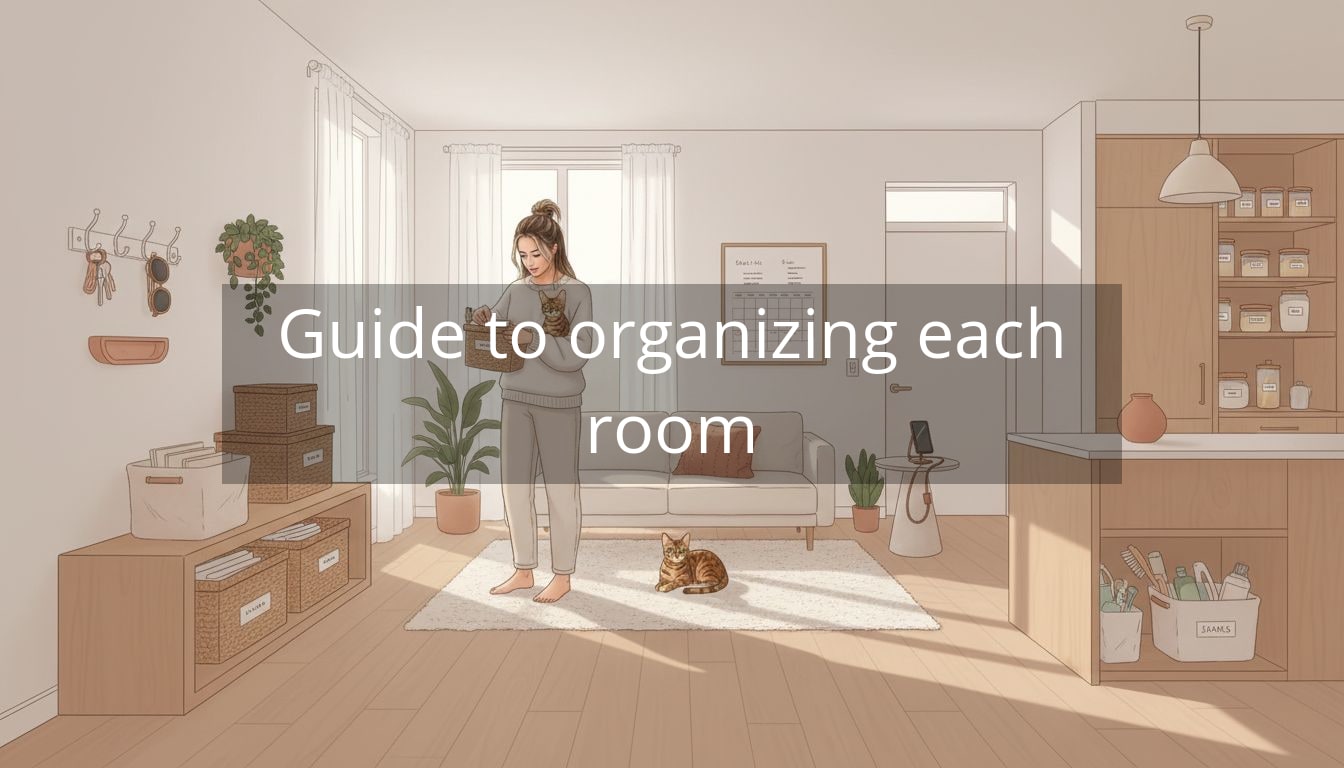
You can Google how to organize your home a hundred times, but the real problem usually hits at 6:47 p.m.—when you walk in exhausted, drop your bag, and immediately feel annoyed by your own space. The counters are mysterious “landing zones,” shoes multiply overnight, and that one drawer (you know the one) has become a tiny junk museum.
This isn’t a character flaw. It’s a systems issue. Clutter builds when everyday items don’t have a clear home, so they default to the nearest flat surface. Add modern life—busy schedules, deliveries, “I’ll deal with it later” piles, and frequent transitions (new job, new hobby, new season)—and your space quietly stops matching your life. The result is visual noise and decision fatigue: you’re constantly re-finding, re-buying, and re-tidying things you already own.
“Clarity isn’t created by doing more—it’s created by removing what doesn’t belong.”
How to organize your home without a total overhaul
The mindset shift: organizing isn’t a weekend makeover. It’s a simple repeatable loop you can run in any room—empty, declutter, group like-with-like, assign homes. That’s it. When you treat each space like a small “system,” it stops being overwhelming and starts being solvable.
Start tiny (15–30 minutes). Choose one contained spot: an entryway shelf, a single kitchen drawer, the bathroom counter. The win needs to be quick enough that your brain trusts you’ll actually finish.
A few practical tools that help immediately (no fancy shopping spree required):
- A “drop zone tray” for keys, earbuds, and lip balm—one container turns scatter into a system.
- Open bins for daily-use items, lidded bins for backups (think: extra chargers, travel toiletries).
- A notes app list (Apple Notes, Google Keep) titled “Home Categories” where you jot your groupings as you discover them: batteries, candles, hair tools, cleaning refills. This prevents the classic “I already own three of these?” problem.
Once you see how calm one organized micro-spot feels, it becomes much easier to move room by room—especially starting with the areas that create the most daily friction.
Room-by-room systems that actually stick (without becoming another project)
Once you’ve proven to yourself that a tiny spot can feel calmer, the next step is choosing the spaces that create the most daily friction. Not the “Pinterest-worthy” spaces—the ones that make you sigh. Usually that’s the entryway, kitchen, bedroom surfaces, and bathroom storage.
A helpful rule: organize for your real life, not your ideal life. If you always drop your bag on the chair, that isn’t laziness—it’s data. Your home is giving you feedback about what’s missing.
Entryway: stop the pile-up before it starts
Your entry is the “handoff point” between outside life and home life. When it isn’t set up well, everything lands wherever it can.
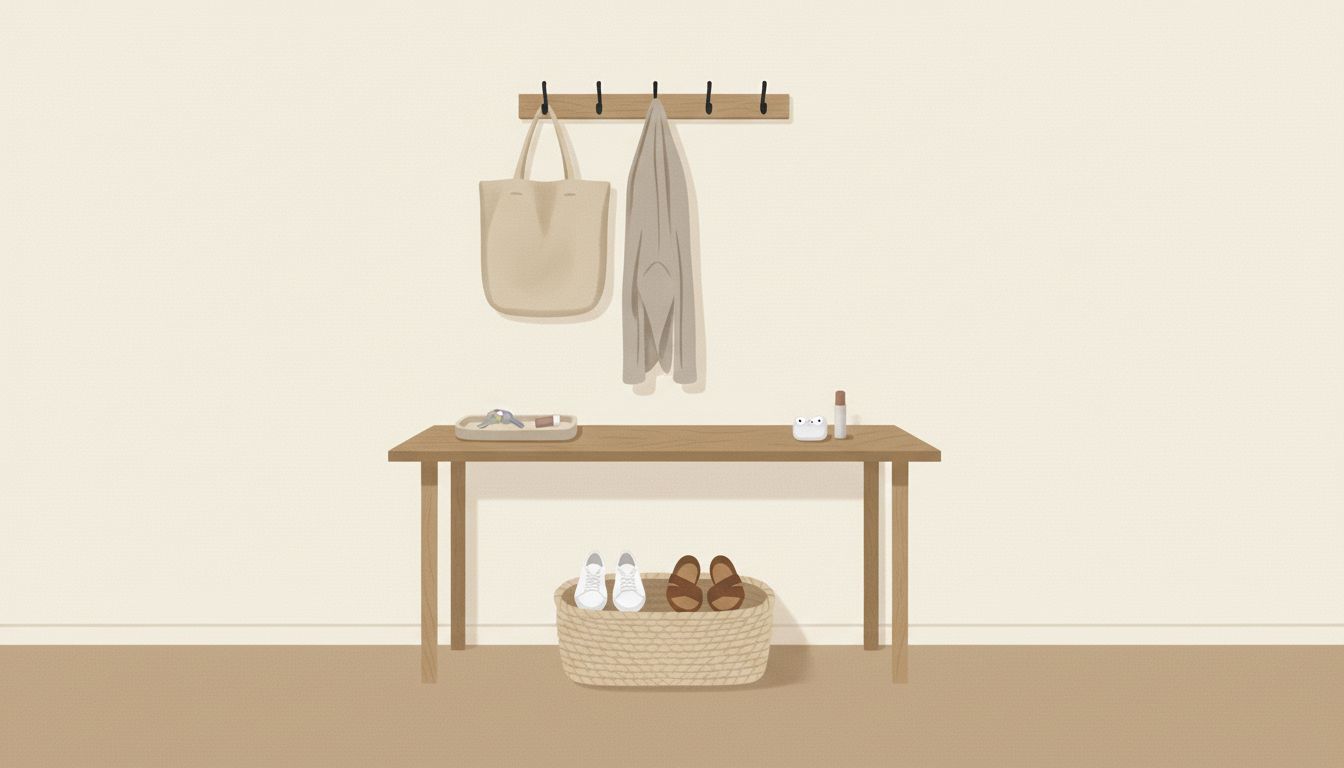
- Create one landing zone: a tray or shallow bin for keys, cards, earbuds, and lip balm.
- Give shoes a boundary: a slim rack, a basket, or even a taped-off square on the floor. The goal is “shoes live here,” not “shoes go everywhere.”
- One hook per frequently-used item: bag, dog leash, jacket. If you have to open a closet, you’ll probably skip it when you’re tired.
- Seasonal edit: keep only current-season outerwear by the door. Everything else gets moved, not “stacked nearby.”
Real life example: If you keep re-hanging the same tote on a dining chair, put a hook there temporarily. If it solves the problem, you’ve just identified the correct home.
Kitchen: reduce decision fatigue where it hits daily
Kitchens get messy fast because they’re high-traffic and high-frequency. The fix isn’t more organizing products—it’s clearer zones.
- Set up “activity zones”: coffee/tea, breakfast, cooking, snacks, and food storage. Group items where you use them.
- Contain the “small chaos”: use one bin for packets, one for snacks, one for baking add-ins. A bin turns 20 tiny items into 1 easy thing to move.
- Declutter duplicates with a simple rule: keep one favorite and one backup (max) for gadgets you rarely use.
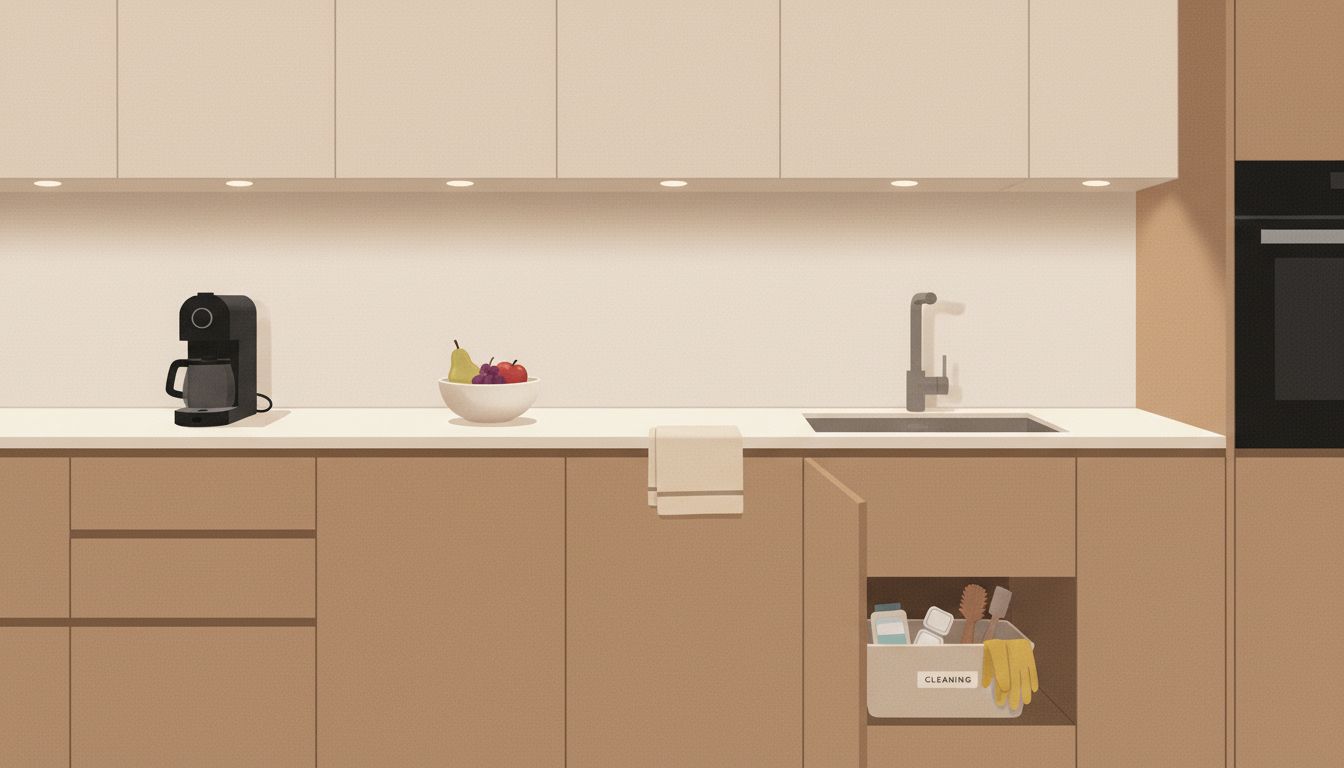
- Reset your counters: choose what earns counter space (maybe coffee machine + fruit bowl) and move the rest into a dedicated home.
Quick win: Put a small bin under the sink labeled “dishwasher + sink” (pods, brushes, gloves). When everything you need is in one place, you stop rummaging—and the mess doesn’t spread.
Bedroom: make it easier to tidy than to drop things
The bedroom should feel like a recovery space, not a second to-do list. Most bedroom clutter is “in transit”—clothes, skincare, cords, and tomorrow’s outfit.
- Give “not dirty but not clean” clothes a home: a single hook, a chair with a limit (only what fits), or a designated basket.
- Create a mini nightstand system: one small tray for hand cream, lip balm, and a charger. Everything else lives elsewhere.
- Closet organization that lasts: group by category first (work, casual, exercise), then by color if you like. Category is what saves time.
- Use under-bed storage intentionally: off-season clothes, spare linens, sentimental items—clearly labeled so it doesn’t become a black hole.
Decision-fatigue win: Keep a “default outfit formula” section in your closet (the pieces you actually reach for). When your best basics are easy to grab, mornings feel quieter.
Bathroom + linen: prevent the “half-used product graveyard”
Bathrooms get cluttered because they’re small and full of duplicates—partly used skincare, extra toothpaste, travel minis, and “just in case” items.
- Daily items stay visible (but contained): a small caddy or bin for your everyday routine.
- Backups get one bin: toothpaste, soap refills, razors. One container creates a natural limit.
- Make “first-in, first-out” easy: put the newest backups at the back of the bin so you actually use what you already own.
- Linen closet by set: store sheets inside one matching pillowcase per bed size. No more hunting for the fitted sheet.
Quick reset: If you have more than one open version of the same product (two shampoos, three moisturizers), choose one to finish first and move the rest to the backup bin. The counter clears itself.
How to organize your home when you’re short on time (and patience)
If time is tight, you don’t need a full “organizing day.” You need a repeatable rhythm that makes your home self-correct.
The 10-minute “closing shift”
Think of it like resetting a café at the end of the day—nothing dramatic, just making tomorrow easier.
- Put items back into their homes (not “near” their homes).
- Clear one surface you touch every day: kitchen counter, entry table, or nightstand.
- Do a fast “floor sweep”: shoes, bags, laundry into their zones.
If you live with other people, keep it simple: everyone returns their items for two minutes. That’s it. It’s not about fairness—it’s about reducing the constant background stress.
The “one-touch” mail and paperwork rule
Paper creates sneaky clutter because it feels important and unfinished. Give it a tiny system:
- Recycle immediately: junk mail doesn’t get a second location.
- One action folder: a single file labeled “This Week” for anything requiring a call, payment, or form.
- One long-term home: a folder or small box for warranties, medical docs, and tax items—separated by category.
This prevents the classic “paper pile that becomes furniture.”
The “container is the limit” approach
If you only adopt one organizing principle, make it this: your containers decide your inventory. When the candle bin is full, you either stop buying candles or you choose which ones you love most. The limit protects your space and your brain.
Small systems, repeated consistently, create the kind of calm you can actually live in.
Helpful tools that earn their keep (and what to skip)
You don’t need a shopping spree. The best organizing tools are the ones that reduce steps.
- Trays for surfaces (keys, skincare, coffee pods). They turn scattered items into one movable “set.”
- Clear or open bins for daily categories (snacks, hair tools, chargers). If you can’t see it, you’ll forget it.
- Lidded bins for backups and rarely used items (refills, holiday items, keepsakes).
- Labels when multiple people share a space or when items look similar (first aid, batteries, light bulbs).
- Drawer dividers for small items that tangle and migrate (makeup, office supplies, utensils).
What to skip: complicated stacking systems that require removing three things to reach one thing. If it adds friction, you won’t maintain it—especially on tired weekdays.
Extra resources if you want more structure
If you’d like more guidance beyond these basics, there are plenty of helpful checklists and visual walkthroughs available. A few resource types that tend to be genuinely useful:
- Room-by-room decluttering checklists you can print or save to your phone
- Short video walkthroughs for organizing small spaces (drawers, under-sink cabinets, closets)
- Simple home inventory lists to prevent duplicates (batteries, toiletries, cleaning refills)
- Weekly reset templates (10–30 minutes) that fit into real schedules
A calm home isn’t perfect—it’s supportive
The goal isn’t a home that never gets messy. The goal is a home that helps you recover faster—where your things have clear homes, your surfaces aren’t constantly shouting at you, and your routines don’t require 50 tiny decisions.
When you use small, repeatable systems—empty, declutter, group, assign—you’re not just learning how to organize your home. You’re building a quieter default. And that matters, because you’re already carrying enough in your head.
Pick one friction point this week. Give it a “home.” Let that be enough. Calm living is less about doing everything, and more about setting up your space so it does a little more for you.
Telegram Galelar
Instagram @galelar_lis
YouTube @galelar
TikTok @galelar_lis

Leave a Reply