
You know that moment when you walk into a room and your brain instantly gets louder? The one surface rule is the quickest way I know to turn that volume down—without committing to a full house clean you don’t have time (or energy) for.
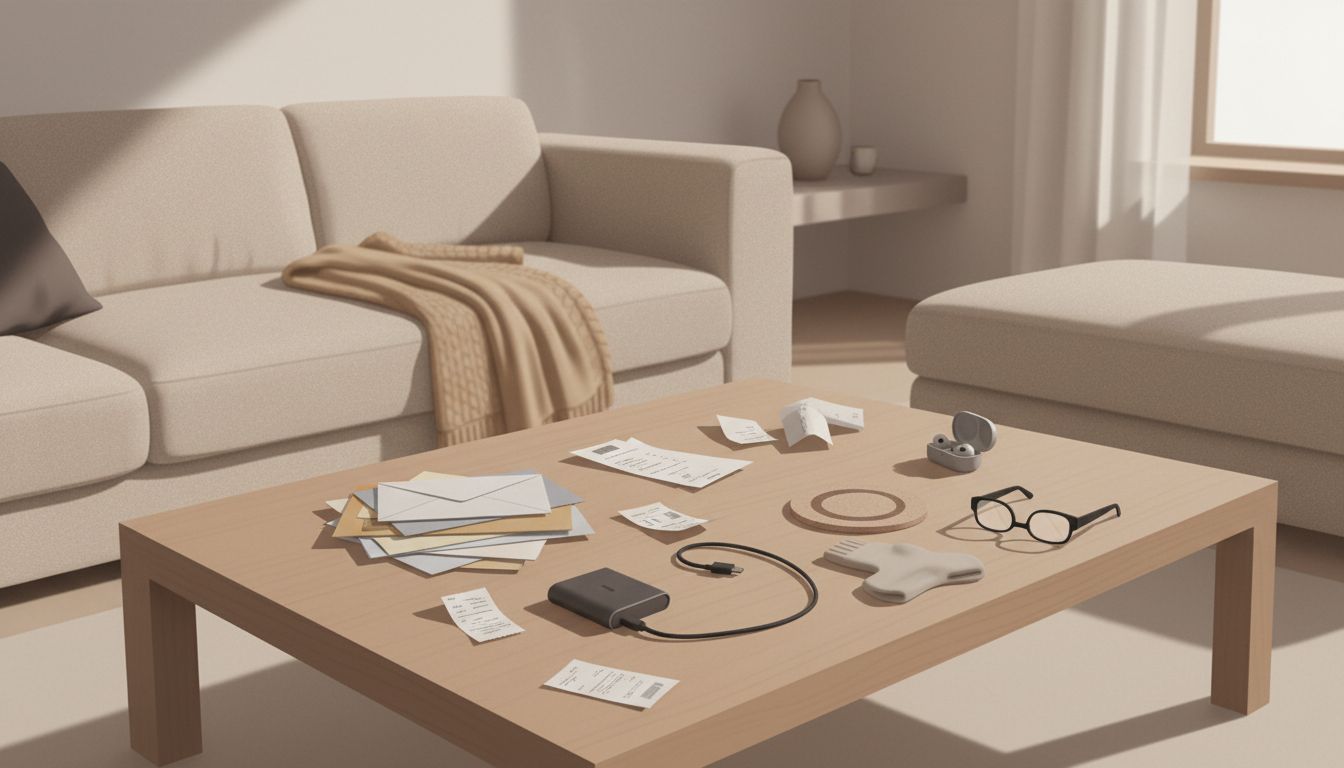
Maybe it’s your living room after a long day: the coffee table has mail, a half-charged power bank, yesterday’s mug, and that one random sock that always appears. Or it’s the kitchen where you want to cook, but the counter is hosting a chaotic little convention—laptop, keys, kids’ artwork, two Tupperware lids with no containers, and a grocery bag you swear you already put away.
Nothing here is “disgusting.” It’s just… visually noisy. And when life is already mentally loud—work messages, plans, half-finished decisions, things you need to remember—your space starts to feel like another open tab you can’t close.
Why this kind of clutter hits so hard (even when it’s not “that bad”)
A lot of us were taught that “cleaning” means floors, bathrooms, and big weekend resets. But modern mess rarely starts as grime. It starts as drop zones.
- You set something down “for a second.”
- The second becomes later.
- Later becomes a pile.
- Then the pile becomes a weird little monument to unfinished tasks.
And the reason it feels so draining isn’t because you’re messy or failing at adulthood. It’s because clutter on surfaces is basically a constant visual reminder that you’re behind. Even if the tasks are tiny, your brain reads the pile as: open loops.
Mail = decisions.
Chargers = responsibility.
Receipts = admin.
Kids’ stuff = someone needs you.
Your laptop on the table = work is still here.
That’s why you can spend 30 minutes “straightening up” and still feel unsettled. You moved things around, but you didn’t change the visual anchor points of the room—the places your eyes land first.
The gentle reset that works when you’re already tired
Here’s the core idea: choose one high-impact surface in a room and clear it completely.
Not “tidy it a bit.” Not “organize the drawer next to it.” Clear it.
That’s the one surface rule.
It’s deceptively small, but it works because surfaces are where clutter shouts the loudest. When a key surface is clear, the entire room looks calmer—even if the rest of the room isn’t perfect. It’s like giving your brain a clean place to rest its attention.
Clear space is not an aesthetic—it’s permission to think again.
And honestly, permission is what you’re after. Not a showroom. Not a Pinterest “after.” Just that feeling of being able to exhale when you walk into your own home.
How the one surface rule resets a room (and your nervous system) fast
Let’s make this practical with real-life examples, because this is where the rule becomes almost weirdly powerful.
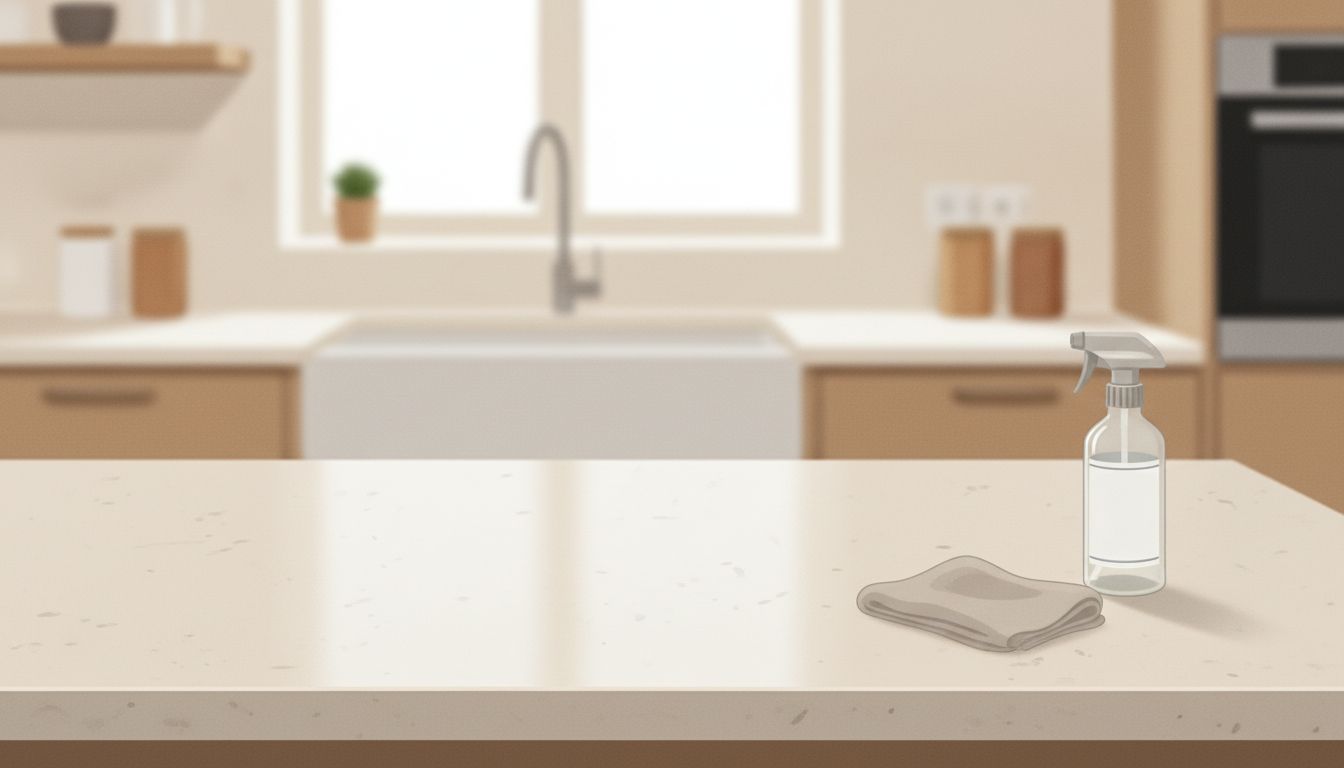
1) The kitchen counter that blocks dinner (and patience)
If your counter is covered, cooking becomes a negotiation. You’re shifting objects just to chop a tomato. You’re moving your bag around to find a cutting board. And every extra step adds friction—until you’re standing there thinking, “Why is everything so hard right now?”
Pick the main counter you actually use (not every counter), clear it fully, and wipe it down. That’s it.
Suddenly you have working space. Your body stops bracing. Dinner feels possible again, even if the dishwasher still needs unloading.
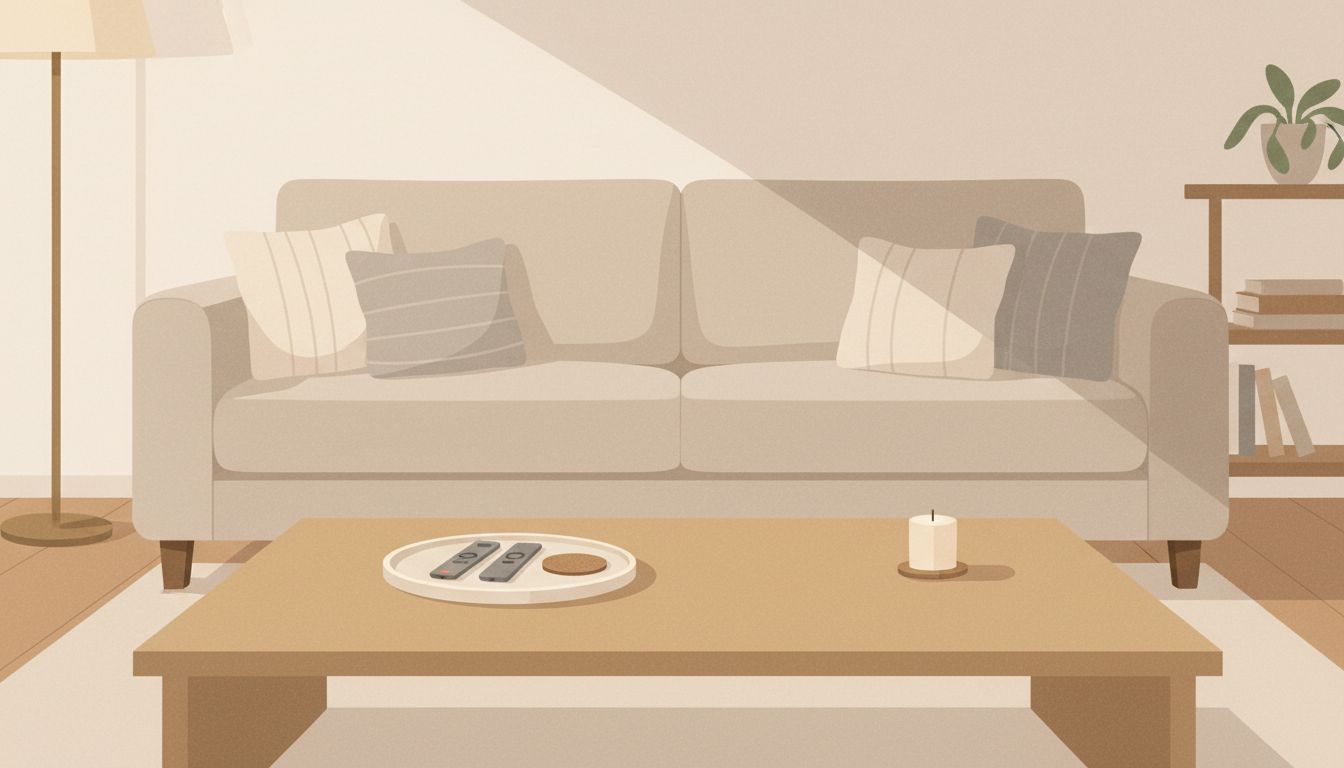
2) The coffee table that keeps the living room from feeling “done”
This is the sneaky one. You can have fluffed pillows and a candle going, but if the coffee table is piled with life debris, the room still reads as unfinished business.
Clear the coffee table completely. If you want to keep something out (remotes, coaster), give it a home—like a tray. When that surface is clean, the whole room shifts from “holding zone” to “rest zone.”
3) The desk that makes you procrastinate
A messy desk isn’t a moral issue, but it is a focus issue. If your work surface is full of old notes, random packaging, and cups, your brain has no obvious starting point.
Clear the desk. Leave only what you need for the next task. This is not about becoming a minimalist; it’s about giving your attention a clean runway.
Why “one surface” works better than “clean the room”
Because “clean the room” is vague and huge. Your brain doesn’t know where to start, so you delay it, and then you feel worse.
“One surface” is specific and survivable. It’s a small win you can complete even when you’re tired—and small visible wins are how you build momentum without burning out.
The simplest way to do it (without getting stuck sorting)
The biggest trap with any reset is this: you start clearing… and suddenly you’re reading an old letter, dealing with return shipping, or reorganizing a drawer.
So here’s the method that keeps the one surface rule fast:
Step 1: Choose your surface (literally point to it)
Coffee table. Desk. Kitchen counter. Pick one.
Step 2: Remove everything that doesn’t belong there
Don’t decide where it will live forever. Don’t sort yet. Just clear the surface.
Step 3: Wipe it down (the “done” signal)
This is oddly important. The wipe is what makes it feel finished, not just shuffled.
Step 4: Deal with the removed items after (and only if you have time)
If you don’t have time, you’re still allowed to stop. The surface reset still counts.
A few “make it effortless” tools (physical + digital)
You don’t need a bunch of containers to do this. But you do need a system that reduces decision fatigue—because the goal is calm, not a new organizing hobby.
The Reset Basket (your secret weapon)
Get one basket/bin (even a laundry basket). When you clear your surface, anything that doesn’t belong goes into the basket immediately.
This does two magical things:
- You keep momentum (no wandering around the house mid-reset).
- You stop turning a 4-minute reset into a 40-minute sorting session.
Later, you can do a quick “home sweep” and put items away room by room, or even keep the basket as a temporary staging zone. The point is: clear first, decide later.
A tray for “allowed clutter”
If a surface needs a few essentials (remotes, coasters, keys), give those items a contained home. A small tray makes the surface feel intentional instead of messy—even when life is busy.
Think of it as boundaries for your stuff. The surface stays clear; the tray holds the “living” items.
Digital tools to make the rule automatic (not another thing to remember)
If your brain already holds 200 invisible tasks, you don’t want “clear the counter” to become another mental sticky note. This is where a tiny recurring reminder helps.
- Tody or Sweepy: Set a gentle recurring task like “One-Surface Reset (Kitchen)” each evening. It turns the habit into a rhythm instead of a decision.
- Todoist or Any.do: Create a recurring task called “One Surface: Coffee Table” and keep it super small. You can even add subtasks like “Clear → Wipe → Done” so your brain doesn’t have to invent steps.
- Structured (or any visual timer app): If you do well with short sprints, set a 5-minute timer labeled “One Surface Reset.” The timer keeps you from overcomplicating it.
Choose “hero surfaces” (so you’re not reinventing the plan daily)
This part is subtle but life-changing: decide in advance which surface matters most in each zone of your home.
For example:
- Kitchen = the main prep counter
- Living room = coffee table
- Bedroom = nightstand
- Work life = desk
When you’re tired, you don’t want to choose. You want to follow a tiny script.
And once you know your hero surfaces, the one surface rule starts to feel less like cleaning and more like restoring order in the exact places that support your day.
Because the truth is, the mess isn’t random—it lands where your life happens. Which is why, when you start resetting the right surface at the right time, you begin to notice something even more interesting: certain piles appear at the same hour, after the same routines, in the same spots… and that’s where the next layer of calm gets built.
Turn the pattern into a system (so it stops coming back)
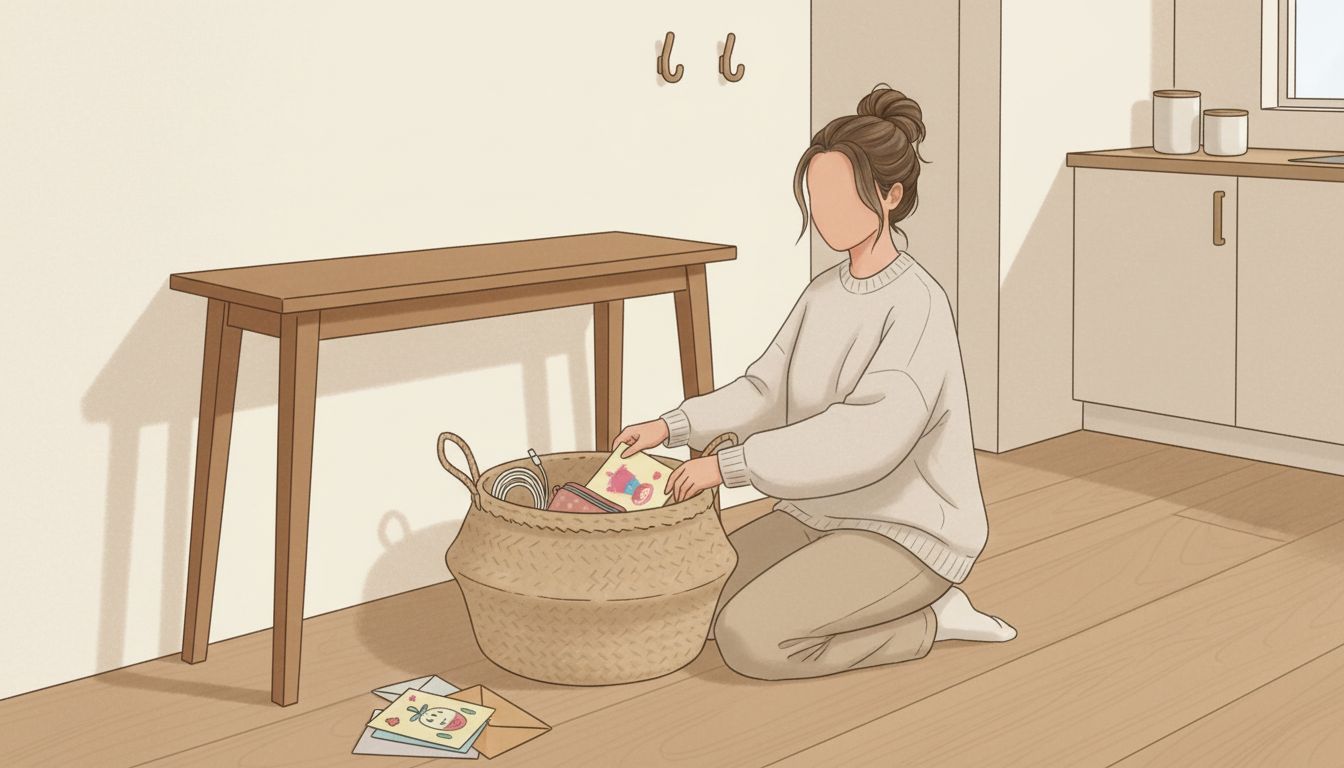
When you notice the same piles showing up in the same spots, that’s not a personal flaw—it’s data. It means your home is telling you where your routines need a “landing pad.” The goal isn’t to be stricter with yourself. It’s to make the right thing the easy thing.
Here’s the simplest way to do that: for every repeat-pile, create a tiny, obvious home within arm’s reach of where the pile happens. If you have to walk to another room to put something away, your future self will “set it down for a second.” (She’s tired. She’s doing her best. We plan for her.)
The 3-question “repeat pile” audit
The next time you clear your hero surface and you’re holding a random handful of items, ask:
- What are these items trying to do for me? (Keys = leaving the house faster. Mail = not forgetting. Chargers = staying functional.)
- Where do I naturally drop them? (Not where you “should,” but where you actually do.)
- What is the smallest home I can create right there? (A hook, a tray, a bin, a folder—small beats perfect.)
Small “homes” that prevent big resets
Create a “Landing Strip” for daily carry items
If your coffee table or kitchen counter constantly collects keys, sunglasses, lip balm, earbuds, and receipts, you don’t need more willpower—you need a designated landing strip. Choose one contained item (a tray, a shallow bowl, a small lidded box) and make it the only place those things are allowed to live out in the open.
- Where it works best: near the entry, on a console, or at the corner of the kitchen counter you don’t prep on.
- The rule: items can be “out,” but only inside the container.
- Bonus upgrade: add a small notepad for “don’t forget” thoughts so they don’t become paper clutter.
Make paper either “action” or “archive” (no third category)
Paper is surface-clutter’s favorite ingredient because it represents decisions. Try this: keep two slim folders or trays near your most common pile spot.
- Action: forms to sign, invitations to respond to, returns, bills, school papers that need attention.
- Archive: anything you’re keeping but don’t need to handle this week.
Anything that doesn’t fit those categories is usually trash or recycling. The magic is that you’ve reduced “mail sorting” from a vague project to two choices. Decision fatigue drops fast.
Give chargers a real home (so they stop living everywhere)
Chargers multiply on surfaces because they’re constantly in use—and because they rarely have a designated “end of use” moment. Pick one charging station and one backup spot.
- Charging station: a small basket/box where devices charge (bedside, desk, or kitchen corner).
- Backup spot: one labeled pouch or zip bag in a drawer for spare cords.
Then set a simple boundary: chargers don’t “camp” on the coffee table. If you charge in the living room sometimes, keep one living-room cord in a discreet spot nearby so it’s not migrating daily.
How to use the one surface rule when you’re truly maxed out
The 2-minute version (for survival days)
Some days you don’t need a reset—you need a minimum viable calm. Do this:
- Trash goes out.
- Dishes go to the sink/dishwasher.
- Everything else goes into the Reset Basket.
Stop there. A clear surface is a win even if the basket is full. You can triage the basket later when you have a shred more capacity.
The 10-minute version (for “I can breathe again” days)
- Clear the surface completely.
- Wipe it down.
- Set a 5-minute timer and do a quick “home sweep” from the Reset Basket: put away the obvious items only.
- Anything that requires a decision goes back in the basket for a later session.
This keeps you out of the trap of starting five complicated tasks just because you found evidence of them on your coffee table.
The “closing shift” routine (so you wake up to less noise)
If you’ve ever envied people who seem to effortlessly keep their spaces under control, it’s usually not because they clean more—it’s because they have a closing shift. A tiny end-of-day routine that resets the hero surfaces your morning depends on.
Pick one time that already exists (after dinner, after the last show, right before you plug in your phone). Then choose just two surfaces to reset:
- Kitchen: the main prep counter
- Living room: coffee table
That’s enough to make tomorrow feel kinder.
Make the rule stick: boundaries that feel realistic
Define your “clear surface standard” (so you don’t negotiate daily)
The most exhausting part of home management is renegotiating what “counts” every single day. Decide your baseline in advance:
- Kitchen counter standard: nothing on the prep zone; a tray is allowed in the corner.
- Coffee table standard: empty, or tray-only (remotes/coasters).
- Desk standard: clear workspace in the center; one pen cup + one notebook OK.
When your standard is clear, the one surface rule becomes quick—not emotional.
Use “minimum friction storage” (the secret to maintaining it)
If putting something away requires moving other things, opening a hard-to-reach cabinet, or navigating a messy drawer, it won’t happen reliably. Aim for:
- Open bins over lidded boxes (unless you truly need visual hiding).
- One-step put-away (drop in, not file perfectly).
- Storage where the item is used (not where it “belongs” in a fantasy version of your life).
When you live with other people: keep it kind and workable
If you share space with a partner, roommates, or kids, the one surface rule still works—you just want the expectations to feel fair.
- Name the hero surfaces out loud: “If the coffee table is clear, the room feels calm.”
- Create one shared Reset Basket so you’re not doing detective work with everyone’s stuff.
- Use simple labels (even one-word ones) for bins or drawers near repeat-pile zones.
- Keep the ask small: “Before bed, can we make the coffee table tray-only?” tends to work better than “clean the living room.”
This isn’t about getting everyone to clean the same way. It’s about agreeing on one visual anchor that helps the whole household feel less stressed.
You don’t need more time—you need fewer decisions.
Conclusion: calm is a practice, not a personality trait
The most comforting thing about the one surface rule is that it meets you where you are. It doesn’t demand a perfect home, a full reset, or a new identity as “someone who’s always on top of it.” It just asks you to create one clear place for your eyes—and your nervous system—to rest.
When you clear one hero surface consistently, you’re not just cleaning. You’re closing loops, reducing visual noise, and building a home that supports the version of you who’s already carrying a lot. Start small, keep it repeatable, and let “calm” be something you practice in minutes—not something you earn after hours.
More visual support (if you like seeing systems in action)
If you’d rather watch routines like this come together, there are additional visual resources and project details you can explore here: