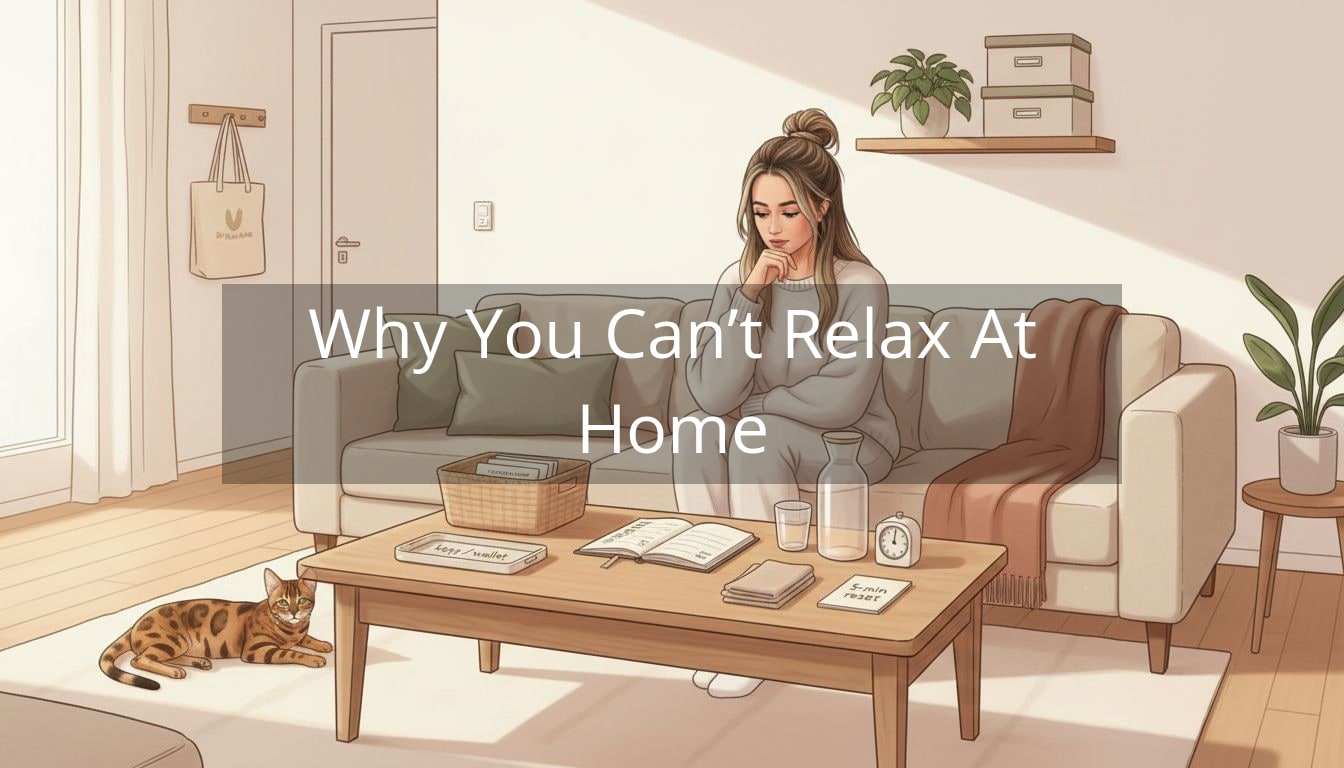
You know that moment when you finally get to relax at home—laptop closed, bra off, dinner handled—and then your eyes land on the mail pile, the sink, the laundry chair, and the tiny red notification bubble? If you can’t fully relax at home even when you technically have “free time,” it’s not because you’re bad at resting. It’s because your environment is still asking your brain to work.
Maybe you sit down on the couch and immediately start scanning: What’s that on the counter? Did I ever respond to that email? Why is the light so harsh? Should I be doing something “useful” right now? And the worst part is how subtle it is. It’s not a dramatic crisis. It’s low-grade tension that follows you room to room, like your nervous system doesn’t quite believe this is a safe place to land.
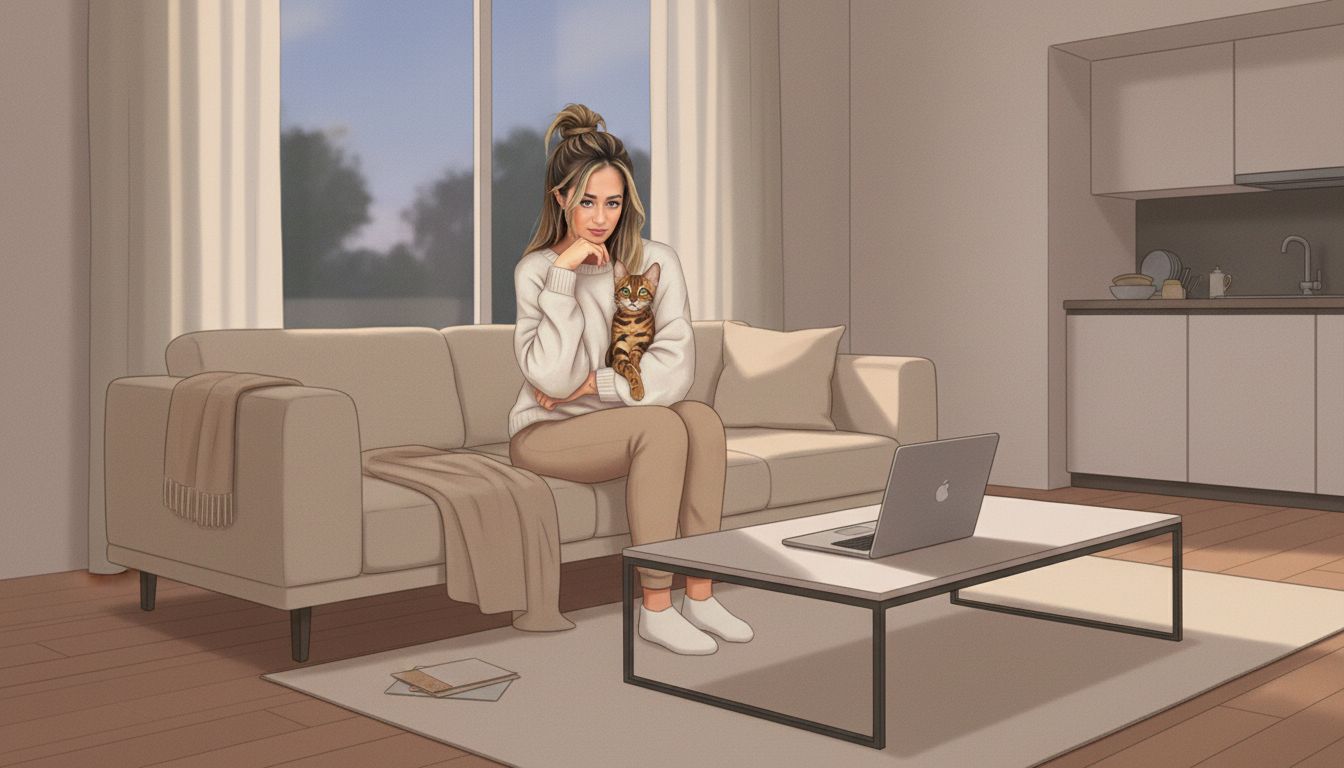
Home is supposed to be the exhale. But for a lot of modern women, it quietly becomes the second shift: the place where admin accumulates, unfinished tasks stay visible, and your phone keeps feeding you “just one more thing.”
Why this is happening (and why it feels so personal)
When you can’t unwind at night, it’s easy to blame willpower: I should be more disciplined. I need a better routine. I just have to stop scrolling. But the real issue is usually design—not interior design in a Pinterest sense, but how your space and your digital habits are currently designed to keep you in “go mode.”
Your brain is constantly taking in cues from your surroundings. And it doesn’t interpret your kitchen counter as “a few objects.” It interprets it as:
- open loops (unfinished tasks)
- decisions waiting to happen
- responsibilities you’re the default owner of
That’s mental load. Not because you’re thinking hard about it, but because your attention keeps getting tugged—again and again—before you ever sink into rest.
And for many of us, home has become a blended zone: part office, part storage unit, part social hub, part recovery space. Even if you live alone, you’re still managing a whole ecosystem—packages, life admin, finances, meals, cleaning, relationships, health, future plans. There’s no “off” switch… unless you intentionally build one.
“Rest isn’t something you earn—it’s something you protect.”
The sneaky cues that keep you alert (even when you’re exhausted)
Let’s name a few of the most common “micro-stressors” that make it hard to relax at home, because once you can see them, they become much easier to deal with.
1) Visual clutter = mental tabs left open
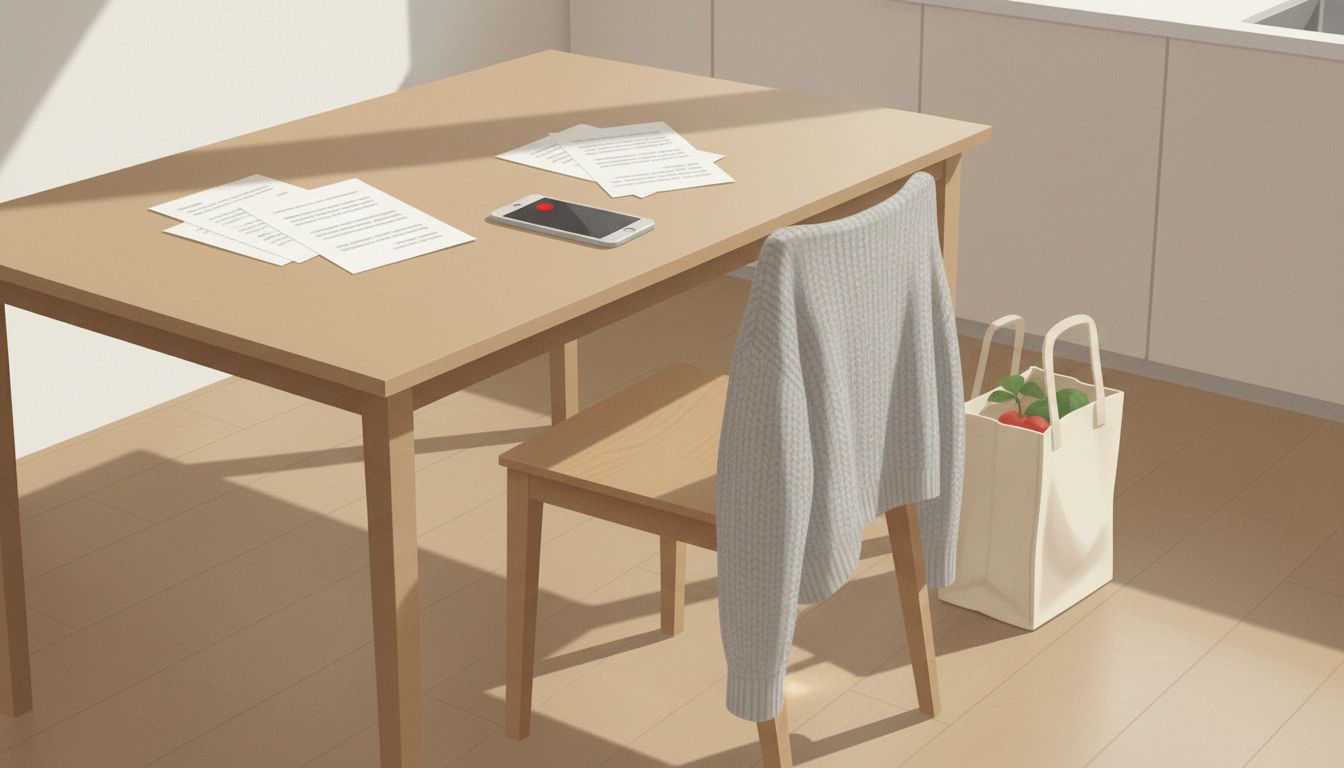
That pile of papers isn’t just paper. It’s a cluster of decisions: file, toss, respond, remember. Same with laundry you meant to fold, or a bag you need to return, or the random items living on the dining table because they don’t have a home.
Even if you’re not consciously worrying about it, your brain reads clutter as “things pending.” No wonder it’s hard to settle.
2) Your phone keeps importing everyone else’s urgency
Even when you’re not actively using it, a phone nearby creates a specific kind of tension: the feeling that something could happen any second. A message. A work ping. A headline. A reminder of something you forgot.
And because so much of life admin lives on our phones—banking, schedules, texts, notes—your brain associates the device with responsibility. So when it’s within reach, you’re never fully “done.”
3) No clear transition from day-mode to night-mode
If your evenings are just “whatever happens after work,” your body doesn’t get a consistent signal that it’s safe to downshift. You might go straight from work to dinner to chores to scrolling to bed… and wonder why you feel wired at 11:30.
A wind-down routine isn’t about being perfect. It’s about giving your nervous system a predictable ramp instead of expecting it to slam on the brakes.
4) Bright lighting tells your body it’s still daytime
Overhead lights—especially cooler bulbs—can keep you mentally sharp when what you need is softness. Lighting is one of the fastest ways to change how a room feels, and yet most of us live in “office lighting” until bedtime.
5) Messy surfaces keep pulling your attention sideways
A cluttered counter is basically a billboard for everything you haven’t completed. You sit down to watch a show and your eyes keep drifting to that one spot that needs attention. Your body is trying to rest, but your environment keeps nudging you back into task mode.
The core idea: make relaxation a default setting, not a performance
Here’s the shift that helps most: instead of trying harder to relax at home, remove the cues that prevent relaxation from happening naturally.
The goal isn’t a magazine-worthy space. The goal is a home that has:
- fewer “open loops” visible at night
- clear zones (resting zone, working zone, drop zone)
- a simple transition ritual that tells your brain: we’re done now
- digital boundaries that stop importing other people’s demands into your evening
Think of it like setting up a gentle system that does the heavy lifting for you—because at 8:30 p.m., you shouldn’t need heroic self-control.
A calm-evening setup you can start with (no reno, no personality transplant)
We’re going practical now. These are small systems that work because they reduce friction. You don’t need to do all of them. Pick the one that feels most relieving.
How to relax at home with a simple “Evening Reset” system
If your space looks like your day—half-finished, multifunctional, slightly chaotic—your brain will keep acting like it’s still working. The antidote is a short reset that clears the visual field enough for your nervous system to unclench.
Try a 10-minute Evening Reset (yes, actually 10 minutes).
Not “clean the house.” Not “get your life together.” Just restore the room(s) you’ll be in for the next two hours.
A realistic checklist might be:
- clear the couch/coffee table (the resting zone)
- deal with dishes enough that the sink isn’t screaming
- put obvious clutter into a single basket (not “away,” just contained)
- wipe one surface quickly (this changes the vibe instantly)
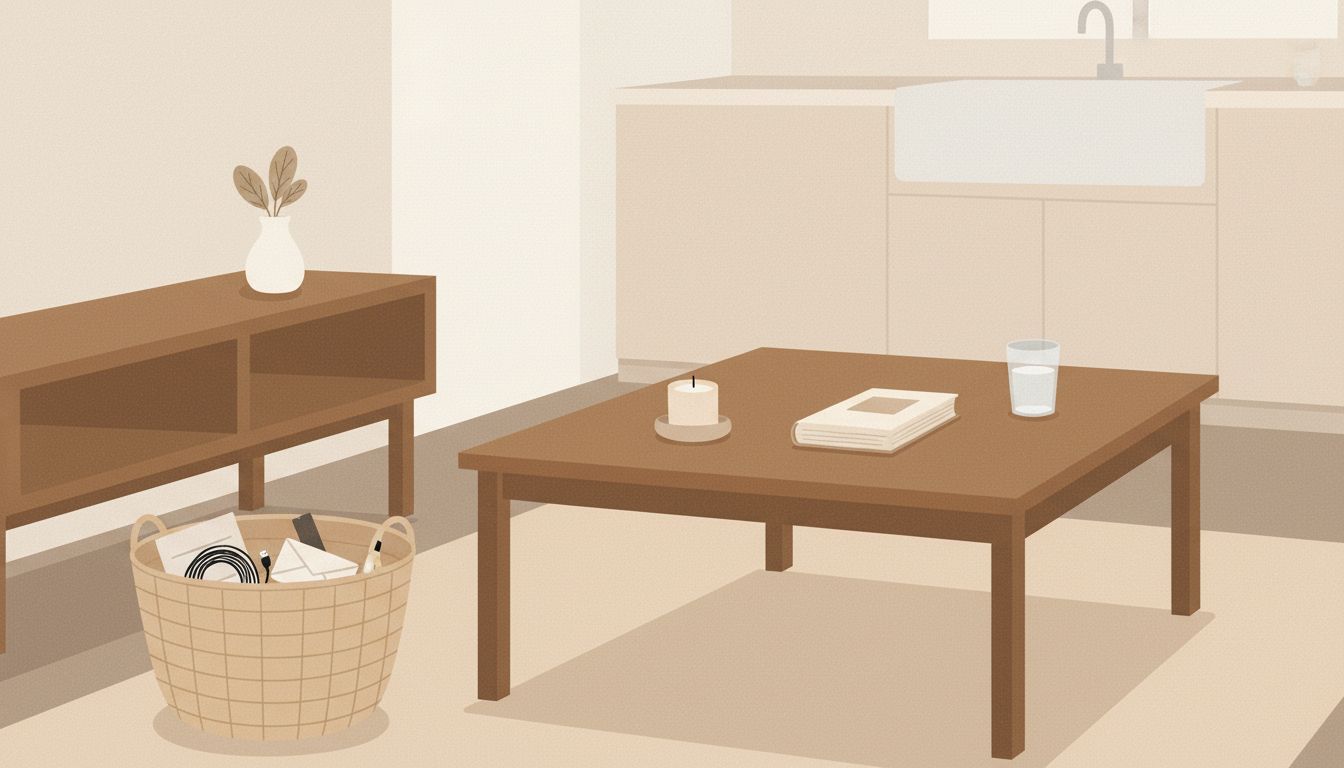
The secret is containment: you’re not finishing every task, you’re reducing visual noise.
Make it automatic with a digital nudge:
- Todoist: create a recurring task called “Evening Reset” with a 4-step checklist. Keep it small enough that you can complete it even when you’re tired.
- If you already use Apple Reminders or Google Tasks, this works there too—the point is the repeatability, not the platform.
Add one tiny boundary: the “phone exile” spot
If you’re trying to relax at home but your phone is beside you, you’re essentially asking your brain to rest next to a slot machine. Even if you don’t pull the lever, the possibility is stimulating.
A simple move: choose one charging spot outside your main resting area—kitchen counter, hallway table, bedroom dresser. Ideally not within arm’s reach of the couch.
If you want backup, use a tool that supports the boundary without making you feel punished:
- Screen Time (iPhone) or Digital Wellbeing (Android): set a wind-down window where notifications are limited and the screen dims.
- Forest: set a 30–60 minute focus timer in the evening so you’re not constantly “just checking.”
This isn’t about demonizing your phone. It’s about giving your brain fewer incoming prompts so it can actually power down.
A softer environment cue that works fast: lighting
If you change one physical thing, consider this: swap “daytime lighting” for “evening lighting.”
You don’t need a full smart-home setup. Even one warm lamp can change the mood of a room. But if you do like systems (and you’re reading this, so… maybe), smart bulbs make it ridiculously easy:
- Philips Hue or similar: schedule lights to warm and dim at a set time, so you don’t have to remember.
- You can also use IFTTT to trigger a “sunset mode” automatically based on time or location.
When the lighting shifts, your body gets the message: we’re not producing anymore. We’re transitioning.
If you’re reading this thinking, Okay, but my biggest issue is that my home is also my work space, you’re not alone—and that overlap is one of the biggest reasons it’s so hard to relax at home right now. The next step is setting up a few “zones” (even in a small apartment) and deciding where unfinished tasks are allowed to live, so your couch stops feeling like an extension of your inbox…
Create “zones” so your brain knows where to stop
When your home is also your office, your nervous system starts treating every surface like a work prompt. The fix isn’t a bigger home—it’s clearer boundaries. Think of “zones” as agreements with yourself: this corner is for focus, this spot is for landing, this area is for recovery.
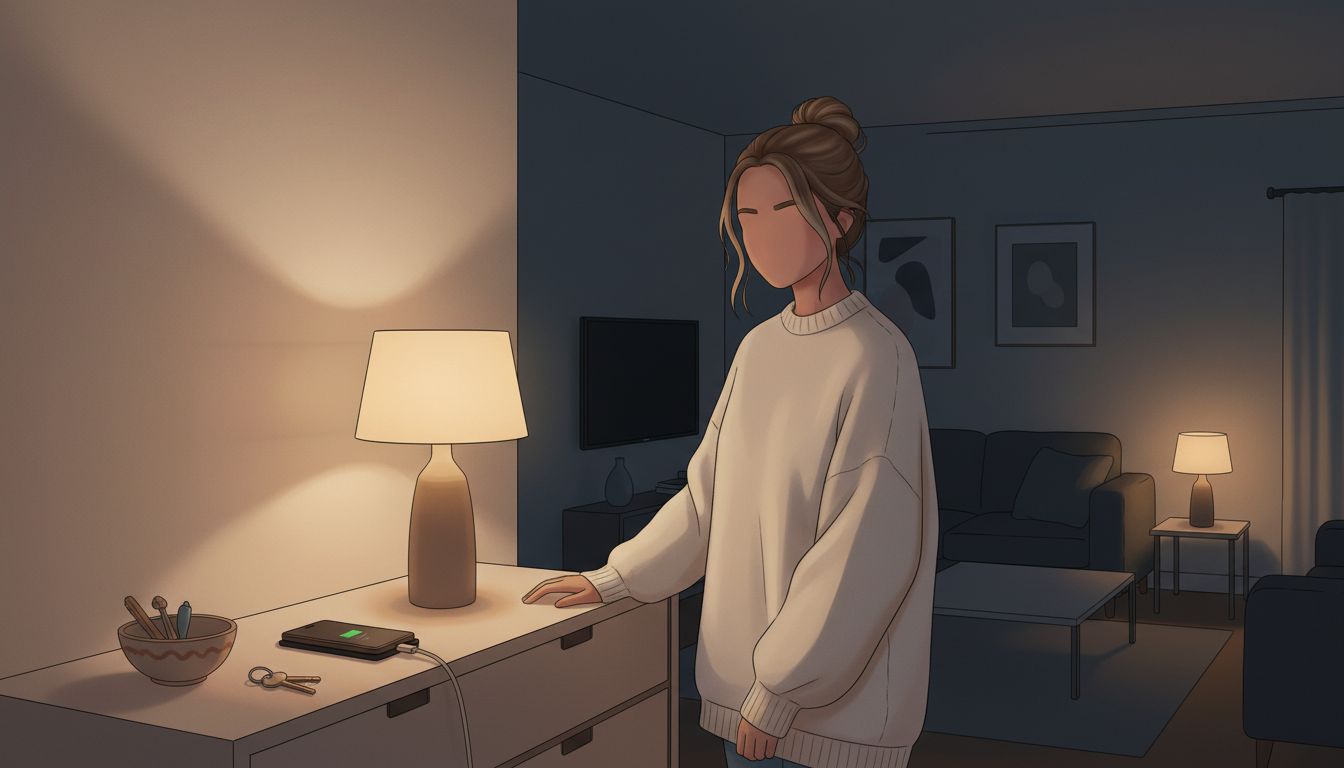
The 3-zone setup (works even in a studio)
- Work Zone: one specific place where work is allowed to live (desk, dining table corner, a rolling cart).
- Rest Zone: one specific place where work is not allowed to exist (couch + coffee table, bed, reading chair).
- Drop Zone: one specific place where life-admin can land without taking over (mail, packages, keys, returns).
The power move here is not “keeping things perfect.” It’s reducing the number of times your eyes land on something that whispers, handle me.
How to make zones actually stick (two simple rules)
- Rule #1: No homeless items in the Rest Zone. If it doesn’t belong to resting (blanket, book, candle, water), it gets relocated during the Evening Reset.
- Rule #2: Unfinished work must “sleep” out of sight. Not because you’re avoiding it—because you’re protecting your off-hours.
If you work from a dining table or couch sometimes, give yourself a “closing signal” so your brain can clock out: put the laptop in a sleeve, stack papers into one folder, and physically remove them from the Rest Zone. Even sliding everything into a basket that goes in a closet counts. The point is: your rest space should not look like an inbox.
A “closing shift” ritual that takes 6 minutes (and makes it easier to relax at home)
You don’t need a long night routine. You need a consistent ending—a tiny sequence that tells your body: we’re done managing things. This is where you start to genuinely relax at home without forcing it.
Try the 6-minute closing shift
- 1 minute: Set a timer. (This keeps it contained and stops the “might as well keep cleaning” spiral.)
- 2 minutes: Clear the Rest Zone surfaces—just the obvious stuff.
- 1 minute: Reset the sink enough that it won’t greet you like a complaint tomorrow.
- 1 minute: Put tomorrow’s “first touch” item where you’ll actually use it (lunch container by the fridge, gym clothes laid out, notebook by your bag).
- 1 minute: Change one sensory cue: dim a lamp, light a candle, turn on a soft playlist, or spritz linen spray.
This works because it tackles the three biggest relax-killers: visual chaos, tomorrow-anxiety, and sensory overstimulation. You’re not cleaning. You’re closing loops.
If you live with other people: make it friction-proof
If you’re the default “closer” of the day, the ritual can start feeling like unpaid labor. Two tweaks help:
- Assign one shared micro-task: “Can you clear the coffee table?” or “Can you start the dishwasher?” Specific beats “help me tidy.”
- Create a ‘later basket’: one bin where everyone’s stray items go. No debates, no sorting at night.
Containment systems: the fastest way to lower mental load
If your home constantly pulls you into decision-making, it’s usually because too many items are asking the same question: Where do I go? Containment answers that question once, then saves you from answering it every day.
Three containers that quietly change everything
- The Drop Basket: for mail, packages, returns, “deal with later.” (One basket, one spot.)
- The Nightstand Bowl: for lip balm, hair ties, meds, earbuds—tiny items that otherwise roam.
- The Couch Caddy: remote, charger, hand cream, book. Rest-ready without scavenger hunts.
Notice the vibe: we’re not chasing minimalism. We’re removing tiny daily frictions that keep your brain on alert.
One small rule for the Drop Basket (so it doesn’t become a doom pile)
Pick a single weekly “basket appointment”—15 minutes, same day each week. That’s when you file, toss, schedule, return. If you don’t have time for 15, do 7. What matters is that your brain trusts there’s a plan.
Digital calm: stop importing urgency into your evenings
Even if your home is spotless, your phone can keep your nervous system braced. If you want to relax at home more consistently, digital boundaries are not optional—they’re the modern equivalent of locking the front door.
The “two-screen rule” for weeknights
This is gentle but surprisingly effective: after dinner, you get one screen at a time.
- If you’re watching a show, your phone charges elsewhere.
- If you’re scrolling, the TV is off.
It reduces stimulation without requiring monk-level discipline. Your brain gets fewer inputs, so it settles faster.
Make your phone less “loud” without making it useless
- Turn off non-human notifications: shopping, news, social “suggestions.” Keep texts/calls from key people if needed.
- Use a nightly Focus mode: allowlist what matters; silence everything else.
- Move addictive apps off your home screen: not deleted—just not instantly accessible when you’re tired.
These are small configuration changes, but they pay you back every single night in fewer micro-spikes of stress.
Make rest feel safe (especially if you’re wired-tired)
Sometimes the issue isn’t mess or screens—it’s a nervous system that’s been running hot for so long that stillness feels uncomfortable. If you sit down and immediately feel restless, that’s not failure. That’s your body adjusting.
Two “off-ramp” practices that don’t feel like homework
- The 60-second exhale: inhale normally, then breathe out slowly for longer than you breathed in. Do it 5–8 times. Long exhales cue safety.
- The comfort cue: one predictable sensory signal that means “evening.” A specific tea, fuzzy socks, a particular playlist, a warm shower. Repetition trains your brain faster than willpower.
Rest is a skill, and skills get easier when you practice them in tiny, repeatable ways.
Small shifts, done consistently, create the kind of calm you don’t have to chase.
Conclusion: calm isn’t a personality trait—it’s a system you deserve
If your home has been feeling like a second shift, you’re not imagining it. Your brain has been responding to constant cues: unfinished tasks, visible clutter, digital urgency, and spaces that don’t clearly say “you’re off now.”
The good news is you don’t have to overhaul your life to feel better. A few simple systems—zones, a short closing shift, containment baskets, softer lighting, and a phone boundary—can change your evenings from low-grade tension to actual recovery.
You deserve a home that helps you relax at home without effort and without guilt. Start with one change tonight—one basket, one lamp, one six-minute reset—and let that be enough. Calm living isn’t about doing more. It’s about designing less for your brain to carry.
Want more visual guidance and supportive resources? Here are a few places to go next: