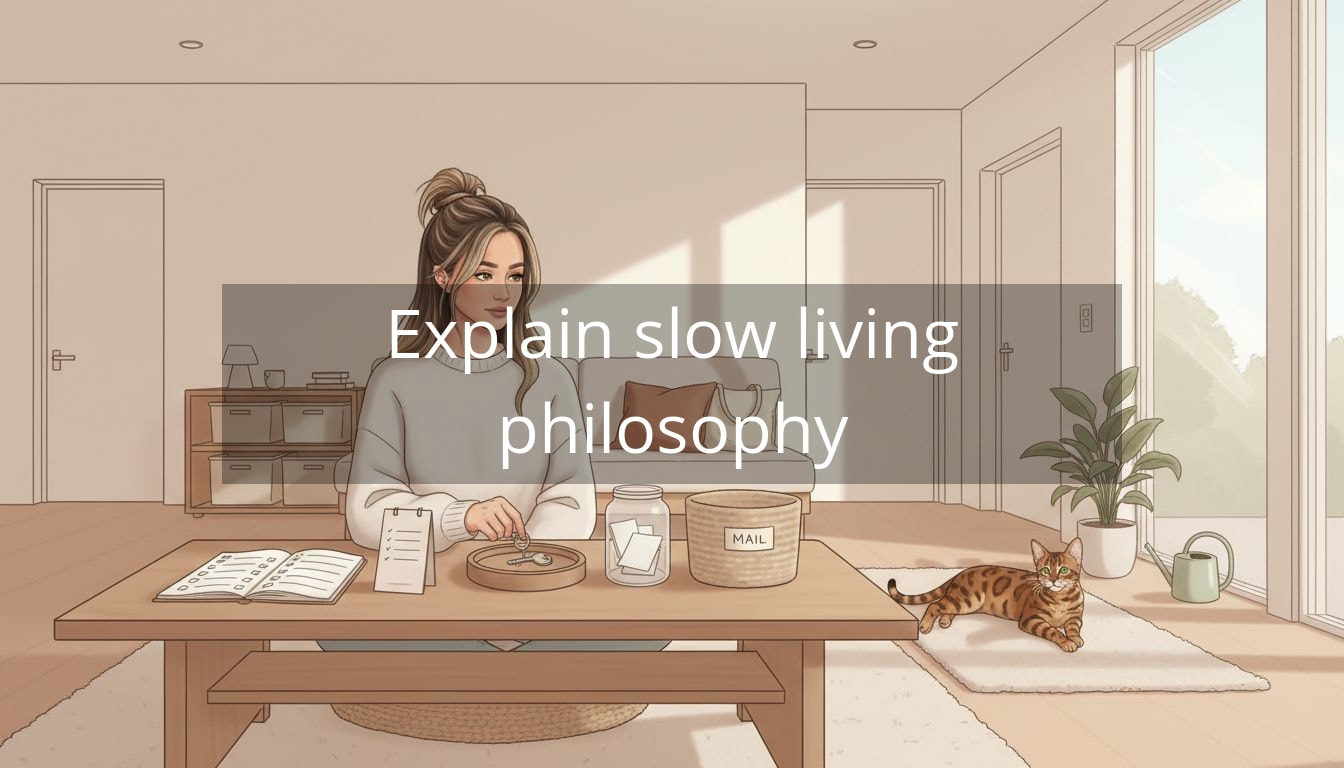
Your day can be going fine—until you realize you’ve already checked your phone 12 times before lunch. That’s exactly why the slow living lifestyle has started to feel less like an aesthetic and more like a lifeline.
Most of us aren’t “bad at time management.” We’re living inside a system that rewards speed and constant availability. Hustle culture frames rest as laziness, workplaces normalize instant replies, and social media keeps a low-level hum of comparison running in the background. Even when you technically have free time, your attention is still being tugged in ten directions—notifications, errands, open tabs, unfinished plans. No wonder your nervous system stays on high alert and you end the day feeling like you did a lot… but didn’t actually live it.
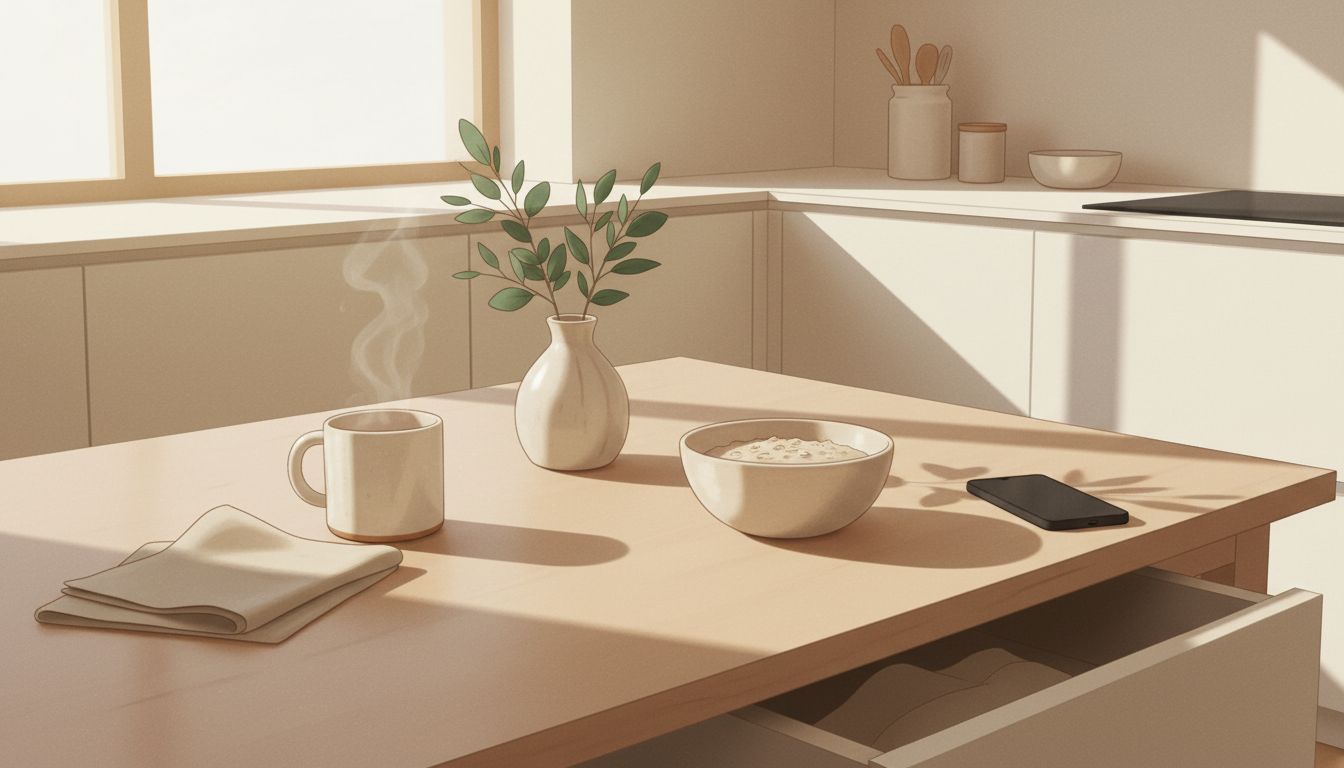
Clarity often arrives when you stop rushing long enough to hear yourself think.
The Slow Living Lifestyle: the mindset shift that changes everything
At its core, the slow living lifestyle is choosing intention over autopilot. It’s not about doing less for the sake of it—and it’s definitely not about moving to the countryside or spending hours making sourdough. It’s a practical philosophy: do fewer things, more fully. Trade constant multitasking for presence. Prioritize what matters (your health, your home, your relationships, your creative work) instead of reacting to whatever shouts the loudest.
A simple way to start is to build “speed bumps” into your day—tiny pauses that interrupt the rush and give you back control:
- Create one daily no-phone pocket. Even 20 minutes helps. Use Focus Mode/Do Not Disturb (iPhone) or Digital Wellbeing (Android) during breakfast or your first work block.
- Single-task one ordinary thing. Drink your coffee without a screen, or fold laundry without pairing it with emails. It sounds small, but it retrains your brain to stop scanning for the next demand.
- Try the three-breath buffer. Before answering a message or saying yes to a plan, take three slow breaths. It’s a boundary in miniature—and it quietly changes your calendar over time.
Once you feel how different your day becomes with just a little more space, you can start shaping a life that supports slowness on purpose, not just in stolen moments.
How to build a slow living lifestyle with simple systems (not willpower)
Slowness sticks when it’s supported by structure. Not rigid schedules—just a few helpful defaults that prevent your day from turning into one long reaction to other people’s priorities.
1) Choose your “non-negotiables” for a calmer day
If everything matters equally, your brain has to renegotiate your day every hour. That’s exhausting. A slow living approach is deciding ahead of time what you protect—then letting the rest flex.
- One body anchor: a 10-minute walk, stretching while coffee brews, or a real lunch away from your screen.
- One home anchor: a 10-minute reset (dishes, counters, quick tidy) that makes your space feel kinder to live in.
- One relationship anchor: a short voice note, dinner without phones, or a quick check-in with someone you love.
Real-life example: If your afternoons always spiral into back-to-back calls, make your body anchor happen before work. A slow breakfast plus five minutes on the balcony counts. The point is not perfection—it’s giving your nervous system a predictable “we’re okay” signal each day.
2) Use a “Default Day” plan to reduce decision fatigue
Decision fatigue isn’t a character flaw. It’s what happens when you’re constantly forced to choose—what to eat, when to work out, which task first, whether to respond now, and how to fit it all in.
Create a simple default template for weekdays. Think of it like bumpers in a bowling lane—your day can still curve, but it won’t fly into chaos as easily.
- Morning: phone-free pocket + one focused work block (even 25 minutes)
- Midday: real lunch + quick reset (walk, stretch, sunlight)
- Afternoon: meetings/admin batch + “closing tasks” list (3 items max)
- Evening: a soft landing routine (prep tomorrow lightly, then rest)
Try this tomorrow: Write your “closing tasks” on a sticky note at 2 p.m. Pick three things that would make you feel done—even if the laundry isn’t folded and your inbox still breathes. Slowness often begins with allowing “enough” to be enough.
3) Create boundaries that don’t require a long explanation
One of the biggest reliefs in a slow living lifestyle is realizing you don’t have to be endlessly available to still be excellent at your job, a good friend, or a caring partner.
Keep boundaries short and kind. You’re not asking permission—you’re communicating a rhythm.
- For messages: “I’m in a work block—replying after 3.”
- For plans: “I can’t this week, but I’d love to next weekend.”
- For work: “I’ll have an update by end of day tomorrow.”
- For your own brain: “Not deciding that right now.” (Write it down, revisit later.)
Small but powerful shift: If you tend to respond instantly, add a gentle delay on purpose. Even five minutes teaches your body that urgency isn’t the default.
Slow living lifestyle habits that make your home and mind feel lighter
Slowness gets much easier when your environment isn’t constantly asking you to manage it. You don’t need a perfect home—you need a home that’s easy to maintain on your busiest weeks.
1) The “one-touch” rule for daily clutter
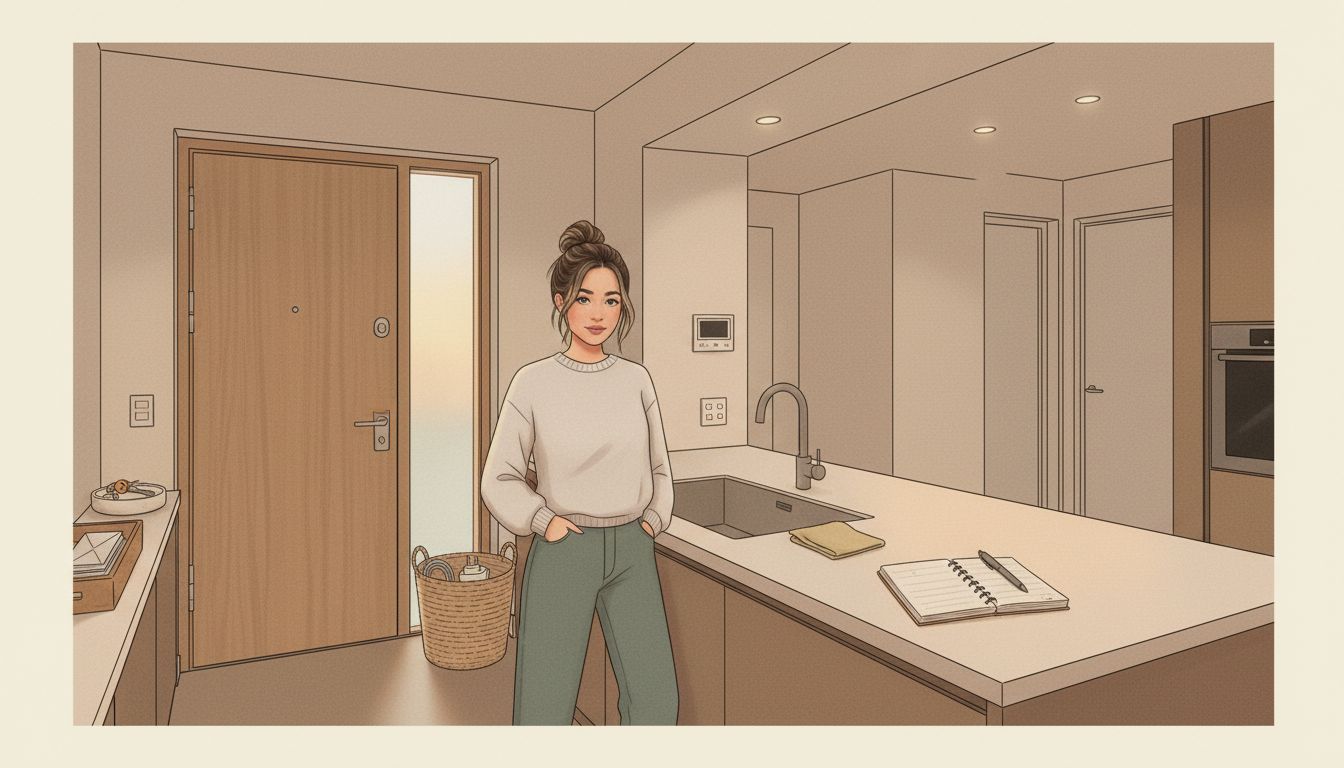
When you pick something up, try to put it where it actually lives—once. Not on the chair, not on the counter, not in the mysterious pile.
To make this realistic, give everyday items an obvious home: keys by the door, chargers in one basket, mail in one tray, beauty basics in one small container. If something doesn’t have a home, your brain becomes the storage system—and that’s where mental overload starts.
2) A 10-minute reset that protects tomorrow-you
This is not a deep clean. It’s a “wake up to less chaos” gift.
- Clear the sink (or at least stack dishes neatly)
- Wipe one counter
- Put laundry in a basket (not multiple micro-piles)
- Set out one thing you’ll need tomorrow (water bottle, outfit, notebook)
Why it works: When your morning begins in a calmer space, you start the day with fewer decisions and less visual stress—two core ingredients of a slower pace.
3) The weekly “life admin” meal: one hour, one day
Life admin is sneaky. It seeps into every evening—appointments, refill reminders, returns, scheduling, budgeting, texts you keep forgetting to answer. A slow living routine contains it so it doesn’t leak into everything.
Pick one consistent time (Sunday at 4 p.m., Wednesday after dinner—whatever fits your life) and do a short admin session:
- Pay/scan bills, check accounts
- Schedule appointments
- Order basics (toilet paper, vitamins, pet food)
- Look at the week and choose 2–3 priorities
- Send the messages you’ve been mentally carrying
Then stop. You’re building a system that holds the details so your mind doesn’t have to.
You don’t need more time—you need fewer open loops.
Tools that support slowness (without adding more to manage)
The best tools are the ones that quietly reduce friction. If an app becomes another task, it’s not helping. These are lightweight options that pair well with a slow living lifestyle:
Digital settings that protect your attention
- Do Not Disturb schedules: set one daily focus window (even 60–90 minutes).
- Notification pruning: keep alerts for people and time-sensitive needs—turn off the rest.
- Home screen “diet”: move social apps off the first screen so checking them becomes a choice, not a reflex.
One place for tasks (so they stop living in your head)
Pick one capture system and keep it simple. A notes app, a small paper notebook, or a basic to-do list is enough—as long as you trust you’ll look at it.
- Brain dump note: a running list for anything that pops up
- Today list: 1–3 “musts” + 1 “nice-to-have”
- Later list: where ideas go so they don’t hijack your workday
A helpful rule: If it takes less than two minutes to write it down, don’t keep thinking about it. Capture it and return to your life.
A gentle “closing ritual” to end the workday
If your workday ends but your brain doesn’t, your evening never fully starts. Try a 5-minute shutdown:
- Write tomorrow’s first task (so you don’t wake up scrambled)
- Close tabs and clear your desktop
- Put your laptop away (out of sight helps your nervous system exhale)
It’s a small signal that you’re safe to rest—no dramatic reinvention required.
More resources if you want extra support
If you’d like examples, prompts, and guided practices to make this feel even easier, additional resources are available:
- Phone boundaries: simple Focus Mode / Do Not Disturb setups for calmer mornings
- Weekly reset checklists: a short routine you can finish in under an hour
- Journaling prompts: value-based questions to help you choose what to keep and what to release
- Slow routines ideas: small rituals for mornings, evenings, and weekends
A calmer life is built in small, repeatable choices
The slow living lifestyle doesn’t ask you to abandon ambition or disappear from real life. It asks you to stop living at the mercy of whatever is loudest—and start building days that feel steadier, kinder, and more yours.
Start with one speed bump. Add one default. Protect one pocket of quiet. Over time, those small systems will do what willpower can’t: reduce your mental load, soften your pace, and make room for you to actually feel your life as you’re living it.
Telegram Galelar
Instagram @galelar_lis
YouTube @galelar
TikTok @galelar_lis