
If you keep wondering why home feels messy, even right after you clean, you’re not imagining things. Why home feels messy is usually less about how hard you’re scrubbing and more about the tiny, repeatable patterns that quietly recreate chaos all day long.
You know the moment: you finally get a pocket of time (a rare, sacred Saturday morning), you wipe the counters, vacuum, fold laundry, even do that “real” clean where you move things to get underneath them. And then… later that same day, you walk back into the kitchen and it feels visually loud again. Not filthy. Just unsettled. Like the mess is waiting in the wings.
That “I literally cleaned—why is this happening?” feeling is one of the most frustrating kinds of burnout because it makes you question your own competence. But this isn’t a character flaw, and it’s not a sign you need stricter discipline. It’s a systems problem.
The real reason why home feels messy (even when it’s technically clean)
A lot of us were taught to think of “messy” as dirt: crumbs, fingerprints, a sticky spot on the floor. And yes, those matter. But the messy feeling—the heavy, mentally noisy vibe—usually comes from something else: visual noise + unfinished decisions.
Here’s what’s really going on:
- Your brain reads objects as input. Every item left out is a tiny piece of information to process, even if you’re not consciously “thinking about it.”
- Unfinished categories create friction. Things that don’t have a clear home (or don’t belong to a clear category) turn your counters and chairs into decision zones.
- Modern life creates constant drop-and-run moments. You’re coming in from errands with a tote bag, you’re switching from work to dinner mode, you’re changing clothes between “real life” and “sofa life.” Your home becomes the buffer between those transitions—and buffers collect clutter.
Psychology researchers often describe this as visual overstimulation: when there are too many competing objects in your environment, your attention gets pulled in too many directions. It can make it harder to focus and genuinely rest. Which means your space can look “fine” and still feel like it’s buzzing.
And for a lot of modern women—working, building a side project, managing appointments, trying to keep up with friendships and fitness and food and laundry—your home becomes the one place you desperately want to feel calm… while also being the place that collects the evidence of your entire life.
The sneaky patterns that keep recreating mess
Most homes that feel messy aren’t dealing with dramatic hoarding-level clutter. It’s usually one (or more) of these subtle patterns:
1) Flat surfaces become parking lots.
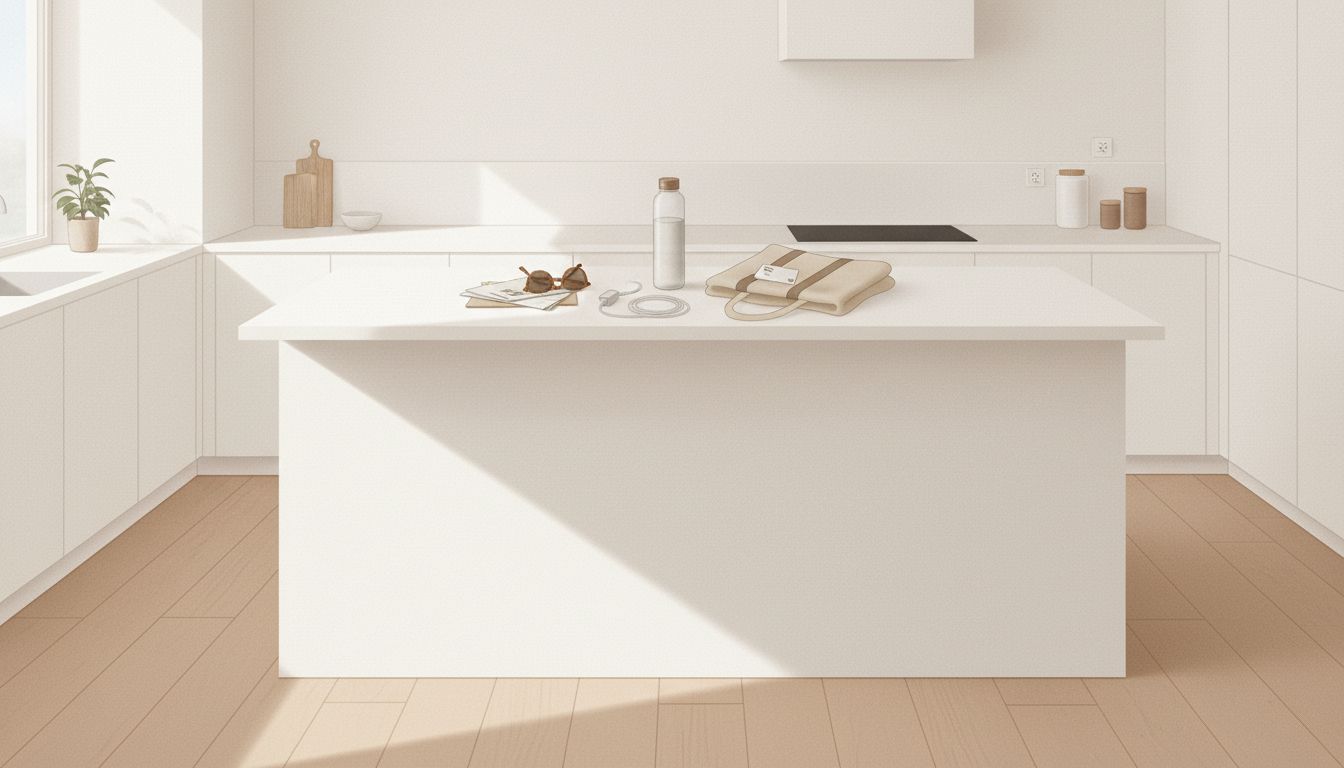
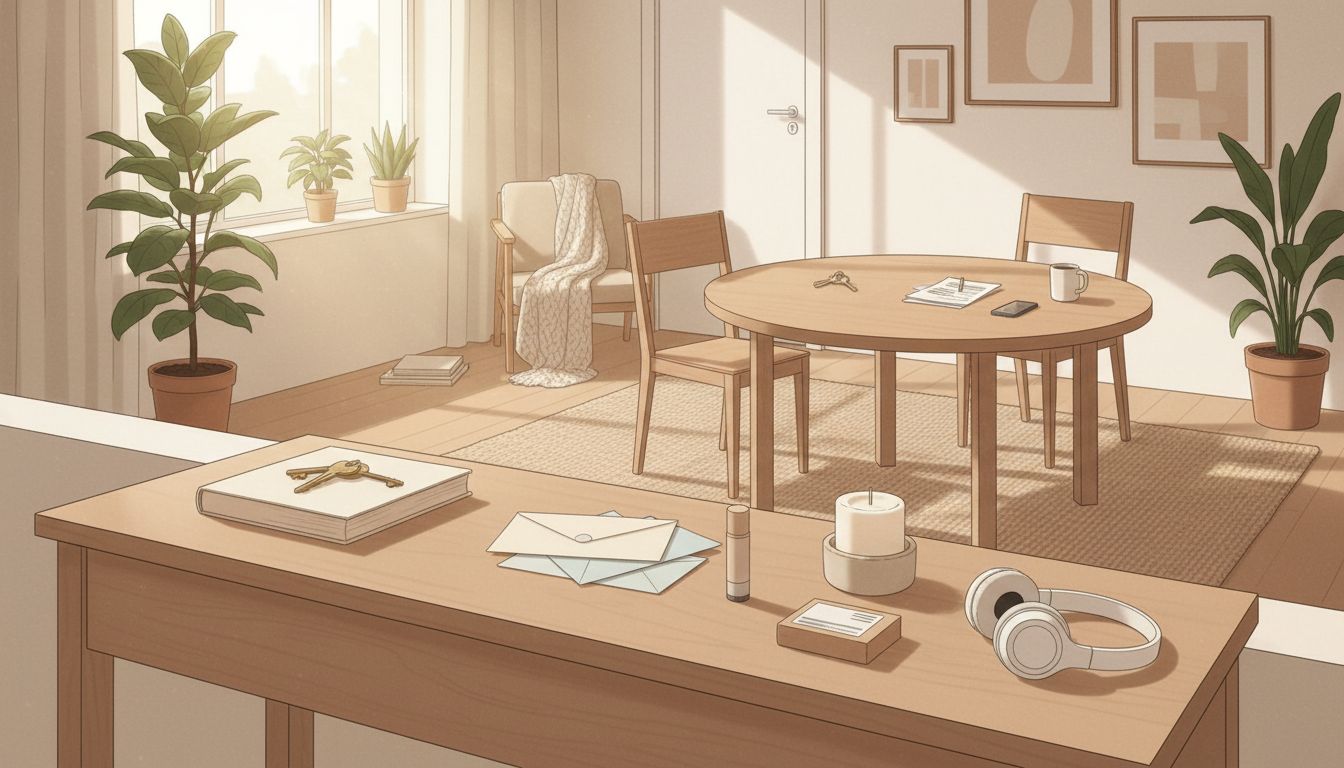
Kitchen islands, nightstands, dining tables, bathroom counters—anything flat becomes a “just for now” zone: keys, mail, water bottles, sunglasses, makeup, packages, a candle you meant to light, a charger that never quite finds its way back.
Even after you clean, if the surface behavior doesn’t change, the space goes right back to feeling crowded.
2) Everyday items don’t have a “lowest-effort” home.
Your headphones technically have a place… but it’s in a drawer that’s annoying to open with one hand. Your bag belongs in the closet… but the closet is packed, and the hook is on the wrong side of the door. So the bag ends up on the chair again.
Homes stay orderly when the “put away” option is just as easy as the “drop it” option.
3) The “not dirty yet” clothing limbo.
This is the chair pile, the treadmill pile, the corner-of-the-bed pile: clothing that’s not clean enough to go back in the drawer, but not dirty enough to wash. It’s the physical form of an unresolved decision.
If you’ve ever tidied your bedroom and still felt like you couldn’t exhale, this is often why.
4) Paper acts like an open browser tab.
Mail, receipts, forms, sticky notes, return labels—paper turns into a quiet to-do list that follows you around. A stack on the counter doesn’t just look messy; it feels messy because your brain keeps scanning it as “pending.”
5) Tiny “homeless” items multiply.
Batteries, elastics, cords, spare keys, random screws, USB adapters—small items don’t take up much space individually, but they create constant micro-mess: the kind that makes drawers jammed and surfaces feel unsettled.
None of this means you’re behind. It means your home is doing what homes do when life is full: collecting transitions.
Clarity isn’t created by doing more—it’s created by removing what quietly pulls at your attention.
What this looks like in real life (aka: you’re not the only one)
This is the part where it gets painfully relatable.
You finish a late Zoom call and set your notebook on the kitchen island because you’re starving and dinner needs to happen fast. You drop the mail next to it. Your water bottle joins them. Then a package shows up. By the time you’re cooking, you’re sliding piles around just to find a cutting board—and suddenly the kitchen feels stressful, even though it’s technically “clean.”
Or you get home after a long day, peel off your jeans, and put them on the chair because you might wear them again. Tomorrow’s sweater joins it. By Thursday, the chair is basically a closet. The floor is clear, you’ve even made the bed… and yet the room feels like it’s closing in.
This is why “just clean more often” doesn’t fix the sensation. Cleaning is maintenance. The messy feeling is usually flow.
The core idea: stop cleaning symptoms, start changing the patterns
If you’re trying to create a calmer home (not a perfect one), the goal isn’t to become someone who cleans constantly. It’s to build a few small micro-systems that prevent the mess from being created in the first place.
Think of it like this:
- Cleaning = removing dirt and resetting a space
- Systems = preventing daily life from turning into piles
When you have even one or two good systems, your space starts to feel lighter because you’re eliminating decision points. And that’s what your overloaded brain is craving: fewer decisions, fewer visual cues, fewer open loops.
Start with this rule: reduce “open loops” in your space
An open loop is anything that your brain reads as unfinished:
- a stack of mail you haven’t sorted
- a jacket you haven’t decided whether to hang or wash
- a counter full of items you haven’t put away
- a drawer full of mystery cables
The home feels calmer when open loops are contained.
So instead of trying to overhaul your whole space, start here: pick one high-traffic zone that’s making you feel the most “ugh.” Usually it’s one of these:
- the kitchen counter / island
- the entryway (where bags, shoes, keys, and packages gather)
- the bedroom chair (you already know)
- the dining table that became your second desk
We’re going to give that zone a simple system—something realistic enough that you’ll still do it on a Tuesday night.
First systems that actually help (without turning your life into a home makeover show)
1) The “One-Touch” upgrade for surfaces (gentle, not strict)
The problem with surfaces isn’t that you have stuff. It’s that surfaces become temporary storage by default.
A helpful rule of thumb: try to avoid letting something land on a surface twice.
- First touch: you come in and put keys down
- Second touch: you move keys later because they’re in the way
That second touch is the hidden tax that makes life feel harder.
A more forgiving version (because real life): choose one intentional landing spot per major surface—like a small tray on the counter or a dish by the door—where the few allowed items can live. Everything else gets a home.
Tiny habit that changes everything: set a 2-minute timer once a day for a “surface sweep.” Not a deep clean—just returning strays to their homes. It’s fast enough that you’ll actually do it, and it stops clutter from becoming background noise.
2) Create “Home Zones” for everyday essentials
If something is used daily, it needs a home that matches how you actually move.
A “Home Zone” is simply: one spot where an item always returns.
- Keys: a hook or a tray at the exact place you naturally drop them
- Headphones/charger: a small bowl or drawer organizer near where you charge your phone
- Bags: a hook you can use one-handed (seriously, this matters)
- Water bottle: one cabinet shelf that isn’t crammed so it’s easy to put back
The trick is to design for your laziest, most tired self. If the system only works when you’re motivated, it won’t work.
3) A realistic solution for “not dirty yet” clothes: the Wear-Again Zone
This is one of those issues that makes people feel messy even when everything else is fine—because the chair pile is visually loud and emotionally annoying.
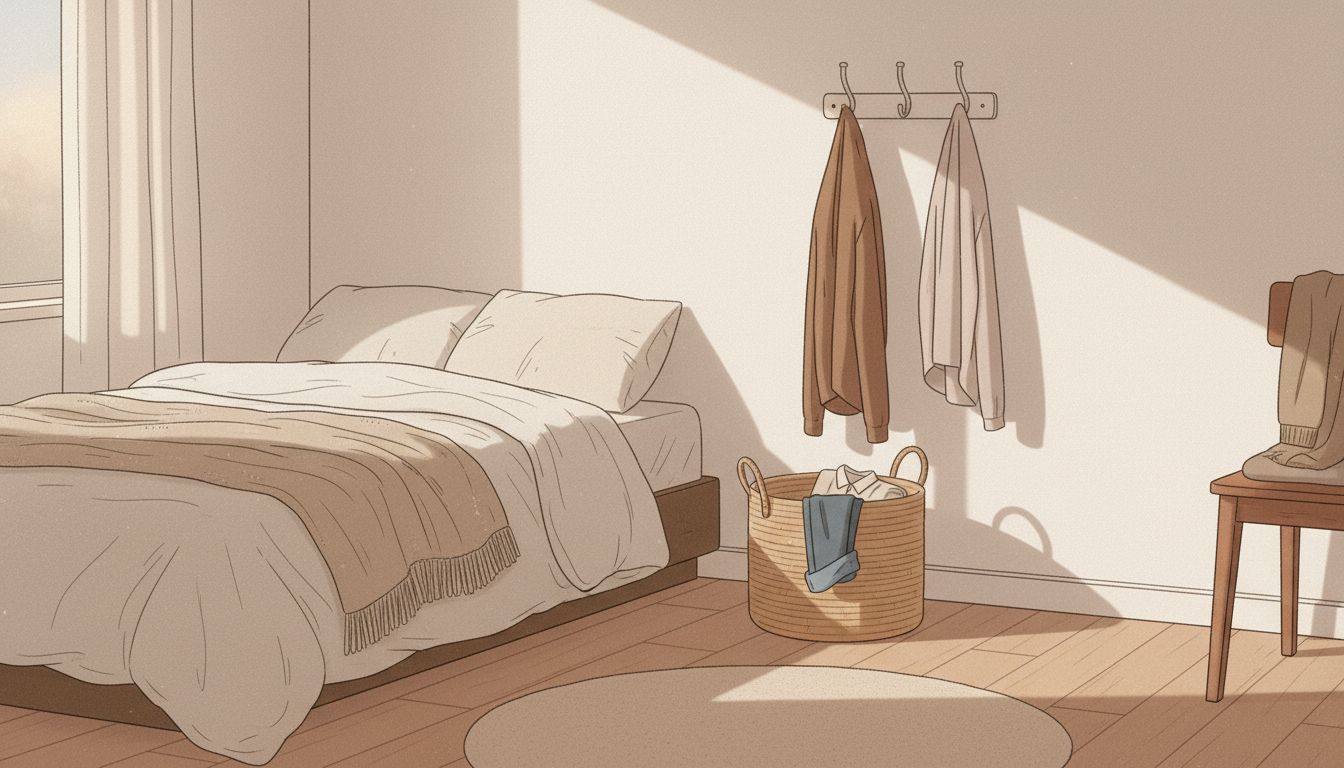
Instead of trying to force yourself to hang everything up (when you know you won’t), create a designated Wear-Again Zone:
- a basket
- a hook set
- a fabric bin on a closet shelf
It’s not about being precious. It’s about containing the limbo category so it stops taking over the room.
4) Paper: switch from “pile” to “pipeline” (with one simple digital tool)
Paper feels uniquely stressful because it represents decisions. So the goal isn’t to perfectly file everything—it’s to create a pipeline: paper comes in, gets processed quickly, and leaves your surfaces.
A simple approach:
- Junk immediately goes to recycling/shred
- Action items go into one physical “inbox” (a file holder, a tray—one place only)
- Anything you might need later gets scanned and saved digitally
If you want a low-effort digital helper, use a notes app you already like (Apple Notes is honestly enough for many people), or something like Notion or Evernote if you prefer searchable tags and a more “home command center” feel. The magic isn’t the app—it’s that you can quickly turn paper into something findable and then remove it from your counters.
If you already use a task app like Todoist or TickTick, this is where it shines: the moment paper becomes a task (“call the dentist,” “pay invoice,” “return package”), you can capture it and stop letting the paper sit there as a visual reminder.
At this point, the goal isn’t to become a minimalist or to suddenly love tidying. It’s to reduce the number of decisions your home asks you to make—especially at the exact moments when you’re tired, hungry, or trying to switch from work brain to real-life brain.
And once one zone starts feeling calmer, you’ll notice something surprising: you don’t just have a cleaner counter—you have a little more mental quiet to work with, which makes it easier to decide what to tackle next… like the small-item chaos that lives in drawers, the “where do I put this?” problem that keeps resurfacing, and the way to make these systems feel almost automatic in your day-to-day flow.
The small-item chaos: how to stop losing things (and your patience)
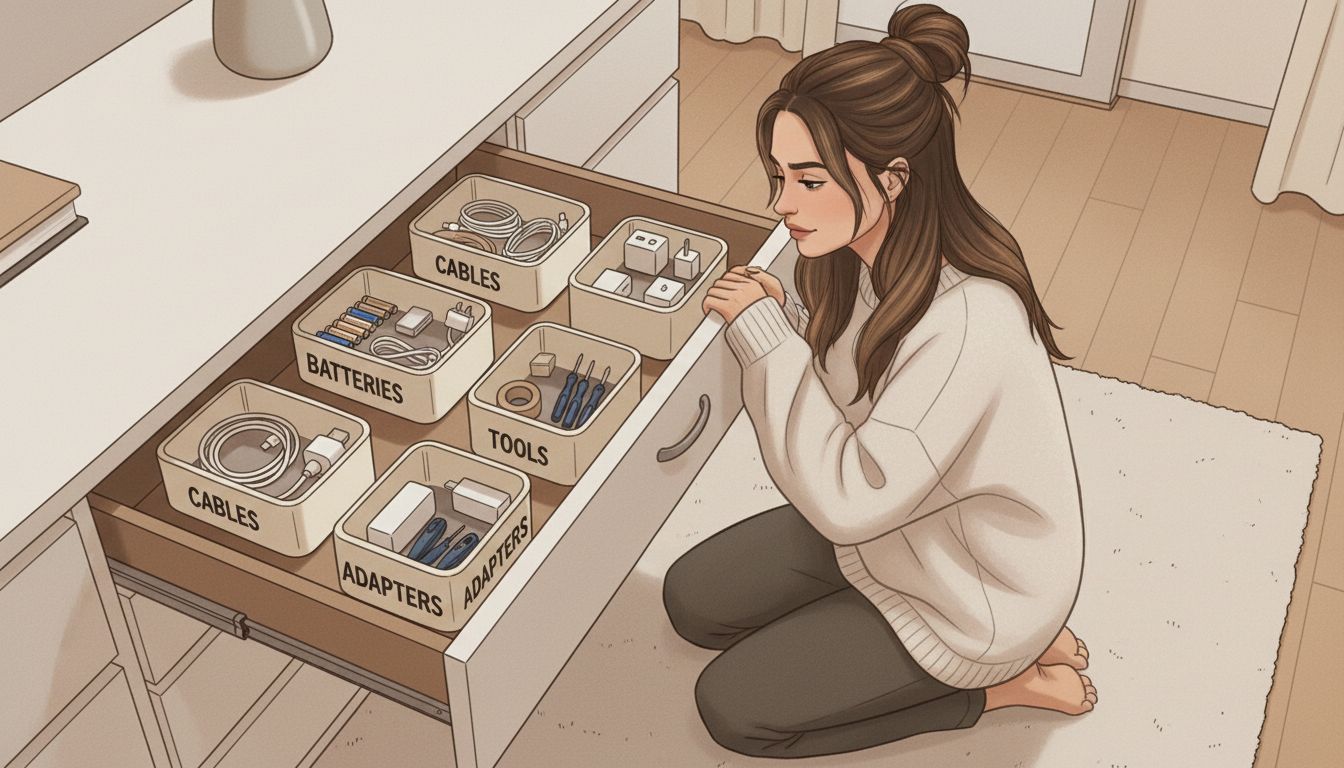
You know the drawer: half batteries, half mystery cords, plus a tiny screwdriver you only find when you don’t need it. This is one of the fastest ways to recreate that “messy” feeling, because small items spread easily and make every “quick tidy” take longer.
Here’s the fix: don’t aim for Pinterest-perfect. Aim for contained and findable.
The “micro-categories” method (so your drawers stop becoming junk)
Small items behave better when they’re grouped into categories that are easy for your brain to understand at a glance. The trick is to keep categories specific enough to prevent mixing, but not so detailed you’ll never maintain them.
- Start with 5 core categories: Power (batteries/chargers), Tech (cables/adapters), Tools (basic toolkit bits), Hang/Stick (hooks/tape/command strips), Extra (spares).
- Choose “open-top containment”: shallow bins, drawer dividers, small boxes, even repurposed containers. Lids add friction; friction kills follow-through.
- Label like you’re doing future-you a favor: simple labels beat aesthetic labels. “CABLES” is a win.
- One home per item type: if scissors live in three places, they live nowhere.
A realistic standard: you should be able to put something away with one hand, in under 10 seconds, without rearranging other items. If you can’t, the system is too complicated—or the container is too full.
The 10-minute “tiny nomads” sweep (weekly)
Once a week (or every other week), do a quick sweep for the little homeless things that multiply:
- Walk your main rooms with a small basket
- Collect tiny strays (hair ties, coins, lip balm, pens, random screws)
- Stand in one spot and sort them into their micro-categories
- Trash/recycle anything broken, dried up, or duplicated into chaos
This works because you’re containing the mess before it spreads into every surface—and you’re eliminating dozens of tiny decisions later.
When you keep asking “why home feels messy,” it’s often a timing problem (not a cleaning problem)
One underrated reason why home feels messy is that your reset moments don’t match your real-life traffic patterns. If your busiest mess-creating moments happen at 8:30am and 6:30pm, but you only “reset” on Saturday, your home will always feel like it’s catching up.
Instead, build two tiny resets that match your natural transitions—because transitions are where clutter is born.
The Two-Reset Day: a calmer default without doing more
- AM Reset (2–4 minutes): clear one main surface + return obvious strays to their homes (think: island, coffee table, bathroom counter).
- PM Reset (5–8 minutes): close the kitchen (trash out, dishes contained, quick surface sweep) + do a “floor glance” in the living area (blankets folded, shoes back).
That’s it. Not a deep clean. Not an organizing project. Just enough to keep visual noise from stacking into stress.
Smart-friend note: if you live with other people, you don’t need them to share your standards—you need them to share your drop zones. One hook, one basket, one tray. Cooperation gets easier when the system is obvious.
Make your systems almost automatic (with gentle design tweaks)
A system is only “good” if it works when you’re tired, distracted, and trying to get dinner on the table. So let’s make it easier to do the right thing than the messy thing.
Use “distance” as a strategy (put homes where clutter happens)
If the remote always lands on the kitchen counter, it’s not because you’re careless—it’s because the counter is the closest flat surface in your path.
- Add a remote bowl where you actually sit (not where it “should” go)
- Add a return bin near the stairs for upstairs items
- Add a tote/hook exactly where bags naturally drop
We’re not fighting human behavior. We’re designing around it.
Try the “1 in, 1 out” rule for problem categories (not your whole house)
If decluttering makes you want to lie down, keep it targeted. Choose one category that creates visual noise—mugs, water bottles, throw blankets, skincare, handbags—and use a simple boundary:
- If a new one comes in, an old one leaves
- If the bin/shelf is full, that’s the signal—not your willpower—to edit
This creates maintenance without a dramatic purge and keeps your storage from silently overflowing.
The “Sunday 15” audit (the maintenance that prevents overwhelm)
Once a week, set a timer for 15 minutes and ask just two questions:
- What didn’t have a home this week? (That’s a system gap.)
- What home was annoying to use? (That’s friction.)
Then make one tiny adjustment: add a hook, move a bin, relabel a container, simplify a category. This is how your home slowly becomes easier to live in—without big, exhausting overhauls.
Small systems done consistently beat big makeovers done once.
Conclusion: a calm home is a supported life
If your space has been making you feel edgy, behind, or like you can’t fully exhale, please hear this: it’s not a personal failure. A home that feels messy is often just a home that’s missing a few low-effort “return paths” for everyday life.
The win isn’t perfection. The win is less mental load: fewer decisions, fewer piles that represent unfinished tasks, fewer moments where you’re shifting clutter just to function. When you build a couple of micro-systems—drop zones, wear-again containment, a paper pipeline, tiny-item categories—cleaning stops feeling like a never-ending loop and starts feeling like simple maintenance.
You deserve a home that supports you back. Start with one zone, make it easier than you think it needs to be, and let “calm” be the goal—not flawless.
And if you’re the kind of person who likes seeing systems in action, there are additional visual resources available to help you set up your zones and resets.

Leave a Reply